Share Important Condition Photos
Photograph the splitters, sills, affected wheel or tire, visible underbody concern, carbon panel or protection-film edge when it relates to the requested work.
Tell us the McLaren model, warning and movement condition before bringing the car to our Dubai workshop. We can plan a free initial inspection, a remote service-van check or collection for an approved repair. Low clearance, a non-running car and Artura hybrid warnings affect the safe arrival plan. We confirm the exact operation we can assess or repair before work begins.
Planning a repair? See estimated Dubai service and diagnostic prices. The written quote follows inspection of the exact car.
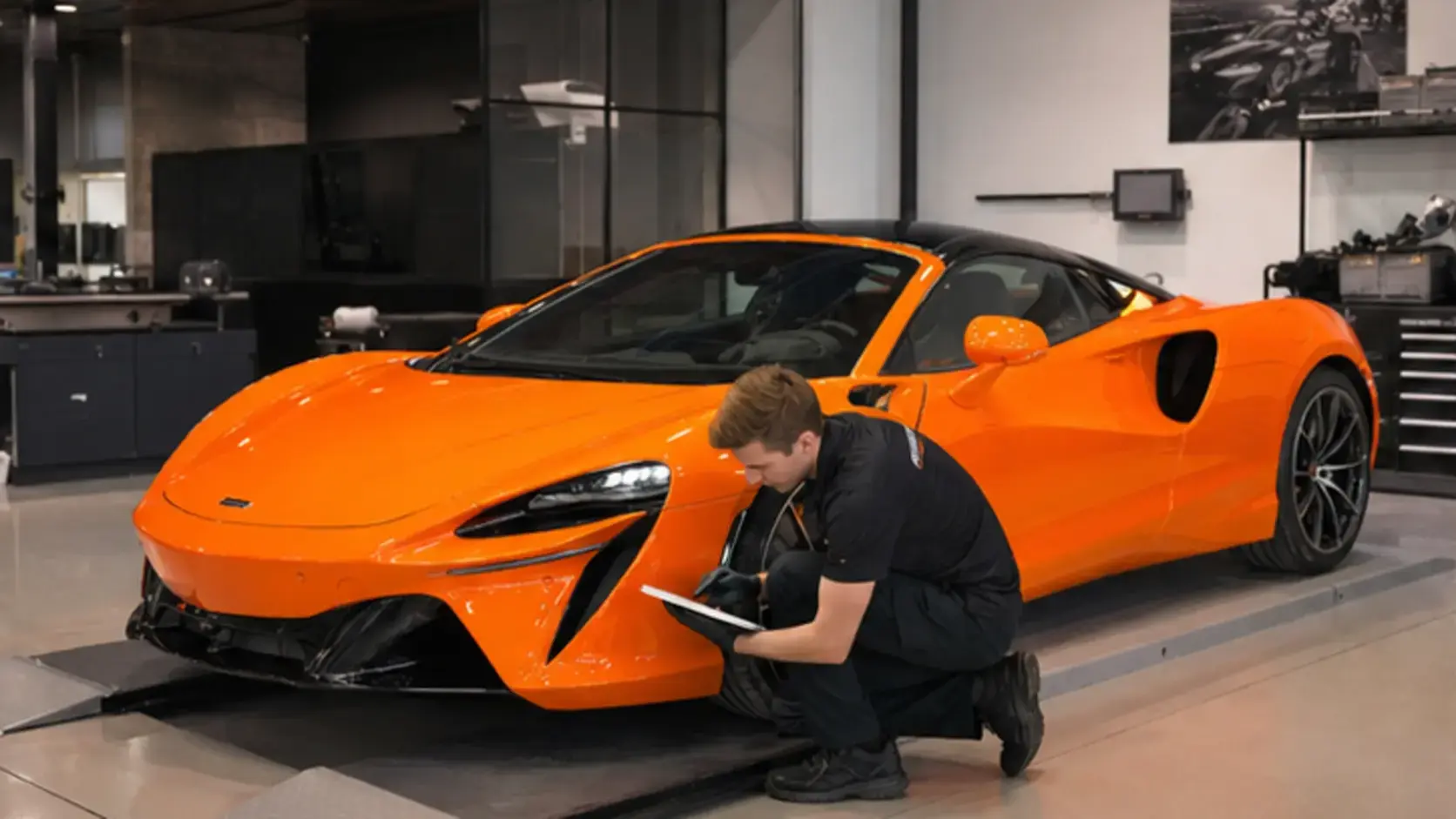
Tell us whether the car rolls, steers and brakes normally, then send the warning, ride height and any visible leak or wheel damage. Stop driving after a serious temperature warning, fluid loss, unsafe tire or brake condition; arrange suitable recovery if safe road travel is uncertain.
The first inspection should identify urgency, the most useful next check and whether model-specific equipment or further access is needed.
Use these indicative Dubai ranges to plan routine work and focused testing. Hydraulic, carbon-ceramic, internal engine, transmission and high-voltage repairs require a vehicle-specific assessment and written scope.
| McLaren service | Estimated price | Scope used for the estimate | Important exclusions or variables |
|---|---|---|---|
| Advanced diagnostics | AED 550 to 1,250 | Focused scan, voltage support, data review and system testing after the free inspection | Programming, intermittent-fault monitoring and dismantling |
| Oil or minor service | AED 1,850 to 2,950 | Correct engine oil, oil filter, reset and standard condition checks | Model, oil quantity, additional filters and underbody access |
| Major scheduled service | AED 3,750 to 6,800 | Minor-service work plus the agreed scheduled filters, inspections and fluid items | Spark plugs, major fluids, overdue faults and model-specific parts |
| 12-volt battery replacement and setup | AED 1,650 to 4,250 | Low-voltage test, compatible battery and required setup | Battery type, charger history, access and related electrical faults |
| AC diagnosis or recharge | AED 300 to 650 | Vent-temperature and pressure check with recharge when suitable | Leaks, refrigerant type, compressor, condenser or cabin access |
| Brake pads per axle | AED 4,500 to 7,250 | Applicable road-car pad set and normal installation labor | Disc wear, carbon-ceramic components, calipers, sensors and material specification |
| Ride-height or hydraulic diagnosis | AED 650 to 1,350 | Stance record, scan review and focused pressure or visible-condition checks | Accumulator, damper, line, pump, control or calibration repair |
| Accessible cooling or fluid-leak repair | AED 1,750 to 6,250 | Repair of a confirmed external hose, seal or related source with normal access | Major dismantling, internal engine work and heat-damaged components |
| Transmission or driveline diagnosis | AED 700 to 1,600 | Fault scan, behavior review and focused mechanical checks | Clutch, internal gearbox, actuator and major driveline repairs are quoted after inspection |
Price scope: These are market-checked indicative Dubai ranges, not fixed quotations. Final price varies by the exact McLaren model, year, specification and condition, the reported issue, diagnostic findings, fault severity, access and protection requirements, labor time, parts source and availability, fluids, programming or calibration, and current supplier pricing. Artura high-voltage work requires separate capability and scope confirmation. Additional work and any applicable VAT are itemized in the written quotation.
Send the model, year, mileage, main symptom and a short description of when it happens. Photos of warning messages, ride height, wheel damage or visible leaks can help us plan the right first check and safe arrival.
Photograph the splitters, sills, affected wheel or tire, visible underbody concern, carbon panel or protection-film edge when it relates to the requested work.
Send the first warning and any following messages. Mention the drive mode, temperature, recent battery event and any change in steering, shifting or power.
Mention recent tire, wheel, brake, battery, fluid, engine, body, accessory, software or transport work that may relate to the new problem.
Tell us how long the car has been parked, whether battery support was used, and whether the symptom appears cold, hot, on short trips, on the highway or after track use.
See how model, ride height and vehicle protection shape the inspection plan. Send the VIN and any photos of existing marks or access concerns before the appointment.
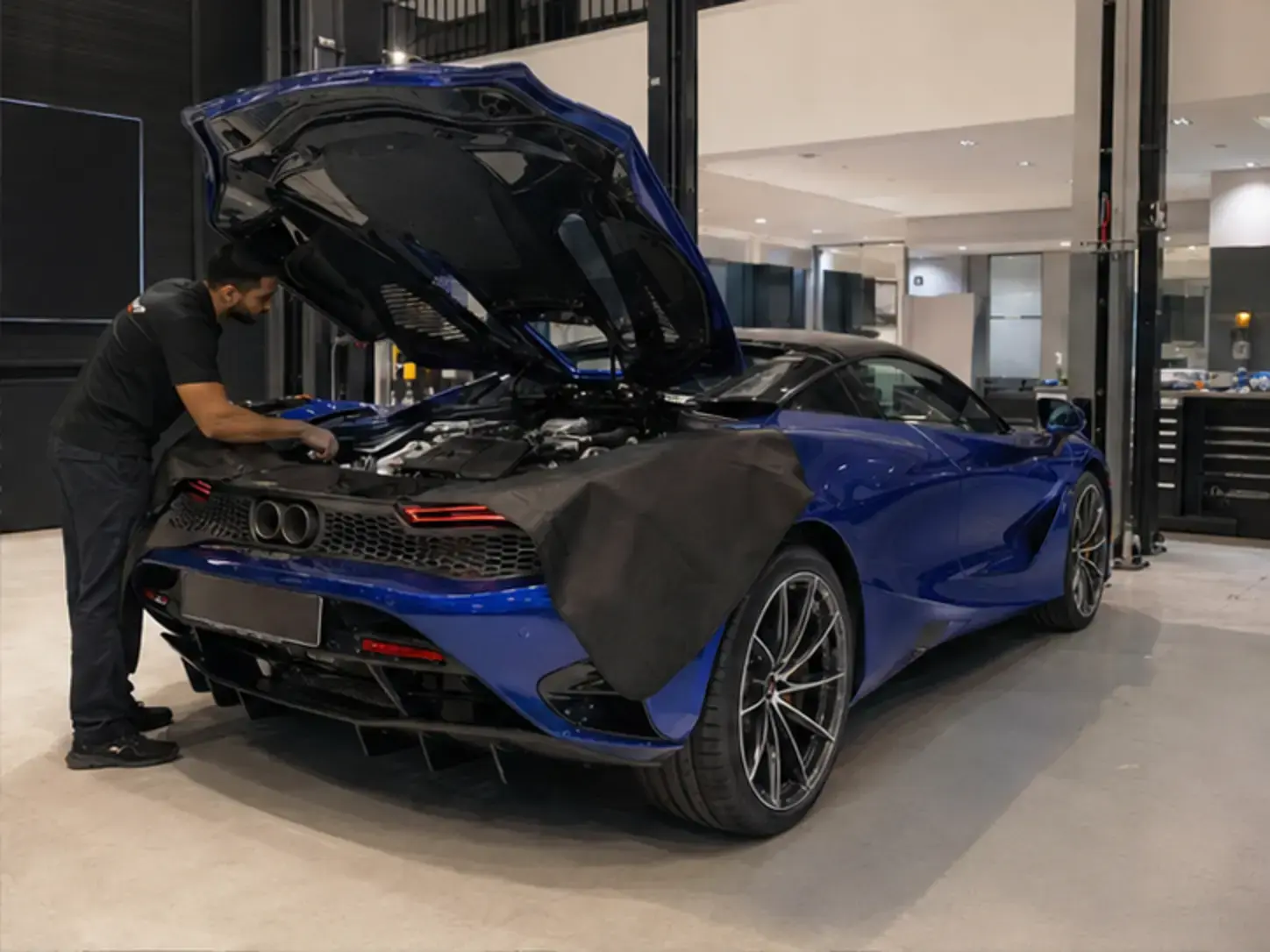
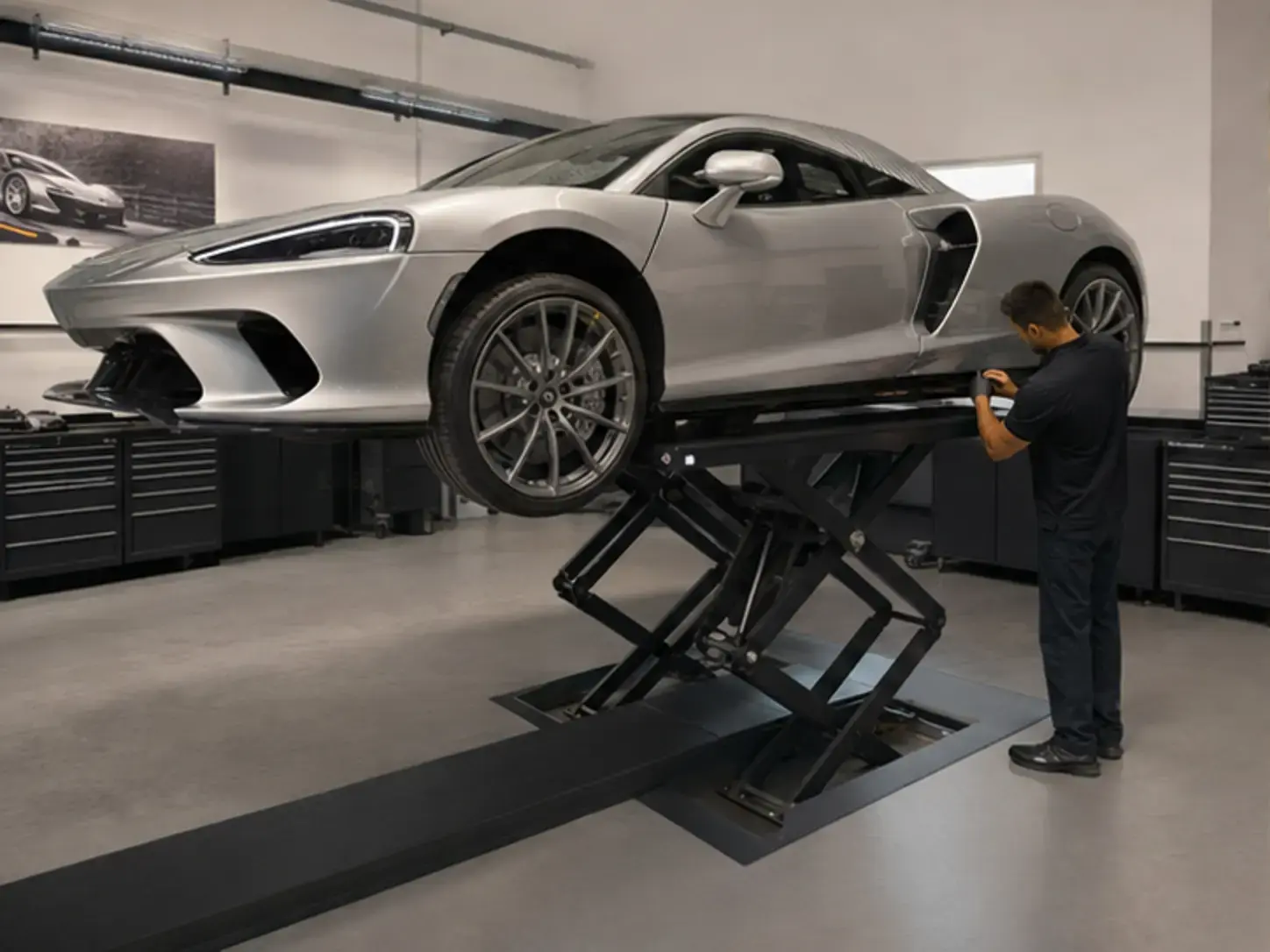
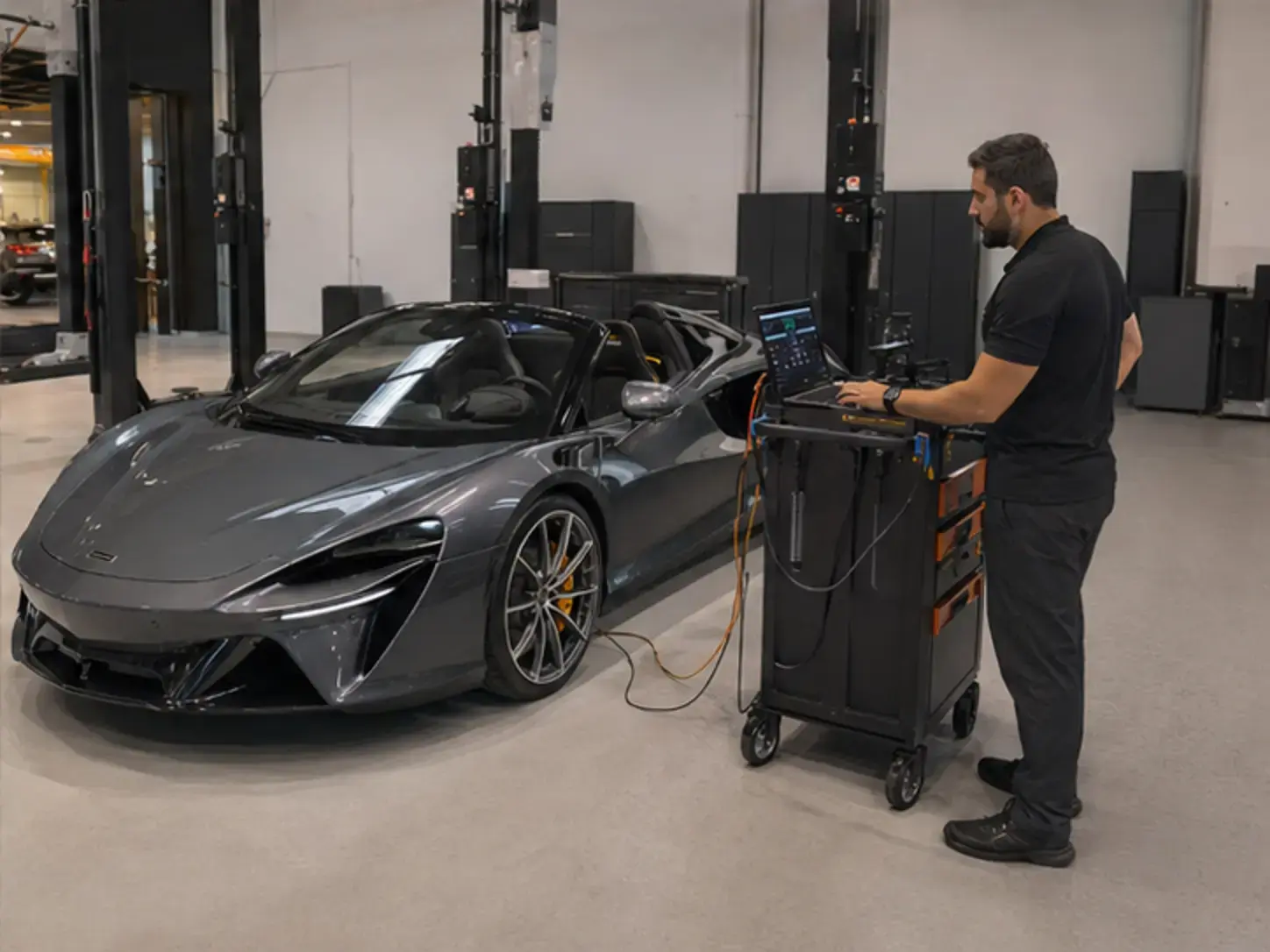
These examples show why the warning or symptom alone may not identify the failed part. The first checks should narrow the cause, then the quote should explain access, parts choices, exclusions and any further test needed.
| Condition presented | Checks that narrow the cause | What the quote should clarify |
|---|---|---|
| Fluid appears near the rear of the car | Fluid identification, position, cleaned recheck, levels, thermal history, underbody images and accessible source evidence. | Which source is confirmed and what remains hidden behind covers? |
| Warning follows storage or weak start | Battery state, support method, charging, connection condition, code chronology and faults returning under stable supply. | What remains active after low-voltage stability is established? |
| Brake vibration or unusual pedal feel | Tire and wheel condition, disc and pad state, hubs, bearings, joints, temperature and recent wheel work. | Which measurements locate the fault before brake materials are ordered? |
| Ride or steering changes after impact | Existing body and underbody marks, wheel or tire damage, ride height, joints, alignment references and steering data. | What physical correction precedes setup or calibration? |
| Engine response changes when hot | Exact mode, temperature, sound, warnings, live data, intake, fuel, ignition, exhaust and cooling observations. | Which result supports the next part or intrusive test? |
| Hybrid or charging message appears | Message sequence, external supply, connector context, low-voltage state along with non-invasive fault information. | Is the next operation within confirmed high-voltage capability? |
Send the VIN, model year, market and installed options. These guide parts, lifting points, fluid and brake specifications, access procedures and final checks.
We are an independent workshop, not a McLaren-authorized repair center. High-voltage isolation, carbon-structure repair, protected programming, advanced calibration and some active-system procedures may need model-specific equipment or outside support.
We will confirm whether the requested work can be completed, inspected only or referred before transport, dismantling or special-order parts are approved.
Separate combustion behavior, 12-volt supply, hybrid warnings, charging and any energized-system request.
Describe engine, heat, suspension, brake, tire and warning conditions, including mode and temperature.
Include storage history, ride height, long-distance use, wheel condition, fluids and cabin comfort symptoms.
Send the year, maintenance record, modifications, previous workshop work and precise operation requested.
Declare event history, tire and brake materials, setup changes, heat exposure and transport needs.
Careful protection and accurate records make the next service or fault check easier. Appearance alone does not confirm fluid, voltage, tire or cooling-system condition.
Follow the vehicle information for equipment and connection points. Record support dates, flat events and replacement details. Unstable supply can add faults.
Check pressure, age and sidewalls before a long drive or after storage. Record wheel repairs and keep all tire specifications coherent.
Photograph existing chips, lifted film edges and repair seams. Agree how covers, clips, adhesives and trim will be handled before access.
Keep dates, mileage, specifications, quantities and part references for oil, coolant, brake and transmission-related work. Find a fluid loss rather than repeatedly topping up.
Long parking can affect the battery, tires, seals and brake surfaces. Report the storage period and preserve warnings for assessment before a hard drive.
Review the body, wheels, dashboard, mileage, keys and accessories at collection. Store the diagnostic findings and exact component references with the service record.
Choose the service closest to the main problem. If several symptoms are involved or the cause is unclear, start with a McLaren diagnostic inspection. For a workshop visit covering several systems, see the McLaren workshop appointment guide.
Warning messages, a slow wake-up or several faults after storage can involve the 12-volt supply, wiring, communication, sensors or the system named by the message. We stabilize voltage, review fault chronology and inspect the connected system before recommending a part. Artura high-voltage propulsion concerns remain a separate confirmed scope.
View McLaren diagnosticsFluid traces, rising temperature, smoke, reduced response or new noise may come from a leak, heat-management component, air, fuel, ignition, lubrication or an internal fault. We inspect the source and relevant pressure, temperature or operating data, explain the supported repair options and recheck fluid level, temperature behavior and running quality.
View engine and coolingDelayed engagement, harsh shifts, shudder or vibration can involve mounts, shafts, controls, temperature, fluid condition or internal wear. We reproduce the concern safely, compare scan information with mechanical evidence and quote the confirmed repair. The original behavior is checked again after completion.
View transmission and drivelinePedal changes, vibration or noise can begin at the tires, wheels, hubs, bearings, brake surfaces or suspension rather than one brake part alone. We measure the connected components, prioritize safety items and verify pedal feel and braking behavior after the approved work.
See McLaren brakingA low corner, changing ride height, knock or steering concern may involve tires, wheels, joints, dampers, hydraulic components, sensors or control conditions. We record stance and surface condition, use an appropriate lifting plan and confirm the affected system before proposing repair or calibration.
View suspension and ride heightSend photographs of the splitter, sills, wheels and ride height, and state whether the car rolls, steers and brakes normally. We can use a remote van check for initial condition information, then confirm road arrival or low-angle collection. Free pickup and delivery apply when the repair job is approved and movement conditions are agreed.
Book a workshop visitChoose the specific system once the likely scope is clear. For a general workshop enquiry, use the garage route; for battery and low-voltage concerns, see the dedicated guide below.
The process moves from vehicle details and safe arrival to inspection, written approval and final checks.
We confirm the VIN, model, condition, clearance, warnings, service history and requested work.
We begin with the agreed visual, scan, voltage and measured checks while recording relevant vehicle surfaces.
Review the parts option, protection method, timing, exclusions and what happens if further access reveals another issue.
The original symptom and relevant functions are checked again, followed by a final condition review at handover.
Start with a free initial inspection. A remote check and low-clearance collection can be discussed for the car’s condition. Paid testing or repair is quoted before it begins.
First condition review and discussion of the reported symptom.
Advanced diagnostics, dismantling or specialist work is priced before approval.Visible condition, dashboard, battery and safe-movement planning.
Workshop testing follows when the cause cannot be confirmed remotely.We agree on location, ramp angle, rolling condition, access and schedule before collection.
Confirm movement conditions and the approved repair before transport.Share the other quote so we can compare the same parts category, labor and repair scope.
VAT, programming and exclusions must be compared like for like.These examples show how a complete quotation can be structured after inspection. They are planning examples, not records of completed customer work. The final total depends on the exact model, installed specification, parts choice, access, condition and any additional fault found.
Example total: AED 2,350
Assumes routine access with no active leak, damaged hardware or warning diagnosis. Additional filters and repairs are separate.
Example total: AED 6,800
Assumes the fitted road-car specification and serviceable discs. Carbon-ceramic parts, sensors, caliper work and disc replacement are excluded.
Example total: AED 3,200
Assumes normal battery access. Charger history, parked-current diagnosis, wiring faults and unrelated electrical repairs are quoted separately.
A written quote should make the diagnosis, chosen repair and responsibility clear before access or parts ordering begins.
The quote connects the symptom and supporting checks to access, surface protection, parts, fluids, labor, VAT, setup or calibration, and final verification.
We confirm the exact model and operation, especially hybrid, hydraulic, security and calibration work. If outside support is needed, agree on custody, transport and handover responsibility.
Confirm source, reference, special-order deposit or return limits, and any non-reusable fasteners or seals. Warranty terms apply to the specific approved job, labor and supplied components.
Newly visible damage or unavailable fasteners must be explained before extra work. For intermittent heat, pressure or warnings, agree safe test limits rather than repeatedly exposing the car to harm.
A slow wake-up, no-start event or battery that repeatedly loses charge needs the storage and charging history. A 12-volt concern is assessed separately from an Artura high-voltage propulsion request.
Read the McLaren 12-volt battery guideThe correct battery specification, connections and charging condition are checked before a replacement or wider electrical repair is proposed.
For scheduled maintenance planning, compare the scope, intervals, parts choices, and quote details in our McLaren service Dubai cost and inspection guide.
These answers cover common questions about safe arrival, independent workshop scope, diagnostics, parts and timing.
No. This is an independent workshop. We confirm the available equipment and current scope for the exact model and requested operation before the appointment.
Send the ride height, splitter, tire, wheel, steering and rolling condition. We can then discuss whether road arrival or recovery is suitable.
High-voltage propulsion procedures are separate from 12-volt support and require confirmation of current equipment and capability before transport.
Send the VIN, year, mileage, main warning messages and any relevant maintenance invoice, part reference, battery event or modification.
An inspection can compare the tires, wheels, hubs, bearings, brake materials and suspension before a repair is proposed.
Stop safely and avoid repeated testing. Share the warning message and any visible fluid loss so recovery and the next inspection can be planned.
Ask before purchasing. The part reference, source, condition, compatibility, setup needs and labor responsibility should be agreed in writing.
Relevant surfaces can be photographed at check-in, protected during access and reviewed again at collection.
Yes. The initial inspection is free. If advanced diagnostics, dismantling or specialized testing is required, the scope and price are explained before that work begins.
Pickup and delivery are free when the quoted repair job is approved. Ride height, rolling condition, location, access and scheduling must be confirmed before movement.
Send the McLaren model, year, mileage, warning message, ride height and movement condition. We will arrange the free inspection, explain whether a remote van check or low-clearance collection is appropriate and confirm the independent workshop scope before paid testing or repair begins.
Page updated September 2026.