Engine diagnosis, repair and rebuild in Al Quoz 4

Car Engine Repair Dubai

Get a clear diagnosis before spending on major engine work at our auto garage in Dubai. We inspect overheating, smoke, oil loss, coolant loss, misfires, knocking and low compression, then explain whether a focused repair, rebuild or replacement makes better financial sense.

Free workshop inspection Free pickup and delivery Al Quoz 4, Dubai
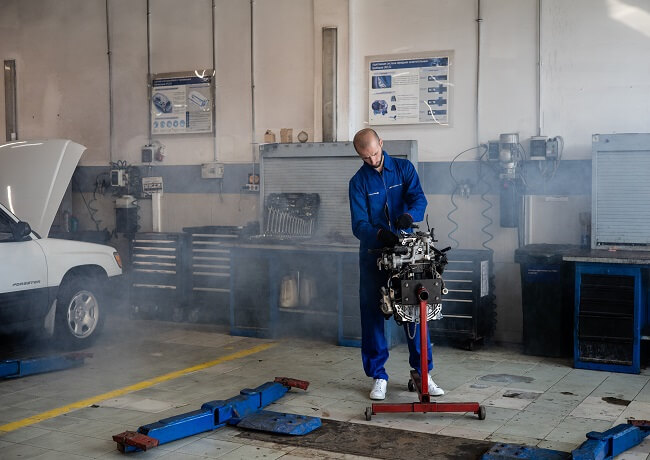
Technician completing car engine repair in Dubai
Free workshop inspection, free pickup and delivery, and clear engine repair options before major work begins.
Diagnosis before repairTesting guides the parts decision.
Written scope firstReview the work and estimated total.
Approval stays with youExtra damage is discussed before extra work.
Mobile assessment optionDedicated inspection van when suitable.
Choose the safe next step

Engine Warning? Act Before the Damage Spreads

The next step depends on what the car is doing now. Our car computer diagnostic service can support faults involving warning lights, sensors and control systems. A short description of the symptom is enough to begin. You do not need to identify the failed part yourself.

Do not keep restarting a severely overheated, oil-starved, knocking, or water-ingested engine. Repeated attempts can increase internal damage and the final repair cost.

Choose your next step

Stop and request recovery

Use this route for a red oil-pressure or temperature warning, heavy knocking, rapid fluid loss, thick smoke, severe shaking, or major power loss.

Arrange a workshop inspection

A steady check-engine light, mild hesitation, a small leak, or occasional cold-start rattle still needs timely testing. Avoid hard acceleration and long trips.

Ask about an on-site assessment

Our dedicated inspection van can assess suitable problems at your location. Major engine repair, rebuild, and replacement work normally continues in the workshop.

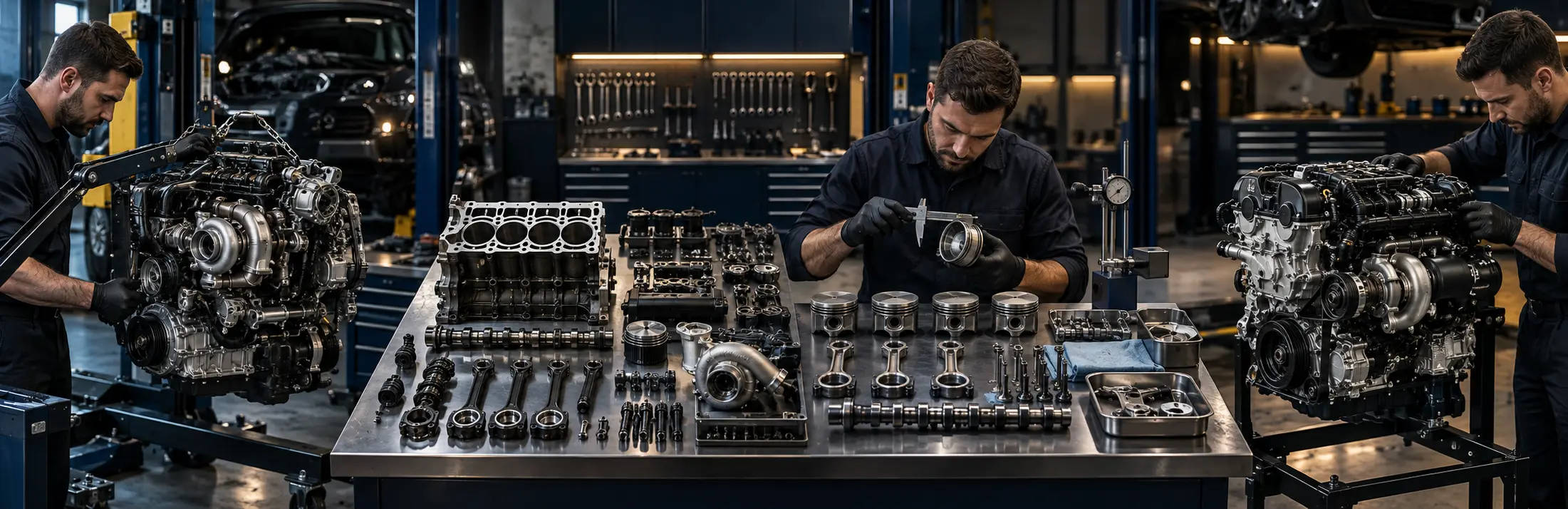
Engine rebuild sequence from removal and dismantling to measurement and reassembly
Engine rebuild sequence

From Strip-Down to Measured Reassembly

01Remove and inspect
02Dismantle and clean
03Measure internal parts
04Reassemble and test
Estimated costs

Car Engine Repair Prices in Dubai

These are market-based estimated ranges, not fixed quotes. The final amount depends on the vehicle, engine layout, test results, parts choice and damage found after dismantling. We confirm the work and customer-payable total in writing before repair. Estimates below include typical labor and relevant basic consumables. VAT treatment is confirmed on the written quote.

Engine serviceEstimated totalTypical scopeUsual timing
Computer scan and engine inspectionAED 150 to 350Fault-code scan, visual checks and initial test plan. Workshop inspection is currently free.45 to 90 minutes
Ignition or minor running repairAED 350 to 1,800Diagnosis plus items such as plugs, a coil, a sensor, hose or cleaning when confirmed faulty.Same day in many cases
Oil leak repairAED 450 to 3,500Seal or gasket replacement, cleaning, fluids and leak recheck. Accessibility changes labor substantially.4 hours to 2 days
Cooling-system and overheating repairAED 550 to 4,500Pressure testing and the confirmed radiator, thermostat, pump, hose or related repair.Same day to 3 days
Head-gasket or cylinder-head repairAED 2,800 to 8,500Strip-down, head assessment, gasket set, bolts, machining where needed, fluids and testing.3 to 7 working days
Engine rebuild or overhaulAED 6,500 to 22,000+Measured dismantling, machining as required, internal parts, seals, reassembly and testing.7 to 20 working days
Used or remanufactured engine replacementAED 5,500 to 30,000+Compatible engine, removal and installation, fluids, adaptation and final checks. Unit cost varies widely.3 to 10 working days after sourcing

Why the range is wide: a four-cylinder engine with easy access costs less to dismantle than a turbocharged V6 or V8. Cylinder-head condition, block damage, machining, turbo contamination, parts availability and whether related cooling faults must be corrected all affect the total. Equivalent repair scope can be 65% to 70% lower than agency pricing, depending on parts and vehicle.

Choose the right route

Repair, Rebuild or Replace the Engine

01
Targeted work

Focused engine repair

Best when testing identifies a contained fault and the engine’s core mechanical condition is healthy. Common work includes ignition repairs, injector service, intake leaks, cooling components, oil seals, timing-related repairs and cylinder-head work. This option normally preserves the original engine and avoids unnecessary dismantling.

Choose it when: compression and oil pressure are acceptable, contamination is limited and the repair cost is reasonable compared with the car’s value.

02
Measured overhaul

Engine rebuild

Best when the original engine is valuable, compatible replacements are uncertain, or measured internal wear can be corrected properly. The engine is dismantled, cleaned and measured. Required bearings, rings, seals, gaskets and damaged parts are replaced, while machining is completed only where measurements require it.

Choose it when: the block and main castings are usable and there is a defensible parts and machining plan.

03
Complete unit route

Engine replacement

Best when the existing unit is seized, cracked, heavily overheated or uneconomical to rebuild. A replacement may be used, remanufactured or new. Compatibility, engine code, electronics, accessories, condition and supplier terms must be checked before purchase.

Choose it when: a traceable compatible unit offers a better total cost, timeline and risk than rebuilding the damaged engine.

Safety first

Is It Safe to Drive With an Engine Problem?

Stop and request recovery

  • Red oil-pressure or temperature warning
  • Heavy metallic knocking or grinding
  • Rapid coolant or oil loss
  • Thick continuous smoke
  • Severe shaking, stalling or major power loss
  • Engine ran through deep water or may be hydrolocked

Switch off safely. Do not keep restarting an overheated, oil-starved or water-ingested engine.

Book an inspection soon

  • Steady check-engine light with normal running
  • Small oil leak without low oil level
  • Mild hesitation or increased fuel use
  • Occasional cold-start rattle
  • Coolant level slowly dropping
  • New smell without smoke or overheating

Monitor the gauges and fluid levels. Avoid long trips and hard acceleration until the cause is checked.

Symptoms and next steps

Common Engine Problems We Diagnose

What you noticePossible causesHow serious?Useful next check
White exhaust smoke and coolant lossHead gasket, cracked head, coolant entering a cylinder or, on some engines, another coolant-fed componentHighCooling pressure test, combustion-gas check and compression or leak-down testing
Blue smoke or high oil useTurbo seals, valve-stem seals, piston rings, PCV fault or external leak reaching hot partsMedium to highLeak inspection, PCV and turbo checks, spark-plug reading, compression and leak-down tests
Knocking or low oil pressureLow oil level, wrong oil, worn bearings, blocked pickup, oil pump fault or internal damageCriticalStop engine, verify oil level, measure mechanical oil pressure and inspect the filter or sump
Misfire and rough idlePlug, coil, injector, air leak, carbon buildup, low compression or timing issueVariesScan live data, isolate the cylinder and test ignition, fueling and compression
OverheatingLeak, fan issue, thermostat, water pump, restricted radiator, trapped air or internal sealing faultHighPressure test, fan activation check, temperature comparison and coolant-circulation assessment
Loss of powerBoost leak, turbo fault, fuel delivery, blocked exhaust, sensor error, timing deviation or low compressionVariesScan under load, smoke-test intake, review fuel and boost data, then test mechanical condition
Engine fault map

Where Common Engine Problems Begin

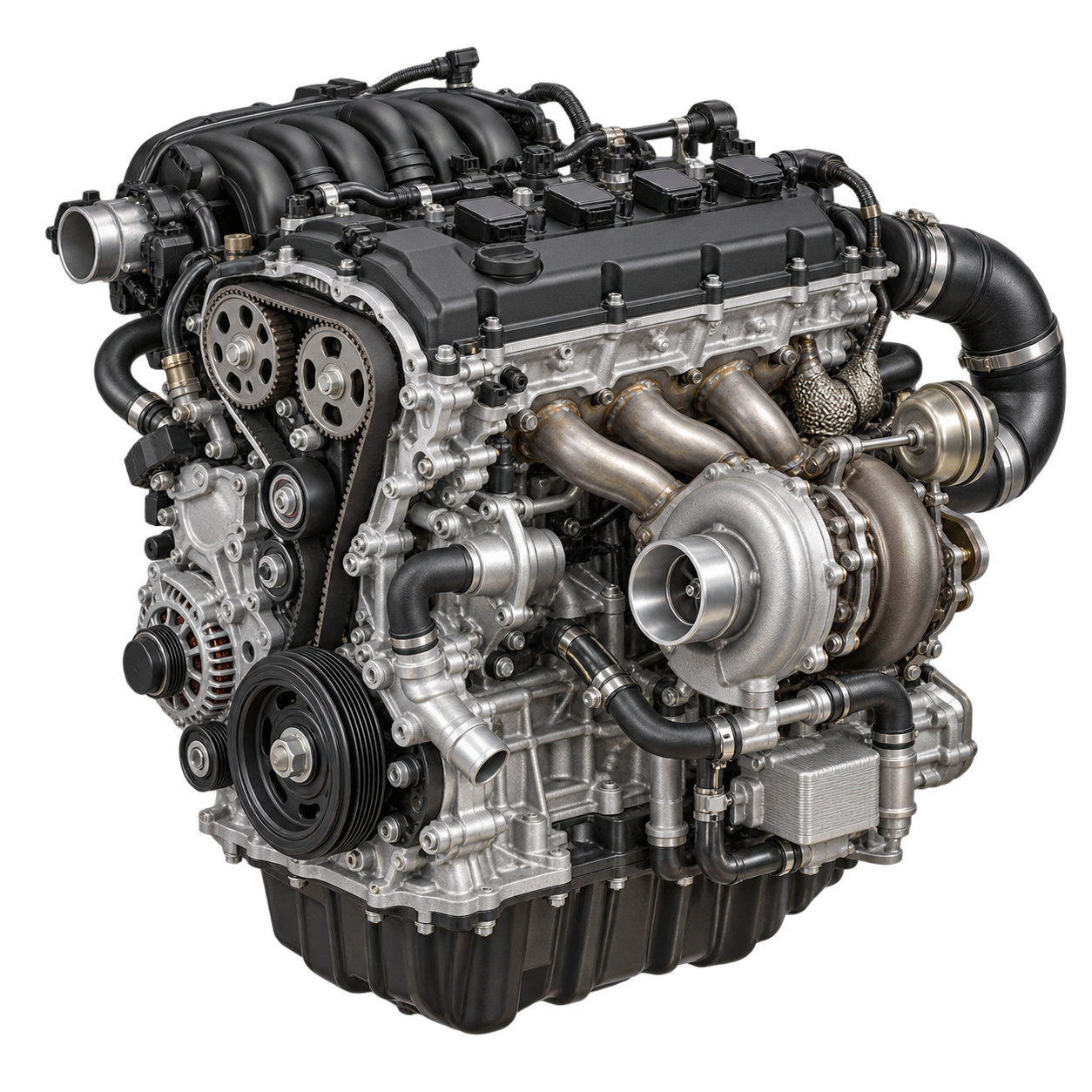
The same symptom can begin in different areas. These six inspection zones help explain why testing comes before a repair or parts decision.

Modern turbocharged car engine with six labeled inspection areas
Timing driveRattle, correlation faults, difficult starting or loss of synchronization.
Ignition and injectionMisfires, rough idle, hesitation, weak acceleration or increased fuel use.
Intake and airflowAir leaks, unstable idle, lean faults and incorrect airflow readings.
Turbo and boostLow power, whistle, smoke, oil in charge pipes or boost-control faults.
Cooling and cylinder headOverheating, coolant loss, white smoke, low compression or mixed fluids.
Lubrication and lower engineLow oil pressure, bearing noise, metal debris, oil loss or internal wear.
Diagnosis before parts

How We Check an Engine Fault

1

Confirm the complaint

We record when the symptom happens, review warning lights and inspect oil, coolant, leaks, belts, hoses and visible damage. A controlled road test is used only when the car is safe to drive.

2

Test the related system

Depending on the fault, checks may include diagnostic scanning, live data, cooling pressure, smoke testing, fuel pressure, mechanical oil pressure, compression, cylinder leak-down, borescope inspection or oil-filter examination.

3

Prove the repair scope

We compare the findings with the vehicle’s engine design and fault history. Major dismantling is recommended only when external tests justify it. You receive the options and estimated total before approving work.

Avoid expensive guesswork

Engine Faults Commonly Misdiagnosed

A warning code is not always a failed part

A lean-mixture code can come from an intake leak, weak fuel supply or incorrect sensor reading. A cylinder-misfire code does not automatically mean a coil is defective. Replacing the named part without testing the circuit and mechanical condition can waste money and leave the original problem unresolved.

Overheating needs a root-cause check

Replacing only the head gasket can fail if a warped head, cracked casting, blocked radiator, weak fan, damaged water pump or earlier coolant contamination is missed. We check the cooling system and the consequence of the overheat together.

Smoke color alone cannot confirm the repair

White vapor can be normal condensation, while persistent white smoke with coolant loss points toward internal coolant entry. Blue smoke can come from turbo seals, valve seals, rings or a crankcase-ventilation fault. Testing determines which repair is justified.

Noise may come from outside the engine

A failed pulley, tensioner, compressor or flywheel can sound like internal engine damage. Listening tests, belt isolation and oil-pressure checks help prevent an unnecessary rebuild or replacement.

Clear evidence before approval

How We Keep an Engine Repair Decision Transparent

Trust should come from findings you can understand, a scope you can compare, and a decision you control. Our car repair advice explains how to compare evidence and written estimates. A fault code, unusual noise, smoke color, or price estimate is a starting point, not proof that an expensive part must be replaced.

01 / Test

Testing is tied to the symptom

The inspection starts with what the car is doing, then uses the relevant checks to narrow the cause. Depending on the fault, that may include live data, pressure testing, compression, leak-down, borescope images, smoke testing, oil-pressure measurement, or inspection for contamination and metal debris.

02 / Explain

The repair scope is explained first

Before major work begins, the proposed repair should identify the suspected or confirmed fault, the parts route, the expected labor, the estimated customer-payable total, and anything that cannot be known until dismantling. Repair, rebuild, and replacement options are compared when more than one route is sensible.

03 / Approve

You remain in control of changes

If dismantling exposes additional damage, the new finding and revised cost are discussed before that extra work proceeds. A conditional finding is described as conditional. It is not presented as certainty simply to make the first quote look complete.

Five things your written quote should make clear

  • The finding: what testing indicates and which symptom it explains.
  • The proposed work: what will be repaired, rebuilt, replaced, cleaned, machined, programmed, or tested.
  • The parts route: genuine, OEM-quality, aftermarket, used, or remanufactured where applicable, subject to confirmed availability.
  • The expected total: labor, parts, fluids, basic consumables, VAT treatment, and any clear exclusions.
  • The uncertainty: what may change only after access, measurement, machining assessment, or supplier confirmation.

No blind promise: we can give a useful estimate from the model and symptom, but the final repair decision follows the inspection. If the evidence does not justify major engine work, the recommendation should not assume it.

Realistic cost planning

Three Engine Repair Cost Scenarios

The following illustrative entries show how scope changes the total. They are not claims about completed customer vehicles. The exact amount for your car follows inspection and parts confirmation.

Example job 1

2018 Toyota Camry 2.5L

Work: overheating diagnosis, thermostat and water-pump replacement, coolant refill, bleeding and temperature verification.

Parts: quality replacement pump and thermostat, subject to brand availability.

Example total: AED 1,850.

Example job 2

2016 BMW 528i

Work: oil-leak diagnosis, valve-cover assembly and gasket replacement, cleaning, oil-level correction and leak recheck.

Parts: complete replacement cover with integrated ventilation components.

Example total: AED 2,950.

Example job 3

2017 Nissan Patrol 5.6L

Work: engine removal, measured overhaul, bearing and ring service, gasket set, required machining, fluids and installed testing.

Parts: internal parts selected after measurement and inspection.

Example total: AED 14,800.

What happens next

Our Engine Repair Process

1

Request

Call or WhatsApp with the model and a short description. Choose a workshop visit, free pickup and delivery, or ask whether an on-site inspection is suitable.

2

Inspect and quote

We perform the relevant checks and explain the evidence. The quote separates the intended repair, parts choice, labor and any work that depends on dismantling.

3

Approve and repair

No major repair begins until you approve the scope. If dismantling reveals additional damage, the revised finding and cost are discussed first.

4

Reassemble correctly

Specified tightening procedures, sealing surfaces, fluids and timing references are followed for the approved work. Related components are checked while access is available.

5

Test

Final checks may include leak inspection, temperature monitoring, oil-pressure confirmation, fault-code review, adaptation and a controlled road test.

6

Handover

You receive a clear summary of the completed scope, the parts route used, and practical running-in or follow-up guidance when it applies. Ask any remaining questions before collection or free delivery.

Different engines need different checks

Petrol, Diesel, Turbo and Hybrid Engine Repair

Petrol and turbocharged engines

Direct-injection petrol engines can develop injector, high-pressure fuel, carbon, ignition and crankcase-ventilation faults. Turbo engines also need boost-leak, lubrication and charge-air checks. When a turbo fails, the intake, intercooler, oil feed and exhaust side must be assessed so debris or restricted oil supply does not damage the replacement.

Timing-chain noise, variable-valve timing faults and oil-pressure issues should be tested early. A timing code can reflect a sensor or control issue, but it can also warn of mechanical wear that should not be ignored.

Diesel and hybrid vehicles

Diesel power loss or smoke may involve injectors, boost control, EGR, particulate filtration, compression or fuel pressure. Diagnosis should separate an emissions-system restriction from an internal engine fault before dismantling.

Hybrid vehicles require safe isolation awareness and model-specific procedures because the combustion engine operates with high-voltage systems and may start automatically. Engine-related work must consider cooling loops, electronic controls and hybrid operating conditions.

Parts and value

How to Control the Total Repair Cost

Approve testing first

A targeted diagnosis usually costs far less than replacing multiple parts by guesswork. Ask what the test will prove and how it changes the repair decision.

Compare complete totals

For rebuild and replacement options, compare the engine unit, machining, labor, fluids, seals, programming, related cooling work and follow-up checks. A low unit price is not the installed total.

Match parts to the plan

Genuine, OEM-quality, aftermarket, used and remanufactured parts have different costs and risks. The suitable choice depends on the component, vehicle value, intended ownership period and supplier support.

DIY checks should be limited to safe basics such as noting warning lights and checking fluid levels when the engine is cold and the owner’s manual permits it. Internal timing, compression diagnosis, overheating teardown and engine lifting require workshop equipment and technical procedures.

Dubai conditions

Prevent Repeat Engine Damage

  • Use the manufacturer-specified oil grade and a suitable filter.
  • Correct oil or coolant loss instead of repeatedly topping up.
  • Inspect the cooling system before peak summer heat.
  • Allow turbo engines to reach normal operating condition before heavy load.
  • Investigate a changing temperature gauge immediately.
  • Do not drive through water that may reach the intake.
  • Follow the correct service schedule for the model and usage.
  • Keep records of oil, cooling and timing-system work.
  • Scan persistent warning lights before they create secondary damage.
  • Recheck fluid levels after major engine work as instructed.
Questions from Dubai drivers

Car Engine Repair FAQs

How do I know whether my engine needs a rebuild?

A rebuild becomes a serious option when testing confirms internal wear or damage across multiple cylinders, bearings, pistons, rings or sealing surfaces. Compression, leak-down, oil-pressure, borescope and dismantling measurements guide the decision. A single failed external component does not justify an overhaul.

Can you give a final engine repair price by phone?

We can provide an estimated range after you share the model and symptom. A final price usually requires inspection because smoke, overheating, misfire and oil loss can have very different causes. The written quote confirms the scope before work begins.

Is a used engine better than rebuilding mine?

It depends on the condition and traceability of the replacement, compatibility, installed total and the rebuild potential of your original unit. A cheaper used engine can become expensive if its engine code, electronics or condition are not checked. We compare both routes when they are viable.

How long does an engine rebuild take?

A typical rebuild may take 7 to 20 working days. The timeline depends on dismantling findings, machining, parts availability and reassembly testing. Simpler cylinder-head work may be faster, while uncommon or performance engines can take longer.

Do you repair engines for all car brands?

We assess petrol, diesel, turbocharged and selected hybrid vehicle engine concerns across many European, Japanese, American, Korean and other makes. The exact repair route depends on model-specific tooling, information, parts and the engine’s condition.

Can you collect a car that should not be driven?

Yes. Free pickup and delivery are available. Tell us if the engine overheated, lost oil pressure, makes a heavy knock or cannot run, so the vehicle can be handled safely. Do not restart a severely damaged engine simply to move it.

What is included in an engine inspection?

The workshop inspection starts with the complaint, warning lights, fluid condition, leaks and basic operating checks. Additional diagnostic tests depend on the symptom. We explain any paid dismantling or specialist testing before it is carried out.

Can an on-site mechanic complete the engine repair?

Our dedicated inspection van can help assess some problems on-site. Major engine repairs, rebuilds and replacements normally require workshop lifting, measuring, cleaning and testing equipment. The first assessment determines the safe next step.

Engine help in Al Quoz 4

Book a Free Engine Inspection

Send your car model and the symptom. We will help you choose a workshop visit, free pickup and delivery, or a suitable on-site inspection. You do not need to diagnose the fault before contacting us.