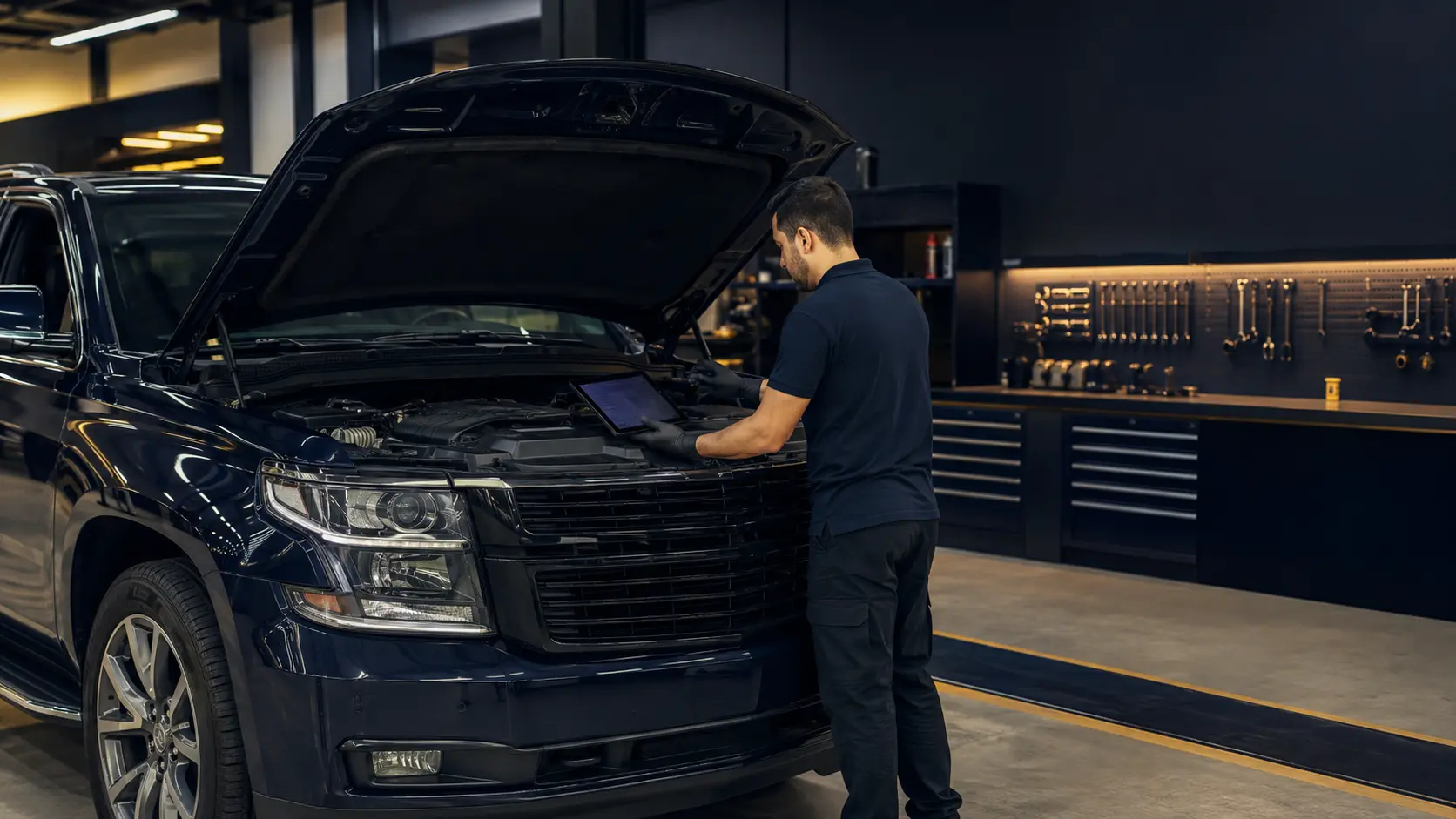
Independent Chevrolet workshop route

Chevrolet Repair Dubai

Book Chevrolet diagnostics, maintenance and mechanical or electrical repair through one Al Quoz workshop contact. Start with the symptom, confirm the installed vehicle specification, then approve a written scope supported by inspection evidence.

Broad brand ownerThis page routes Chevrolet repair intent without replacing specialist service pages
Diagnosis before partsFault codes and common failures are clues, not automatic parts orders
Independent workshopNo Chevrolet dealer or manufacturer-authorisation claim
Written approvalConfirm parts, labour, timing, exclusions and verification
Route by symptom

Chevrolet problems we can assess

A broad Chevrolet repair page should help an owner choose the first inspection route. It should not pretend that every warning, noise or driveability change has one universal answer.

01

Warning lights and poor performance

Check-engine warnings, reduced power, hesitation, rough running, starting difficulty or stalling can involve air, fuel, ignition, sensors, wiring, voltage supply, exhaust control or internal engine condition. A scan provides context, while live data and targeted testing help identify the next step.

02

Cooling, leaks and overheating

A rising temperature, coolant loss, fan concern, visible leak or steam needs cautious handling. Stop safely if overheating occurs. Inspection may cover pressure evidence, hoses, radiator, thermostat operation, pump circulation, fan control, wiring and signs of combustion or oil contamination.

03

Transmission and driveline behaviour

Delayed engagement, shift flare, harsh changes, vibration or driveline noise should be recorded by speed, gear, temperature and load. Fluid condition where serviceable, fault data, mounts, shafts, transfer components and internal transmission evidence may require separate checks.

04

Brake, steering and suspension changes

Grinding, a soft pedal, pulling, heavy steering, clunks, uneven ride height or vibration are safety-relevant symptoms. Tyres, alignment, brakes, wheel bearings, joints, bushes, dampers and electronically controlled assistance can influence how the vehicle feels.

05

AC and electrical faults

Weak cooling, intermittent blower operation, battery discharge, flickering lights or multiple warnings can require both mechanical and electrical assessment. Refrigerant pressure, airflow, compressor control, sensors, fuses, grounds, battery and charging condition may be connected.

06

Maintenance and inspection planning

The correct service scope depends on model, engine, mileage, use, age and available history. Oil, filters, fluids, plugs, belts and other items should follow the applicable schedule and actual condition rather than a generic package applied to every Chevrolet.

Workshop sequence

How Chevrolet diagnosis progresses

The order changes when there is an immediate safety risk, but a useful process still connects the customer complaint to evidence and a clearly bounded estimate.

Confirm the complaint

Record the exact behaviour, when it began, operating temperature, warning messages, recent work and whether the concern can be repeated safely. Photos or videos captured while parked can preserve intermittent evidence.

Identify the vehicle

Use the VIN, model year, engine and driveline details to avoid treating different Chevrolet variants as identical. Parts and procedures can change within the same model name.

Inspect before dismantling

Check visible leaks, wiring, hoses, tyres, fluid condition, mounting points and other accessible evidence. Obvious damage should be verified as relevant to the complaint rather than assumed to explain everything.

Scan and measure

Read available manufacturer-specific data, stored and pending faults and live values where supported. Follow with pressure, voltage, temperature, mechanical or leak tests selected from the evidence.

Define the repair scope

Separate confirmed work from diagnostic next steps. Identify the proposed parts basis, labour, supporting operations and what would require new approval after access or dismantling.

Verify the result

Repeat the original operating conditions when safe, inspect the completed work and confirm relevant faults, leaks, temperatures, noises or road behaviour have been addressed within the approved scope.

Service boundaries

What belongs on this brand hub

This Chevrolet page owns broad brand-repair intent and routes deeper needs to the correct specialist page. It should not duplicate every service page in full.

Engine and performance

Use this hub for a broad Chevrolet concern, then continue to the focused Chevrolet engine repair page when inspection points to internal engine, timing, cooling or performance work. The specialist page explains testing and repair boundaries in more detail.

Transmission concerns

Shift quality and driveline symptoms need a focused route. The Chevrolet transmission repair page covers diagnosis, fluid and mechanical decisions without assuming a complete gearbox replacement.

Computer diagnostics

A dashboard warning does not automatically name a failed part. Our computer diagnostic service explains how codes, freeze-frame data, live readings and physical tests work together.

Maintenance

Routine work should follow the installed engine and service history. The car service Dubai page outlines maintenance planning separately from fault diagnosis.

Safety systems

Use the Chevrolet brake repair page for braking symptoms and the Chevrolet suspension repair page for clunks, pulling and ride changes. If vehicle control changes suddenly, stop and call before driving.

Independence

Auto Repair UAE is an independent multi-brand workshop. This page does not claim Chevrolet dealer status, factory authorisation, manufacturer certification or access to every dealer-only online function.

Estimate clarity

What changes Chevrolet repair cost

A useful estimate is based on the confirmed fault and vehicle configuration. It should not rely on unverified discounts, “best” claims or one price for every model.

Decision areaWhat changes the scopeWhat to confirm
Initial diagnosisA Chevrolet fault that appears only under heat, load, towing or slow traffic may require a different test route from a visible leak or worn component.Confirm the first scan, safety and mechanical checks, the planned reproduction conditions and when extra diagnosis needs approval.
Vehicle specificationEngine, driveline, trim and market specification can change Chevrolet part numbers, supporting hardware and programming requirements.Confirm VIN-linked fitment, part brand or condition, included hardware, availability, programming needs and written warranty.
Model and accessSUV, pickup and passenger-car layouts, previous work and seized hardware can produce very different access and labour requirements.Ask what inspection and access is included and which decisions remain conditional after covers or assemblies are removed.
Connected workFluids, seals, alignment, module setup or checks to cooling, charging and driveline systems may support the confirmed repair.Confirm which connected operation is included, excluded or depends on measurement, scan or dismantling findings.
Result verificationThe original warning, leak, temperature, shift or drivability concern should be retested under safe comparable conditions.Confirm which scan, pressure, temperature, leak or controlled road checks will be repeated at handover.
Chevrolet quote boundaryModel and year alone may omit the installed engine, driveline, options, previous repairs and the current condition of the vehicle.Confirm VIN, diagnosis, labour, parts, fluids, programming, VAT, exclusions and the written approval route.
Models and preparation

Model-aware booking details

Model names help route the enquiry, but the VIN and installed equipment determine parts and procedures. Share modifications, towing use, off-road use, accident history and non-standard wheels where relevant.

Chevrolet model coverage

Enquiries may include Spark, Groove, Captiva, Equinox, Traverse, Tahoe, Suburban, Camaro, Corvette, Silverado and other Chevrolet vehicles. This list is not a claim that every part or programming function is immediately available; availability is confirmed for the exact vehicle and repair.

SparkGrooveCaptivaEquinoxTraverseTahoeSuburbanCamaroCorvetteSilverado
  • Bring the VIN and current mileage.
  • Photograph warning messages before they disappear.
  • List recent repairs, battery work or fluid top-ups.
  • Describe whether the symptom is cold, hot, intermittent or load-related.
  • Keep wheel-lock keys and security adapters with the vehicle.
  • Ask which findings are confirmed and which remain conditional.
Owner preparation

Plan the visit around evidence

A clearer booking reduces repeat diagnosis and helps the estimate distinguish urgent repairs from maintenance or optional work.

Intermittent symptoms

Write down the conditions that trigger the concern: cold start, hot idle, highway speed, uphill load, AC operation, refuelling or rain. Note whether restarting changes it. Intermittent problems can be difficult to reproduce after the vehicle arrives, so a safe photo or video captured while parked can preserve a warning message, sound or gauge reading.

Previous repair information

Share invoices or a simple list of recent work, especially battery replacement, jump-starting, cooling-system repairs, transmission service, tyre changes or accident work. This history does not prove that a prior repair caused the new issue, but it helps the technician understand what was disturbed and which tests have already been attempted.

Fluid and leak evidence

Do not wash away a new leak before the first inspection unless safety requires cleanup. Record the colour, smell, approximate location and whether it appears after parking, driving or using the AC. Avoid mixing fluids or repeatedly topping up an unknown leak because that can conceal the rate of loss and create a larger system problem.

Modified or working vehicles

Tell the workshop about engine tuning, non-standard wheels, suspension changes, towing equipment, heavy-load use or off-road operation. These details can change baseline behaviour, parts selection and diagnostic priorities. A vehicle used for towing or commercial loads may need different questions from the same model used mainly for city driving.

Repair priority

Ask the estimate to separate safety-critical work, work needed to resolve the reported fault, maintenance due by schedule and optional improvements. This makes it easier to approve the right sequence without presenting every observation as an emergency or hiding a required repair inside a broad service package.

Handover questions

At collection, ask what caused the symptom, which parts were fitted, what verification was completed and whether any condition remains. Keep the invoice and diagnostic summary with the vehicle history. If a warning or behaviour returns, record the exact circumstances and contact the workshop before clearing codes or authorising unrelated parts elsewhere.

Dubai operating conditions

High ambient heat and slow traffic can expose a marginal cooling, charging or AC problem, but the weather is not a diagnosis. Record whether the Chevrolet changes after idling, in the hottest part of the day or during a longer highway run. Dust can affect filters and exposed parts, yet replacement should follow actual condition and the applicable maintenance schedule rather than an invented local interval.

Road-test boundaries

A technician may need to reproduce noise, vibration, shift or performance behaviour, but a road test is not appropriate when brakes, steering, tyres, overheating or major leaks make the vehicle unsafe. In that case the first assessment should happen stationary or after recovery. Ask what was reproduced and how the test conditions compare with the original complaint.

Planning later work

An inspection may identify wear that is not causing the current symptom. Ask for measurements, urgency and the consequence of delay so future maintenance can be planned separately. This avoids presenting every observation as a failure while still documenting items that deserve monitoring. A clear later-work list should not be mixed into the invoice as completed work.

Common questions

Chevrolet repair questions

These answers help Chevrolet owners route the symptom correctly and distinguish confirmed repairs from maintenance or conditional findings.

Can you quote Chevrolet repair from a warning light?

A warning can guide the first check, but a reliable repair quote normally requires the model details, fault context and inspection evidence. A code can identify a system or circuit condition without proving the failed component.

Is this a Chevrolet dealership?

No. Auto Repair UAE is an independent multi-brand workshop in Al Quoz. Any specialist programming, dealer-only security access or sublet requirement must be confirmed for the exact vehicle and job.

Should I drive a Chevrolet that is overheating?

Stop safely and switch the engine off if temperature rises sharply, steam appears or coolant is being lost. Continuing to drive can increase damage. Call before arranging workshop transport.

Do you replace parts before diagnosis?

The intended process is diagnosis before parts. Some visible failures may be clear, but electrical, performance and transmission complaints usually need testing to define the repair boundary.

What should a written estimate include?

Confirm the diagnosed item, parts basis, labour, supporting fluids or hardware, VAT where applicable, expected timing, exclusions and what requires separate approval.

How do I book?

Send the model, year, VIN if available, mileage, warning photo, main symptom and whether the vehicle is safe to drive. Use the appointment page or call the Al Quoz workshop.

Al Quoz workshop enquiry

Book Chevrolet repair in Dubai

Send the Chevrolet model, VIN, mileage, warning photo and the exact conditions in which the concern appears. The first assessment will separate confirmed repair, maintenance and conditional findings, then record the parts basis and handover checks in the written scope.