Independent Mercedes workshop in Dubai

Mercedes repair Dubai

Book maintenance, diagnosis or mechanical repair with a clear starting point. Send the model, year, mileage, dashboard message and the conditions in which the problem appears.

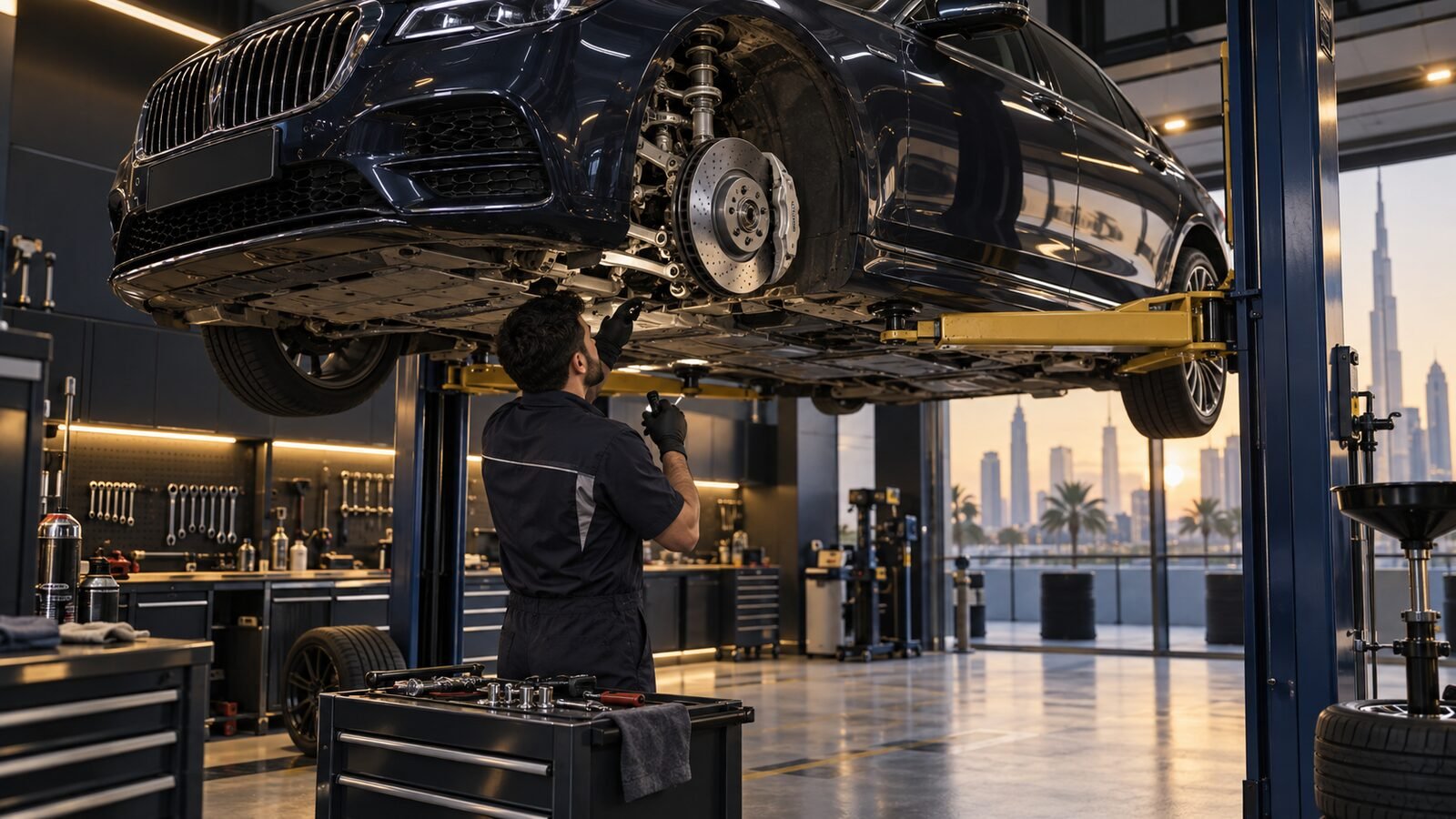
Dark blue Mercedes vehicle inspected by a technician in a workshop
Start with the complaintDescribe what changed and when.
Use the exact vehicleModel, year, VIN and fitted systems matter.
Approve defined workTesting and repair should be separate.
Confirm the resultRepeat the condition that caused the concern.

A useful first appointment

The symptom decides where diagnosis begins

A warning light, noise or change in driving behaviour is evidence, not a parts list. The first checks should match the affected system and the circumstances in which the concern can be repeated.

Tell the workshop whether the vehicle can be driven safely, whether the problem is getting worse and whether another repair, battery change, impact or long parked period came before it. This prevents unrelated maintenance from being confused with the fault you want investigated.

Dashboard and electrical concerns

Send the exact warning message and say whether it appears at startup, under load, after rain, after a battery event or after the vehicle has been parked. Stored data directs testing, but voltage, wiring, communication and component operation still need to be checked before a failed part is named.

Noise, vibration and handling

State the speed, road surface, steering position, braking input and whether the engine is pulling or coasting. A similar sensation can come from tyres, wheels, brakes, mounts, driveline parts or suspension. The conditions matter more than a guessed component name.

Temperature, leaks or smoke

Stop and call before driving if temperature rises, oil pressure is lost, smoke is heavy, fuel is leaking or steering or braking control changes. A photograph can help show the location and colour, but a remote message cannot confirm that the car is safe.

Starting and battery behaviour

Say whether the engine cranks, whether the lights dim, how long the car was parked and whether it recently needed a jump-start. Battery state, charging output, terminals, current draw and stored low-voltage events provide a better picture than an unloaded voltage reading.

AC and cabin control

Note whether cooling changes at idle, whether one side is warmer, which vents are affected and whether airflow changes with fan speed. Refrigerant condition is one possibility. Pressure, temperature, control, sensors, actuators and physical components may also need checking.

Recent work or an intermittent fault

Mention the last repair, tyre change, wheel alignment, battery replacement, coding event or impact. If the symptom is intermittent, record a short clip only when safely parked or when a passenger can do it. Include the outside temperature and driving condition.

Mercedes engine components prepared for inspection and repair

Vehicle identity before parts

The badge alone does not define the repair

Mercedes vehicles with similar names can use different engines, transmissions, suspension systems, brake packages, batteries and electronic equipment. Production date and fitted options can change a part number or the procedure required after installation. Send the vehicle identification number when a parts check is needed.

Do not approve a part solely because a fault code mentions it. The code identifies the circuit or condition that the control unit detected. Wiring, power supply, communication, fluid condition, mechanical operation and related components may need testing before the failed item is confirmed.

If the vehicle has modified wheels, non-standard suspension, added electrical accessories or recent coding work, mention it before diagnosis. Those changes may be unrelated, but hiding them can waste testing time.

Owners moving from another workshop should bring recent invoices and scan reports. Replaced parts do not prove that the original fault was fixed, and clearing warning history can remove useful evidence.

Approval without ambiguity

Read the estimate as a repair plan

A useful estimate explains why work is proposed, what is included and how the result will be checked. It separates the customer complaint, confirmed fault, maintenance due and observations that can be monitored.

Evidence

Ask what measurement, physical check or repeatable behaviour confirmed the fault. A stored message or visual observation may guide the process, but the estimate should state the finding that supports replacement or repair.

Scope

Confirm labour access, seals, fasteners, fluid, programming, adaptation, alignment or calibration where they apply. If dismantling may reveal extra work, agree how the workshop will document it and request approval.

Parts choice

Ask whether the quote uses a genuine, original-equipment, remanufactured or other aftermarket part. The correct choice depends on specification, availability and repair goal, not a generic label.

Keep the approved estimate and final invoice with the vehicle record. If the scope changes, the new item should show the reason, price effect and timing before work continues. The German car repair page explains adjacent brand routes without replacing these Mercedes service pages.

Workshop sequence

From intake to a checked result

Record the concern in the owner’s words

Model, year, mileage, warning text, recent work and the exact driving condition create the starting brief. Intermittent faults need timing and context, not only a scan appointment.

Inspect the basics before deep testing

Fluid level, battery condition, visible damage, connections, leaks, tyres and recent service history can change the direction. Basic checks also reveal whether the car should be moved or tested differently.

Test the system that matches the symptom

Measurements should answer a question. Voltage, pressure, temperature, scan data, mechanical play or a controlled road test is useful when it is connected to the complaint.

Approve the defined repair

Confirmed work, optional maintenance and unrelated observations should appear separately. Ask when extra approval would be needed and which parts or procedures are included.

Repeat the original condition

Confirmation may need a cold start, drive cycle, road test, leak recheck or adaptation. If the result cannot be reproduced immediately, the collection note should state what remains to be monitored.

Different ownership patterns

Tell the workshop how this Mercedes is actually used

Use changes the evidence. These situations help the workshop choose a sensible starting point without pretending that driving style alone proves a failure.

A recently purchased Mercedes

Start with present condition rather than assuming the previous schedule was followed. Bring any purchase inspection, invoices and warning history. The workshop can inspect fluid condition, visible leaks, battery state, tyres, brakes, filters and stored data, then separate immediate faults from maintenance that can be planned. A catch-up plan should say what is confirmed, what is due by reliable history and what remains unknown.

A vehicle used mostly for short trips

Record how often the engine reaches operating temperature, how long the car remains parked and whether the battery has needed support. Short journeys can change the evidence available around charging, starting and condensation, but they do not prove a particular fault. Testing should still establish the condition of the battery, charging system and affected component before replacement.

A motorway commuter

For a vibration, noise or temperature concern, state the speed range, road surface, load and whether the problem changes while accelerating, coasting or braking. Do not attempt risky testing. A controlled workshop road test may be needed after tyres, wheels, brakes, driveline and suspension have been inspected for obvious problems.

A car returning after another repair

Bring the old estimate and invoice. Say whether the original symptom changed, disappeared briefly or remained exactly the same. The replaced part is part of the history, not proof that the correct cause was found. Preserving stored data and describing the timeline helps the next technician avoid repeating the same assumption.

A vehicle with non-standard equipment

List wheel and tyre sizes, suspension changes, electrical accessories, coding or retrofits. These items may be unrelated, but they can affect diagnosis, part specification or calibration. The workshop needs the real configuration in front of it rather than an ideal factory description.

A car with no complete service record

Missing history does not prevent a useful visit. It does mean the workshop should inspect current condition without claiming to know what happened before. Ask for a staged plan that covers immediate safety and reliability concerns first, followed by maintenance that can be scheduled after the baseline is established.

Owner questions

Practical answers before booking

These answers set realistic boundaries. They do not replace inspection of the actual vehicle.

Can a warning message identify the failed part?

No. It identifies the condition detected by the vehicle. The failed part, wiring issue, voltage problem, fluid concern or mechanical cause still needs testing. Send a clear photograph of the complete message and note when it appeared.

Should I clear the warning before the appointment?

Avoid repeatedly clearing useful fault history when the vehicle is safe to leave as it is. Tell the workshop about battery disconnection, jump-starting or previous code clearing because those events can change the evidence available.

Can price be confirmed from a photograph?

A photograph can show location and visible damage, but it may not show access, hidden breakage, specification or related work. A useful early estimate explains what is provisional and what inspection is needed before the scope becomes firm.

What should I check at collection?

Review the original complaint, dashboard, work area and invoice. Ask how the result was confirmed, whether settings were reset and whether a later recheck is required. Report a returning concern with time, mileage and driving condition.

At handover, ask how the original concern was reproduced and checked after repair. Save the part description, measurements and any diagnostic, alignment or calibration record. If a warning returns, report the time, mileage and driving condition rather than repeatedly clearing it.

Information worth preserving

Good records shorten the next investigation

A service record is more useful when it explains what was observed, tested and changed. A line that only names a replaced component gives the next technician little context. Keep the mileage, original symptom, diagnostic finding, part description and method used to confirm the result.

When a repair needs a return check, record the required distance, temperature or driving condition. A leak recheck, alignment review, battery registration, adaptation or cold-start confirmation may not happen in the same way. Written instructions prevent the follow-up from becoming another general inspection.

Do not discard an old invoice simply because the car now has a new owner. Even an incomplete record can show when a battery, fluid, tyre, suspension component or control unit was changed. Mark uncertain information as uncertain instead of converting it into a confident service history.

Before the visit

Save photographs of dashboard messages, fluid marks or visible damage. Write down the time, outside temperature and whether the engine was cold or warm. If the car is unsafe, arrange appropriate transport instead of trying to reproduce the concern on the road.

During approval

Ask which finding supports the work, whether the quote includes related consumables and what would cause the scope to change. If a part is unavailable, approve a substitute only after its specification and effect on price are explained.

After collection

Check that the dashboard has no new message, the work area is refitted cleanly and the invoice matches the approved scope. Report a returning concern with new evidence rather than assuming it is automatically the same fault. If the workshop asks for a later recheck, note the mileage and conditions required so it is not forgotten.

Book Mercedes repair

Send the model, year, mileage and main symptom

We will confirm the appropriate starting appointment and the information needed for the first checks.

Focused Mercedes service routes

Mercedes service records by system

Starting and low-voltage faults

Main and auxiliary battery condition, fitment and registration questions belong in a Mercedes battery assessment with the exact low-voltage complaint preserved.

Steering behaviour

Heavy, loose, noisy or warning-affected steering needs a separate Mercedes steering assessment that records speed, temperature and recent chassis work.

Dent and paint condition

When a panel is dented, the Mercedes dent repair assessment uses paint integrity, dent shape and panel access to choose paintless dent removal or a painted body repair.