Toyota and Lexus
Maintenance, hybrid checks, cooling, brakes, suspension, AC and electrical work.
Book maintenance, diagnostics and repairs for Toyota, Nissan, Lexus, Honda, Mazda, Mitsubishi, Subaru, Suzuki and other Japanese vehicles. We inspect the actual fault, explain suitable repair choices and provide a clear written estimate before authorized work begins.
Choose the dedicated brand page for model-specific services, common repairs, estimated prices and booking guidance.
Maintenance, hybrid checks, cooling, brakes, suspension, AC and electrical work.
Service for daily drivers, SUVs and four-wheel-drive vehicles.
Engine, transmission, brake, suspension, AC and electrical repair routes.
Model-specific service for SKYACTIV, boxer-engine and all-wheel-drive vehicles.
Passenger car, SUV, pickup and diesel repair routes.
Maintenance and repair for compact cars, crossovers and SUVs.
A warning light, vibration or leak does not identify a failed part by itself. We reproduce the condition where safe, inspect the related systems and separate the confirmed cause from maintenance that can be planned later.
These nonbinding market-based ranges help with initial planning. The written quote is based on the vehicle, confirmed fault, selected parts, labor, fluids, programming and applicable VAT.
What changes the total: engine size, hybrid or conventional powertrain, four-wheel drive, part source, fluid specification, access, the number of affected components, calibration and damage caused by continued driving. A quote for one visible item should not be compared with a complete repair that includes related parts and testing.
The correct starting point depends on whether the vehicle is due for planned service, has a new symptom or already has a confirmed fault.
Use this route when service is due and the vehicle has no unresolved warning or driving concern. We match engine oil, filters, plugs, fluids and inspection items to the model and usage.
A service can reveal wear, but additional repairs remain separate from the maintenance scope until you approve them.
Choose diagnosis for warning lights, intermittent behavior, electrical issues, vibration, overheating, poor performance or a symptom with several possible causes.
Testing is focused on the conditions that trigger the concern. We explain any advanced paid diagnostic stage before beginning it.
If an inspection has already identified the failed item, we check that the proposed part and repair method suit the exact vehicle. Previous scan results or quotations can help, but the car may still need verification.
Your estimate states the parts category, labor, related materials and final checks included in the job.
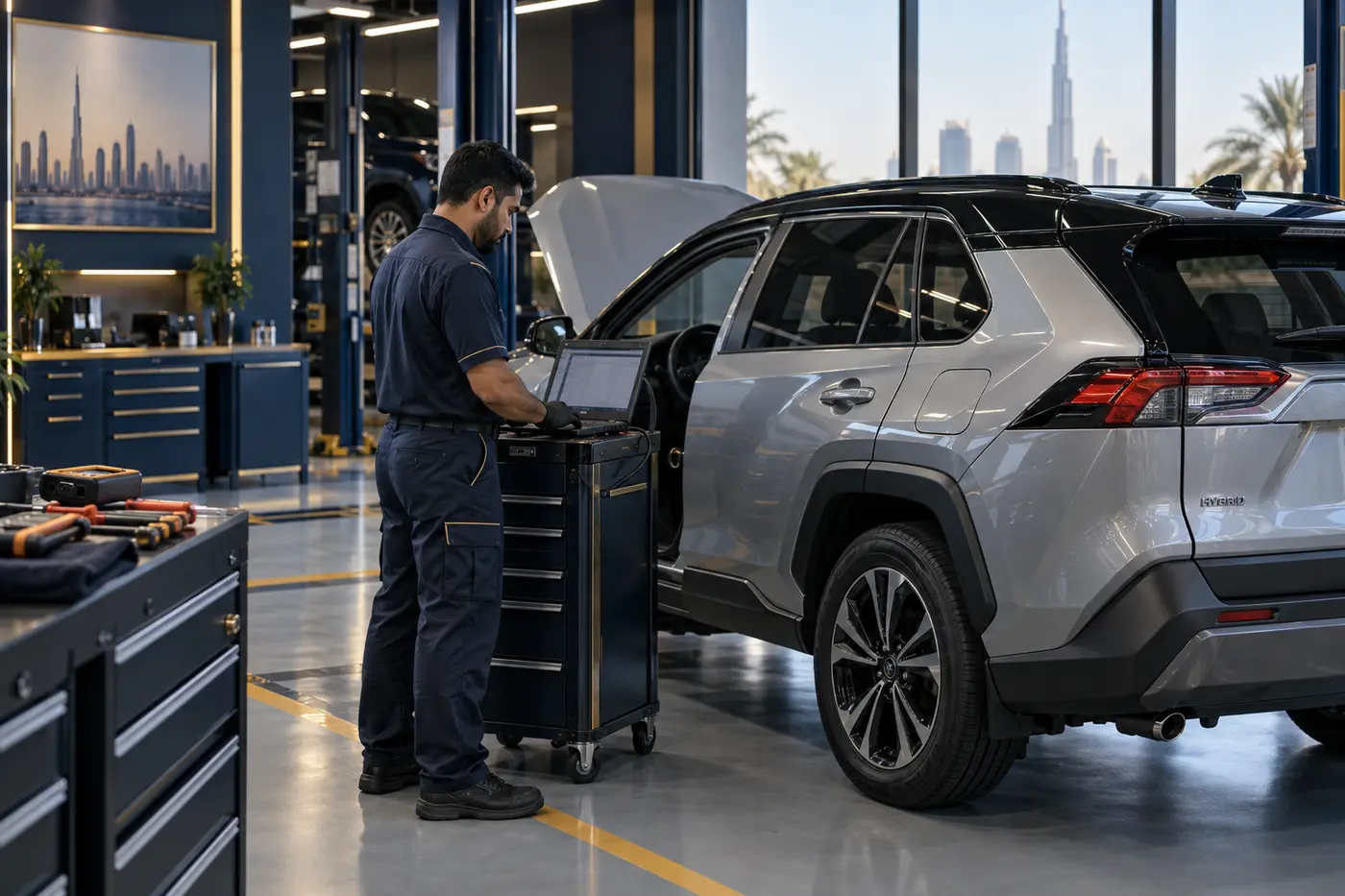
Japanese cars often combine reliable mechanical systems with complex control networks. A fault code identifies the system that noticed a problem, not always the component that caused it. Battery voltage, wiring, connectors, sensors, actuators, software state and the mechanical system may all affect the result.
For a hybrid vehicle, tell us the model and warning shown. We can arrange the appropriate initial assessment and confirm whether the next stage requires workshop access or specialist high-voltage procedures. We do not treat an ordinary 12-volt battery issue as proof of a traction-battery failure.
Electrical diagnosis may need the problem to be present, a battery supply to be stabilized or the vehicle to complete a controlled drive cycle. Intermittent faults can take longer than a permanent failure because the test must capture the condition rather than simply clear a warning.
Programming, immobilizer work, module replacement and calibration are quoted separately when required. We confirm access and suitability for the exact control unit before a customer purchases an electronic part.
These three estimated jobs show how a complete scope can be built after inspection. They are planning figures, not claims about previous customer vehicles. Final pricing depends on the exact model, findings, parts choice, availability and vehicle condition.
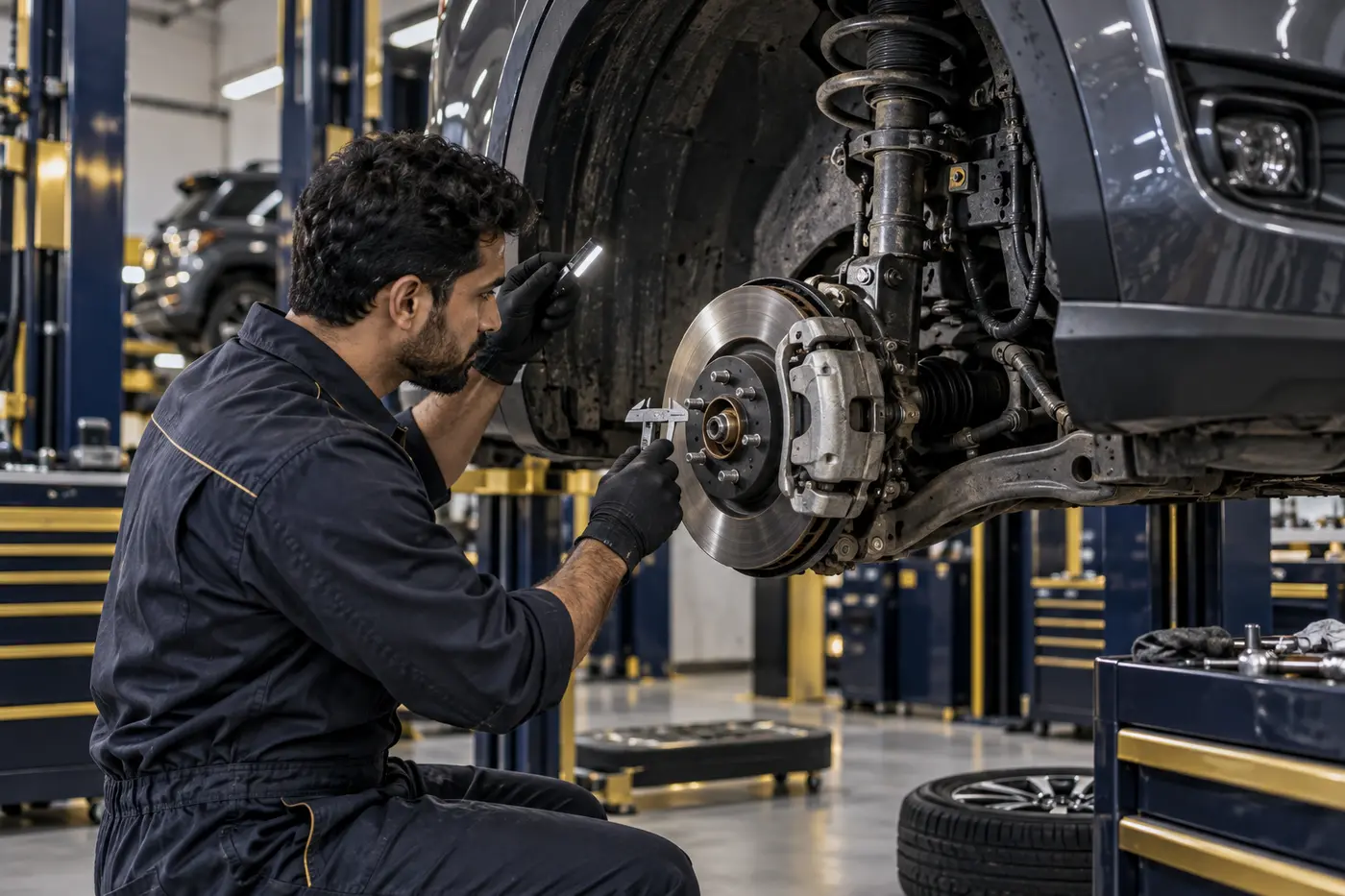
A grinding noise and brake-pedal vibration lead to inspection of the front axle. The scope assumes worn pads and scored discs with serviceable calipers and hoses.
The estimate includes compatible front pads, two front discs, installation, cleaning and a road check. Sensors, caliper repair, wheel-bearing work or a different disc size would change the total.
Coolant drops and a sweet smell after parking lead to pressure testing. The scope assumes an accessible leaking hose assembly and seal, without radiator, water-pump or internal engine damage.
The estimate includes the hose assembly, seals, correct coolant, installation, bleeding and operating-temperature checks. Overheating damage or a second leak needs a revised scope.
Slow starting and several warnings lead first to 12-volt battery, charging and system checks. The scope assumes the traction battery is healthy and the auxiliary AGM battery fails testing.
The estimate includes a compatible AGM battery, installation, registration where required, a system scan and final charging check. Wiring, parasitic drain or high-voltage faults are separate.
You do not need to identify the failed part before contacting us. Start with the vehicle model and what changed.
Call or send a short WhatsApp message. Add the preferred workshop visit, pickup or on-site inspection details.
We review the vehicle at no charge and explain whether focused diagnostic work is needed.
The proposed scope identifies the finding, parts choice, labor, timing, price and important exclusions.
Only authorized work proceeds. The vehicle is checked against the original concern before handover.
Timing: A routine service, battery or common brake job may be completed the same day when the required parts and workshop capacity are available. Intermittent electrical faults, overheating diagnosis, transmission work, internal engine repair or model-specific parts can require more time. We confirm a practical schedule after inspection and parts availability checks.
Safety: Do not continue driving with severe overheating, heavy fluid loss, smoke, lost brake pressure, unsafe steering, a locked wheel or a strong vibration. Call first so we can discuss collection or recovery. Free pickup and delivery is available, while a dedicated on-site inspection can be arranged separately when it is the suitable first step.
Our pricing can be 65% to 70% lower than agency pricing for comparable repair work. A fair comparison must include the same parts category, number of components, labor, fluids, programming, calibration, testing, VAT treatment and exclusions.
Genuine, OEM-equivalent, quality aftermarket, refurbished and used parts serve different needs. Availability, fit, condition and the importance of the component determine which choices are sensible. We identify the proposed category instead of presenting every part as equivalent.
The written estimate distinguishes the repair that addresses the current fault from due maintenance and wear that can be planned. If additional damage becomes visible only after dismantling, you receive an updated explanation before extra work proceeds.
Visit the workshop in Al Quoz 4, arrange free pickup and delivery, or request a dedicated on-site inspection. The mobile visit is useful for an initial assessment, but lift access, extended testing or full repair may still require the workshop.
We check the authorized work against the condition you reported and explain any remaining advice. Where a specific job carries warranty terms, those terms are stated for that job in writing rather than assumed across every repair.
Tell us the model and the service or symptom. We will arrange the workshop visit, free pickup and delivery, or a dedicated on-site inspection, then explain the appropriate next step before repair work begins.
These answers cover the practical details customers usually need before arranging an inspection.
We service Toyota, Lexus, Nissan, Infiniti, Honda, Mazda, Mitsubishi, Isuzu, Subaru, Suzuki and other Japanese makes. Send the model and service or symptom so we can identify the right starting point.
Yes. The initial workshop inspection is free. If confirming the cause requires advanced diagnostics, dismantling, specialist testing, fluids or extended road testing, we explain that paid stage and its price first.
Yes. Free pickup and delivery can be arranged when booking. Tell us the location and whether the vehicle has a safety issue, low clearance, a locked wheel or a non-running condition so collection can be planned correctly.
A dedicated on-site inspection is available by arrangement using the service van. This is an initial assessment service. Some faults require workshop lifting equipment, safe recovery or longer diagnostic testing.
The price table provides nonbinding planning ranges for defined services. The final written quote depends on the exact vehicle, confirmed fault, parts choice, labor, fluids, calibration, availability and applicable VAT.
Hybrid inspections and repairs are matched to the exact model and system. Start by sending the vehicle model and warning or symptom. We will confirm the suitable diagnostic route and whether specialist high-voltage work is required.
Common maintenance, battery and brake work may be completed the same day when inspection, parts availability and workshop capacity allow. Complex diagnosis, major mechanical repair and ordered parts require a longer confirmed schedule.
The model, year and a short description of the service or problem are enough to begin. A warning photo or short video can help. We may request the VIN or other details later when accurate parts matching requires them.