Computer diagnostic assessment
AED 180 to 450
Includes an initial scan, warning review and focused non-invasive checks. Extended wiring tests or dismantling are quoted separately.
Independent Honda garage · Al Quoz 4
A warning light on the way to work? AC that gets warm at a traffic light? Book Honda maintenance, diagnostics and repair at Auto Repair UAE in Al Quoz 4, Dubai. Start with your model and what’s wrong. We’ll explain the first check and quote paid work before it begins.

Start here
Routine service, a warning light, poor AC, brake noise and a no-start complaint should not be booked as the same job. Choose the closest situation below, or call us if you are not sure.
You do not need to diagnose the car before contacting us.
Send the symptoms, photos of warning lights and recent repair history. We will tell you what information is needed next.
Honda models
Parts, fluids, engines, transmissions and fitted equipment vary by model and generation. The model name alone is not always enough for a quote.
Engine and transmission options change by generation. A Civic or Accord badge alone does not identify the correct oil, spark plugs or transmission fluid.
On CR-V and HR-V models, check the fitted drivetrain before adding rear differential or transmission service. Tire wear and suspension condition matter alongside alignment.
City, Jazz and Fit maintenance should follow the installed engine and gearbox. Imported versions may use different parts or service information from UAE versions.
For Pilot, Odyssey and other Honda models, start with the model and concern. We can confirm year, engine and parts references during the assessment.
ESTIMATED DUBAI RANGES
Use these planning ranges to understand the likely budget before inspection. Each estimate covers the work described, including labor and the listed routine materials. The written quotation will confirm the exact parts, quantities, tests and VAT treatment before work starts.
AED 180 to 450
Includes an initial scan, warning review and focused non-invasive checks. Extended wiring tests or dismantling are quoted separately.
AED 250 to 550
Includes approved-specification engine oil, a quality filter, installation, level verification and a basic leak check. Extra filters are separate.
AED 550 to 1,200
A planning allowance for scheduled maintenance and inspection. The quote must name each included filter, fluid and labor item. Spark plugs and transmission service are separate unless expressly listed.
AED 400 to 850 per axle
Includes compatible front pads, installation and a brake condition check. Rotors, sensors or seized hardware can change the total.
AED 350 to 800
Includes a suitable battery, installation and charging-system check. Electrical drain diagnosis or model-specific setup is separate.
AED 250 to 600
Includes pressure and temperature checks plus refrigerant recharge where suitable. Leak repair and failed components are quoted after testing.
Free initial workshop inspection and free pickup and delivery are available. Computer diagnostics and extended testing are separately priced when needed. Dedicated on-site inspection with a van is a paid service; the fee and scope are explained before booking. Check the written quote for VAT and the final payable total.
Detailed owner guide
Honda owners often contact us for routine maintenance, warning lights, AC concerns, brake noise, steering vibration, battery problems and transmission behavior. The booking should separate maintenance from a fault that needs diagnosis.
Common booking reasons
Small details can change the test. A vibration only while braking is different from one at steady highway speed. An AC unit that cools while moving but warms at idle points the inspection in a different direction from low airflow at every speed.
Workshop services
The first inspection determines which service is actually needed. We explain the findings before parts are ordered.
Oil and filter work, fluid checks, brake inspection, battery checks and other mileage or condition-based items are confirmed from the vehicle and service history.
Warning lights, starting problems, electrical faults and drivability concerns need scan data together with voltage, pressure or physical checks.
Engine, transmission, cooling, steering, suspension and brake repairs are quoted after the affected parts and related causes are inspected.
Cooling performance, airflow, pressures, leaks, electrical control and compressor behavior are checked before component replacement.
Pressure, tread, damage, balance, alignment and suspension condition are considered together when the car pulls or vibrates.
Damage position, panel or glass condition, trim and safety equipment determine whether repair or replacement is appropriate.

Diagnosis before repair
We separate confirmed faults from maintenance recommendations. You can then approve the repair with a clearer scope.
A few useful details help us plan the checks. Start with the symptom; bring the rest when it is relevant.
Write down when the problem started and whether it followed a service, battery replacement, impact, overheating event or long period of parking. Note the fuel level, outside temperature and driving condition when the symptom appears. These details are often more useful than trying to name the failed part.
Bring all keys when the concern involves starting, immobilizer behavior, locking or key recognition. For an intermittent electrical problem, avoid disconnecting the battery immediately before the visit unless necessary for safety. Stored fault and voltage information may help the technician understand what happened.
Remove valuable items and child seats only when access to the affected area is needed. If the complaint involves a water leak, do not dry every trace before inspection; photos and the wet path can help identify where water entered. If the complaint involves a smell or smoke, stop driving and call rather than trying to reproduce it.
When you collect the car, ask the technician to show the replaced part when practical and explain the final check. Confirm whether warning lights were cleared because the cause was repaired or simply reset. If a road test is needed, ask what condition was used to confirm the symptom no longer appears.
THREE TYPICAL QUOTATIONS
These examples show how three common jobs may be quoted after the vehicle and required work are checked. They are planning examples, not completed-work claims or fixed offers. Your quotation will reflect the exact model, installed parts, condition and any separate fault found.
01
Typical estimate: AED 450
A routine oil-service quotation for an Accord without an active oil-pressure warning or external leak.
Assumes standard access and no damaged drain hardware.
02
Typical estimate: AED 700
A front-axle pad quotation after the rotors, calipers and remaining friction material are checked.
Brake rotors, fluid service and seized hardware are excluded unless listed.
03
Typical estimate: AED 600
A 12V battery replacement quotation after battery condition and charging voltage are confirmed.
Electrical drain tracing and unrelated charging faults are separate.
Example totals stay within the general ranges above, but a warning light, leak, damaged fixing, worn disc, electrical drain or nonstandard part can change the scope. We explain any additional work and request approval before adding it.
At the workshop
Send your Honda model and a short description of the concern. Warning photos, mileage and history can follow if they help with the next check.
We record what you want checked and any recent work that may affect the diagnosis.
Scans, measurements and physical checks are selected for the symptom. Unrelated work is not assumed.
The estimate should state labor, parts, timing and any condition that could change after opening or testing.
We explain the completed work, findings, remaining observations and any follow-up check.
A useful estimate separates confirmed repairs, further testing and maintenance that can wait.
The estimate should identify the confirmed problem, proposed work, labor, parts basis and expected timing. If the vehicle needs dismantling before hidden damage can be seen, the estimate should explain that condition before work starts.
For a part replacement, ask why the part is needed and what test supports the decision. A fault code can be useful, but it may point to a circuit or operating condition rather than a failed component. Wiring, connectors, battery voltage, airflow, pressure or another mechanical fault can create related codes.
Keep the invoice and note any follow-up mileage or date. If a warning returns, report when it returned and whether the symptom is the same. That information helps distinguish an unresolved fault from a new concern.
Do not continue driving if the engine overheats, oil pressure is lost, smoke is heavy, fuel is leaking, braking or steering control is reduced or a tire is visibly unsafe. Stop in a safe place and call. If the car can be driven but the fault is changing quickly, avoid unnecessary use until it is checked.
Call for assistanceFor intermittent problems, a short video or clear note can help. Do not film while driving. Ask a passenger to record it or wait until the car is safely parked. Include the speed, warning message and conditions only when it can be done safely.
Never open a hot cooling system or try to reproduce a dangerous fault.
Note whether the symptom appears on a cold start, after the engine warms up, while braking, during low-speed turns, over bumps or only with the air conditioning running. A short phone video can preserve a sound or dashboard message that disappears before the vehicle reaches the workshop.
Disconnecting the battery or repeatedly clearing warning lights can remove information that helps trace the problem. If the car is safe to drive, leave the warning history intact and tell the technician about any recent jump-start, battery change or repair.
At collection, ask how the original complaint was reproduced and checked after repair. A successful confirmation may require a cold start, a road test, a scan after the drive or a recheck for leaks once the vehicle reaches operating temperature.
Price and timing
A service quote is easier when the exact specification is known. A fault repair can change after testing or dismantling shows the actual condition.
Keep a simple record now. It makes a later service or returning symptom easier to explain.
Keep the final estimate, invoice and any inspection notes with the vehicle records. They help the next technician understand what was checked, what was replaced and which observations still need attention.
If a repaired symptom returns, record when it came back and whether the conditions are the same. Contact the workshop with the invoice details so the concern can be reviewed against the previous work.
A shudder does not automatically mean you need a transmission. Engine misfires, mounts, driveshafts and incorrect fluid can create overlapping symptoms. The computer diagnostic assessment should connect the scan results with a safe road test and physical checks.
A serviceable leak, wiring fault or external component may have a focused repair. Fluid service belongs on the quote only when the specification, history and findings support it. It is not a promised cure for internal wear.
When internal damage is confirmed, compare the dismantling cost, available parts and repair scope. A rebuild needs an itemized proposal and a clear explanation of what can only be assessed after opening.
Replacement may be more practical when damage is extensive or rebuild parts are unavailable. Confirm the unit reference, new or used condition, installation, fluids, setup and written terms before approval.
Before authorizing a gearbox: ask which test ruled out the simpler causes. A fault code is a starting point, not a complete diagnosis.
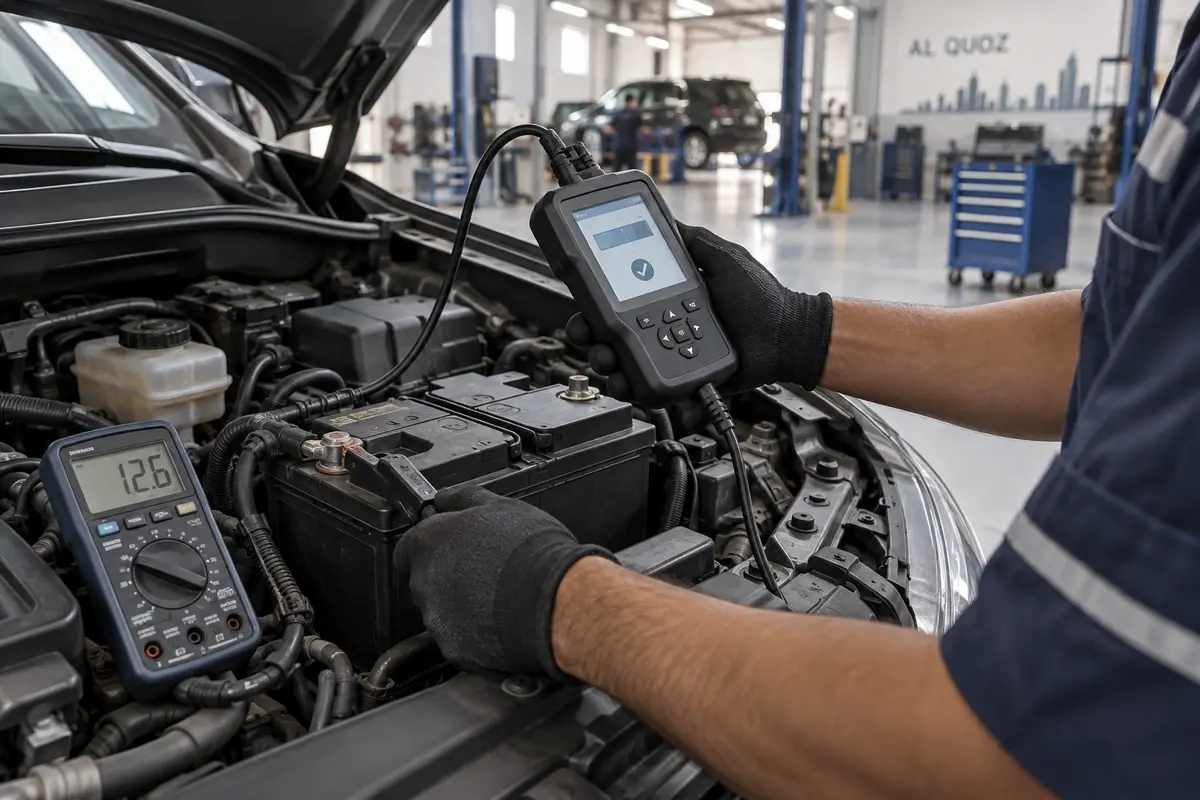
Daily stop-start driving, long idling periods and summer AC use make changes in cooling, starting and braking hard to ignore. Tell us what changed during your normal journey. You don’t need a technical diagnosis.
The useful outcome is a clear decision: repair a confirmed problem now, schedule a maintenance item, or monitor something that does not yet justify replacement. Paid diagnosis, parts and labor require an agreed scope. Keep that estimate alongside the handover findings.
Check Honda UAE owner information for manufacturer guidance and Honda UAE warranty information before approving work that may fall under existing coverage. Your vehicle’s manual and applicable terms take priority over a generic service interval.
Start with your model and the concern. These answers explain the first step, pricing and when to stop driving.
Send the model and a short description of the service or symptom. Mileage, warning photos, history or technical details can be shared later if they help diagnosis or parts matching.
A warning light alone is usually not enough for a repair quote. A scan and the relevant physical or measured checks are needed to identify the cause.
Yes, subject to inspection. Weak cooling can involve refrigerant, airflow, leaks, electrical control or compressor operation, so testing comes first.
No. Stop in a safe place and switch off the engine if the temperature rises or coolant is lost. Call before moving the car.
Contact us about an older Honda with the model and concern. Inspection and parts availability determine the practical repair options; you do not need to identify the failed part before booking.
No. We are an independent multi-brand workshop in Al Quoz 4, Dubai and do not claim Honda dealer authorization.
Tell us your Honda model and what needs attention. Arrange a visit to Al Quoz 4 or ask about free pickup and delivery. We’ll request any extra details needed for the assessment.