Routine Mitsubishi service
Oil, suitable filter, fluids, tire and brake checks based on your model and maintenance record.
Review oil serviceA new warning, rising temperature or change in drive feel? Get Mitsubishi servicing and fault repair for Pajero, Outlander, L200, ASX and other models. Tell us the model and what changed; we will help choose a safe first check.
Minor service estimate: AED 450–950 Final scope and VAT treatment are in your written quote.
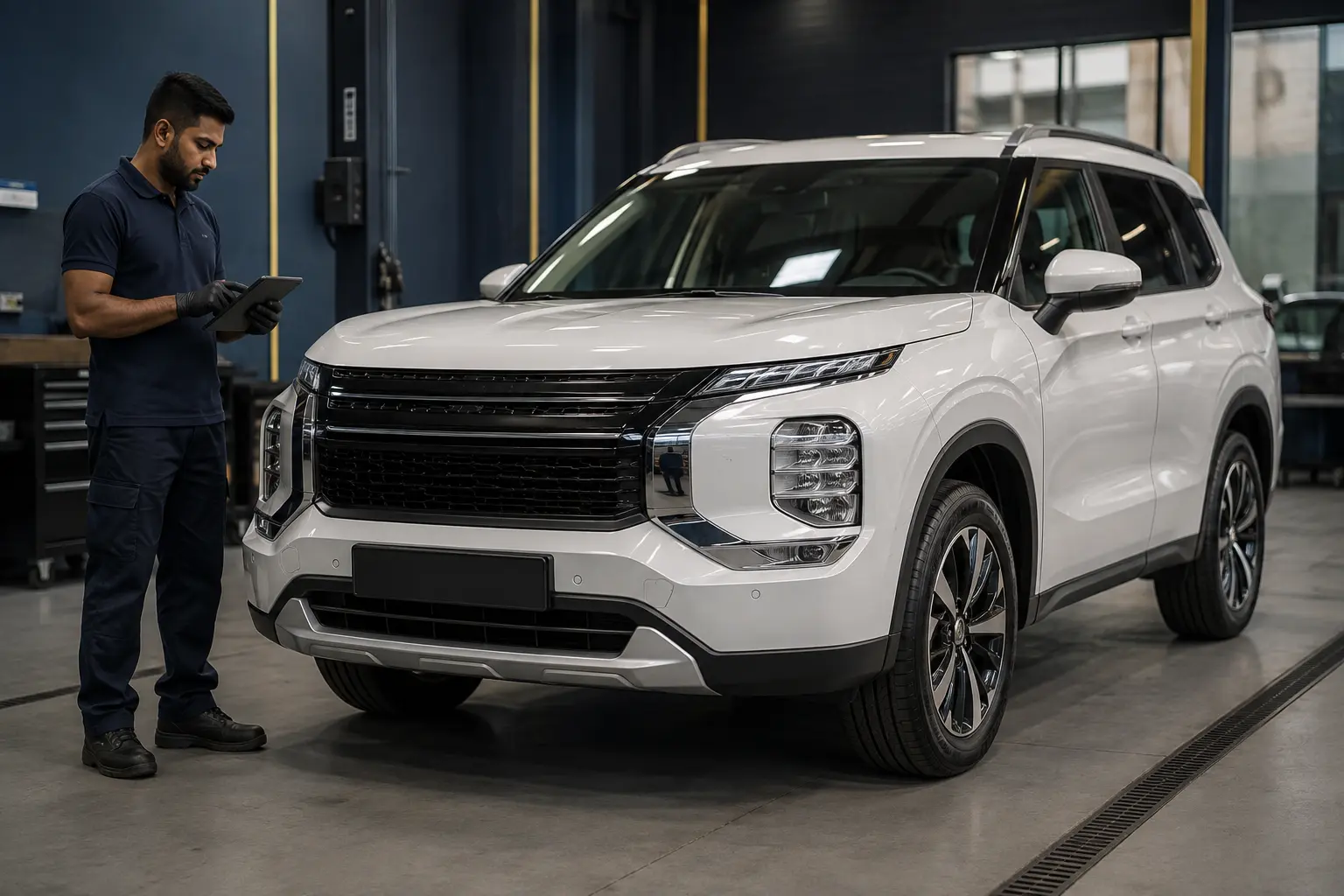
Book routine care or tell us the change you have noticed. We inspect the reported problem, explain the useful repair choices and send a written estimate before paid work begins.
Oil, suitable filter, fluids, tire and brake checks based on your model and maintenance record.
Review oil serviceInvestigate overheating, coolant loss, engine warnings, leaks and power changes before replacing parts.
Review engine repairAssess engagement, shifting, vibration, 4×4 operation and fluid history with the exact transmission in mind.
Review transmission repairCheck a changed pedal, noise, pull or rough ride alongside tires, wheels, steering and damaged components.
Review brake repairTrace weak cabin cooling, battery problems and intermittent functions to the affected system.
Review AC repairPreserve the fault message and compare scan results with real symptoms and measured checks.
Review diagnosticsNot sure which option fits? Call +971 50 608 7150 and describe the model and symptom. We will suggest the first inspection.
A code, sound or leak starts the investigation. It should not finish it. The technician connects the owner’s timeline with physical, electrical, thermal and scan results.
Preserve the message and note fuel, temperature, load, speed and recent work. Inspect supply voltage, air and fuel clues, ignition or combustion signs, leaks and live values before choosing a component.
Do not continue driving to reproduce overheating. Check visible loss, residue, fan behavior, hose condition, pressure, circulation checks and whether a previous repair introduced air or mixed fluids.
Record cold and hot engagement, shift quality, load, speed, warning state and fluid history. Engine performance, mounts, wheel-speed information and driveline play can imitate a transmission complaint.
Describe the selected mode, surface, impact location, recovery event and whether the symptom follows steering or load. Inspect guards, leaks, joints, mounts and wheel ends before internal assumptions.
State battery age, storage, jump starts, accessory additions and weather exposure. Capacity, grounds, voltage drop, charging control and abnormal draw answer different questions.
Link noise, vibration, pulling or pedal feel to road speed, braking, steering angle, load and surface. Tire damage, alignment, bearings, joints and brakes require separate inspection.
These estimated Dubai ranges help you set a budget before inspection. The written quotation depends on the model, fault, parts choice and access. It lists the approved labor and parts, states VAT treatment, and separates any further testing. The free workshop inspection confirms what is needed before repair approval.
| Service | Estimated price | Typical scope |
|---|---|---|
| Workshop inspection | Free | Initial visual and symptom assessment at our Al Quoz 4 workshop. |
| Computer diagnosis | AED 250–650 | Relevant scan, basic electrical checks and targeted testing for the reported fault. |
| Minor service | AED 450–950 | Engine oil, suitable filter and routine checks. Fluid grade and extra filters vary by model. |
| Brake-pad replacement | AED 650–1,500 per axle | Suitable pads, installation and basic brake checks. Discs and sensors are quoted separately. |
| AC diagnosis or repair | AED 300–2,200+ | Testing and the agreed repair. Compressors, evaporators and major parts can increase the total. |
| Suspension repair | AED 450–3,500+ | Inspection and the approved component repair. Alignment and additional worn parts are separate. |
| CVT or transmission diagnosis | AED 350–850 | Scan, road-test observations where safe and system-specific checks before parts are recommended. |
Send the model and the service or symptom. We can explain the most useful first step and arrange a free workshop inspection or free pickup and delivery.
The images show powertrain checks, underbody inspection and a handover discussion. The actual work depends on the exact model.
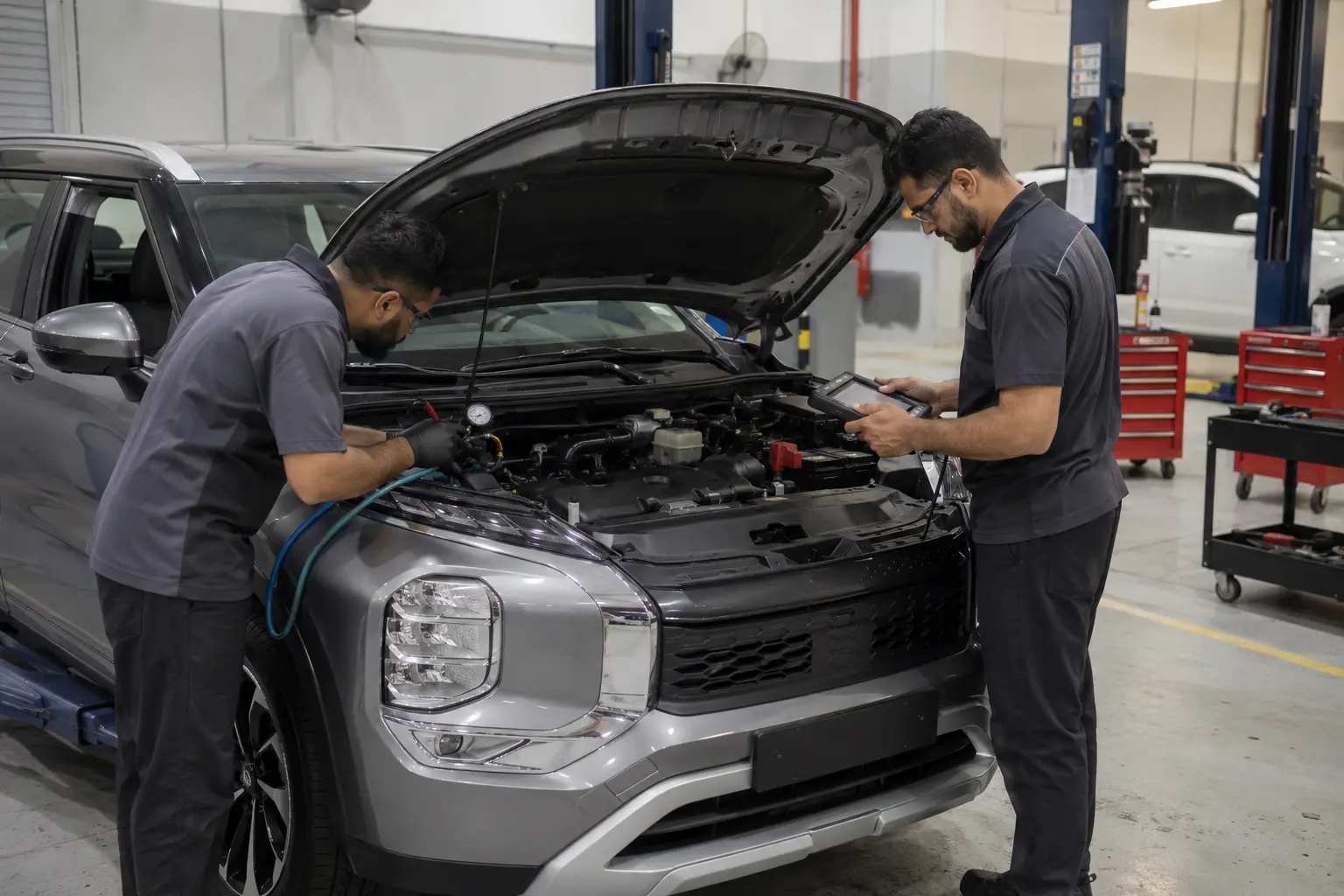
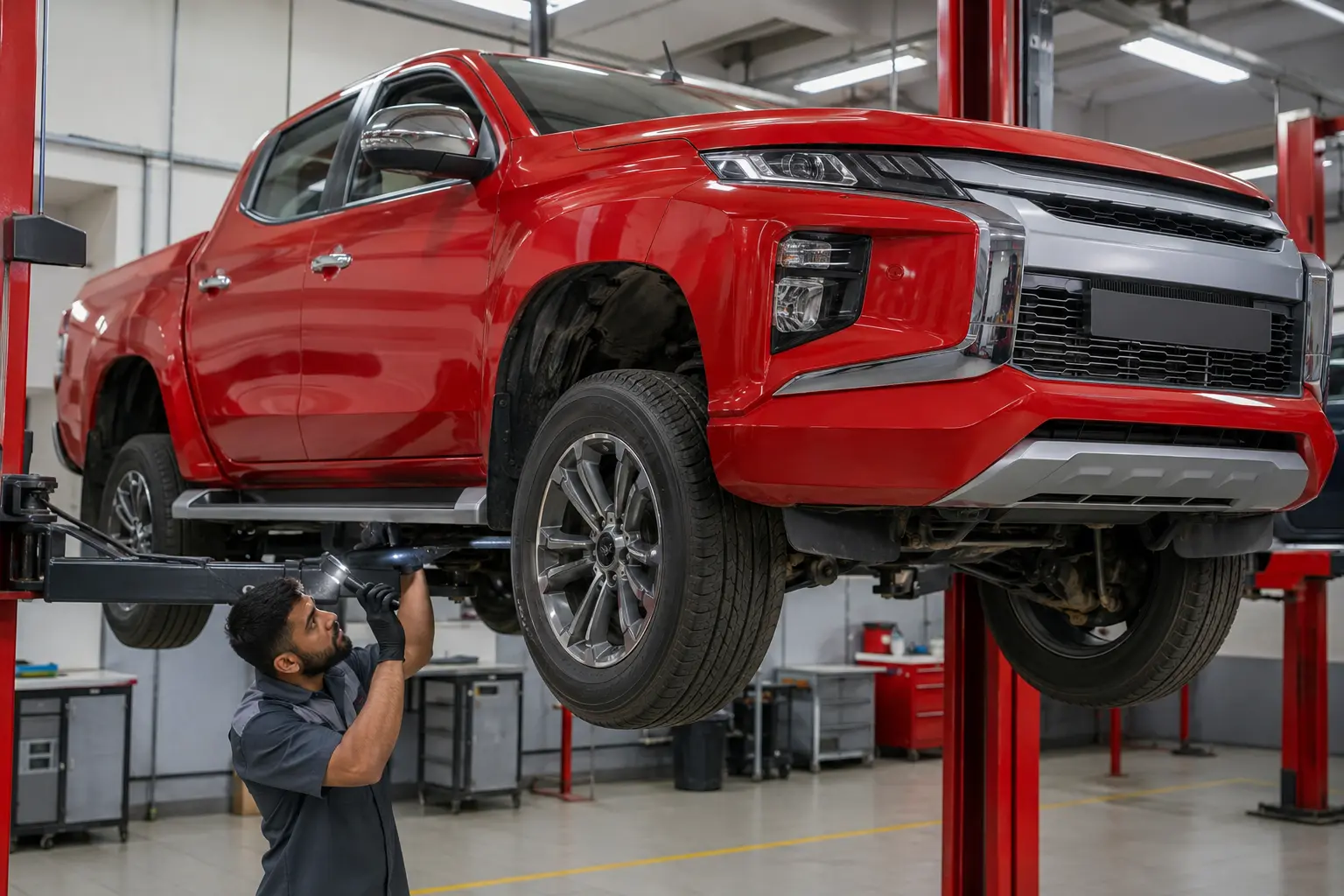
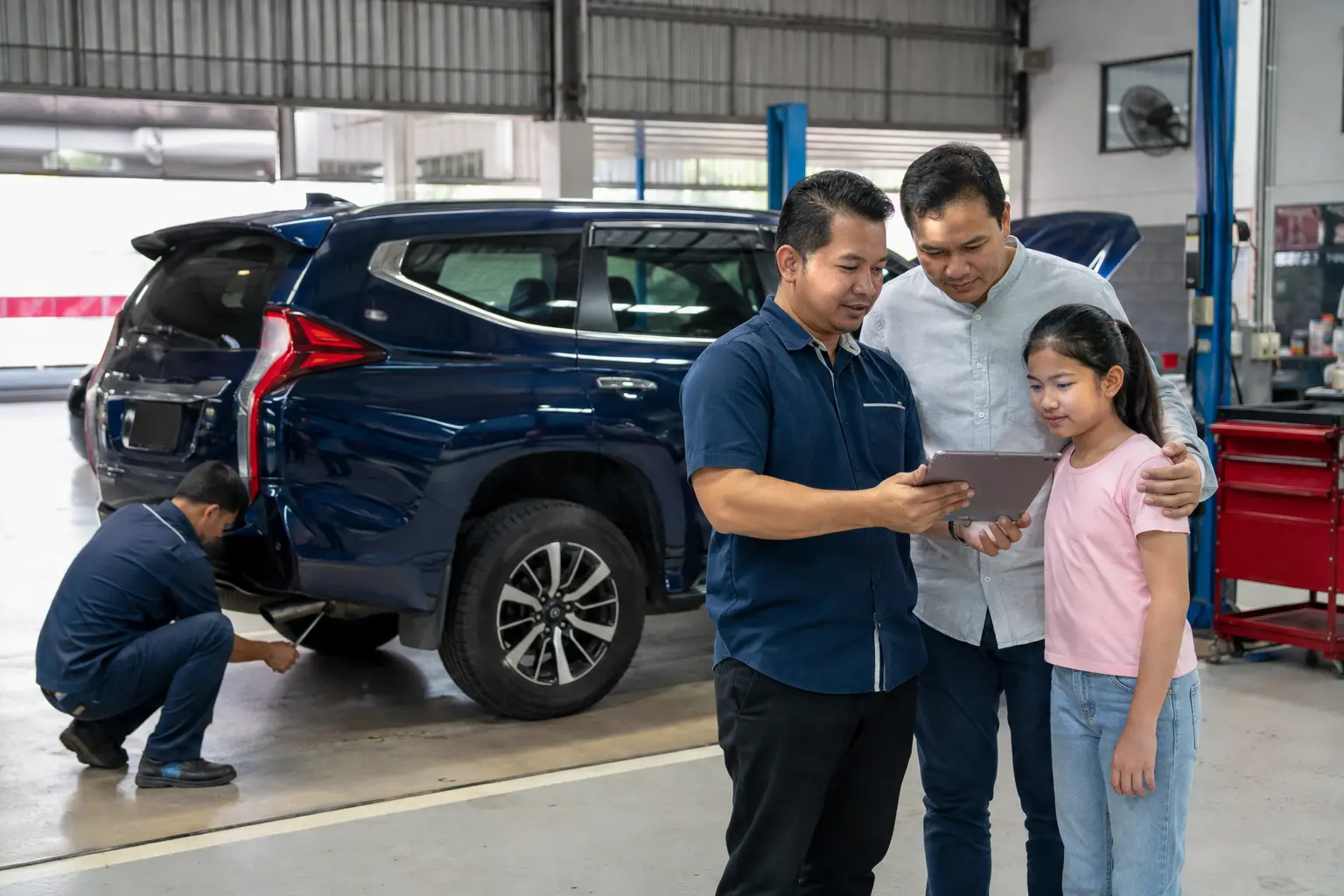
A warning can change from a small repair to a safety problem. If the car feels unsafe, stop somewhere safe and call before moving it again. We will help decide whether a workshop visit or recovery is appropriate.
If there is smoke or leaking fuel, move people away and seek emergency help when needed.
A warning light alone does not prove the car is safe to drive. Check the symbol in the owner information, photograph the complete display and note whether it is steady or flashing.
Tell us what changed and call before setting off if the warning is unfamiliar or worsening.
Report a leak, bent guard, loose trim, changed exhaust position, tire sidewall damage, or contact near brakes and steering.
Do not crawl under an unsupported SUV or pickup. A tire holding air can still be unsafe when its sidewall is damaged.
Refer to model-specific owner guidance and describe conditions that may justify closer inspection. One invented interval cannot responsibly cover every Mitsubishi.
Repeated cold starts, idling, speed humps and stop-go traffic can influence battery state, brakes, cooling fans, tires and fluid condition. Mileage alone may not tell the full story.
Passenger and luggage load affect rear tires, brakes, dampers and cabin cooling. Ask whether the symptom changes with a full cabin, highway trip or long idle.
Payload, towing, site dust, extended idling and schedule pressure matter. Fleet records should capture mileage, operating pattern, repeat defects and downtime.
Inspect underbody contact, guards, driveline joints, fluid leaks, wheel balance, tire cuts and brake contamination after difficult surfaces or recovery.
Review battery support, tire flat spotting, brake release, fuel age, leaks, contamination and the safety of the first start. Avoid repeated attempts on an uncertain engine.
Record market origin, tuning, accessories, wheel size and non-standard cooling or electrical work. Confirm parts and procedures against the actual configuration.
These quotations show how a complete repair price can be structured. They are illustrative, not customer records. Inspection, vehicle condition and parts selection can change the final total.
Cooling-system repair
Pressure test, suitable radiator-hose replacement, coolant refill and final temperature check.
Illustrative total: AED 1,450
Front brake service
Front brake pads, disc inspection, installation, cleaning and road-test checks.
Illustrative total: AED 1,150
AC cooling repair
Leak testing, replacement of a suitable failed AC component, recharge and vent-temperature check.
Illustrative total: AED 1,650
Tell us the service or change you noticed. We document the vehicle, inspect the concern safely and explain the repair choice before paid work begins.
Your written estimate should list the proposed repair, parts, related fluids or hardware, labor, final checks and VAT treatment. Maintenance recommendations stay separate from the original complaint.
Share the model and symptom. Previous work or warning photos can help if available.
We note mileage, warnings, visible damage and the parts of the car linked to the complaint.
Relevant scan, electrical, cooling or mechanical tests guide the next decision.
We explain the work, estimate and any additional access needed before proceeding.
We verify the reported fault where safe and record what was done or what still needs attention.
If a protected calibration, security procedure, warranty or campaign action needs an authorized Mitsubishi channel, we explain that limit and provide the inspection findings for the next step.
Al Habtoor Motors’ current Mitsubishi catalogue includes the names below. Availability and specification can change, so the physical vehicle remains the source for parts and procedure decisions.
Model, production date, engine, transmission, driveline, trim and market can change the required component. Show whether the estimate uses Mitsubishi-branded supply, an OE manufacturer, a third-party replacement, a rebuilt unit or a customer-provided item.
| Decision | Checks required | Owner question |
|---|---|---|
| Replacement component | VIN, part reference, supersession, physical comparison, connector and mounting details. | Is the proposed item verified for this production configuration? |
| Fluid service | System specification, prior product if known, condition, quantity and leakage assessment. | Is the service correcting maintenance, contamination or an active fault? |
| Owner-supplied part | Source, packaging, markings, new or used state, warranty and related hardware. | Will the workshop accept and stand behind installation limits? |
| Programming or calibration | Required tool, access, information, preconditions and post-work verification. | Is an authorized Mitsubishi service operation required? |
Retain the complaint, measurements, photos, approved estimate, part references, fluid specification and verification result. A clear history helps the next technician understand what changed and prevents repeated replacement based on the same untested assumption.
For fleet or commercial vehicles, record downtime, driver report and duty pattern as well as mileage. Repeat failures often become easier to see when workshop notes and operating context are reviewed together.
No. Auto Repair UAE is independent. Warranty approval, recalls, campaigns, official records and protected manufacturer operations should be handled through Mitsubishi’s authorized UAE network.
You can share details for current passenger cars, SUVs and L200 pickups, plus earlier or imported vehicles. We can confirm the booking after reviewing the exact identity, condition, technical information, tooling and requested work.
A diagnostic visit can preserve codes and conditions, inspect related systems and compare physical checks or live data. A fault code alone does not confirm a failed component.
The model and a short description are enough to start. Photos, mileage, the VIN and service history can help later when a precise part or diagnosis needs them. A final price may require inspection.
A limited first inspection may cover tires, wheels, brakes, suspension, driveline and visible underbody condition after you explain the vehicle’s use and any impact history.
No. Stop when temperature is abnormal, coolant is escaping, oil pressure is lost or serious mechanical noise appears. Call to plan recovery instead of extending the damage.
Discuss the exact part reference, source, condition and documentation first. Supplying your own part does not guarantee fitment, required hardware, installation warranty or that the workshop can install it.
The technician repeats the relevant measurement or operating condition where safe, checks for leaks or new faults, and explains any limit that requires monitoring or official follow-up.
Send the Mitsubishi model and the service or symptom, then choose a workshop visit or pickup. Extra technical details can be requested later when they are needed for diagnosis or parts.