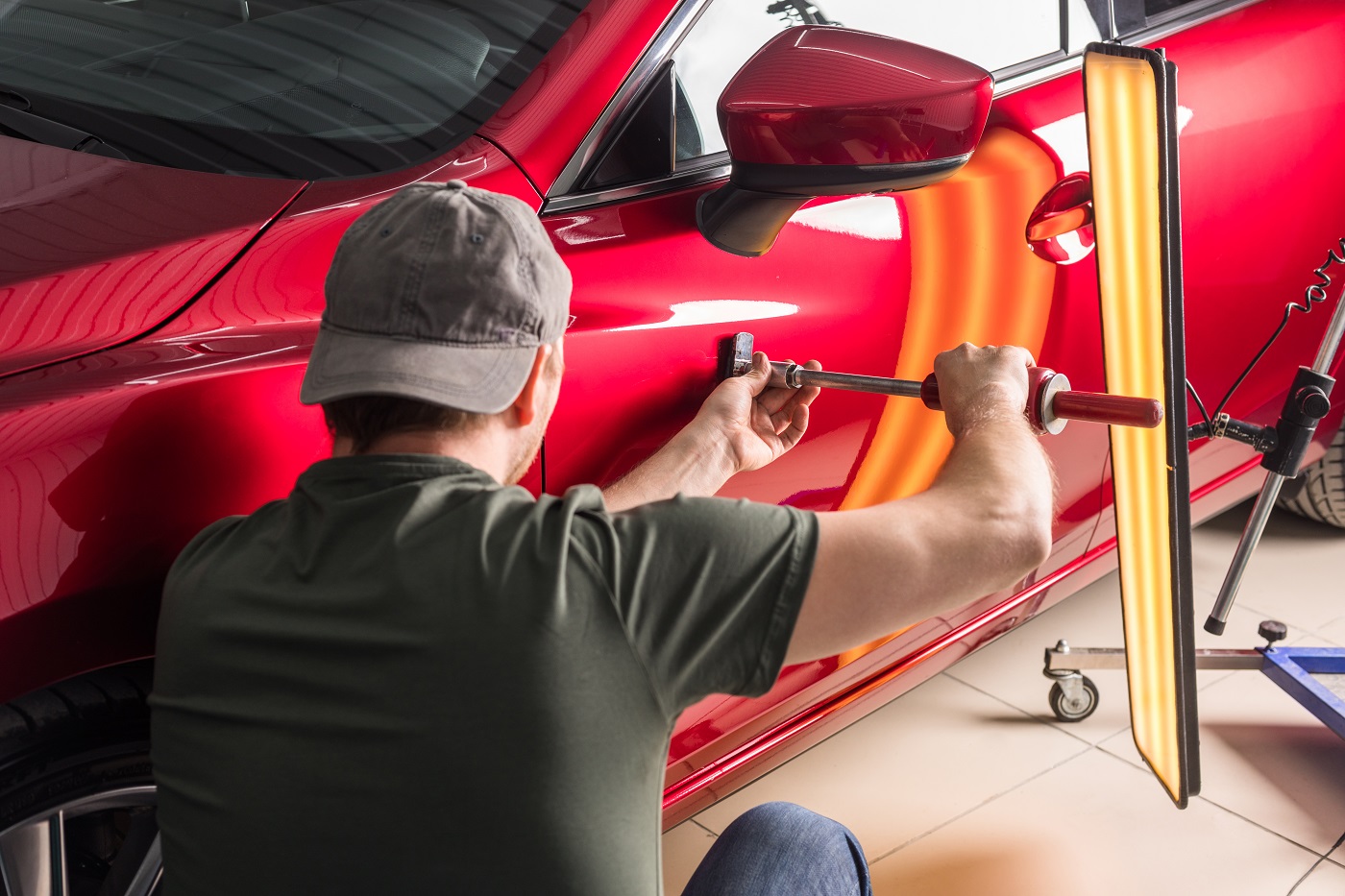
- Paint surface
- Inspect in controlled light for cracks, chips, scratches, lifting, abrasion, colour disturbance and previous refinishing. Polishing can temporarily disguise marks, while water and reflections can hide shallow distortion. Keep the area clean but do not aggressively correct it before assessment.
- Dent geometry
- Record width, depth, crowns, crease direction and metal tension rather than labelling everything small or large. A broad shallow dent can behave differently from a narrow sharp impact even when both occupy a similar visible area.
- Panel location
- Identify body line, swage, edge, hem, seam, brace, bonded area and proximity to lamps, glass or trim. Metal near an edge may have less freedom to move and can require another repair route.
- Material and construction
- Confirm the panel and available repair information instead of guessing aluminium or steel from the model class. Material, thickness, reinforcement and joining method influence tool choice, heat limits and refinishing decisions.
- Rear access
- Determine whether trim, liner, lamp, handle, wiring or another component must be removed. Access work should be priced and authorized separately when hidden clips, adhesives or previous damage can change the scope.
- Nearby technology
- Note cameras, radar areas, parking sensors, antennae, wiring, sound insulation and driver-assistance hardware. A cosmetic repair must not disturb a bracket, connector or calibrated component without including the required verification.