Steering effort increases
Check assistance-system operation, voltage and faults, hydraulic fluid where applicable, pump condition, binding joints, tyre pressure and front suspension movement.
Steering system diagnosis and repair
Diagnosis for heavy, loose, noisy, uneven or warning-affected steering, with suspension, tyres and alignment checked when they can create the same complaint.
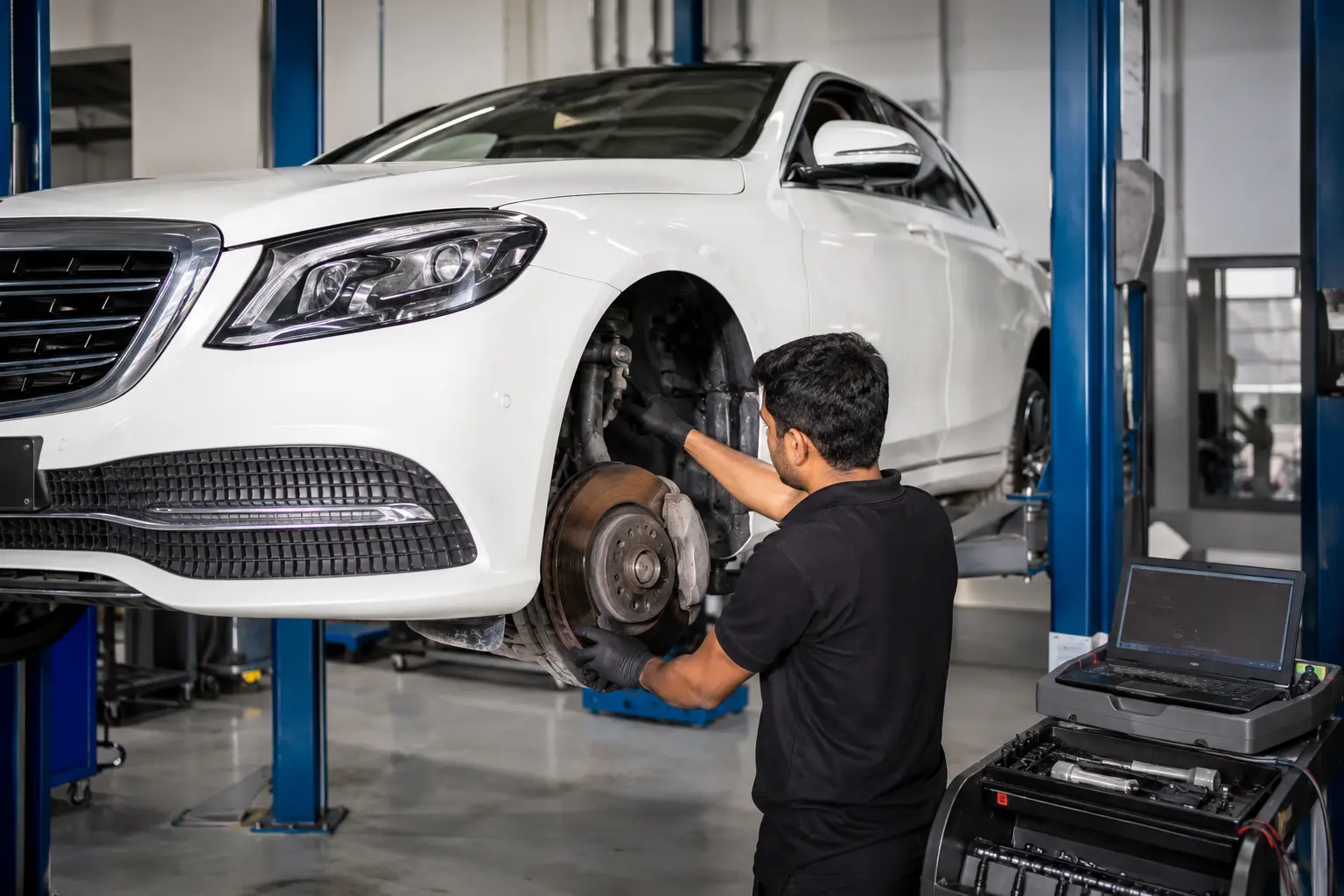
Safety-led intake
A steering warning, sudden increase in effort, loss of assistance, severe free play, binding, a wheel that no longer responds normally or a change after an impact deserves prompt assessment. If control is uncertain, do not continue simply to reach the workshop. Arrange safe recovery.
A slight off-centre wheel or mild pull may allow a planned inspection, but the cause still matters. Tyre pressure, tyre damage, alignment, road camber, brake drag, suspension wear and steering faults can create similar sensations. The page therefore starts with what the driver feels, then follows evidence to the correct system.
Symptom map
These are diagnostic directions, not conclusions. More than one condition can produce the same symptom.
Check assistance-system operation, voltage and faults, hydraulic fluid where applicable, pump condition, binding joints, tyre pressure and front suspension movement.
Inspect tie rods, rack mounts, steering joints, wheel bearings and suspension bushes. Tyre condition and alignment can add to the feeling.
Record whether the sound occurs stationary, over bumps or during low-speed turns. Different sounds lead toward joints, mounts, assistance or suspension.
Confirm tyre pressure and construction, alignment, road influence, brake drag and suspension condition before blaming the steering rack.
Review alignment and steering-angle information, especially after tyre, suspension or steering work. An off-centre wheel does not identify which component moved.
Read the exact message and relevant fault data. Low voltage, sensor information, motor assistance, wiring or control conditions can be involved.
Estimated Dubai ranges
These planning ranges cover common Mercedes steering checks and repairs. The written quotation confirms the affected component, parts choice, labor, calibration, wheel alignment and VAT treatment before paid work begins.
AED 250 to 600
Includes a warning scan, steering behaviour check and focused inspection of accessible steering, suspension and tire components. Dismantling or extended electrical tracing is separate.
AED 300 to 650
Includes suitable hydraulic fluid, controlled replacement, level setting and an accessible leak check. It applies only where the Mercedes uses a serviceable hydraulic system.
AED 350 to 800
Includes scan-based steering angle checks and calibration where supported. Alignment, sensor replacement and faults in related control modules are quoted separately.
AED 650 to 1,400 per side
Includes a compatible tie rod component and installation. Wheel alignment, seized hardware and additional worn joints can change the final total.
AED 900 to 1,800
Includes removal, a suitable repair or replacement path and refitting for a confirmed hydraulic pump fault. Hoses, reservoir, flushing and rack work are separate when required.
AED 1,800 to 4,500
Includes a defined rack repair or compatible replacement and installation. Programming, subframe access, tie rods, fluid, geometry work and model-specific parts affect the total.
Comparable independent work can be 65% to 70% lower than agency pricing when the service scope and parts are equivalent. Send the Mercedes model and describe what the steering is doing. That is enough to start.
What we repair
It covers the components and controls that allow the driver’s input to change the road-wheel direction. That can include the steering rack, tie rods, column joints, assistance equipment, sensors, wiring and related geometry checks.
Steering-wheel leather, trim, buttons, heating, paddles and cosmetic damage are cabin concerns rather than steering-system faults. Tell us whether the problem affects vehicle direction, steering assistance or only the steering-wheel finish so we can guide you to the right service.
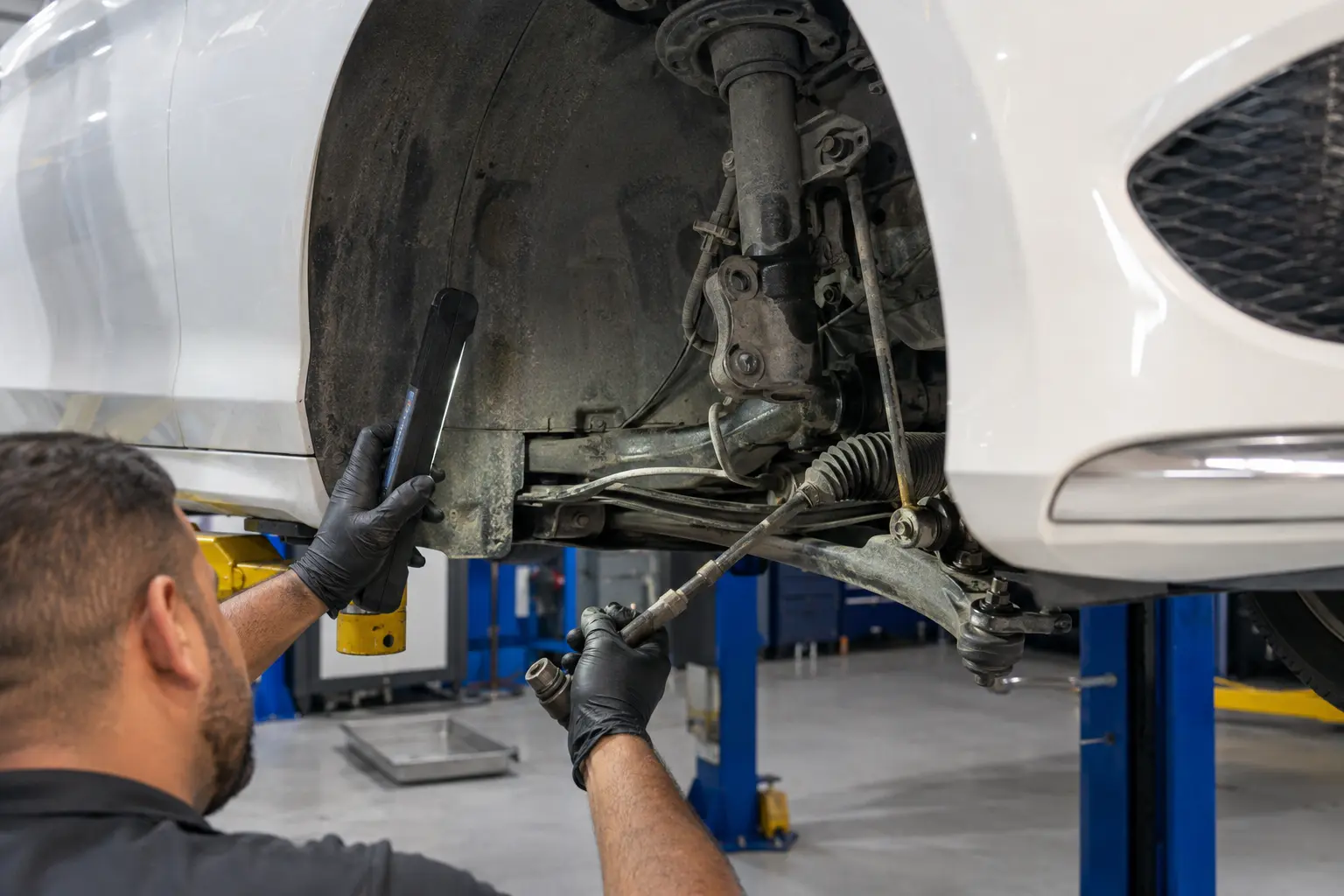
Measured and physical checks
The first inspection begins with the complaint. We ask when the problem occurs, whether the vehicle has struck a kerb or pothole, whether tyres or suspension parts were recently changed and whether a warning appears. A short road assessment may help when the vehicle is safe to drive.
On the lift, the technician can inspect accessible steering joints, rack connections, boots, mounts, suspension bushes, wheel bearings and tyre condition. Free play is located rather than described broadly. Hydraulic systems can be checked for fluid condition and leakage where applicable. Electronic assistance systems can require voltage checks, fault data and live information.
Evidence from one source is compared with the others. A diagnostic fault code may identify a circuit or implausible signal, yet it cannot by itself prove that the most expensive component has failed. Physical damage can also exist without a helpful code.
How the systems differ
Some Mercedes platforms use hydraulic power assistance. Increased effort or a whine can involve low fluid, aeration, leakage, pump condition, a restricted line or mechanical binding. The source of leakage should be traced. Adding fluid without finding why the level fell is a temporary response, not a repair.
Fluid specification matters. A universal product should not be added because its colour looks similar. If the system has been contaminated or run low, the repair plan may extend beyond the visible leak.
Electric or electromechanical systems rely on stable voltage, sensor data, wiring and control logic as well as the mechanical rack. A steering warning after a low-voltage event does not always mean the rack assembly has failed.
Diagnosis can include battery and charging health, fault records, power and ground checks, steering-angle information and physical movement. Calibration or initialisation is performed only when it is part of the correct repair route.
Repair decisions
The correct scope depends on where the play, restriction, leakage, noise or signal fault is found.
Checked for leakage where applicable, internal or external play, damaged boots, mounting condition and assistance faults.
Checked for joint play, damage, thread and locking condition. Replacement normally requires geometry verification.
Checked for play, stiffness, noise and coupling condition between the steering wheel and rack.
Hydraulic pump or electric motor operation is assessed with its supply, control and mechanical load.
Relevant steering-angle, torque or position information is interpreted with the physical inspection.
Ball joints, bushes, arms, strut mounts and wheel bearings can alter steering feel and alignment stability.
Three typical quotations
These are realistic planning examples, not completed-customer claims or fixed offers. The final scope depends on inspection, installed system, parts condition and the checks needed after repair.
Example total AED 1,150
Work: Confirmed one worn outer tie rod, replaced the compatible component, torque checked the connection and completed wheel alignment.
Parts: New compatible tie rod end and required fitting hardware.
The example assumes the rack, inner tie rod and steering knuckle remain serviceable and no seized hardware requires extra labor.
Example total AED 1,650
Work: Verified pump noise and low assistance, removed and repaired the pump, renewed suitable fluid and checked operation after refitting.
Parts: Pump repair components, seals and suitable hydraulic fluid.
Hoses, reservoir contamination and steering rack leakage are excluded unless the written quotation lists them.
Example total AED 3,600
Work: Confirmed a steering rack fault, removed and repaired the unit, refitted it, completed relevant calibration and verified wheel geometry.
Parts: Rack repair components, seals and normal fitting materials.
The example excludes unrelated suspension wear, damaged wiring and a complete replacement rack if the original unit cannot be repaired.
A warning light, impact damage, mixed tire condition or worn suspension joint can produce a similar steering complaint. We separate those findings from the steering repair and request approval before adding work.
Repair with a verification plan
Once the failed or damaged part is supported by the inspection, the estimate should state what will be replaced or repaired and which related operations are necessary. A tie-rod replacement and a rack replacement do not carry the same access, fluid, calibration or alignment requirements.
Fasteners and joints are installed using the appropriate method and torque information. Protective boots, locking arrangements and hose or wiring routing are restored. If the repair opens a hydraulic circuit, the system is filled and bled using the applicable procedure.
The vehicle is then checked for the original symptom. Wheel alignment is performed or verified when the repair affects geometry. Relevant electronic values and warnings are reviewed. A successful save or cleared code is not the completion proof; steering response, security and final road behaviour matter.
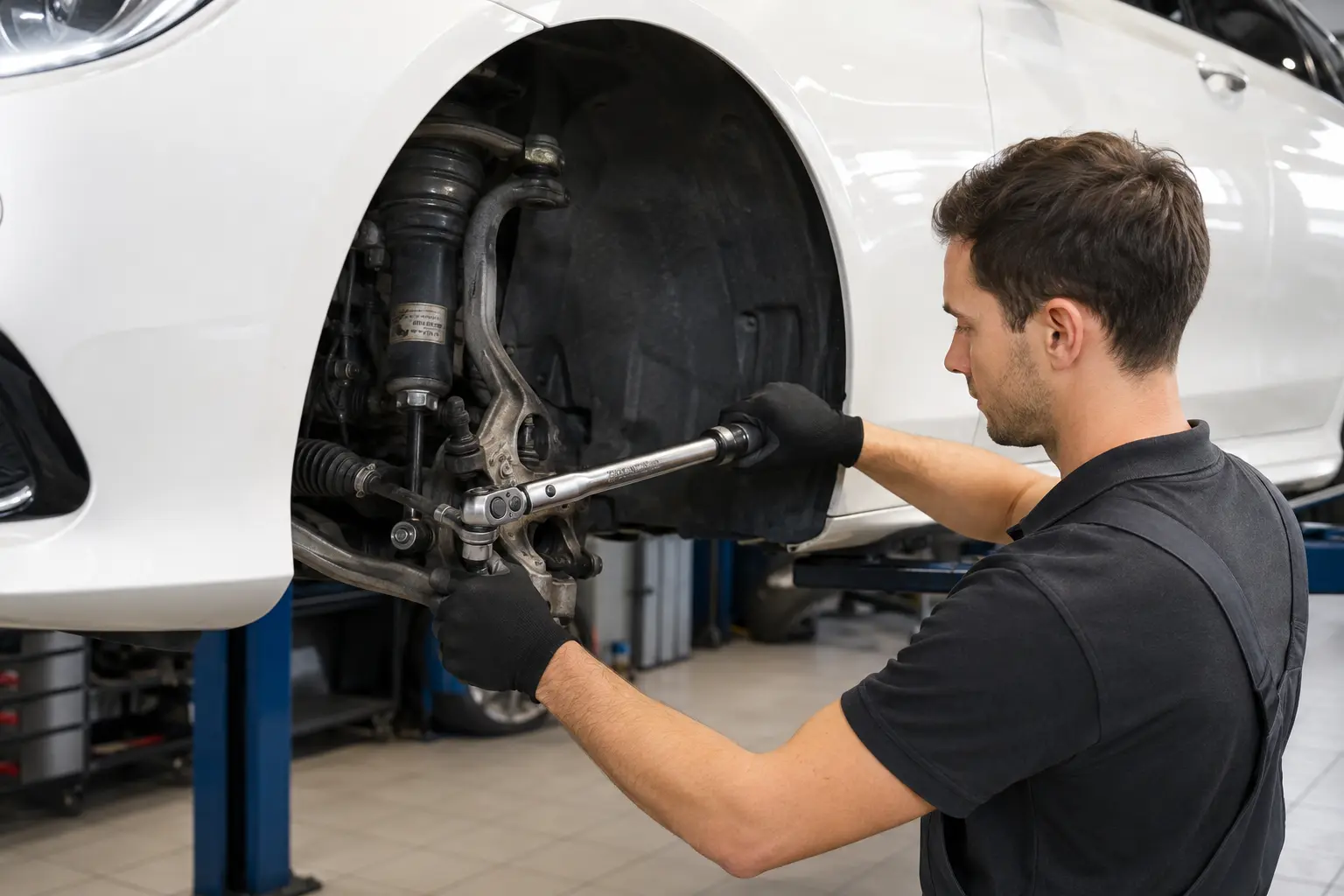
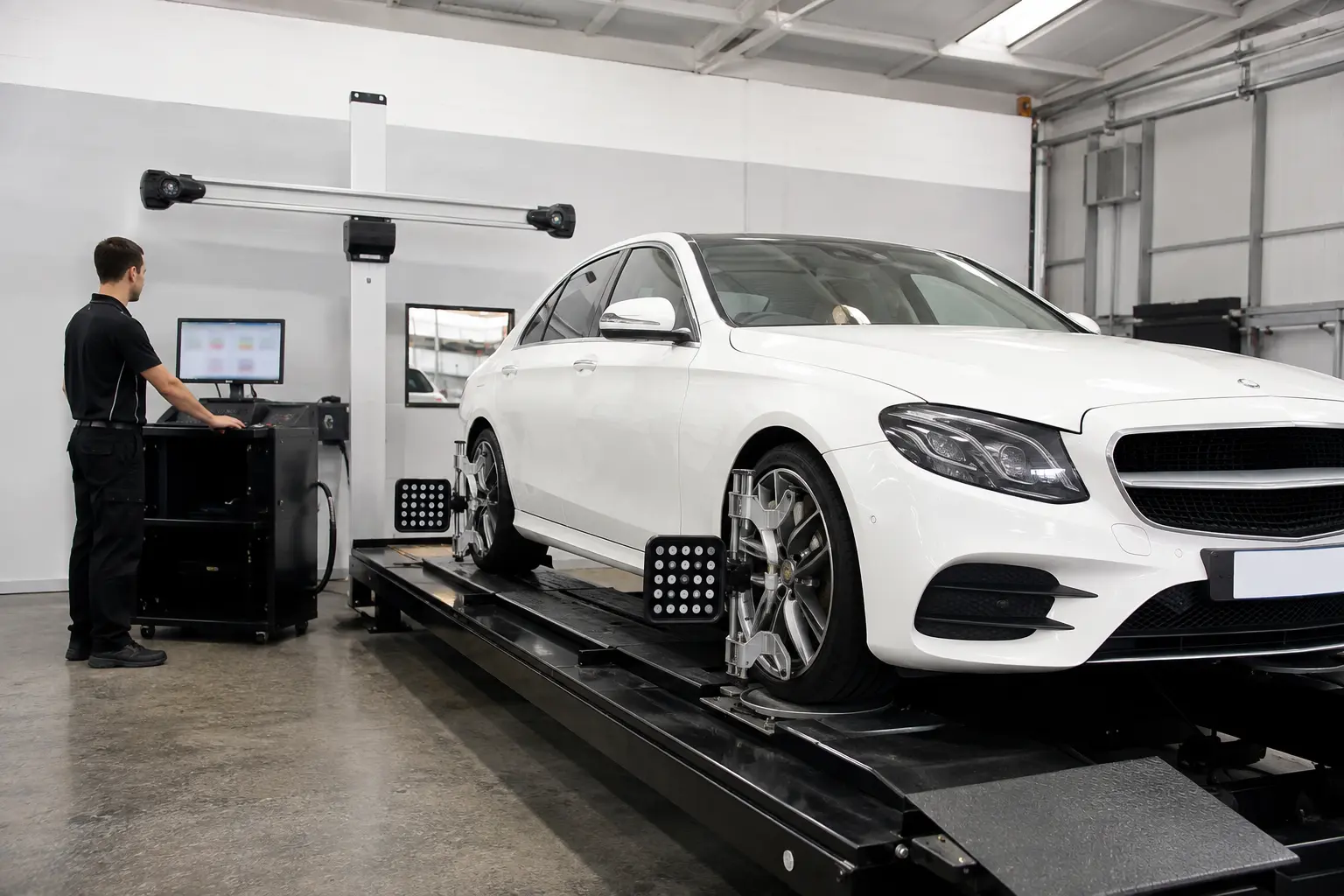
Alignment is evidence after mechanical condition
Alignment adjusts measurable wheel geometry. It cannot remove play from a joint, repair a bent arm, stop a rack leak or restore failed power assistance. If components move under load, the alignment reading may not remain stable.
Mechanical inspection therefore comes first when the complaint includes looseness, impact, noise or abnormal tyre movement. After relevant repairs, the alignment rack helps verify toe and other adjustable values. The steering wheel position and steering-angle data can then be considered where applicable.
Tyres also influence the result. Unequal pressure, mismatched construction, damage or irregular wear can produce pull and steering variation even when the measured geometry is within the available target.
What changes the estimate
Price and workshop time depend on the confirmed component, vehicle generation, access, fluid or electronic procedure, parts source and alignment requirement. Accident or kerb-impact damage can widen the inspection because more than one part may have moved.
Parts availability should be confirmed by VIN. Supplier terms can vary by part and job. The estimate should distinguish diagnosis, replacement parts, labour, fluid, wheel alignment and calibration where they apply. We do not use an unsupported guaranteed-solution claim to replace those details.
Related Mercedes services
For wider maintenance, warning-light or mechanical concerns, use the Mercedes repair hub. For general information covering other vehicle makes, the main steering repair page explains the broader service.
Use the Mercedes repair Dubai hub for broader Mercedes services. Use the general steering repair page for non-brand-specific system information.
Road evidence needs controlled conditions
A vehicle can pull differently on a crowned road, under braking or on a surface with grooves. That does not make the complaint imaginary. It means the assessment should compare repeatable conditions rather than rely on one road and one brief impression. Tyre pressure, size, construction, tread depth and damage are recorded before geometry or rack conclusions are made.
A pothole or kerb strike can affect a wheel, tyre, steering joint, suspension arm, bearing, subframe position or alignment. The steering wheel may become off-centre even when the car still appears driveable. If the impact was strong, tell us which wheel was involved and whether a tyre or wheel has already been replaced. Hidden movement can remain after the visible damage is corrected.
Vibration also needs a speed and load description. A shake at a narrow speed range may lead toward wheel or tyre condition, while feedback under braking can involve brakes or suspension. A knock over bumps is assessed differently from a click only while turning at parking speed. Those distinctions reduce the chance of naming a steering rack from a broad phrase such as steering noise.
The repair route needs named evidence
The available route depends on the failed component, vehicle identity, supplier support and whether a safe, verifiable repair is possible.
Fitment, included hardware, return conditions and supplier coverage are confirmed. New does not remove the need to verify alignment, fluid or electronic procedures.
Ask who rebuilt it, what was renewed, how it was tested and what core return applies. A painted used rack should not be presented as remanufactured without evidence.
This route is considered only when the fault, repair method and specialist capability support it. Damage, corrosion or unavailable internal parts can rule it out.
Boots, tie rods, fasteners, fluid, wiring or mounts may be necessary with the primary repair. Each addition should have a reason rather than appear as an unexplained package.
Questions before diagnosis
Tell us whether the fault occurs stationary, while parking, over bumps, under braking or at road speed.
No. Tyre pressure, tyre construction, alignment, suspension, brake drag, road camber and steering components can all contribute. The vehicle needs a structured inspection.
No. Alignment changes geometry settings. Mechanical play in a joint, rack, bearing or mount must be repaired before the readings can be trusted.
Low-speed steering places a high demand on assistance. Hydraulic supply, electric assistance, voltage, tyre pressure or mechanical binding may be involved.
Low or unstable voltage can affect electronic steering systems and stored faults. That possibility needs measurement and does not rule out a separate steering fault.
Ask for an assessment, but trim and control work is a secondary cabin service. This page focuses on the mechanical and assisted steering system.
Rack and tie-rod work normally affects geometry and should include alignment verification. The exact electronic and hydraulic procedures depend on the vehicle.
Record whether it is a knock, click, groan or whine and when it happens. A short video can help, but the physical inspection determines the source.
Describe the behaviour
Send the VIN, dashboard message, recent tyre or suspension work and when the steering changes. Mention any impact before driving to the workshop.