GMC AC repair
Cooling, airflow, refrigerant, compressor, front and rear climate faults.
View AC repairOverheating in traffic, a harsh shift, weak AC, or a new suspension noise? Book GMC repair in Dubai for your Yukon, Sierra, Acadia, Terrain, or other GMC model. Start with the model and problem. We inspect the concern and explain the estimate before paid work begins.
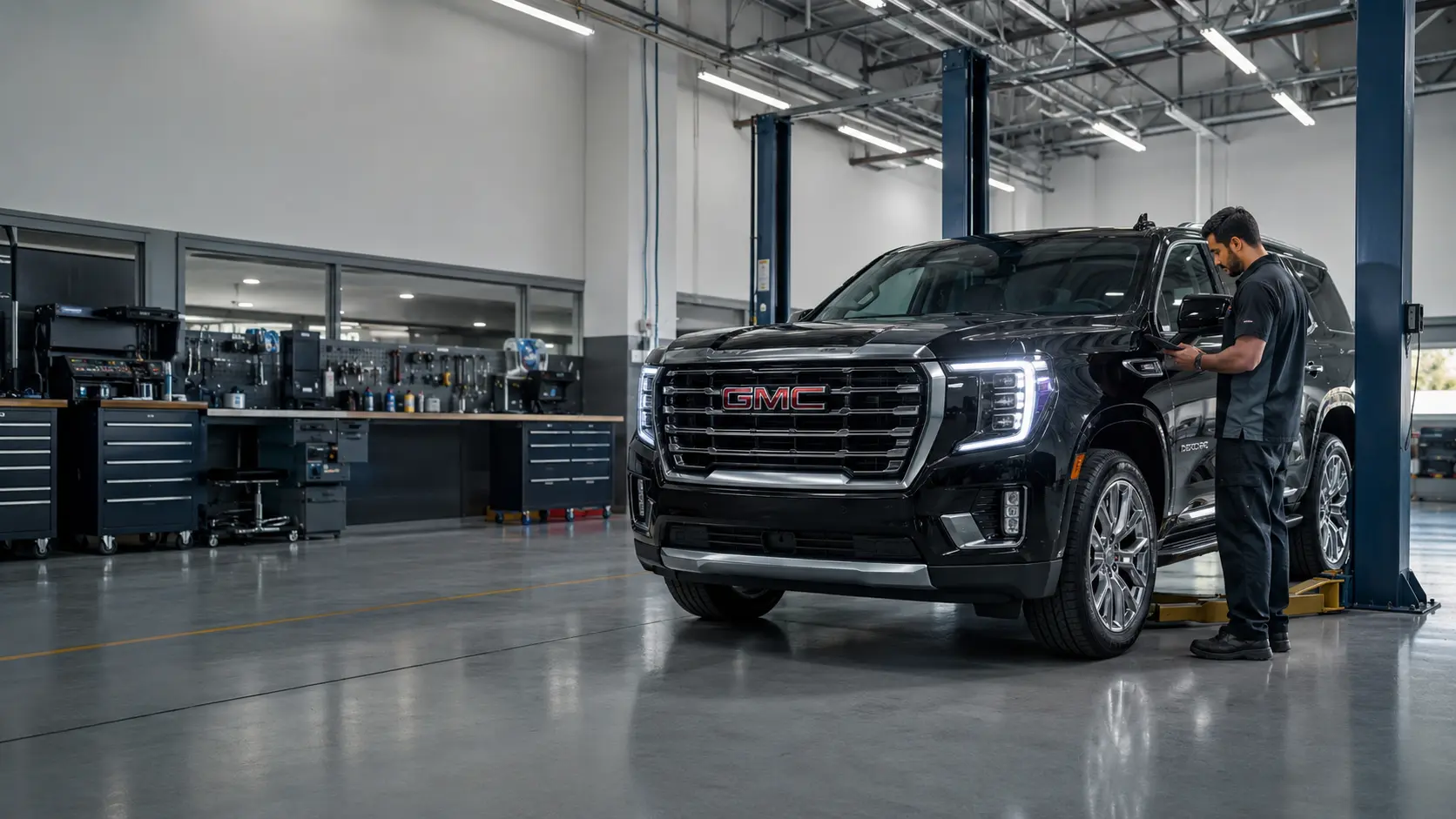
Large SUVs and trucks can feel normal when empty yet reveal a fault under towing, cargo, heat or highway load. Conversely, tires or wheel changes can imitate a driveline condition. The advisor needs the exact operating context before selecting tests.
A useful first inspection determines urgency and the most likely system path without treating model reputation or a dashboard description as proof of a failed assembly.
Choose the service that matches the problem. The dedicated GMC pages explain the work, repair choices, and estimated prices. If you are unsure which system is involved, start with the free initial inspection.
Cooling, airflow, refrigerant, compressor, front and rear climate faults.
View AC repairPads, discs, calipers, hydraulics, warnings, load, and vibration.
View brake repairWarnings, leaks, overheating, smoke, noise, misfires, and power loss.
View engine repairCorrect oil specification, filter, hard-use planning, and inspection.
View oil serviceKnocks, damping, ride height, handling, alignment, and tire wear.
View suspension repairEngagement, shifting, fluid, controls, towing behavior, and internal faults.
View transmission repairFor planning, a Terrain oil service is AED 425–575, while a Yukon or Sierra 1500 gasoline oil service is AED 550–850. Engine, capacity, parts, and additional due items affect the total. These are planning ranges, not final VAT-inclusive quotes.
Matched engine oil and filter, labor, level check, and reset. Additional filters and repairs excluded.
Applicable gasoline-engine oil service, filter, labor, and visible leak checks. Extra due maintenance is separate.
One front axle set with fitting and brake inspection. Rotors, calipers, and additional repairs excluded.
Temperature, pressure, airflow, and control checks. Recharge and component replacement are separate.
Detection, evacuation, and refrigerant work as quoted. Leak repairs, contamination, and extra rear-system work may add cost.
Suitable lead-acid battery and installation for applicable vehicles. AGM and higher-capacity batteries cost more.
The initial workshop inspection is free. Extended diagnostics, dismantling, and specialist testing are quoted separately. Your written estimate confirms the included parts, labor, fluids, VAT, and final payable total.
Get a GMC estimateThese are planning scenarios, not completed customer jobs. Each assumes the stated parts and condition. The written quote confirms VAT and the final total after inspection.
Correct-spec engine oil, oil filter, applicable drain seal, labor, level check, visible leak inspection, and oil-life reset. Additional filters, fluid services, and leak repairs are excluded.
A matched front axle pad set, installation, contact-point cleaning, rotor measurement, fluid check, and road verification. Assumes serviceable rotors and calipers; replacement rotors are extra.
Confirmed evaporator replacement with dashboard-access labor, applicable seals, refrigerant service, and zone checks. Additional electrical faults, contamination, or separate rear-system repairs are excluded.
Engine, chassis, and electrical faults need different checks. Vehicle size, condition, and equipment determine the inspection method.
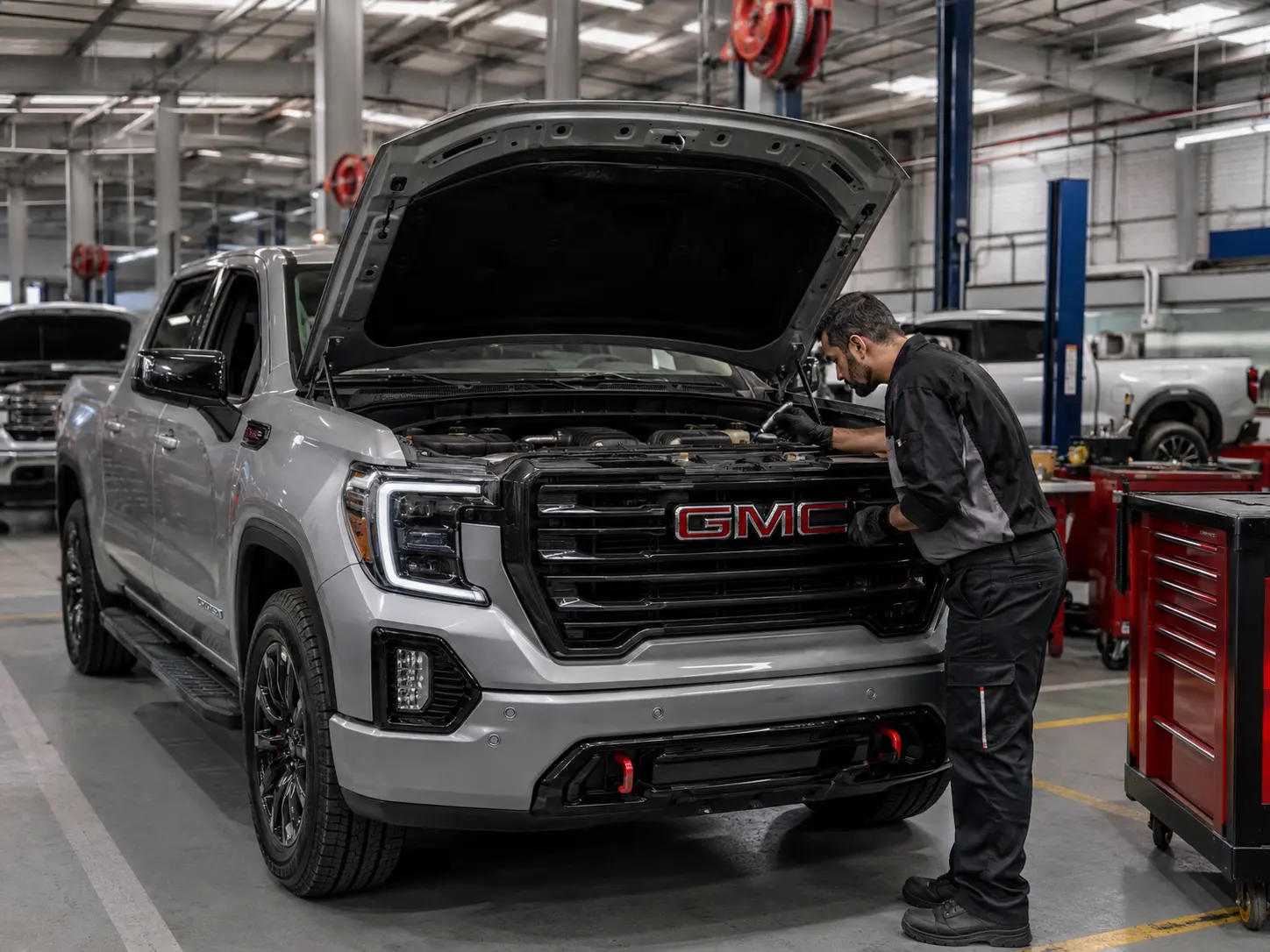
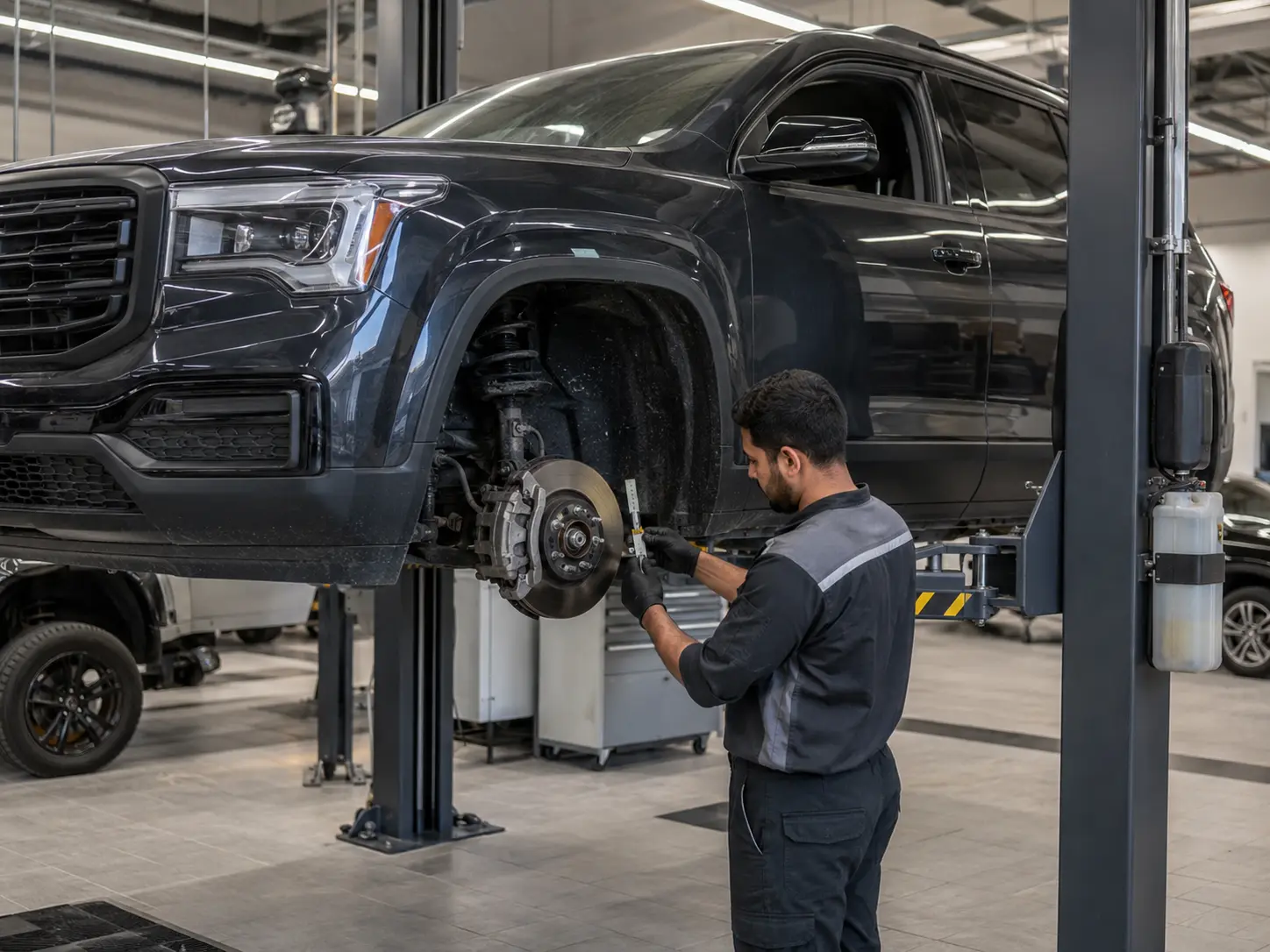
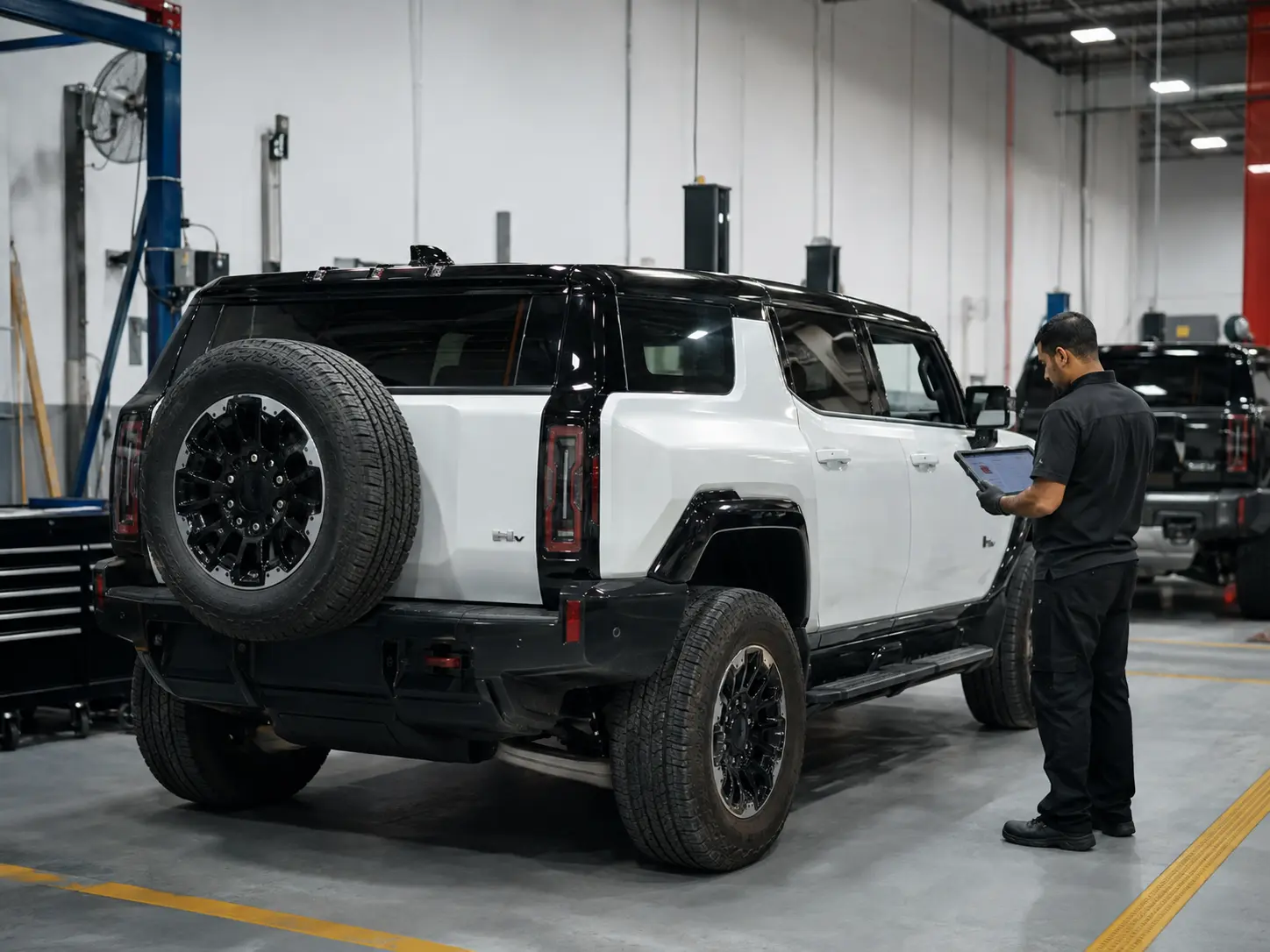
Size, heat and usage determine sensible inspection priorities. Towing or off-road history informs the technician, but by itself it proves neither abuse nor a need for packaged replacements.
State trailer type, approximate loaded weight, brake equipment, route and any recent overheating or shift change. Confirm the vehicle and hitch ratings independently before use.
After a towing concern, preserve warning messages and avoid repeatedly recreating a high-load fault without a safety review.
Lift or lowering components, wheel offsets, oversized tires and non-standard dampers alter geometry, loads and access. Send photographs and component information before booking.
Alignment cannot correct worn joints, damaged wheels or an incompatible setup. Hardware condition comes first.
Record all four tire sizes, load ratings, pressures, age and tread pattern, plus spare condition. Mixed rolling dimensions can affect handling and four-wheel-drive behavior.
A highway vibration should be assessed with wheel damage, balance, runout and driveline possibilities kept separate.
Trackers, cameras, trailer controllers, lighting and audio additions may change battery demand or sleep behavior. Long airport parking can reveal limited reserve even without an abnormal draw.
Keep installation documents and report every jump-start or battery replacement with its date and rating.
Off-road use can affect filters, underbody protection, connectors, brakes and cooling airflow. Water crossings introduce a different risk and should be declared immediately.
Cleaning is not proof that fluids, bearings or wiring remained unaffected; request relevant inspection when exposure was significant.
Where safe and agreed, the final check should approximate the original temperature, road speed, cargo or steering condition. An unloaded idle test may not reproduce a towing symptom.
Keep scan records, fluid references, alignment sheets and replaced-part details for continuity.
A full-size Yukon, pickup-based Sierra, crossover Acadia or Terrain, and Hummer EV differ in dimensions, lift points, drivetrain, suspension and electrical architecture. We use the model details to prepare transport and any special tooling.
Imported-market configuration, option packages and earlier modifications may affect parts and diagnostic information. The VIN and clear images of the vehicle and warning display are more reliable than a shortened registration description.
Vehicle weight, wheelbase, roof height, tire condition and ride-height faults can change the safe arrival and lifting method. For a non-running truck, we plan safe movement and check workshop access when you contact us.
EV traction, charging and thermal operations remain separate from routine low-voltage testing. Manufacturer-protected programming or driver-assistance calibration may also require an outside specialist.
Find help with electrical supply, steering, glass, bodywork, wheels, and interior repairs. Use the relevant service page for the work you need.
Collision damage, panels, paint, structure, wheels, and safety systems.
View accident repairStarting, charging, battery matching, installation, and drain diagnosis.
View battery servicePanels, bumpers, paint, refinishing, sensors, and body restoration.
View body repairPaintless repair, creases, bedside damage, panels, and paint.
View dent repairCurb damage, bends, cracks, vibration, pressure loss, and refinishing.
View rim repairPart matching, sourcing choices, installation, coding, and verification.
View spare partsHeavy steering, pulling, play, leaks, warnings, and geometry.
View steering repairLoad-rated tire selection, fitting, balancing, alignment, and pressure.
View GMC tiresSeats, headliners, trim, carpet, foam, stitching, and material repair.
View upholstery repairGlass damage, seals, moldings, sensors, installation, and calibration.
View windshield serviceAn oil change or scheduled fluid service maintains a working system. It is not a remedy for persistent overheating, a slipping transmission, or lost oil pressure. We identify any additional diagnosis before adding work.
A confirmed hose leak, worn control-arm joint, damaged ground connection, or faulty sensor may need a focused repair. We explain the surrounding checks and why the proposed part addresses the problem.
For internal engine or transmission damage, compare the repairable condition, machining, replacement assembly, parts availability, total installation cost, and applicable written warranty. A low assembly price alone is not the complete job price.
Ask to see the genuine or suitable aftermarket part choice in the estimate. Towing, heavy loads, modifications, and electronic suspension can affect fitment. Used or rebuilt assemblies need a clear description of condition, compatibility, included components, and written coverage.
Your model and a short description are enough to start. We request additional details if needed for parts, diagnosis, or safe collection.
The initial inspection identifies the next step. Any paid testing, proposed repair, parts choice, and expected timing are explained before you approve them.
We complete the agreed work and check the original concern under a safe, relevant operating condition. Additional recommendations remain separate from the selected repair.
The quote identifies parts, labor, fluids, setup requirements, exclusions, and the final payable amount. If access reveals additional damage, the extra work returns to you for approval.
At handover, keep the invoice and work summary with earlier service records. Ask about any remaining observations and the next maintenance due. Written parts or repair warranty terms apply only as stated for the selected work.
Our independent workshop is in Al Quoz 4, Dubai. Contact us with the GMC model and what needs attention. For collection, share your location and whether the vehicle starts, rolls, steers, and brakes normally.
If your truck has a lift kit, oversized tires, extended body, or restricted movement, mention it when arranging collection. We handle the access and equipment checks rather than asking you to diagnose the vehicle yourself.
Stop safely for overheating, lost oil pressure, fuel leaks, heavy smoke, or changed braking or steering control. Do not reproduce a dangerous towing fault to demonstrate it. Electric models need appropriate recovery instructions.
Check any manufacturer warranty, recall, or service package with the supplying dealer. Recall eligibility is vehicle-specific. This independent workshop cannot approve a manufacturer warranty claim.
Record a warning while parked, check tire pressures against the vehicle label, and note visible leaks without reaching near moving parts. Do not open a hot cooling system, crawl beneath an unsupported vehicle, or disturb high-voltage components.
Terrain oil service is estimated at AED 425–575. Yukon or Sierra 1500 gasoline oil service is AED 550–850. Prices depend on the model and included work. The written quote confirms VAT and the final payable total.
Yes. The initial workshop inspection is free. Computer diagnosis, extended electrical tracing, dismantling, and specialist tests are separately priced before work starts.
Free pickup and delivery are available. Share your location and whether the car moves normally. A dedicated on-site van inspection is a separate paid service, with the fee agreed first.
No. Your model and a short description are enough to start. We request the VIN or other details later when needed to match parts, fluids, or procedures.
Depending on the repair, the quote can identify genuine parts and suitable aftermarket alternatives. Fitment, supplier, availability, and any applicable written warranty should be clear before you choose.
Routine service may be completed the same day when parts and capacity allow. Intermittent faults, internal repairs, and ordered parts take longer. You receive an expected schedule after assessment.
Yes. A warranty, recall, or service package may cover the concern. Check your vehicle’s terms with the supplying dealer before paying for related work. This independent workshop does not approve manufacturer claims.
Contact us with the model and concern. A 12-volt, brake, or suspension check differs from charging or traction-battery work. We explain the diagnostic equipment and specialist support required for the requested repair.
Tell us your GMC model and what needs attention. We’ll arrange the initial inspection, explain any paid diagnosis, and help plan collection.