Check-engine warning
Stored and pending codes, freeze-frame information, misfire counts, fuel correction, temperature, pressure, and sensor signals are reviewed. A code identifies a circuit or operating condition, not a guaranteed component.
GMC engine workshop in Al Quoz 4
Diagnose warning lights, overheating, oil loss, coolant leaks, smoke, misfires, low power, timing noise, and internal engine damage before choosing repair, rebuild, or replacement.
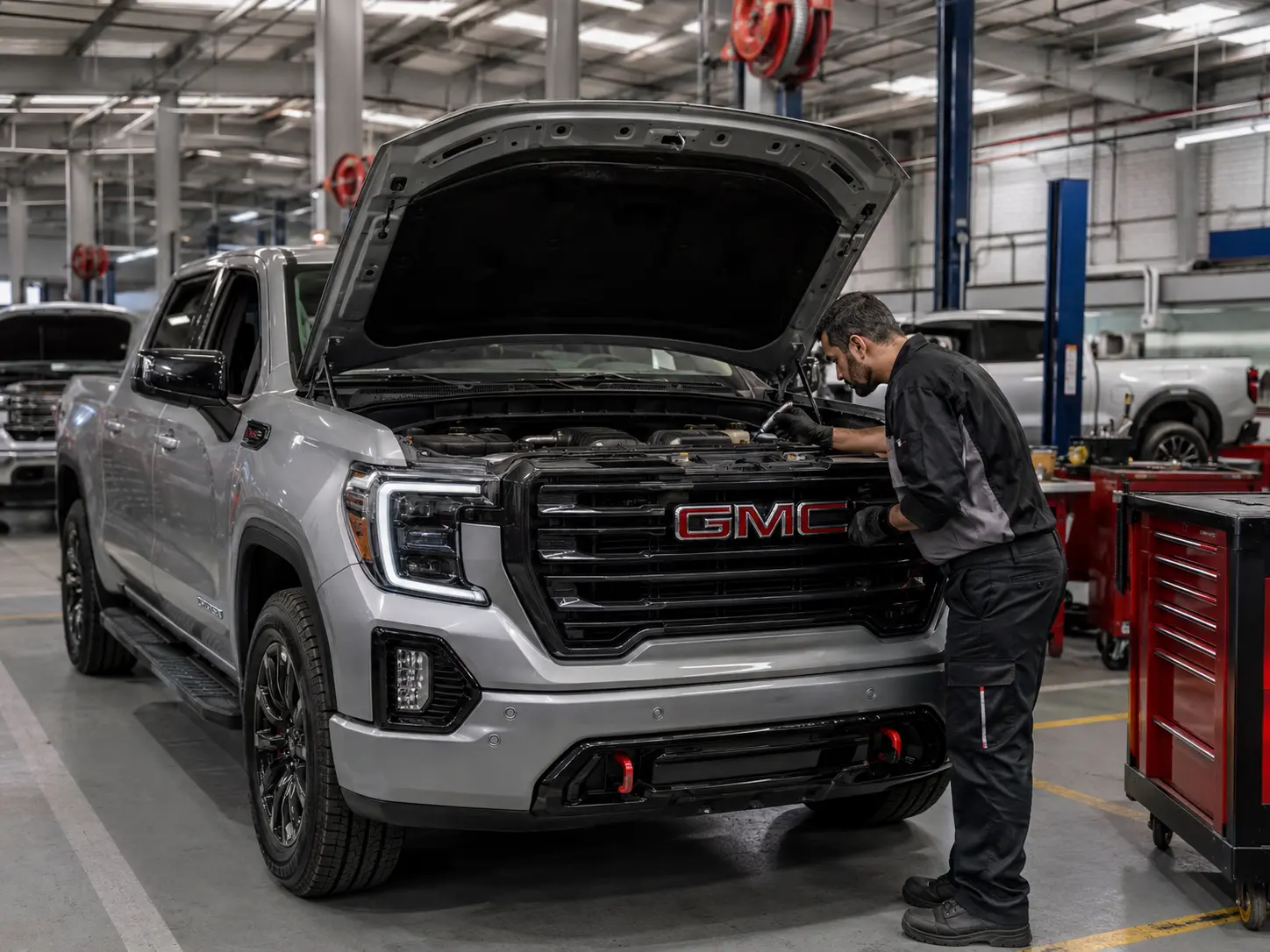
Start with the engine fault stage
The warning, sound, fluid, and driving condition determine the first safe checks. More than one symptom may point to the same underlying failure.
Stored and pending codes, freeze-frame information, misfire counts, fuel correction, temperature, pressure, and sensor signals are reviewed. A code identifies a circuit or operating condition, not a guaranteed component.
Cooling fans, pressure, cap, hoses, radiator, pump, thermostat, reservoir, visible leaks, combustion-gas clues, and operating data are checked before repeated overheating damages the engine.
Oil level, correct grade, external leaks, filter and housing, pressure, contamination, consumption history, crankcase ventilation, and internal noise are separated. A red pressure warning requires immediate caution.
Ignition, fuel delivery, air leaks, injectors, compression, valve operation, exhaust restriction, controls, and transmission behavior can overlap. Testing prevents a full tune-up from hiding a mechanical fault.
The engine speed, temperature, oil pressure, load, and location of the sound are recorded. Accessory drives, injectors, exhaust leaks, lifters, timing parts, bearings, and piston movement require different responses.
Blue, white, or dark smoke is assessed with fluid levels, temperature, fuel data, turbo condition where fitted, crankcase pressure, cold-start behavior, and odor. Condensation is not treated as automatic engine failure.
Choose the repair level after tests
A major-sounding symptom does not always require a complete engine. The condition of the block, heads, lubrication system, cooling system, and related vehicle systems sets the sensible boundary.
Sensors, ignition parts, injectors, pumps, seals, gaskets, cooling components, intake leaks, wiring, or accessory drives may correct the fault without opening the long block.
Cylinder-head work, valve-train parts, timing components, oil-pump repairs, or selected internal parts may be suitable when measurements show the remaining assembly is serviceable.
Severe wear, widespread contamination, damaged cylinders, bearing failure, overheating distortion, or poor repair economics may favor a documented rebuild or suitable replacement engine.
Each option is compared for included parts, machining, source, warranty terms, related systems, expected downtime, and risk. A used engine with an unknown history is not presented as equal to a measured rebuild or documented remanufactured assembly.
Budget ranges by diagnostic and repair level
Engine family, model access, fault depth, parts source, machining, contamination, related cooling work, and dismantling findings affect final cost.
| Engine work | Estimated price | Typical scope |
|---|---|---|
| Initial engine inspection | Free | Fluid, leaks, warnings, noise history, and visible condition review |
| Advanced engine diagnosis | AED 450 to 1,500 | Scanning, live data, targeted electrical or mechanical tests, and findings |
| Ignition or misfire repair | AED 700 to 3,500 | Confirmed plugs, coils, wiring, injector, air-leak, or related correction |
| Cooling-system repair | AED 900 to 6,500 | Confirmed hose, thermostat, pump, radiator, fan, reservoir, or leak work |
| Oil-leak repair | AED 800 to 7,500 | Accessible seal or gasket through larger cover, housing, or pan work |
| Timing or valve-train repair | AED 4,500 to 15,000 | Confirmed components, access labor, seals, fluids, and verification |
| Cylinder-head repair | AED 7,500 to 22,000 | Head removal, testing or machining, approved parts, gaskets, fluids, and checks |
| Engine rebuild or replacement | AED 18,000 to 55,000+ | Selected assembly route, labor, related items, commissioning, and tests |
Our equivalent engine work can be 65% to 70% lower than agency pricing. The estimate identifies parts, machining, engine source where relevant, fluids, seals, labor, testing, VAT treatment, exclusions, and what happens if dismantling reveals more damage.
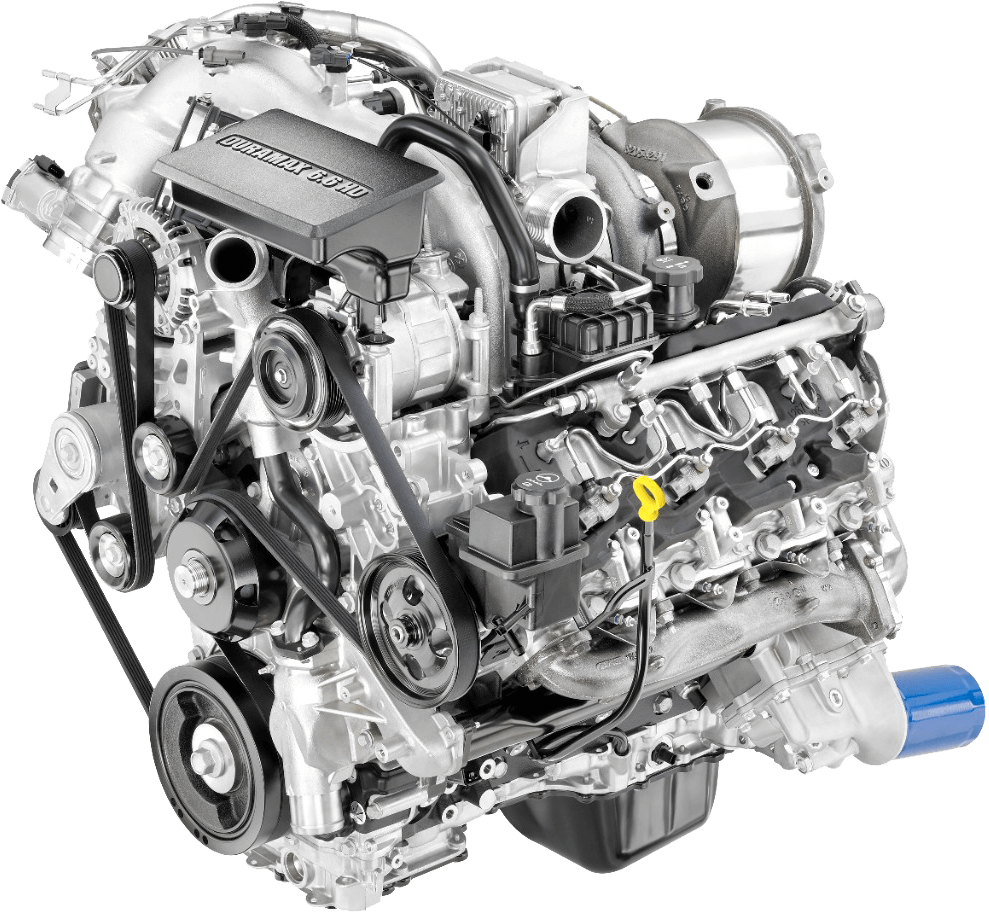
Build evidence before dismantling
The starting test set follows the complaint. Scanning may be combined with battery and charging checks, live sensor data, smoke testing, fuel-pressure checks, ignition analysis, cooling pressure tests, oil-pressure measurement, compression, cylinder leakage, borescope inspection, and fluid examination.
No single test proves every internal condition. Good compression does not confirm oil pressure, and an ordinary scan cannot show physical bearing clearance. The report connects multiple findings before recommending high-cost work.
If the GMC arrives after severe overheating, oil-pressure loss, coolant contamination, or an engine seizure, safe external checks may come first. Controlled dismantling is then quoted as a diagnostic stage when internal condition cannot be confirmed from outside.
Correct the supporting cause as well as the damage
Oil grade, level history, pressure, pump condition, pickup, cooler, filter housing, galleries, leaks, sludge, metal debris, and crankcase ventilation can determine whether new internal parts survive.
Radiator flow, fan control, hoses, thermostat, pump, cap, reservoir, heater circuit, pressure retention, and trapped air are checked so an overheating source is not returned unchanged.
Intake leaks, throttle operation, injectors, pump delivery, ignition energy, sensor accuracy, exhaust restriction, and control adaptations affect starting, mixture, power, and final commissioning.
Battery condition, cranking speed, ground paths, alternator output, connectors, harness routing, modules, and network faults can imitate or contribute to poor engine operation.
Engine mounts, transmission behavior, torque-converter clues, propeller shafts, axles, and exhaust contact can transfer noise or vibration that appears to come from the engine itself.
Fluids, priming, cooling bleed, initial start, leak checks, scan data, temperature stability, adaptations where needed, road testing, and follow-up guidance complete a major installation.
One detailed example case study
Vehicle and concern: a 2018 GMC Sierra 5.3L with a recurring misfire, increased oil use, ticking after warm-up, and earlier replacement of ignition parts that did not resolve the complaint.
Evidence: scan data localized repeat misfires, ignition output remained consistent, cylinder leakage exceeded the comparison cylinders, the affected spark plug showed deposits, and valve-train inspection confirmed mechanical wear.
Decision: targeted top-end work was compared with a broader rebuild. Oil pressure, remaining cylinder condition, bore evidence, vehicle mileage, downtime, and owner plans supported an approved cylinder-head and valve-train repair rather than automatic engine replacement.
Engine identification before parts ordering
Send the VIN when available. GMC model names can cover several engine families, and ordering by displacement alone can produce incorrect sensors, seals, timing parts, or complete assemblies.
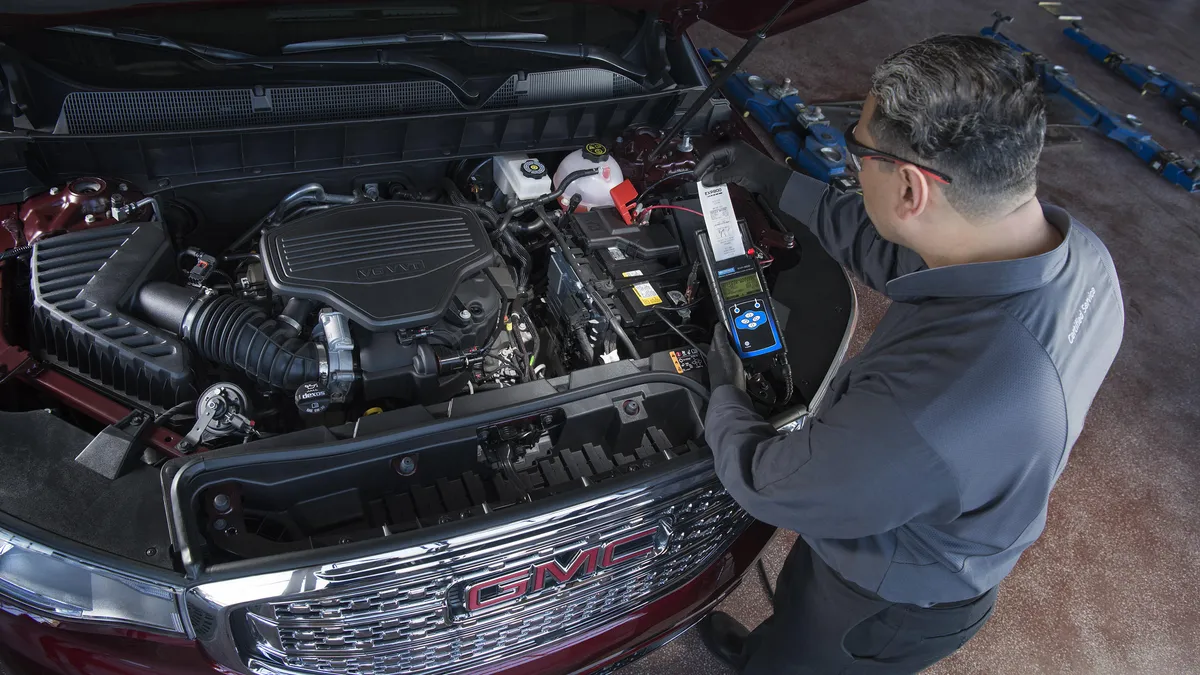
A staged engine repair process
Warning, noise, fluid loss, smoke, temperature, power, repair history, and driving conditions are documented.
Electronic, mechanical, lubrication, cooling, fuel, and ignition evidence narrows the fault.
The written options identify parts, machining or engine source, related items, cost, risk, and timing.
Approved work is completed, followed by fluid, pressure, leak, data, temperature, starting, and road checks.
GMC engine questions
Stop safely and switch off the engine. Low oil pressure can cause rapid internal damage. Check the level only when safe and arrange advice rather than continuing to test it on the road.
No. The code identifies a monitored condition or circuit. Live data, electrical checks, mechanical tests, and the operating circumstances are used to confirm the cause.
Often yes, but the repair level depends on how hot it became, how long it ran, coolant and oil condition, pressure tests, head condition, cylinder sealing, and the cause of overheating.
Neither route is automatically better. Compare measurements, included parts, machine work, source history, warranty, related systems, expected downtime, and total installed cost.
Coils, wiring, injectors, fuel pressure, intake leaks, compression, valve-train wear, control signals, or exhaust restriction may remain. Diagnosis should confirm the affected cylinder and cause.
Timing depends on diagnosis, dismantling, parts, machining, engine availability, supporting repairs, and testing. The workshop gives an updated schedule when internal condition is known.
Yes. Free pickup and delivery can be arranged within the service area. Share whether the engine cranks, the warnings shown, and what happened before it stopped.
GMC engine repair in Dubai
Send the GMC model, warning, sound, fluid loss, and recent repair history. We will arrange diagnosis in Al Quoz 4 or vehicle pickup. Shifting, engagement, or driveline concerns should follow the GMC transmission repair route. Routine lubrication service belongs on the GMC oil change page.