Minor exterior damage
Scratches, dents, bumper scuffs, cracked grilles, broken lamps, mirror damage, and isolated paint defects.
GMC collision repair · Al Quoz 4
Restore damaged GMC bodywork, paint, lighting, glass, suspension, and safety systems through one coordinated repair. Start with a free workshop inspection and receive a written estimate before repair work begins.

01
Start with the damage
Accident damage is not limited to the panel you can see. A bumper impact can affect brackets, absorbers, sensors, lamps, cooling parts, wiring, wheel alignment, and suspension mounting points. A side impact can involve doors, pillars, glass, seat-belt components, airbags, and structural alignment. We inspect the visible area and the connected systems before preparing the repair estimate.
Tell us the GMC model, year, location, and whether the vehicle can move safely. Photos help us understand the initial condition, but they do not replace an inspection when hidden damage is possible. If the vehicle is unsafe to drive, request collection instead of taking a risk on the road.
Scratches, dents, bumper scuffs, cracked grilles, broken lamps, mirror damage, and isolated paint defects.
Damaged panels, bumpers, supports, cooling components, suspension parts, sensors, and wheel-alignment changes.
Multiple panels, structural measurement, restraint systems, wiring, mechanical damage, and extensive refinishing.
02
Choose the right repair depth
A dented metal panel may be repaired when its shape, mounting points, corrosion protection, and strength can be restored. A split bumper cover may be repairable when the damaged area is suitable and the sensor mounts remain accurate. Cracked lamps, badly stretched metal, torn mounting points, and safety-critical parts often require replacement.
Replacement choices can include genuine, OEM-quality, aftermarket, or selected used parts when appropriate. The estimate identifies the proposed route. Paintwork can range from a localized repair to complete panel refinishing and blending into adjacent panels. Color matching is checked under suitable lighting before handover.
Suitable for repairable dents, scratches, bumper damage, brackets, and localized paintwork where the original part remains serviceable.
Used when damage, safety, fit, sealing, or long-term reliability makes repairing the existing component unsuitable.
Includes preparation, primer, color application, clear coat, blending when needed, polishing, and finish inspection.
03
Plan the repair budget
These fitted ranges help you plan before inspection. The final amount depends on the model, affected area, hidden damage, parts source, paint color, structural work, sensor calibration, glass, mechanical repairs, and VAT treatment. A written estimate lists the work included and identifies items that may change after dismantling.
Small cosmetic work can be priced by panel. Collision repairs are better quoted as a complete job because clips, brackets, absorbers, lamps, sensors, blending, alignment, fluids, and testing can materially change the total. Comparable workshop repairs may cost 65% to 70% less than agency pricing when the same parts and repair scope are compared.
Estimated per affected area for suitable minor dents, preparation, paint, and finishing.
Estimated repair or refinishing. Replacement parts, sensors, and brackets are separate when required.
Estimated per panel, depending on metal work, paint system, blending, and trim removal.
Estimated complete job involving several parts, bodywork, paint, alignment checks, and assembly.
Inspection-led estimate for structural, mechanical, electrical, restraint, and multi-panel repairs.
04
Check beyond the body panel
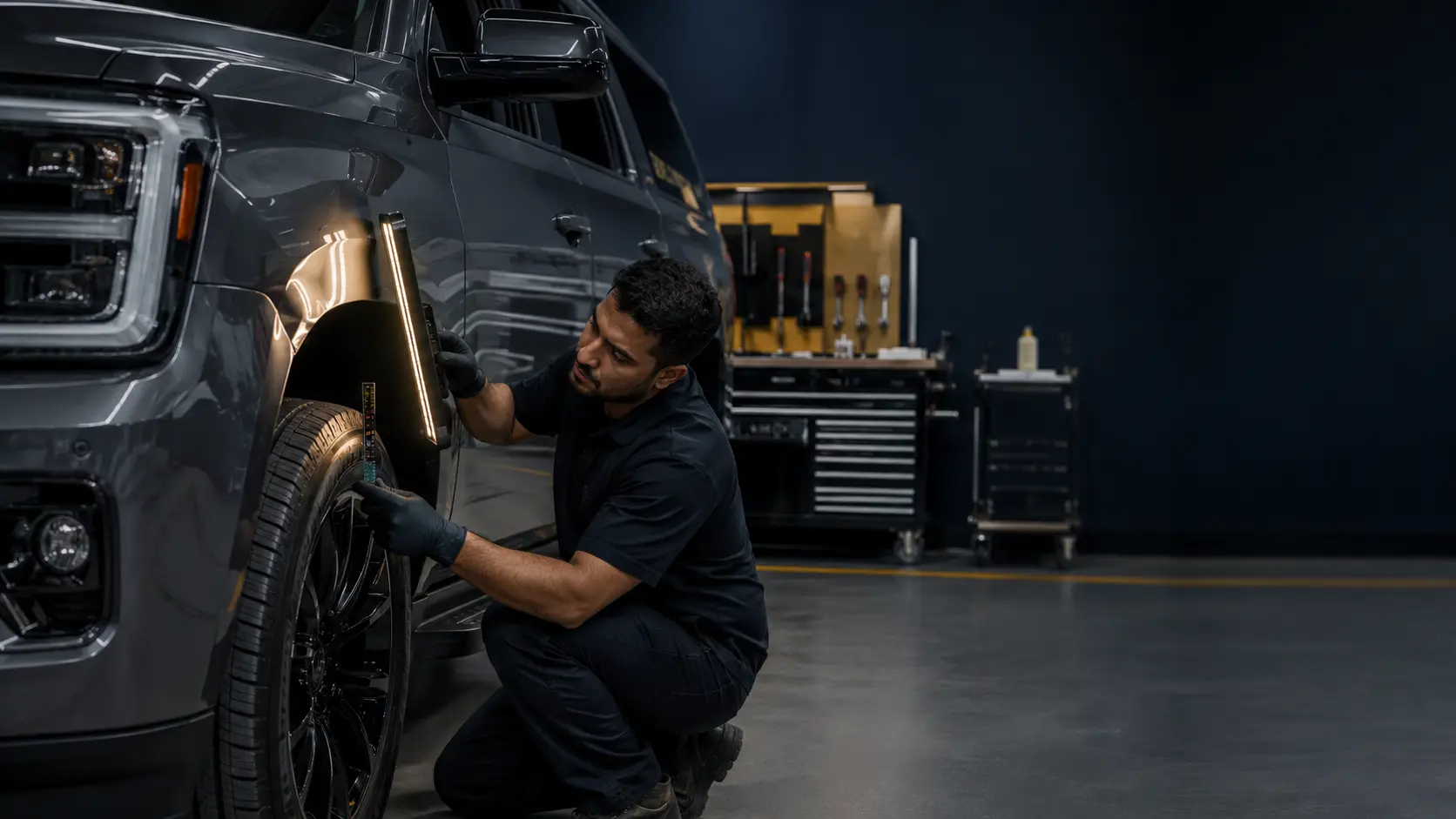
Arrange pickup if steering has changed, a wheel is rubbing, fluid is leaking, glass blocks visibility, lights are badly damaged, airbags have deployed, the hood or door cannot latch, or loose body parts could detach.
05
GMC-specific fit and finish
We handle accident repairs for GMC Yukon, Yukon XL, Sierra, Canyon, Terrain, Acadia, Savana, and other GMC vehicles used in the UAE. Model year, trim, wheelbase, lighting package, parking sensors, cameras, driver-assistance equipment, grille design, and towing specification can change the correct replacement part.
Large SUVs and pickups need careful measurement because long panels, boxed sections, beds, tailgates, towing hardware, side steps, and large wheels can transfer impact loads beyond the visible damage. Imported vehicles or modified trucks may need additional specification checks before parts are ordered.
Bumpers, grilles, lamps, doors, quarter panels, tailgates, cameras, sensors, suspension, and structural checks.
Front-end damage, bedsides, tailgates, towing equipment, steps, wheels, alignment, lamps, and cab panels.
Panels, bumpers, sliding or liftgate systems, glass, lighting, cooling, electrical, and restraint components.
06
A complete written scope
The estimate should separate body labor, paint labor, parts, materials, mechanical work, electrical work, alignment, calibration, glass, fluids, and VAT treatment when those items apply. It should identify whether each major part is repaired or replaced and state the proposed part source and condition.
Hidden damage sometimes appears only after a bumper, liner, panel, lamp, or trim section is removed. If that happens, the new finding should be documented and added to a revised estimate before extra repair work proceeds. This protects the customer from unclear additions and allows the safest repair route to be reviewed.
Damage correction, dismantling, installation, paint materials, assembly, alignment checks, scans, and testing listed in the estimate.
Genuine, OEM-quality, aftermarket, or selected used parts should be identified clearly with any material condition notes.
Hidden damage, unavailable parts, additional calibration, corrosion, previous repairs, and structural findings can change the total.
Compare the estimate by the complete outcome. Check the proposed parts, paint areas, blending, clips, brackets, sensors, alignment, scans, calibration, fluids, assembly, and final testing. A low first figure may exclude items needed to finish the vehicle correctly. If dismantling reveals hidden damage, ask for photos and a revised written amount before additional work continues. This keeps the repair decision clear while allowing safety-related damage behind bumpers, liners, lamps, and trim to be handled properly.
07
From inspection to handover
Start by sending the model, year, damage location, and vehicle location. We arrange a workshop inspection, pickup, or an on-site assessment when appropriate. After inspection, you receive a repair estimate that explains the proposed bodywork, parts, paint, mechanical repairs, electrical work, and checks.
Work begins after approval. Parts are sourced, damaged areas are dismantled, and hidden conditions are reviewed. Repair, replacement, preparation, painting, assembly, alignment, scanning, calibration, and road testing are completed according to the agreed scope. The vehicle is cleaned in the repaired areas and reviewed before handover.
Record visible damage and check connected systems.
List repair work, parts, paint, and known exclusions.
Confirm the repair route before work begins.
Complete body, paint, mechanical, and electrical work.
Inspect finish, fit, warnings, alignment, and operation.
08
Typical complete repair budgets
These are realistic planning estimates, not confirmed customer repair records. Final cost depends on inspection, hidden damage, parts choice, paintwork, and vehicle condition.
Typical job estimate
Bumper repair, grille section, lamp mounting repair, fender correction, paint, blending, assembly, and front alignment check. Replacement lamp or sensor parts would change the total.
AED 5,800 to 8,900Typical job estimate
Bedside metal correction, preparation, refinishing, tail-lamp mounting check, bumper alignment, polishing, and final panel-gap inspection. Bed replacement is separate if repair is unsuitable.
AED 4,500 to 7,500Typical job estimate
Rear bumper cover, absorber and bracket checks, tailgate alignment, sensor inspection, paint, assembly, scan, and lighting test. Structural damage would require a revised estimate.
AED 4,200 to 7,20009
Details that affect the result
A successful accident repair is more than making a dent disappear. Panel gaps should be even, doors and tailgates should latch correctly, lamps should align, seals should sit properly, and repaired areas should not create wind noise or water entry. Paint color, metallic orientation, gloss, texture, and blending should be reviewed before handover.
Vehicles with cameras, radar areas, parking sensors, blind-spot monitoring, or other driver-assistance equipment may need scans, aiming, relearning, or calibration after parts are removed or impact changes their position. The required procedure depends on the fitted system and repair. Warning lights should not simply be cleared without checking the cause.
Panel gaps, mounting points, closures, seals, lamp positions, and wheel clearances are checked.
Color, coverage, gloss, texture, blend areas, edges, dust, and polishing are inspected.
Lighting, sensors, cameras, warnings, windows, locks, cooling, steering, and road behavior are reviewed as applicable.
10
Workshop access
Our accident repair workshop is in Al Quoz 4, Dubai. We serve GMC owners across Dubai and support vehicles coming from Abu Dhabi, Sharjah, and Ajman. Free pickup and delivery can be arranged, which is especially useful when the vehicle has damaged lights, unsafe steering, leaking fluids, loose panels, deployed airbags, or broken glass.
Send the GMC model, year, vehicle location, and a few photos of the damaged areas. Tell us whether the vehicle starts, rolls, steers, and brakes normally. We will help arrange the appropriate next step. Photos can support the first discussion, while the free workshop inspection confirms the repair scope.
Call or WhatsApp +971 50 608 7150 to arrange an inspection, pickup, or damage assessment. A dedicated on-site inspection van is available by arrangement when a mobile assessment is suitable.
Direct answers
Photos can support an initial discussion, but hidden damage, mounting points, sensor condition, paint blending, alignment, and structural findings often require inspection before a complete estimate is prepared.
Yes. Suitable dents, scratches, bumper scuffs, and isolated paint damage can be repaired without treating the vehicle as a major collision job.
Yes. Free pickup and delivery can be arranged. Share the vehicle location, model, damage, and whether it can roll and steer.
No. Repairability depends on the material, shape, stretched area, mounting points, corrosion protection, safety role, labor, and expected finish.
Genuine parts can be sourced when available. Suitable OEM-quality, aftermarket, or selected used parts may also be discussed. The estimate should identify the proposed source and condition.
Alignment checks or adjustment should be included when the impact, wheel position, steering, suspension, or tire wear indicates a need. Your written estimate identifies whether it is included.
Yes. Sensors, cameras, wiring, mounts, warnings, scan results, and any required calibration can be included according to the fitted system and damage.
Timing depends on damage severity, dismantling findings, parts availability, paintwork, structural work, calibration, approval, and final testing. The expected schedule is discussed after inspection.
Start with a free inspection
Send the model, year, vehicle location, and damage photos. We can arrange inspection, pickup, and a written repair estimate before work begins. Panel, bumper, paint, and refinishing work should continue through the GMC body shop route. Damage involving glass, seals, or camera mounting areas should follow GMC windscreen replacement.