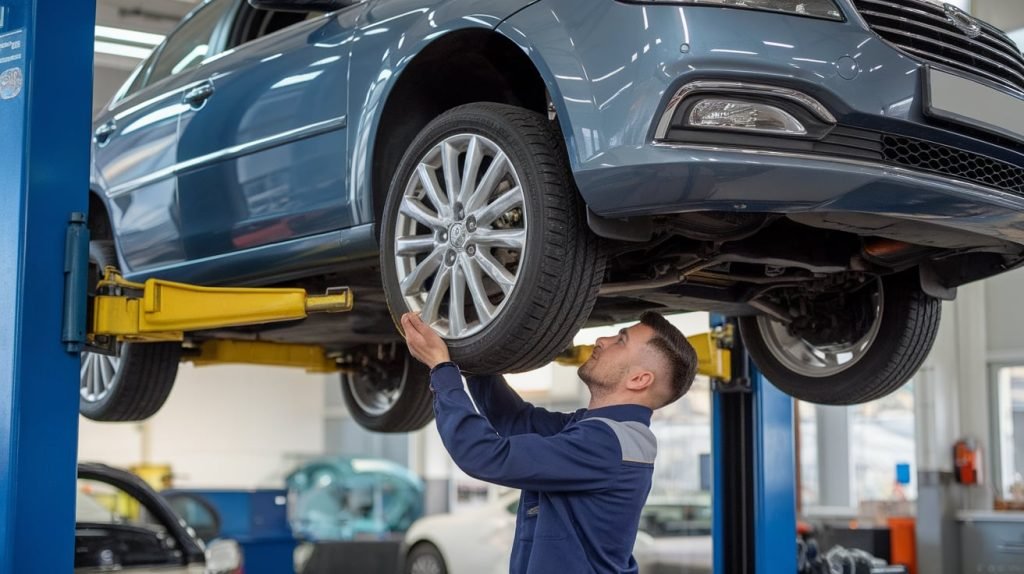
The steering wheel sits a little crooked, so you hold it straight and keep driving. Weeks later, the inner shoulder of a tire is worn. That small correction was evidence. Wheel alignment problems can waste tread quietly, but pulling and uneven wear do not always mean the angles are wrong.
There is no single mileage that fits every car. As a practical Dubai routine, have wheel alignment measured about every 10,000 km or during tire rotation, then check sooner after a pothole or curb impact, new tires, suspension or steering work, an accident, a ride-height change, pulling, a crooked steering wheel, or uneven tread wear. Adjust it only when measurements fall outside the vehicle specification or the repair procedure requires it.
The distinction matters. A measurement can confirm the angles without forcing an adjustment. It can also reveal that worn bushes, a bent arm, tire pressure, road crown, or a damaged wheel must be corrected first. If pressure is the concern, use our car air pump guide to find the placard value and check the tire before assuming alignment is responsible.
Wheel Alignment Schedule for Dubai Driving
| Situation | When to check | Why | Next decision |
|---|---|---|---|
| Normal city and highway use | Around every 10,000 km or at tire rotation | Provides a repeatable inspection point before wear becomes severe | Adjust only if readings or symptoms justify it |
| Pothole, curb, road-edge, or hard impact | As soon as practical | An impact can change geometry or damage a tire, rim, or suspension part | Inspect damage before alignment |
| New tires | Before or at installation when wear history is uneven or unknown | Protects new tread and creates a baseline | Correct pressure and mechanical faults first |
| Steering or suspension repair | After parts affecting geometry are fitted | Tie rods, arms, bushes, struts, subframes, and ride height can change angles | Follow the vehicle repair procedure |
| Collision or chassis work | After structural and suspension measurements | An alignment printout can expose remaining geometry differences | Do not use adjustment to hide bent parts |
| Modified ride height or off-road use | After the change and whenever handling or wear changes | Lift, lowering, load, and impacts alter the operating position | Use specifications suited to the approved setup |
Signs You Need a Wheel Alignment Check
- Steering wheel is off-center on a level, straight road
- Vehicle consistently pulls or drifts after tire pressure is corrected
- Inner or outer tread wears faster than the rest
- Feathered tread feels smooth one way and sharp the other
- Handling changed after a curb, pothole, accident, or suspension repair
- Driver-assistance warnings appeared after steering or chassis work
These are reasons to inspect, not proof of one fault. Tire construction, pressure differences, brake drag, road slope, torque steer, worn suspension, and mismatched tires can imitate alignment symptoms.
Toe, Camber, and Caster Explained
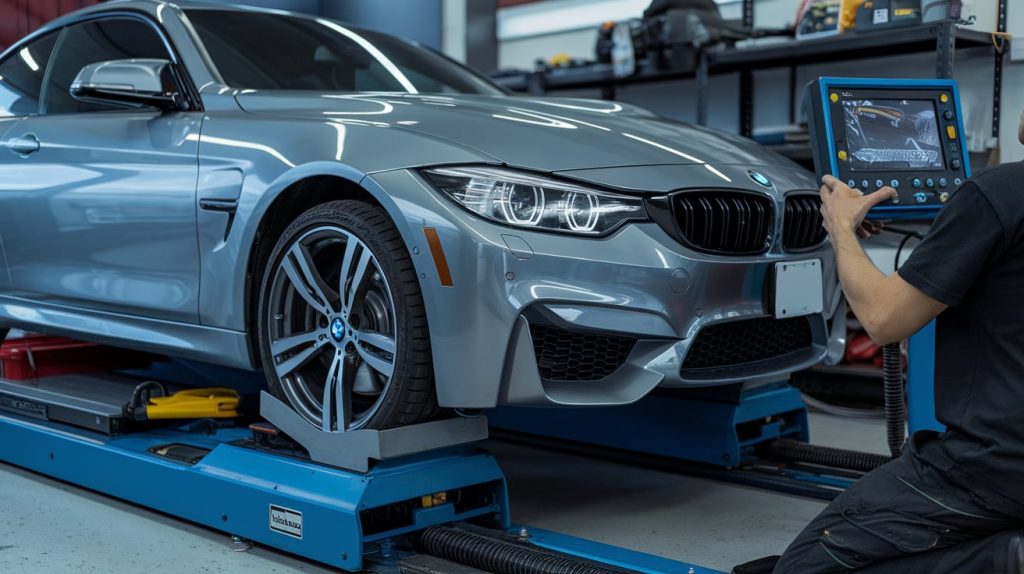
Wheel alignment means measuring wheel and steering geometry against the vehicle specification. The important angles have different effects, and not every angle is adjustable on every model.
Toe
How the wheels point inward or outward when viewed from above. Incorrect toe can scrub tread quickly and create feathering.
Camber
The inward or outward tilt from vertical when viewed from the front. Excess difference can affect pull and shoulder wear.
Caster
The steering-axis tilt viewed from the side. It influences straight-line stability, steering return, and pull.
Rear toe and camber matter too. If the rear wheels create a thrust angle, the car may travel slightly sideways while the steering wheel is held off-center to compensate. A four-wheel measurement shows the relationship between both axles.
Wheel Alignment Is Not Wheel Balancing
Alignment
Measures and adjusts wheel angles and steering geometry. Common clues include off-center steering, pull, feathering, and shoulder wear.
Balancing
Corrects uneven mass in a wheel-and-tire assembly. A common complaint is speed-related vibration through the steering wheel, seat, or floor.
Mechanical repair
Corrects play, damage, seized adjusters, weak springs, bent parts, wheel-bearing issues, or ride-height faults before alignment can be reliable.
A car can need more than one. New tires may require balancing and alignment. A bent rim can vibrate despite correct balance. Worn control-arm bushes can let the readings move after the vehicle leaves the rack. The complaint decides which tests belong together.
Can You Drive With Bad Wheel Alignment
| Condition | Driving decision | Action |
|---|---|---|
| Small steering-wheel offset, stable handling, sound tires | Short planned driving may be reasonable | Check pressure and arrange measurement soon |
| Consistent pull without severe instability | Drive cautiously only if control remains predictable | Inspect tires, brakes, steering, suspension, and alignment |
| Rapid or cord-level tire wear | Unsafe | Stop driving and replace unsafe tires after finding the cause |
| Steering changed after a hard impact | Potentially unsafe | Inspect the tire, wheel, suspension, and steering before adjustment |
| Loose steering, clunking, wheel movement, or vehicle instability | Do not continue normally | Arrange inspection or recovery |
What Should Be Checked Before Alignment

Do not adjust around a mechanical fault
- Tire pressure, size, condition, and tread pattern
- Wheel and rim condition
- Wheel-bearing play
- Tie rods, ball joints, arms, bushes, and strut mounts
- Spring, shock, air-suspension, and ride-height condition
- Vehicle load and manufacturer preparation requirements
- Steering wheel position and relevant fault codes
A seized adjuster can also change the job. Some vehicles require replacement hardware, eccentric bolts, shims, subframe correction, or specific procedures. If an angle is out of specification but not normally adjustable, investigate ride height, damage, part installation, and chassis position rather than forcing a generic solution.
How a Four-Wheel Alignment Should Be Done
- Confirm the complaint. Note pull, steering position, vibration, tire wear, impact history, repairs, loads, and driver-assistance warnings.
- Inspect the vehicle. Correct tire pressure and identify unsafe tires, damaged wheels, looseness, worn parts, or ride-height problems.
- Prepare the rack and targets. Position the vehicle, compensate sensors as required, settle the suspension, and follow model procedures.
- Measure all four wheels. Record toe, camber, caster where applicable, thrust angle, steering position, and the vehicle-specific specification.
- Adjust in the correct sequence. Rear geometry commonly affects the front reference. Center and secure the steering system as required.
- Verify the result. Print before-and-after readings, confirm the steering wheel, road test where appropriate, and address any remaining pull separately.
Wheel Alignment Cost in Dubai
These Auto Repair UAE prices are planning ranges in AED. Vehicle size, front-only versus four-wheel measurement, adjustment access, seized hardware, suspension faults, ride-height setup, and ADAS requirements change the final total.
| Service | Price range | Typical scope | Not normally included |
|---|---|---|---|
| Alignment measurement | AED 100 to 180 | Initial four-wheel readings and basic condition review | Mechanical repair and ADAS calibration |
| Standard wheel alignment | AED 150 to 350 | Measurement, available adjustments, steering centering, and printout | Seized hardware or replacement parts |
| Performance, luxury, or modified setup | AED 300 to 750+ | Additional setup time, ride-height checks, or adjustable geometry | Corner weighting unless quoted |
| Alignment after suspension repair | AED 180 to 450 | Geometry check and adjustment after approved repairs | The suspension repair itself |
| ADAS calibration | Quoted by vehicle and system | Calibration when the manufacturer procedure requires it | Not automatically included with alignment |
Prices vary by model and condition. Confirm VAT, inspection, adjustment count, road test, printout, and any calibration on the estimate. A cheap adjustment is not useful if loose parts or incorrect ride height make the readings change again.
For booking and current workshop scope, use our wheel balancing and alignment service in Dubai.
Do You Need Alignment With New Tires
Not every tire replacement proves an alignment fault, but new tires are a sensible checkpoint. Measure the geometry when the old tires wore unevenly, the steering wheel is off-center, the vehicle pulls, suspension work was completed, or the alignment history is unknown.
Perform the mechanical inspection before fitting expensive tires when severe wear suggests damage. If the old tires hide a bent wheel or worn bush, alignment alone will not protect the new set. Correct tire pressure and balancing belong in the same handover, but they remain separate operations.
Align before tires
Useful when diagnosis is needed first or a mechanical repair may change which tires and parts are required.
Align during fitting
Practical when the vehicle is mechanically sound and the new set needs a clean geometry baseline.
Recheck after repair
Required when steering, suspension, subframe, or ride-height work changes the measured position.
Why a Car May Still Pull After Alignment
A centered printout does not eliminate every cause of pull. Road crown can create a slight drift. Unequal tire pressure, tire conicity, brake drag, torque steer, worn mounts, loading, or an electric power-steering issue can remain. Cross-camber and caster differences may be within broad limits yet still influence behavior.
Swap or test tires only through a safe, planned procedure because directional patterns, staggered sizes, and wheel positions can limit interchange. The technician should verify the complaint on an appropriate road, compare readings, and test the remaining systems instead of repeatedly turning adjusters.
Alignment After Suspension, Steering, or Accident Repair
Replacing tie rods, control arms, bushes, struts, springs, steering racks, subframes, or wheel bearings can alter geometry. The same applies to collision correction. Alignment belongs after the structure and parts are restored to the correct position, not as a way to pull bent components into a green range.
Air-suspension vehicles may need a specified ride-height mode, ballast, settling procedure, or diagnostic command. Modified vehicles need realistic targets for their approved ride height, tire use, and available adjustment range. If you suspect worn or damaged parts, arrange a suspension inspection in Dubai before final alignment.
When Wheel Alignment May Require ADAS Calibration
Lane cameras, radar, steering-angle sensors, and other driver-assistance systems use the vehicle’s direction and geometry as references. Depending on the manufacturer, calibration or initialization may be required after alignment, steering work, suspension changes, collision repair, glass replacement, ride-height changes, or sensor removal.
Do not assume every alignment requires the same calibration. Check the procedure for the exact model, equipment, repair, and fault state. The alignment rack prepares the geometry; the ADAS process may require separate targets, floor conditions, scan functions, road calibration, or a combination.
DIY Checks and Workshop Measurements
Useful owner checks
- Set tire pressure to the vehicle label
- Inspect inner and outer tread in good light
- Note steering-wheel position on a level road
- Record impact and repair history
- Photograph wear patterns before rotating tires
Workshop-only decisions
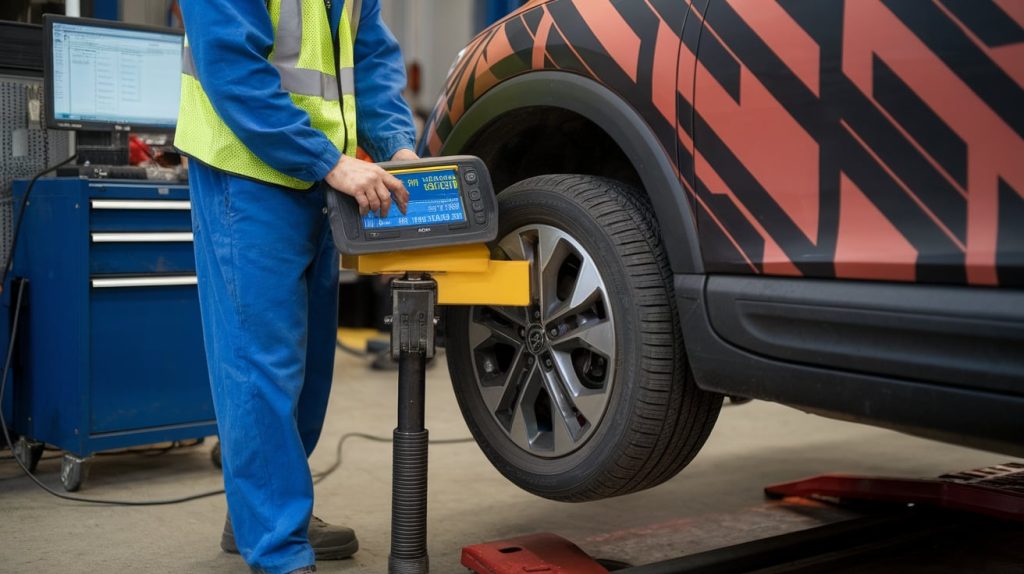
- Four-wheel angle measurement
- Suspension and steering play assessment
- Ride-height and load preparation
- Adjustment sequence and torque
- ADAS calibration requirement
String and tape methods can illustrate geometry on simple project vehicles, but they are not a substitute for model specifications, calibrated equipment, runout compensation, mechanical inspection, and calibration needs on a road car.
How to Read a Wheel Alignment Printout
A wheel alignment printout should let you compare the vehicle before and after the work. Look for four wheel positions, the measured toe and camber values, caster where the machine reports it, the allowed specification range, and the final steering-wheel or thrust-angle result. Red and green colors are only visual shortcuts. A number shown in green can still sit near one edge of a broad tolerance, while a red number may belong to an angle that the manufacturer did not make adjustable. The useful question is not, “Did everything turn green?” It is, “Do the readings fit this model, tire setup, ride height, and complaint?” Ask the technician to explain any value that remains outside specification, whether it is adjustable, and what inspection supports the next step. Keep the sheet. If tire wear or pulling returns, the earlier readings give the next technician evidence instead of another guess.
Before readings
These show the geometry as the vehicle arrived. They help connect tire wear, steering position, recent repairs, and impact history to measured angles.
Specification range
The target must match the model, year, suspension option, wheel setup, and required preparation. A generic target is not enough.
Final readings
These show what changed. If one value remains outside range, the invoice should explain whether parts, ride height, damage, or a non-adjustable design is involved.
When Not to Pay for Wheel Alignment Yet
Do not approve alignment as the first response when a tire has exposed cords, a sidewall bulge, severe pressure loss, or impact damage. The same caution applies when a wheel is cracked or visibly distorted, a bearing has play, a tie rod or ball joint is loose, a spring is broken, or the car cannot hold a stable ride height. An alignment machine measures the position created by those parts; it cannot make failed hardware sound. Paying for adjustment before the repair often means paying twice because the angles change again when the faulty part is replaced.
Pause the alignment when the complaint is only a speed-related vibration too. That pattern usually calls for tire condition, wheel runout, balance, hub fit, bearing, and driveline checks before geometry becomes the main suspect. If the vehicle suddenly pulls during braking, brake drag or a braking fault must be ruled out. If it began immediately after fitting tires, check pressure, tire direction, size, construction, and mounting.
Alignment Needs for SUVs, Performance Cars, Air Suspension, and EVs
The basic angles are the same, but preparation can change by vehicle. An SUV used off road may have impact damage, mud around mounting points, altered ride height, or tire patterns that need inspection first. A performance car may use staggered tires, factory negative camber, adjustable links, or alignment targets tied to road versus track use. Copying a generic center-of-green setting can change steering response without solving the owner’s complaint.
Air-suspension models may require a normal ride-height mode, a settling procedure, measured body height, ballast, or a scan-tool command before readings are valid. An EV adds battery weight, immediate torque, and model-specific lift and calibration procedures, but those facts do not prove it needs alignment more often. Use tire wear, impacts, repairs, steering behavior, and the manufacturer procedure as the evidence.
SUV or 4×4
Confirm tire type, load, off-road impacts, lift kit, bushes, joints, and approved ride height.
Performance setup
Record road or track use, staggered sizes, adjustable arms, target settings, and tire-temperature evidence where relevant.
Air suspension or EV
Follow the model procedure for ride-height control, loading, scan functions, steering sensors, lifting, and calibration.
How to Compare Wheel Alignment Quotes in Dubai
The lowest number may cover only a quick front-toe adjustment. Another quote may include a four-wheel measurement, inspection, steering centering, available adjustments, a road test, and a before-and-after printout. Ask each workshop to describe the same scope before comparing prices. That prevents a low starting figure from becoming a different job once the car is on the rack.
| Ask the workshop | Why it matters | What a clear answer includes |
|---|---|---|
| Is this measurement only or adjustment too? | A check can confirm no adjustment is needed. | Initial readings, included adjustments, and final verification. |
| Is it front only or all four wheels? | Rear thrust angle can affect steering-wheel position and tracking. | Four-wheel measurement and which angles are adjustable. |
| Are inspection and printout included? | Loose parts can make the result temporary. | Tire and suspension checks plus before-and-after values. |
| What can increase the estimate? | Seized hardware, damaged parts, ride-height work, and calibration add scope. | Approval before extra labor or parts are fitted. |
| Is ADAS calibration required? | The requirement depends on the model and repair procedure. | Separate scope, equipment, conditions, and price when applicable. |
| Does the figure include VAT? | It keeps the comparison based on the payable total. | A written estimate with inclusions and exclusions. |
Bring the vehicle details and describe the behavior precisely: when it pulls, at what speed vibration starts, which tire shoulder is wearing, and what work or impact came first. A short road story can save a long round of parts swapping. For current pricing, treat the ranges above as planning figures and request a vehicle-specific estimate before authorizing work.
What Dubai Road and Climate Conditions Change
Heat does not directly set toe, camber, or caster, but it changes how owners should inspect the system around them. Tire pressure rises during driving and falls after the vehicle cools, so compare cold pressures with the door-label specification instead of judging one hot reading. High road temperatures can make neglected pressure and shoulder wear more costly because damaged tread has less margin. Construction zones, sharp parking ramps, curb contact, and pothole impacts can also change a straight-driving car in one moment.
Dubai roads often include crowned surfaces that drain water to the side. A small drift on one road does not prove misalignment. Check the behavior on more than one safe, level route and note wind, load, lane, and braking. If the steering wheel stays off-center or the same pull remains across suitable roads, book a measurement. Evidence beats a guess, especially when the car uses wide, low-profile, run-flat, or staggered tires.
Common Wheel Alignment Mistakes
- Adjusting before tire pressure and tire condition are corrected
- Ignoring worn bushes, loose joints, weak springs, or wheel-bearing play
- Doing front toe only when rear thrust angle is affecting steering position
- Assuming vibration is always alignment instead of checking balance, tires, rims, and joints
- Using generic targets instead of the correct vehicle specification and preparation
- Skipping a before-and-after printout
- Forgetting ADAS procedures after a repair that requires them
- Aligning a collision-damaged vehicle before structural measurement
Key Takeaway
Use 10,000 km or tire rotation as a practical inspection point, not a promise that every car needs adjustment at that mileage. Get a wheel alignment check sooner after an impact, new tires with uneven-wear history, steering or suspension work, collision repair, ride-height changes, pulling, crooked steering, or irregular tread. The correct job includes tire and mechanical inspection, four-wheel measurements, vehicle specifications, a printout, and ADAS procedures when required.
Book Wheel Alignment in Al Quoz 4
Send the vehicle make, model, year, tire size, steering symptom, and any recent impact or suspension work. We can check the tires and mechanical condition, measure all four wheels, explain the readings, and quote any adjustment or repair before work continues.
Bring useful evidence
- Old alignment printout
- Tire replacement date
- Photos of uneven wear
- Recent repair invoice
- Impact or accident details
Wheel Alignment FAQs
How often should I get wheel alignment in Dubai?
Use about every 10,000 km or tire rotation as a practical check, then inspect sooner after impacts, new tires with uneven-wear history, steering or suspension work, or any pull, crooked steering, or irregular tread.
Does every alignment check require adjustment?
No. If the vehicle is mechanically sound and all readings meet the relevant specification, adjustment may not be needed. Keep the printout as a baseline.
Is pulling always caused by wheel alignment?
No. Tire pressure, tire construction, brake drag, road crown, suspension wear, loading, and steering faults can create a pull. Diagnose the pattern with the measurements.
Does wheel alignment fix vibration?
Not usually by itself. Speed-related vibration often needs tire, wheel, balance, runout, bearing, or driveline checks. Alignment corrects geometry.
Should alignment be done before or after new tires?
Inspect before fitting when serious wear may indicate damage. Otherwise, measurement during tire installation provides a useful baseline and protects the new set.
Can worn suspension prevent alignment?
Yes. Excess play, damaged parts, weak springs, ride-height faults, or seized adjusters can make a correct and repeatable alignment impossible until repaired.
Do all four wheels need alignment?
Four-wheel measurement is generally useful because rear toe, camber, and thrust angle affect how the vehicle tracks. Actual adjustment depends on the vehicle design.
Will my car need ADAS calibration afterward?
It depends on the vehicle and repair. Follow the manufacturer procedure for alignment, steering, suspension, glass, collision, ride-height, and sensor work.
Sources and Technical References
- Bridgestone wheel-alignment measurement overview
- Hunter Engineering guidance on alignment and ADAS calibration
Use the service information and alignment specifications for the exact vehicle. Preparation, permitted adjustments, torque values, and calibration requirements vary.