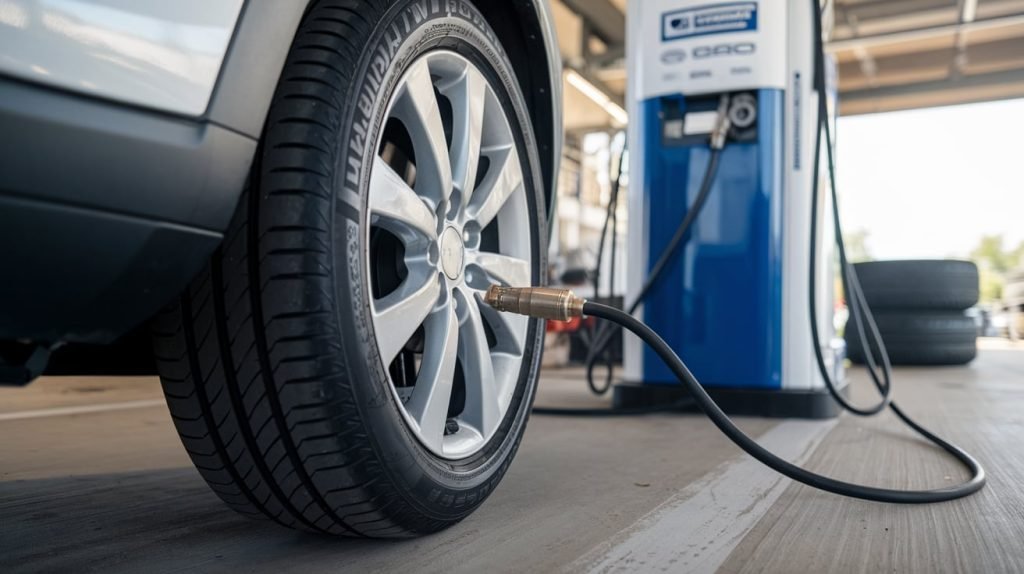
Car tire inflator guide for UAE drivers
The tire looks low, the nearest filling station is not close, and a compact compressor is sitting in the trunk. The important question is whether adding air is safe or only hiding a leak.
The direct answer
What a car air pump is
A car air pump usually means a portable tire inflator. It draws power from a 12-volt socket, the vehicle battery, a rechargeable battery or mains electricity and compresses air into a tire through the valve. The inflator is a pressure-correction tool. It cannot make a punctured or structurally damaged tire safe, and repeated pressure loss needs inspection.
The same phrase is sometimes used for very different vehicle parts. An air-suspension compressor raises and levels the body. A secondary-air pump supports cold-start emissions operation on some engines. An AC compressor circulates refrigerant. None of these is the portable device used at the tire valve. Naming the correct component prevents a parts search or booking from going in the wrong direction.
For tire inflation, the first specification belongs to the car, not the pump. Find the recommended cold pressure on the driver-door placard, fuel flap or owner manual for the relevant load and tire configuration. The number on the tire sidewall normally describes a maximum condition for the tire, not the vehicle maker’s everyday target.
The US National Highway Traffic Safety Administration’s tire safety guidance tells drivers to use the vehicle manufacturer’s recommended pressure and measure when tires are cold. It defines cold as a vehicle that has not been driven for at least three hours. The same principle is useful in the UAE because driving and direct heat can raise the reading.
Choose for the vehicle
The features that change the buying decision
A compact inflator that suits a small saloon may take too long on a large SUV tire. A high maximum-pressure claim does not answer how quickly the unit moves air or how long it can run.
Cover the vehicle requirement
The inflator must reach the target pressure with a practical margin. Passenger-car pressure is different from bicycle, off-road and commercial applications. Do not buy by the largest printed PSI alone.
Tire volume affects speed
A large tire needs more air volume than a compact-car tire even when both finish at a similar pressure. Look for credible inflation-time or flow information for a comparable tire size.
The motor needs cooling time
Portable compressors can overheat when run continuously. The manual should state how long the pump may operate and how long it needs to cool. This matters when inflating several tires.
Readable is not the same as accurate
A clear digital display helps at night, while an analogue gauge avoids relying on a separate display battery. Compare the reading with a reliable gauge and watch for drift or damage.
Reach every valve without strain
Hose and power-cable length should reach the rear tire without stretching across hot or sharp surfaces. A secure chuck reduces leakage and prevents damage to the valve stem.
Heat, dust and loose parts matter
The case should protect the hose, plug, adaptors and instructions. Do not leave a rechargeable unit where the battery is exposed to avoidable heat, and inspect cables before use.
Power and use case
Compare inflators on the same criteria
| Type | Where it works well | Main limitation | Check before buying |
|---|---|---|---|
| 12-volt socket inflator | Routine passenger-car top-ups with the vehicle nearby | Socket current limit, cable reach and dependence on vehicle power | Vehicle socket rating, plug quality, cable length and operating instructions |
| Battery-clamp compressor | Larger tires or units that need more current than a cabin socket | Connection requires care and correct polarity around the battery | Cable protection, fuse, clamps, duty cycle and manufacturer procedure |
| Cordless inflator | Convenient small corrections and use away from a power lead | Battery state, heat exposure and slower performance on larger tires | Battery condition, charging method, replaceability and real tire-size performance |
| Mains compressor | Home or workshop use where an outlet and storage space are available | Not useful as a vehicle emergency tool without mains power | Regulator, hose, moisture control, noise and suitable tire chuck |
| Manual pump | Emergency backup for small pressure corrections | Physical effort and slow filling of car tires | Stable base, gauge, hose, valve connection and realistic effort |
Automatic shut-off can reduce overshoot when the set point and gauge are reliable, but stay beside the pump. A light helps with valve access after dark; it does not make roadside use safe. Move the vehicle away from traffic before working on a tire whenever possible.
Use without guessing
How to inflate a car tire
Read the vehicle placard or owner manual. Note whether front and rear pressures differ and whether the stated value changes with load.
Look for a visibly flat tire, sidewall bulge, cut, exposed cord, cracked wheel, damaged valve or object in the tread. Do not inflate a tire that appears structurally unsafe.
Remove the valve cap, take an initial reading and compare it with the vehicle target. If the tire is hot, use the vehicle guidance and recheck when cold.
Secure the chuck, keep the hose clear, operate the pump within its duty cycle and watch the pressure. Stop if the unit, lead or connection behaves abnormally.
Use automatic shut-off only as assistance. Confirm the final reading with the inflator or a separate gauge and release air carefully if needed.
Listen at the valve and observe whether the reading holds. Refit the valve cap, which keeps dirt and moisture away from the valve core.
Check every tire, including the spare when the vehicle has one. Do not assume one low tire means the others are correct.
If the same tire needs frequent air, note the pressure change and arrange inspection instead of treating each top-up as a repair.
A pump is not always the answer
When to stop inflating
Do not keep adding air to a tire with a sidewall bulge, deep cut, exposed cord, separated tread, severe cracking, damaged bead, bent or cracked wheel, smoking rubber or obvious structural deformation. Move people away if the tire or wheel appears unstable. A tire can fail while being inflated.
A tire that lost most of its air may have been damaged internally while driven. Reaching the placard pressure does not prove it is safe. A nail or screw also does not show whether a repair is allowed until the tire is removed and inspected. Puncture location, size, internal damage, previous repairs and tire condition all matter.
Repeated pressure loss can come from the tread, valve core, valve stem, bead, wheel corrosion or cracking, a previous repair or temperature-related changes. A professional tire inspection should identify the leak and decide whether repair or replacement is appropriate.
UAE storage and heat
Keep the inflator ready without damaging it
Protect the battery and cable
Follow the device manual for storage temperature. Avoid leaving a cordless inflator in direct sun or a location where heat, water or loose luggage can damage the battery, housing or gauge.
Keep vents and connections clear
Dust around motor vents, the hose chuck and electrical contacts can reduce cooling or create a poor connection. Wipe the unit and store adaptors in the case.
Test before a long trip
Confirm the pump runs, the hose reaches every tire, the gauge is credible and the battery or power lead is ready. Do not discover a missing adaptor or flat battery at the roadside.
Do not chase a warm reading
Pressure rises as a tire warms through driving and ambient conditions. Use the vehicle guidance, avoid releasing air simply because a hot reading is above the cold target, and recheck later when cold.
Air volume and duty cycle become critical
Reinflating several large tires after reducing pressure needs more air and run time than a routine top-up. Choose equipment for the tire volume and follow safe off-road pressure guidance for the vehicle.
Traffic risk comes first
Do not work beside moving traffic when the vehicle can be moved to a safer place. Use warning equipment appropriately and call roadside assistance when the position or tire condition is unsafe.
Pressure monitoring
What to do when the TPMS light stays on
A tire-pressure monitoring system warns about pressure condition or a system fault, depending on the vehicle. Check every tire against the placard when cold. Some vehicles need a reset or relearn after correction, while others update after driving. Follow the owner manual for the exact vehicle.
If pressures are correct but the warning remains, the cause can include a sensor battery, damaged sensor, wheel change, incorrect relearn, communication problem or a system that calculates pressure indirectly from wheel speed. Do not replace a sensor solely because the warning is present. Read the relevant faults and confirm which wheel or function is affected.
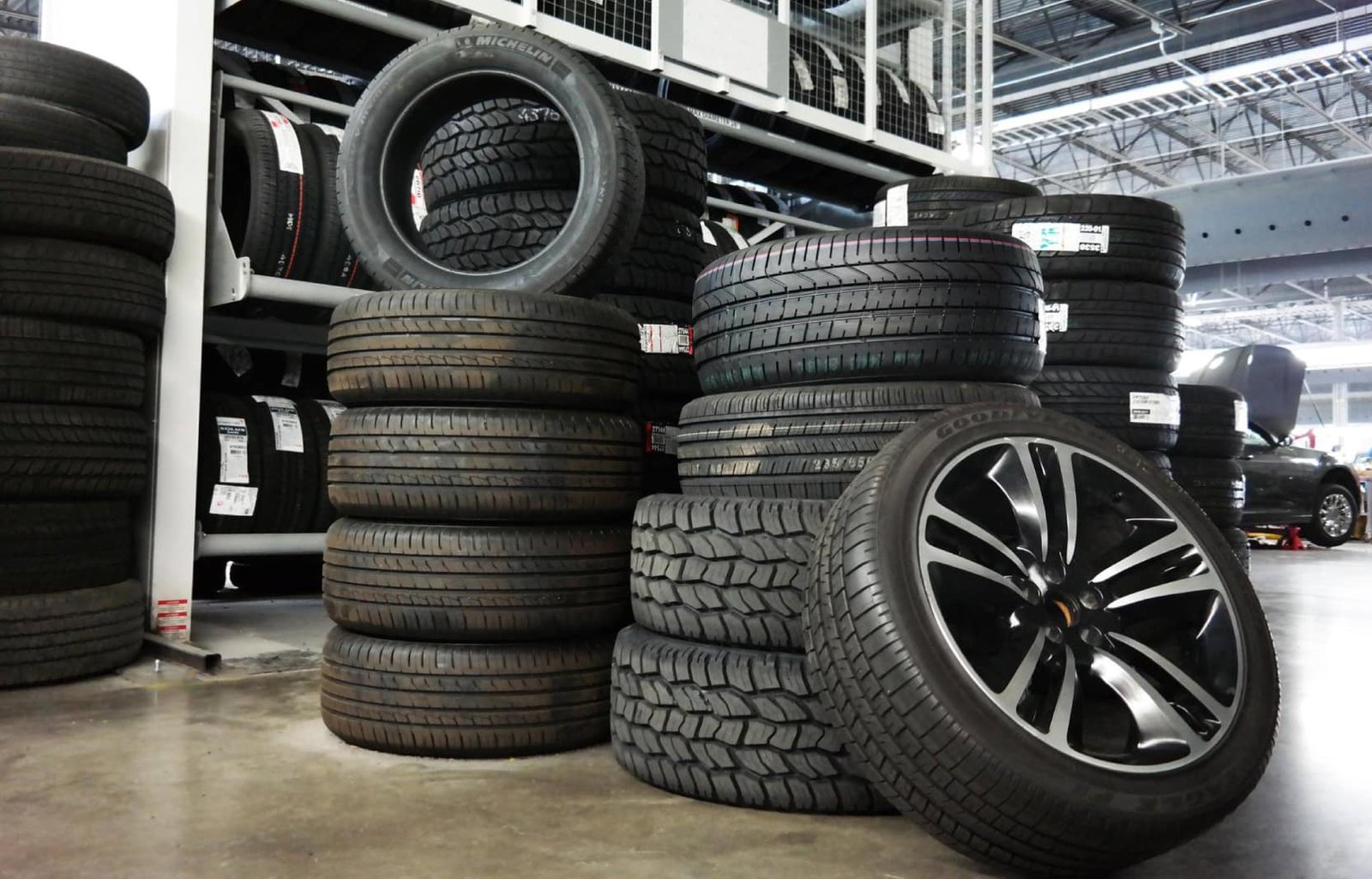
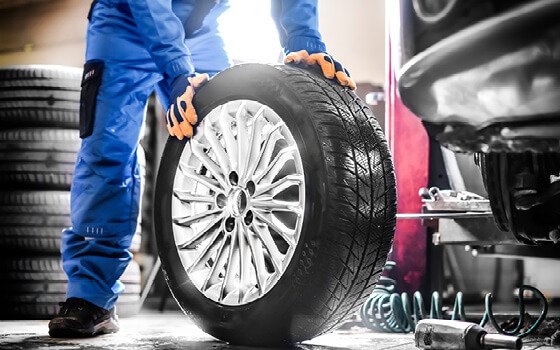
Pressure correction also does not replace wheel and tire diagnosis. Uneven wear, pulling or steering-wheel position can point to tire damage, wheel condition, suspension wear or alignment. The tire inspection and replacement service covers the tire decision, while a wheel-alignment assessment is useful only after damaged or loose components are addressed.
Troubleshooting the inflator
Common pump problems and the next check
| Problem | Check | Do not do |
|---|---|---|
| The pump will not start | Power source, vehicle socket rating, fuse, plug, battery charge, switch and cable condition | Bypass the fuse or hold damaged wires together |
| The pump runs but pressure barely rises | Chuck seal, hose leakage, valve condition, gauge response and tire damage | Run beyond the duty cycle while assuming the tire is only large |
| The gauge disagrees with another gauge | Take repeated readings at the same cold tire and compare with a reliable reference | Choose the higher or lower reading simply because it is convenient |
| The unit becomes very hot | Stop, disconnect safely and follow the cooling period in the manual | Cover the vents, hold the hot housing against trim or continue through a smell |
| The connector leaks at the valve | Chuck alignment, seal, thread or lever condition and valve stem movement | Force the connector and damage the valve |
| A cordless battery will not hold charge | Charger, contacts, battery age, storage condition and manufacturer support | Use a swollen, leaking or damaged battery |
Choose by real use
Which car air pump fits your ownership pattern
The right inflator is the one that can reach every valve, supply enough air for your tire volume, and complete the job without exceeding its duty cycle. Maximum pressure alone is a poor buying shortcut.
City car
Compact emergency inflator
A small 12-volt unit may be enough for occasional pressure correction on passenger tires. Check the cable length from the socket to the farthest wheel and confirm the vehicle socket can supply the required current.
SUV or large tire
Higher airflow and duty cycle
Larger tires hold more air. Look for tested inflation time on a comparable tire size, a hose that reaches safely, thermal protection, and a stated cooling period. A high PSI label does not prove fast filling.
Several vehicles
Battery-clamp or supported cordless unit
A unit used across several cars benefits from stronger airflow, replaceable accessories, a dependable gauge, and support for its battery or power lead. Confirm polarity protection before choosing battery clamps.
Long-distance travel
Redundant pressure plan
Carry a separate pressure gauge, working spare or approved mobility equipment, valve caps, and the vehicle instructions. Test the inflator before departure. A pump with a discharged battery is just luggage.
Off-road pressure changes
Continuous-use capability
Repeatedly airing down and reinflating several tires creates far more heat than an occasional top-up. Compare airflow at useful pressure, hose temperature, duty cycle, connectors, and cooling instructions.
Home maintenance
Accuracy and repeatability
Choose a readable gauge and compare it against a dependable reference on the same cold tire. Automatic shutoff is convenient, but the final pressure should still be checked after the pump stops.
Know what air cannot repair
When to inflate, inspect, repair, or replace the tire
An inflator restores pressure. It does not repair the reason pressure escaped. Use the table to separate a normal adjustment from a condition that needs the vehicle parked.
| Situation | Use the pump | Next decision |
|---|---|---|
| All tires are slightly low after a temperature change | Set each cold tire to the vehicle placard value | Recheck after driving and again when cold |
| One tire loses a small amount over several days | Add enough air only when the tire remains safe to move | Inspect the tread, valve, bead, wheel, and earlier repair |
| A nail is visible in the tread | Do not remove it beside the road | Keep load and distance low only if the vehicle guidance and tire condition allow safe movement; otherwise recover |
| The sidewall has a bulge, cut, exposed cord, or impact split | No | Fit a suitable spare safely or arrange recovery and tire replacement |
| The rim is cracked or the bead has separated | No repeated top-ups | Stop using the wheel and arrange tire and rim inspection |
| Pressure drops again immediately after inflation | Stop the pump | Do not drive on the tire; identify the leak and damage |
What ownership costs come after purchase
The purchase price is only one part of ownership. Cordless batteries age, plug fuses can fail, hoses and chucks wear, gauge accuracy can drift, and adapters disappear. Before buying, check whether the manufacturer sells replacement batteries, hoses, seals, fuses, and connectors. A low-priced unit that cannot be repaired may cost more over several years than a supported model.
Store the pump where heat, moisture, and loose luggage will not damage it. Recharge cordless batteries according to the manufacturer’s instructions, and do not leave a swollen battery in the vehicle. Run a short function check before a long journey. Record the cold tire pressures after inflation, because that simple note shows whether one tire is losing air faster than the others.
Workshop check
Why repeated pressure loss needs inspection
An inflator can restore pressure, but it cannot repair a puncture, leaking valve, damaged rim, or cracked tire. If the same tire loses pressure again, record the cold reading and arrange a leak check instead of treating every refill as a solution. Our tire puncture repair guide explains which tread punctures may be repairable and which damage requires replacement.
A visible bulge, deep cut, exposed cord, or bent wheel needs professional assessment. Do not keep adding air to hide structural damage.

Evidence
Technical sources
- NHTSA tire safety guidance explains placard pressure, cold readings, tire inspection, and inflation steps.
- Michelin Middle East tire-pressure guidance covers pressure checks, inflation, TPMS, and tire condition.
- Transport Canada tire-inflation guidance explains where to find the vehicle pressure label and why a seriously underinflated tire should not be driven.
- Use the vehicle tire placard and owner manual for the final pressure and loading instructions for your car.
Final decision
Key Takeaway
A portable car air pump restores pressure, but it does not repair the reason air escaped. Use the vehicle placard, inflate while the tire is cold when practical, respect the inflator duty cycle, and stop when the tire has structural damage or cannot hold pressure. Repeated pressure loss needs a tire, valve, bead, and wheel inspection.
When air does not stay in the tire
Arrange a tire and valve inspection
Record the cold pressure, how quickly it drops, any visible object or damage, and whether the TPMS warning returns.
Before using the pump
Car air-pump questions
The vehicle placard and the inflator manual provide the final figures for your car and device.
What PSI should I set on a car air pump
Use the vehicle manufacturer’s recommended cold pressure on the tire placard or in the owner manual. Front and rear values may differ, and a loaded vehicle may have another recommendation.
Should I use the PSI printed on the tire sidewall
No. The sidewall number is not the vehicle’s normal target pressure. Use the vehicle placard for the correct tire and load condition.
Can I inflate a hot tire
If a tire is significantly low, adding air can be safer than driving underinflated, but the reading will be affected by heat. Follow the vehicle guidance and recheck when the tire is cold.
Why does the same tire keep losing pressure
Possible routes include a tread puncture, valve, bead, wheel, previous repair or tire damage. Repeated loss needs inspection. A pump corrects pressure but does not repair the leak.
Is a cordless inflator better than a 12-volt pump
It depends on tire size and use. Cordless units are convenient, while a 12-volt or battery-clamp unit may avoid reliance on a charged tool battery. Compare flow, duty cycle, gauge, reach and power limits.
Can a portable pump inflate an SUV tire
Some can, but tire volume and duty cycle matter. Check the manufacturer’s performance for a comparable tire size rather than relying only on maximum PSI.
Can I use tire sealant and then add air
Follow the vehicle and sealant instructions. Sealant has limits, can affect pressure sensors and does not make sidewall or structural damage safe. Arrange tire inspection as soon as the instructions require.
How often should I check tire pressure
Follow the vehicle guidance and check before long trips or when load changes. Check promptly when the TPMS warns, the tire looks low or handling changes. Use a cold reading for a reliable comparison.