Steering and tire correction in Al Quoz 4
Wheel Balancing and Alignment Dubai
ميزان وترصيص السيارات بالعربية
Wheel alignment corrects wheel angles that can cause pulling or uneven tire wear. Balancing corrects uneven weight in a wheel and tire assembly that can cause speed-related vibration. At our Al Quoz 4 workshop, we check your tires, wheels, steering, and suspension before recommending the right service.
Estimated prices: Front alignment AED 145 to 265 four-wheel alignment AED 240 to 430 and balancing AED 57 to 115 per wheel. These estimates are before 5% VAT. See the full price table below.
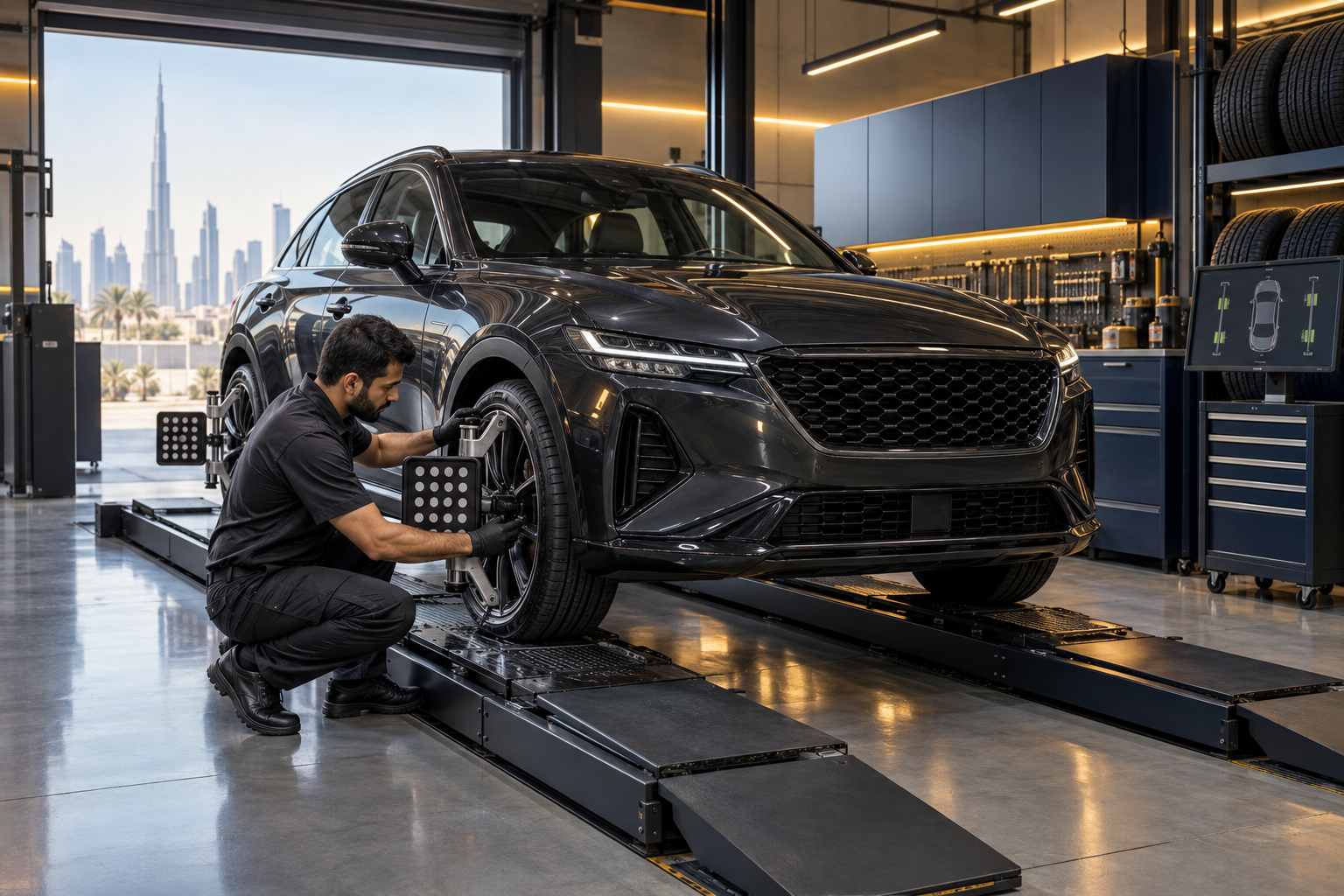
Estimated prices with clear units
Wheel alignment and balancing prices in Dubai
These estimated prices cover common passenger cars and SUVs. Performance models, large wheels, difficult adjustment, seized hardware, specialist calibration, damaged parts, and commercial vehicles can cost more. Your written quote confirms the service, wheel count, adjustments, added 5% VAT and any extra work before approval.
All displayed AED estimates are before 5% VAT. The written quote adds VAT to the agreed work.
| Service | Estimated price | Normally includes | Possible extras |
|---|---|---|---|
| Front wheel alignment | AED 145 to 265 | Initial check, front-angle measurement, available adjustment, and steering position review | Seized adjusters, parts, specialist settings, or calibration |
| Four-wheel alignment | AED 240 to 430 | Front and rear measurement, available adjustments, and final readings | Shims, damaged hardware, suspension work, or electronic procedures |
| Performance or luxury alignment | AED 380 to 715 | Vehicle-specific measurement, available correction, and final report | Ride-height setup, weighted alignment, specialist targets, or calibration |
| Wheel balancing | AED 57 to 115 per wheel | Balance measurement, suitable correction weights, and recheck | Tire removal, rim repair, valve, sensor, or hub-centering parts |
| Four-wheel balancing package | AED 210 to 400 | Balancing for four mounted wheel-and-tire assemblies | Large or specialist wheels, tire repair, or replacement |
| Alignment and four-wheel balance | AED 430 to 745 | Alignment measurement and available adjustment plus four-wheel balancing | Parts, rim repair, tire replacement, or advanced calibration |
| Steering angle calibration | AED 170 to 380 | Applicable scan procedure and verification where supported | Diagnosis or repair of warning lights and sensor faults |
| Wheel and tire runout diagnosis | AED 145 to 335 | Targeted measurement when normal balancing does not solve vibration | Rim straightening, tire replacement, or hub repair |
What your quote includes
A low alignment price may cover measurement only or a limited axle. Our estimate identifies the measured wheels, adjustments, balancing quantity, and excluded repairs. Equivalent work can be 65% to 70% below agency pricing when the procedure and total scope match.
Choose the service from the symptom
Does your car need alignment or balancing?
Use the symptom as a starting point, then check the wheel and tire condition before paying for either service. A car may need alignment, balancing, both, or a different repair. Tire damage, a bent rim, worn suspension, brake drag, incorrect pressure, and bearing faults can produce similar complaints.
| What you notice | Likely first check | Other possible causes | Driving advice |
|---|---|---|---|
| Car pulls left or right on a level road | Wheel alignment and tire pressure | Tire conicity, brake drag, suspension wear, or road slope | Arrange a check soon, especially after an impact |
| Steering wheel sits off-center | Alignment angles and steering position | Previous incorrect adjustment or damaged steering parts | Inspect before tire wear increases |
| Vibration appears at a certain speed | Wheel balance and rim runout | Tire defect, contamination, hub fit, bearing, or driveline | Reduce speed if vibration is strong |
| Inside or outside tire edge wears quickly | Camber, toe, and suspension condition | Incorrect pressure, overload, or worn components | Replace unsafe tires and correct the cause |
| Vibration began after tire fitting | Balance, bead seating, and wheel mounting | Wrong centering rings, trapped debris, or tire damage | Return for inspection before extended driving |
| Steering changed after a pothole or curb | Wheel, tire, alignment, and suspension inspection | Bent arm, damaged rim, tie rod, strut, or subframe shift | Stop if steering is unstable or the tire loses air |
Measurement and correction choices
Wheel alignment and balancing services
We select the service after checking how the vehicle behaves and what the tires and wheels show. The written estimate separates each correction so you can see what is being purchased.
Front wheel alignment
Measures and corrects the adjustable front-wheel angles. This can suit vehicles where rear geometry is fixed and confirmed within a suitable range. Steering position and tire condition are checked as part of the decision.
Four-wheel alignment
Measures the relationship between front and rear wheels and adjusts available angles. This is important for many independent rear suspension, performance, luxury, SUV, and modern driver-assistance-equipped vehicles.
Wheel balancing
Measures weight imbalance in the rotating wheel-and-tire assembly. Correction weights are applied in suitable positions, then the assembly is rechecked. Missing weights or a tire defect may explain a recent vibration.
Wheel rotation and pressure
Rotation can help manage wear when the vehicle, tire pattern, size arrangement, and manufacturer guidance permit it. Staggered setups and directional tires limit the available rotation pattern.
Steering angle reset
Some vehicles require steering-angle calibration or related electronic procedures after alignment or steering work. This is confirmed by the vehicle system, not added automatically to every job.
Rim and tire fault check
Runout, bead seating, sidewall condition, tire shape, rim bends, hub fit, and pressure-sensor concerns are checked when ordinary balancing does not explain the vibration.
Vibration needs more than added weights
How wheel balancing is checked
The wheel and tire rotate together on the balancing machine. The measurement identifies where correction weight is needed and how much. The wheel is then rechecked after the weights are placed. If the reading changes repeatedly, excessive weight is required, or vibration remains, the assembly needs more investigation.
A bent rim, tire flat spot, internal tire separation, uneven bead seating, dirt between the wheel and hub, incorrect centering ring, missing wheel hardware, or worn suspension can imitate imbalance. Simply adding more weights can hide the clue without fixing the cause. A damaged wheel may need a separate rim repair assessment.
- Tire pressure and visible tire condition
- Wheel and tire size compatibility
- Bead seating and wheel mounting surfaces
- Existing weights and signs of weight loss
- Radial and lateral movement during rotation
- Hub fit, centering rings, and fasteners
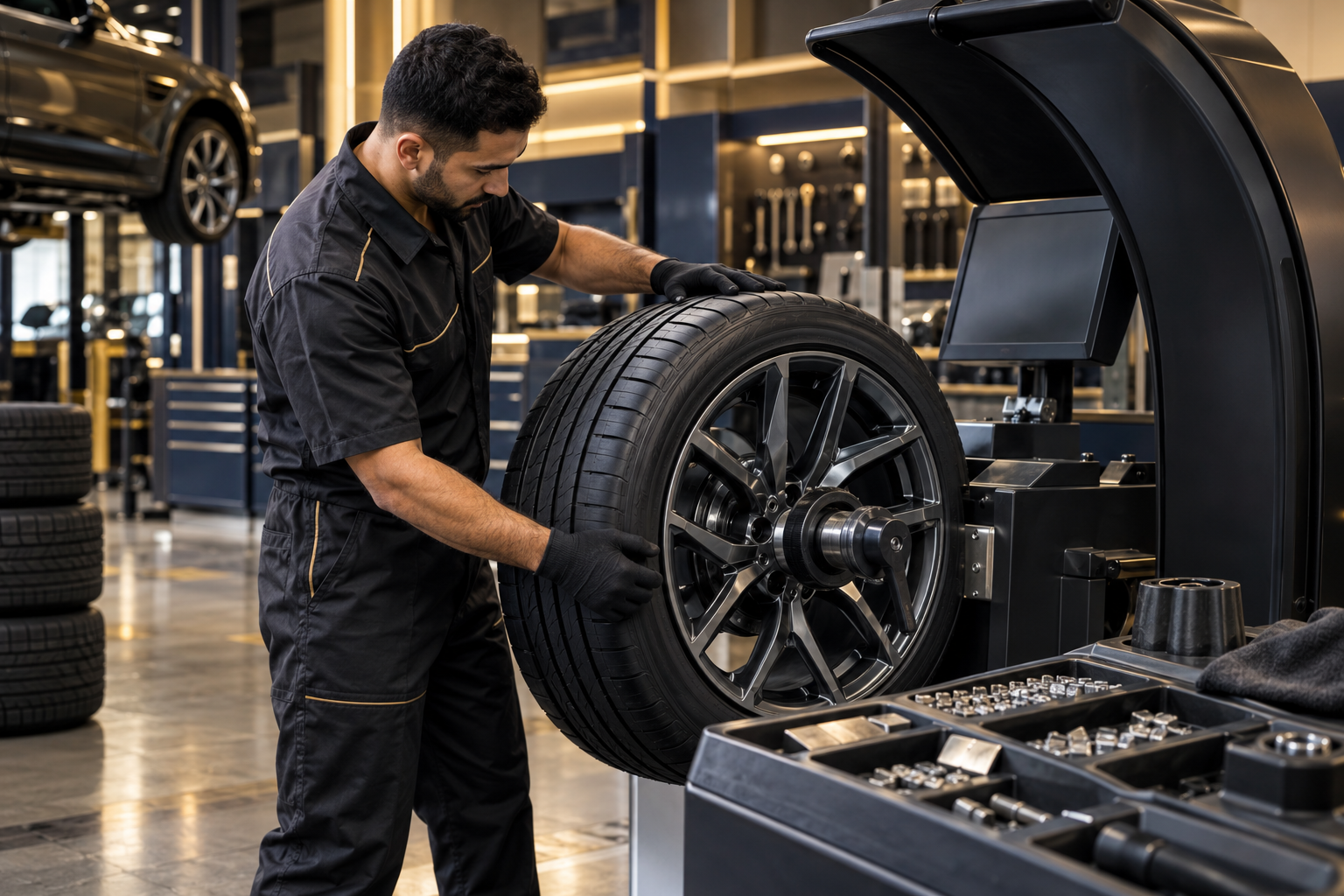
Three angles explain different wear patterns
Camber, toe, and caster
Alignment is not one universal number. The technician compares the vehicle’s measurable angles with the applicable specification and checks whether each angle is adjustable. A reading outside range can point to worn, bent, shifted, or incorrectly fitted parts when ordinary adjustment cannot bring it back.
Camber
Camber describes the inward or outward tilt of the wheel when viewed from the front. Excessive camber can concentrate wear on one tire edge. Ride height, bushes, control arms, struts, and accident damage can affect it.
Toe
Toe describes whether the wheels point slightly toward or away from each other. Incorrect toe can scrub tread quickly and leave a feathered wear pattern. Steering wheel position must remain centered during correction.
Caster
Caster relates to the steering axis and affects straight-line stability and steering return. It may not be adjustable on every vehicle. A side-to-side difference can indicate component or body-position concerns.
Alignment will not repair worn parts
Loose tie rods, damaged control arms, failed bushes, worn ball joints, weak wheel bearings, bent rims, and unsafe tires need attention first. Adjusting around a mechanical defect produces unreliable readings and can waste a new set of tires. We can quote the needed suspension repair separately before alignment.
From symptom to final readings
Our wheel alignment process
You only need to tell us the vehicle model and what you feel while driving. We handle the measurements and explain any additional checks that become necessary.
Discuss the symptom
We note pulling, vibration, steering position, recent tire work, impacts, repairs, or unusual wear.
Inspect tires and steering
Pressure, tread, wheel condition, steering play, suspension joints, and obvious damage are checked before adjustment.
Measure the vehicle
Alignment sensors record the applicable wheel angles. Ride height and loading concerns are considered where relevant.
Explain the readings
You receive the recommended service and a written estimate for adjustment, balancing, or related repair.
Correct approved items
Available angles are adjusted, wheels are balanced where included, and specified electronic procedures are completed when required.
Verify and hand over
Final readings, steering position, tire pressure, and the reported behavior are reviewed before the car is returned.
Example costs
Three example wheel service costs
These are example costs for planning, not completed customer jobs. The actual price depends on the vehicle, wheel size, adjustable angles, hardware condition, tire condition, and whether another fault must be repaired first.
Example cost
2021 Toyota Camry steering pull
Four-wheel measurement, available front and rear adjustment, steering-wheel centering, tire-pressure check, and final readings. Suspension parts and tire replacement are separate if inspection finds damage.
Estimated total: AED 305
Example cost
2020 BMW X5 highway vibration
Four-wheel balancing for large alloy wheels, mounting-surface check, suitable correction weights, pressure check, and remeasurement. Rim straightening and tire replacement are not included.
Estimated total: AED 400
Example cost
2022 Mercedes-Benz GLE tire service
Four-wheel alignment, four-wheel balancing, steering position review, final measurements, and pressure check after a new tire set. Calibration or suspension repair remains separate when required.
Estimated total: AED 685
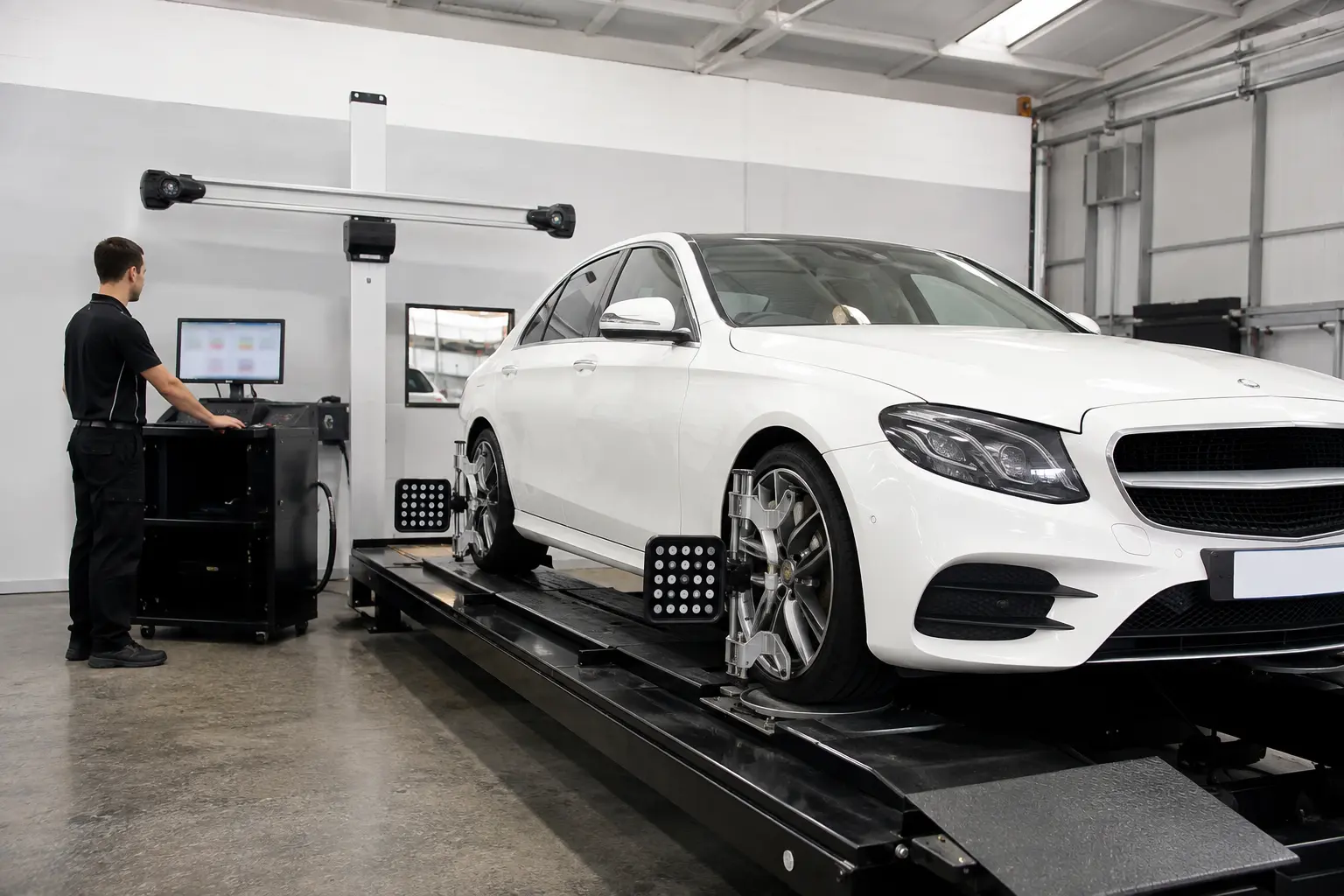
Vehicle weight, suspension, and wheel setup matter
Alignment for different vehicles
A compact sedan, heavy SUV, pickup, sports car, and electric vehicle can require different targets, access, loading, and wheel handling. Air suspension may need the correct ride height. Adaptive systems, rear steering, or driver-assistance features may introduce additional procedures. Large wheels and low-profile tires also make impact damage more noticeable.
Staggered front and rear wheels cannot always be rotated in the usual pattern. Directional tires can move only in permitted directions unless remounted. Aftermarket wheels need the correct offset, center bore, spacers, centering rings, and hardware. We consider the installed setup instead of assuming that every vehicle of the same model is identical.
After an accident or suspension repair
Alignment should follow replacement of steering or suspension parts that affect geometry. A hard impact may also require a rim, tire, subframe, or body-position check before ordinary adjustment can produce a reliable result.
Protect tires after correction
When to check wheel alignment again
There is no single interval that fits every car and driving pattern. Check alignment when the steering position changes, the vehicle begins pulling, tire wear becomes uneven, or the car hits a serious pothole or curb. An inspection is also sensible after suspension or steering work, accident repair, major ride-height changes, or fitting a new tire set when the old tires show abnormal wear. A condition check after a hard impact or relevant repair is more useful than an automatic schedule.
Maintain the specified cold tire pressure, inspect tread across the complete width, and do not ignore missing balance weights or a recurring vibration. Rotating tires where the setup permits can reveal wear trends and help use the tread more evenly. Alignment cannot restore tread already worn away, so correction is most valuable before an expensive tire develops severe edge wear.
If vibration remains after balancing, avoid repeating the same service without checking the tire, rim, hub, wheel mounting, bearing, brakes, suspension, and driveline. For a remaining vibration, we check the wheel and related parts rather than repeating balancing.
Clear measurements and practical support
Why visit our Al Quoz workshop?
We identify the cause before selling a correction. This protects your tires and keeps alignment, balancing, rim repair, tire replacement, and suspension work as separate decisions.
Free inspection
Start at our Al Quoz 4 workshop with a tire, wheel, steering, and suspension condition check.
Written estimate
Review the measured service, number of wheels, adjustments, and possible extras before work begins.
Pickup and delivery
Free pickup and delivery can be arranged when visiting the workshop is inconvenient.
On-site assessment
Our dedicated van can assess suitable concerns by arrangement. On-site inspection is quoted separately.
Questions before booking
Wheel balancing and alignment FAQs
What is the difference between alignment and balancing?
Alignment measures and corrects wheel angles relative to the vehicle. Balancing corrects uneven rotating weight in each wheel-and-tire assembly. Pulling and an off-center steering wheel often point toward alignment, while speed-related vibration often starts with balancing and runout checks.
How much does wheel alignment cost in Dubai?
Estimated front alignment is AED 145 to 265 while four-wheel alignment is commonly AED 240 to 430. Performance or specialist work may be AED 380 to 715. Parts, seized hardware, calibration, and repairs are separate unless included in the written quote.
How much does wheel balancing cost?
Balancing is estimated at AED 57 to 115 per wheel or AED 210 to 400 for four wheels. Large or specialist wheels, tire removal, rim repair, sensor work, and replacement parts can change the total.
Will alignment stop steering-wheel vibration?
Not necessarily. Vibration is more commonly related to wheel balance, tire condition, rim runout, hub mounting, bearings, brakes, suspension, or driveline parts. We identify the speed and conditions where it occurs before choosing the service.
Should I align the car after fitting new tires?
An alignment check is valuable when the old tires show uneven wear, the steering is off-center, the car pulls, suspension work was completed, or an impact occurred. New tires do not automatically correct an existing geometry problem.
Can worn suspension prevent a correct alignment?
Yes. Loose joints, damaged arms, failed bushes, worn bearings, weak springs, incorrect ride height, and shifted mounting points can make readings unstable or keep an angle outside its suitable range. Those faults should be corrected first.
Do all four wheels need balancing?
Not in every case, but balancing all four provides a complete check when vibration is unclear, tires were replaced, weights are missing, or several wheels have been disturbed. The reported symptom and inspection guide the quantity.
What details should I send to book?
Send the vehicle model and a short description of the pulling, vibration, tire wear, steering position, or recent impact. We may ask when the symptom occurs or whether tire and suspension work was recently completed.
Correct the cause before another tire wears out
Book wheel alignment and balancing in Dubai
Tell us your vehicle model and whether it pulls, vibrates, wears tires unevenly, or has an off-center steering wheel. We will arrange the suitable workshop check and provide a written estimate before correction begins.
Free workshop inspection
Visit us in Al Quoz 4 or arrange free pickup and delivery. Dedicated on-site assessment is available and quoted separately where suitable.