Cooper, Countryman, Clubman and moreService, diagnosis and repair in one visit plan
Find the Right Help for Your MINI
Choose a scheduled service for a due reminder, or diagnosis for a new warning, leak or change in the drive. These common concerns show where an inspection starts. You can describe the symptom in your own words.
Concern
Useful first checks
What to tell us
Rough cold start
Fault records, ignition, intake, fuel, voltage and mechanical condition where indicated
Cold or warm start, duration, smoke, warning and recent work
Coolant loss or temperature warning
Leak source, pressure, circulation and fan behavior
Top-up history and whether it happens in traffic; stop for overheating
Hesitation or shudder
Transmission type, mounts, shafts, controls, leaks and operating temperature
Selection, creep, gear change or acceleration conditions
Knock or vibration
Tires, wheels, bearings, joints, mounts, brakes and steering components
Speed, road surface, braking and steering angle
Battery repeatedly goes flat
Capacity, charging, connections, sleep behavior and accessories
Parking duration, battery replacement and jump-start history
AC weak at idle
Airflow, fans, heat rejection, pressures, leakage and compressor control
Whether cooling improves with road speed
MINI Services for Maintenance and Active Faults
From a routine Cooper oil service to a Countryman cooling concern, the work should match what your car actually needs. These are the main services you can inquire about.
01
Oil and filter service
For a due service with no active fault
Correct-specification oil, oil filter, routine sealing items, level verification and supported service reset. Air and cabin filters are added when due and agreed. Electric models have a different maintenance scope, so the team checks the vehicle details before pricing the visit.
02
Engine and cooling repair
For coolant loss, rough running or oil leaks
We inspect the leak source and operating conditions before recommending cooling, ignition, seal or engine work. Repeated top-ups need investigation. Pressure testing, electrical checks or deeper access are separately explained when the initial inspection cannot establish the cause.
03
Transmission and driveline work
For hesitation, shudder or delayed engagement
The assessment separates transmission behavior from mounts, shafts, engine running and wheel-related vibration. Service, targeted repair and major assembly work have different costs. The proposed solution includes the relevant fluid and setup requirements rather than treating a fluid change as a universal cure.
04
Brakes and suspension
For brake noise, steering pull or knocks
Pads and discs are checked alongside tires, wheels, bearings and joints where relevant. We explain which measurements justify replacement and whether alignment is needed afterward. Damaged hardware, calipers or additional sensors are itemized when they change the quoted work.
05
Battery and electrical diagnosis
For slow starting, warning lights or a flat battery
Battery condition, charging and connections are checked before replacement. Where required, the new battery is registered to the vehicle. If discharge returns after parking, further testing may be needed to find the drain instead of fitting another battery without resolving its cause.
06
AC and cabin comfort
For weak airflow or cooling that fades
We assess vent temperature, blower operation, fans and refrigerant-related concerns. A recharge is a defined service, not a repair for a confirmed leak. The estimate identifies whether you need diagnosis, recharge, leak repair or a component before paid work starts.
Prices below are estimated before 5% VAT. Your written quotation shows VAT and the final payable total. Engine, generation, part choice and access affect the work required.
Focused warning-light diagnosis
AED 240 to 525
Scan and targeted basic checks; programming, extended monitoring and dismantling separate
Engine oil and filter service
AED 450 to 900
Correct-specification oil, filter, sealing items, level check and supported reset
Major scheduled service
AED 900 to 1,800
Routine oil service and agreed filters/checks; plugs, major fluids and active repairs separate
Front brake pads
AED 650 to 1,400 per axle
Compatible pads and normal labor; discs, calipers, hydraulics and additional sensors separate
12-volt battery replacement
AED 650 to 1,300
Test, suitable battery, installation and registration where required; drain diagnosis separate
AC diagnosis
AED 145 to 430
Agreed cooling and control tests. Refrigerant service is separately estimated at AED 240 to 810; leak repairs and major components are additional
The written estimate states parts, labor, materials, applicable VAT and exclusions. Electric MINI models do not need combustion-engine oil service. Extra work proceeds only after approval.
Get a quote for your model. Tell us the service or concern and we will explain the next step. A final repair total follows inspection when the fault is not yet known.
Compare the complete job, not only the replacement part. MINI access can involve extra removal, and a low initial parts figure may leave out seals, fluids or setup. The estimate should make those items visible before you choose the work.
Parts matched to your car
We check the generation and fitted specification when selecting parts. Where alternatives are available, compare genuine or suitable aftermarket options by compatibility, fitted price and written terms. Similar model names do not make every part interchangeable.
Convenient inspection options
Choose the workshop inspection or ask about pickup. A dedicated on-site inspection may suit an initial assessment, with its fee agreed before dispatch. Work requiring a lift or specialist equipment is planned at the workshop.
How Your MINI Visit Works
Your first message can be simple. Tell us which MINI you drive and what you want checked. If you need collection, add your preferred area and visit timing.
Arrange a visit or pickup
We discuss the appointment and whether the car can be driven safely. Free pickup and delivery are available across Dubai by arrangement. For a non-running vehicle or low clearance, we discuss the suitable collection method rather than asking you to drive it to us.
Understand the cost before repair
The first workshop inspection is free and covers the symptom discussion and an initial visual check. Computer scans, full condition inspections and further diagnosis are paid services, quoted before testing. We explain parts choices, access, labor and exclusions. You decide which paid work to approve, and additional findings are discussed before the bill changes.
Receive the repair and final checks
The agreed work is completed and the relevant function is checked. The handover covers the original concern, any remaining issue and the next service need. You keep the itemized record, with any repair-specific warranty explained in writing.
MINI Inspection and Handover Checks
Inspect access and condition
Check the relevant connections, hoses, visible leaks and previous work before deeper access.
Measure chassis concerns
Relate brake, tire, wheel, bearing and suspension findings to the reported noise or vibration.
Verify the repair
Repeat the relevant function or operating check when safe. Explain unresolved symptoms, test limitations and follow-up advice at handover.
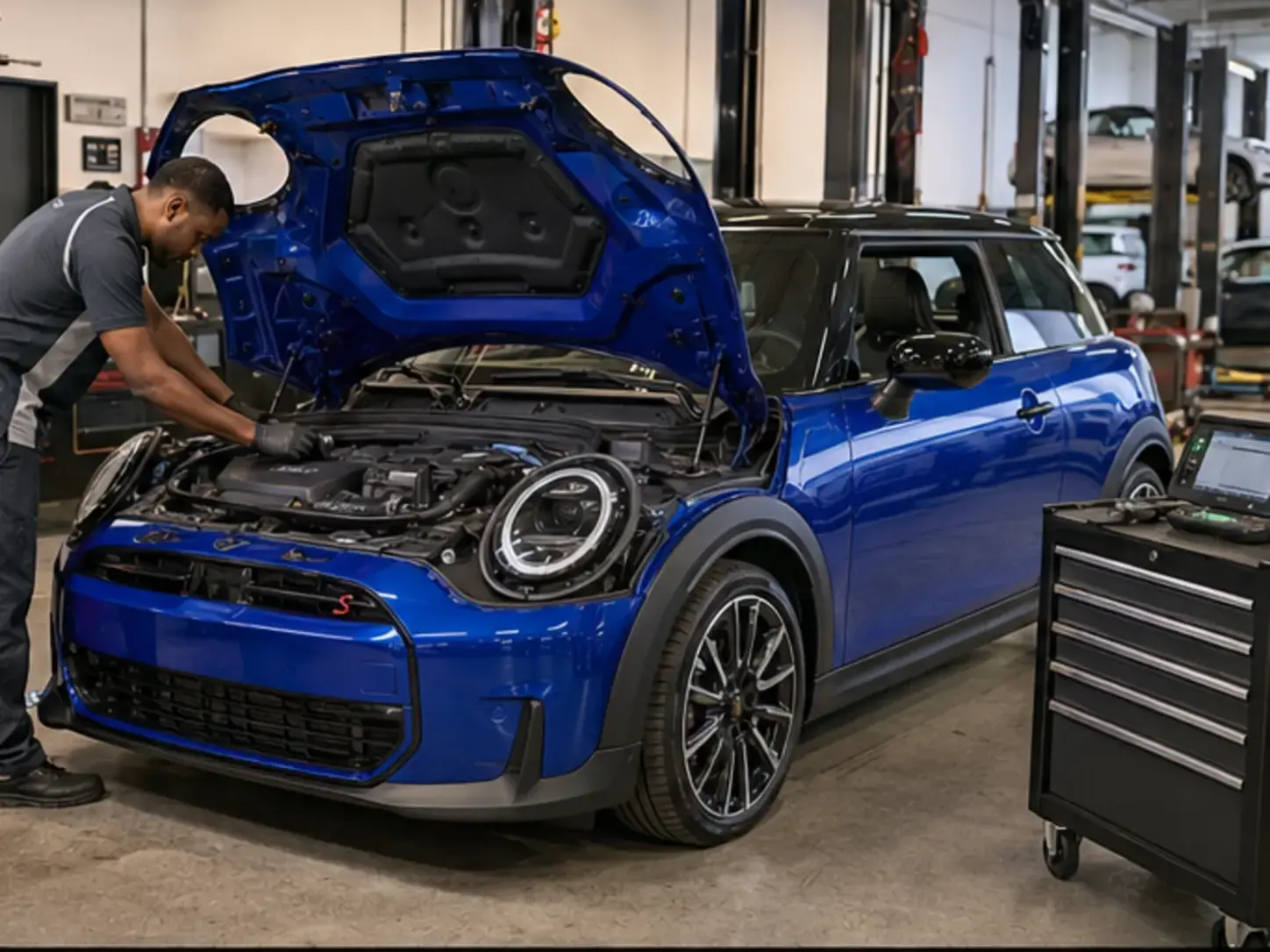
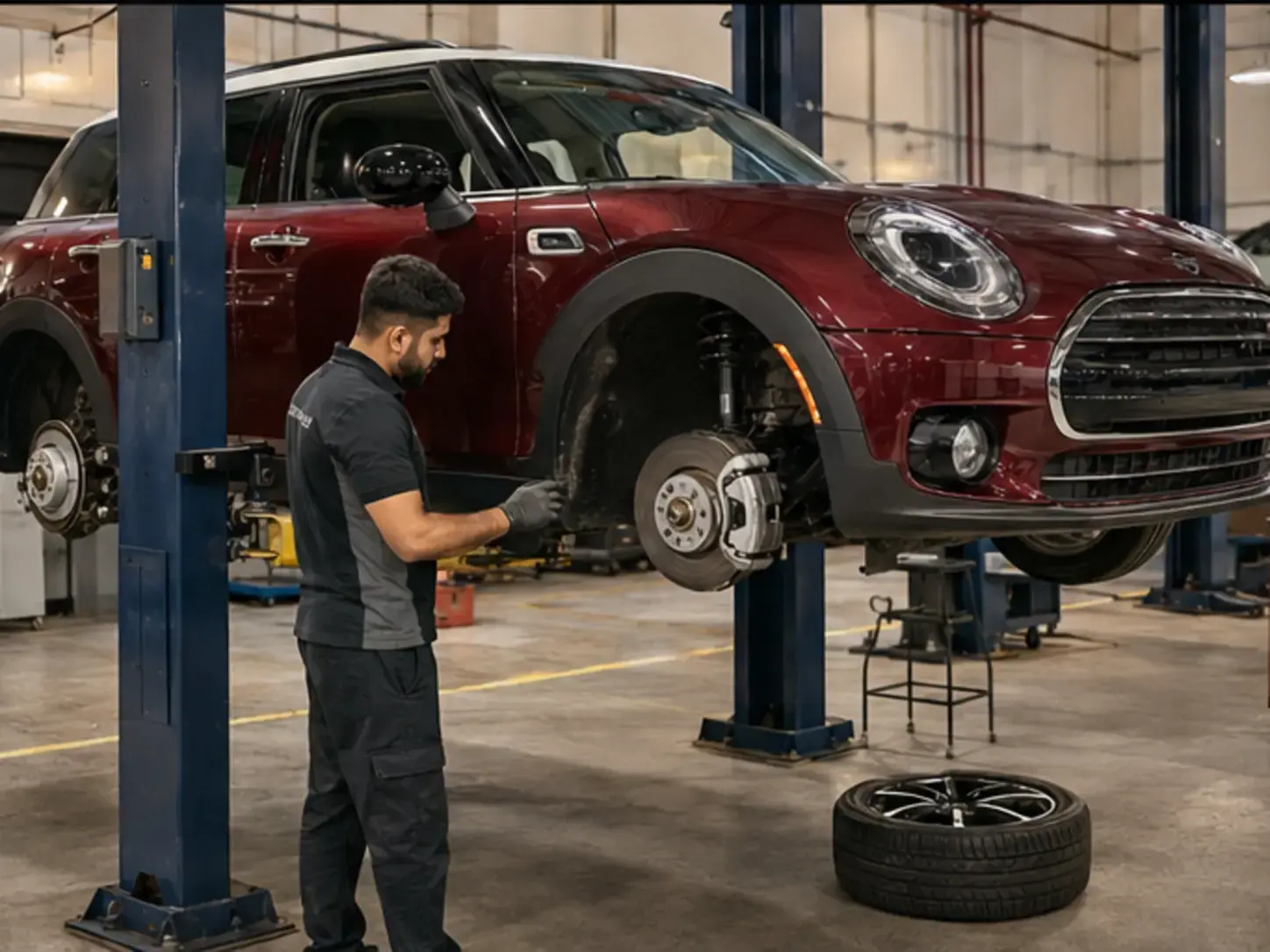
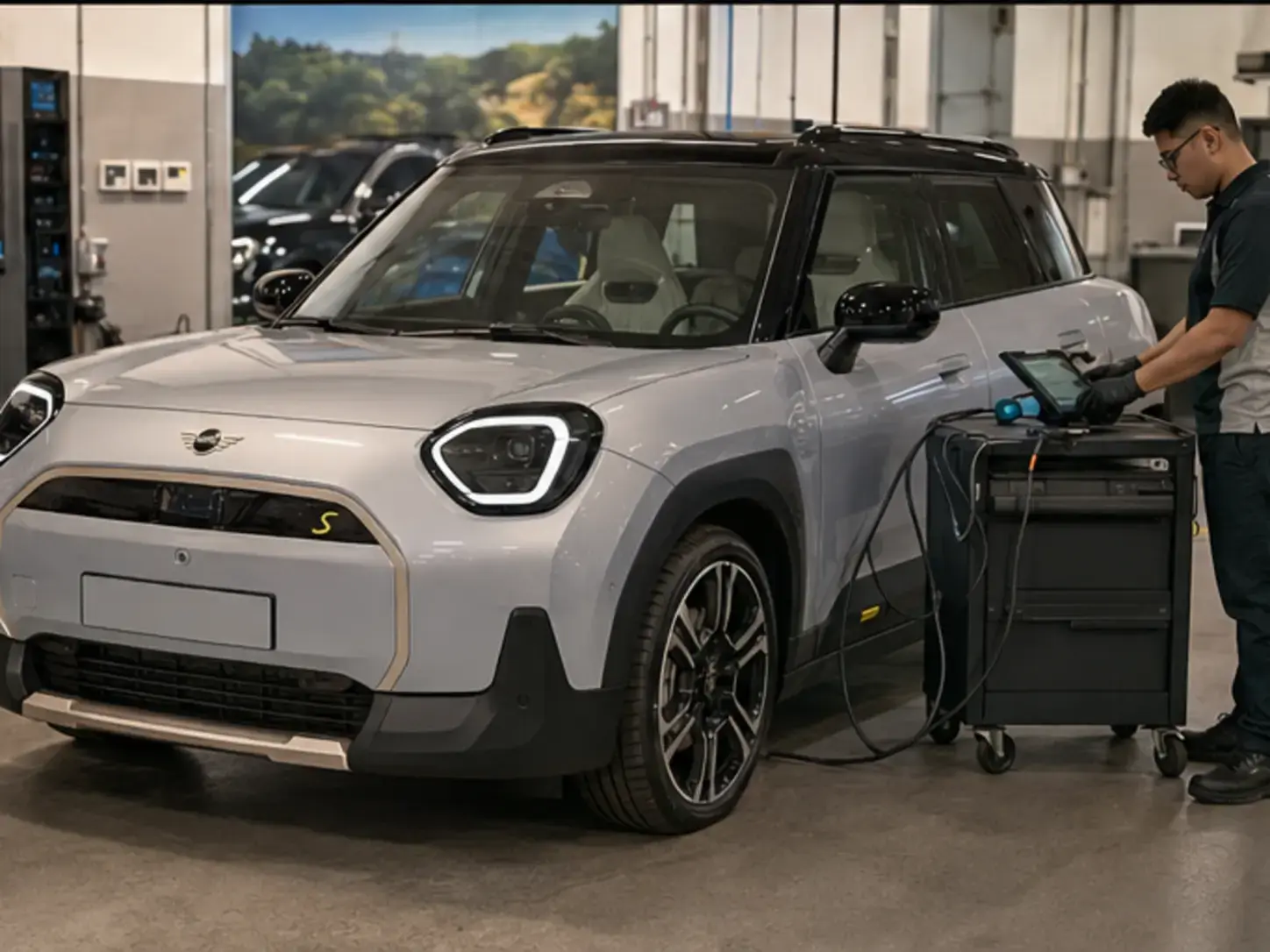
Engine and cooling inspectionBrake and suspension inspectionFinal electrical and function checks
Three Typical MINI Repair Estimates
These typical job estimates are before 5% VAT and are not completed customer jobs. The written quote confirms the work, VAT and the total payable.
2020 MINI Cooper oil service
AED 650
Correct-specification engine oil, oil filter, routine sealing items, installation, level verification and service reset where supported. Assumes no oil leak, damaged drain hardware or active warning requiring diagnosis.
2019 MINI Countryman front brakes
AED 1,250
Compatible front pads, wear sensor where required, installation and brake inspection. Assumes serviceable discs and calipers. Discs, hydraulics and unrelated suspension work are separate.
2018 MINI Clubman battery
AED 950
Battery and charging test, compatible replacement, installation and registration where required. Parked-current diagnosis, wiring repair and remaining faults are separate.
MINI Models and Repair Differences
Cooper hatch and convertible
Confirm the generation, engine, transmission and roof or body concern. Similar badges across years do not establish interchangeable parts.
Countryman
Identify the powertrain and drive configuration. Explain suspension, cooling, load-related or cabin concerns in the conditions where they occur.
Clubman
Share the generation and service history, including rear-door, driveline, tire-wear and suspension concerns.
Aceman and electric MINI
Separate routine 12-volt, brake, suspension and cabin work from charging, battery and propulsion requests. Our team explains the specialist support needed for the requested work.
Imported or modified vehicles
Describe changes to software, wheels, suspension or wiring. The VIN and installed references may be needed for parts and procedures.
Service, Targeted Repair or Major Work
Choose the work around your MINI’s condition. Separate what is due, what is faulty and what needs a larger repair before approving the estimate.
Maintenance due
Scheduled service
For due oil, filters, fluids and inspection items. Follow the correct schedule and documented history rather than treating routine service as a cure for an active fault.
Your next step
Book the due service and mention any warning, leak or change in performance separately.
A confirmed fault
Targeted repair
For an identified leak, worn part or electrical fault. Diagnosis should explain the cause and which component needs repair or replacement.
Review the estimate
Check the part choice, labor, related fluids and required setup before agreeing to the work.
Assembly damage
Rebuild or replacement
Consider major work when the condition, available parts and suitable repair method support it. Ask why a smaller repair will not address the damage.
Compare the complete job
Include removal, refitting, fluids, programming or calibration and relevant final checks.
Several concerns in one visit?
Separate urgent repairs, items that can be monitored and scheduled maintenance. Mention recent tire, brake or suspension work if a noise started afterward. For newer models, we explain any programming, driver-assistance calibration or high-voltage requirements that affect the proposed work.
Keep MINI Maintenance Matched to the Vehicle
Oil, filters and cooling
Review what is due against the service record. Report repeated oil or coolant top-ups so a possible leak is assessed rather than treated as routine maintenance.
Battery and parking habits
Long parking periods and Dubai traffic help explain when a concern appears. Repeated battery discharge needs assessment instead of becoming an accepted part of ownership.
Tires, wheels and suspension
After a pothole impact, inspect the tires, wheels and relevant suspension. Alignment alone will not correct a damaged wheel or worn component.
Model and powertrain
Match the visit to your MINI’s engine or electric powertrain. Review brakes, tires, battery condition and other due items using the vehicle’s own maintenance information.
When to Stop Driving Your MINI
Stop safely and arrange assistance
Do not continue if control or engine safety is affected
Overheating or an oil-pressure warning
Impaired braking or steering
Severe vibration or rapid fluid loss
Do not open a hot cooling system. Arrange advice and suitable recovery before continuing.
Run-flat tires still have limits
Follow the exact vehicle and tire instructions. Not every type of tire damage is safe to drive on. Arrange an inspection after low-pressure use instead of assuming a universal speed or distance allowance.
Electric MINI damage needs extra care
Do not charge a visibly damaged high-voltage system. Impact-related charging concerns need specialist assessment. Move away and contact emergency services for smoke, fire or immediate danger.
MINI Repair Near You in Al Quoz 4
Al Quoz 4 · Dubai
Choose how to arrange your visit
Tell us your MINI model and what you notice. You can start with a noise, warning or service request, even if you do not know which part is involved.
A warning photo, service history or VIN is requested only when it helps the next step.
Confirm your appointment and request the location pin before traveling. The workshop supports checks that need a lift, equipment or extended access.
Free pickup and delivery
Arrange collection across Dubai
Pickup and delivery are available by arrangement. Tell us if the car cannot start, select neutral, roll or steer, or if it has low clearance.
On-site assessment
Discuss a visit to your location
On-site inspection is a separate service with the fee agreed before dispatch. Some faults still need workshop testing before a repair can be recommended.
MINI Repair Questions
What should I send first?
Your MINI model and main concern are enough to begin. We may request the year, VIN, warning image or service history when needed.
Is the workshop inspection free?
The free first workshop inspection includes discussing the problem and an initial look at the vehicle. A computer scan, full condition inspection, advanced diagnosis or dismantling is priced separately before it begins.
How much is a MINI oil service?
The planning range is AED 450 to 900 before 5% VAT for engine oil and filter service. Engine specification, quantity and additional items affect the final quote. This does not apply to battery-electric powertrains.
Does a battery replacement need registration?
Some models require registration or adaptation with the correct battery type and rating. The procedure is checked for the exact vehicle.
Can I drive with a temperature warning?
Stop safely and arrange assistance for overheating or coolant loss. Do not open a hot cooling system or continue to test the fault by driving.
Why is my MINI rough when cold?
Ignition, intake leakage, fuel, ventilation, voltage and mechanical issues are possible. Inspection and testing should precede a parts decision.
Can you diagnose transmission shudder?
An assessment can distinguish mounts, controls, shafts, leaks and other possible causes before internal work is proposed.
Do you accept electric MINI repairs?
Contact us with the model and concern. We discuss the assessment and any specialist requirements for charging, traction-battery or propulsion work.
Is pickup available?
Free pickup and delivery are available across Dubai by arrangement. Vehicle condition and access determine the appropriate collection method.
How long will the work take?
Timing depends on diagnosis, approved scope, access and parts availability. Confirm the estimate after inspection rather than relying on a fixed website promise.
Get Your MINI Service Visit Started
Tell us your MINI model and what you need: a due service, a fault inspection or help arranging pickup. We will explain the available visit and any paid testing before you commit to repair.