Tyre and wheel screening
Record cold pressure, tyre size, age, wear pattern, sidewall condition, wheel damage and balance history. These checks prevent a road-contact problem being mislabelled as steering failure.
View Audi tyre supportBook Audi steering repair in Dubai for heaviness, play, pulling, vibration, noise or a steering warning. The first inspection should connect the driver’s description with tyres, wheels, alignment, suspension, steering hardware, power supply and control data before any major component is selected.
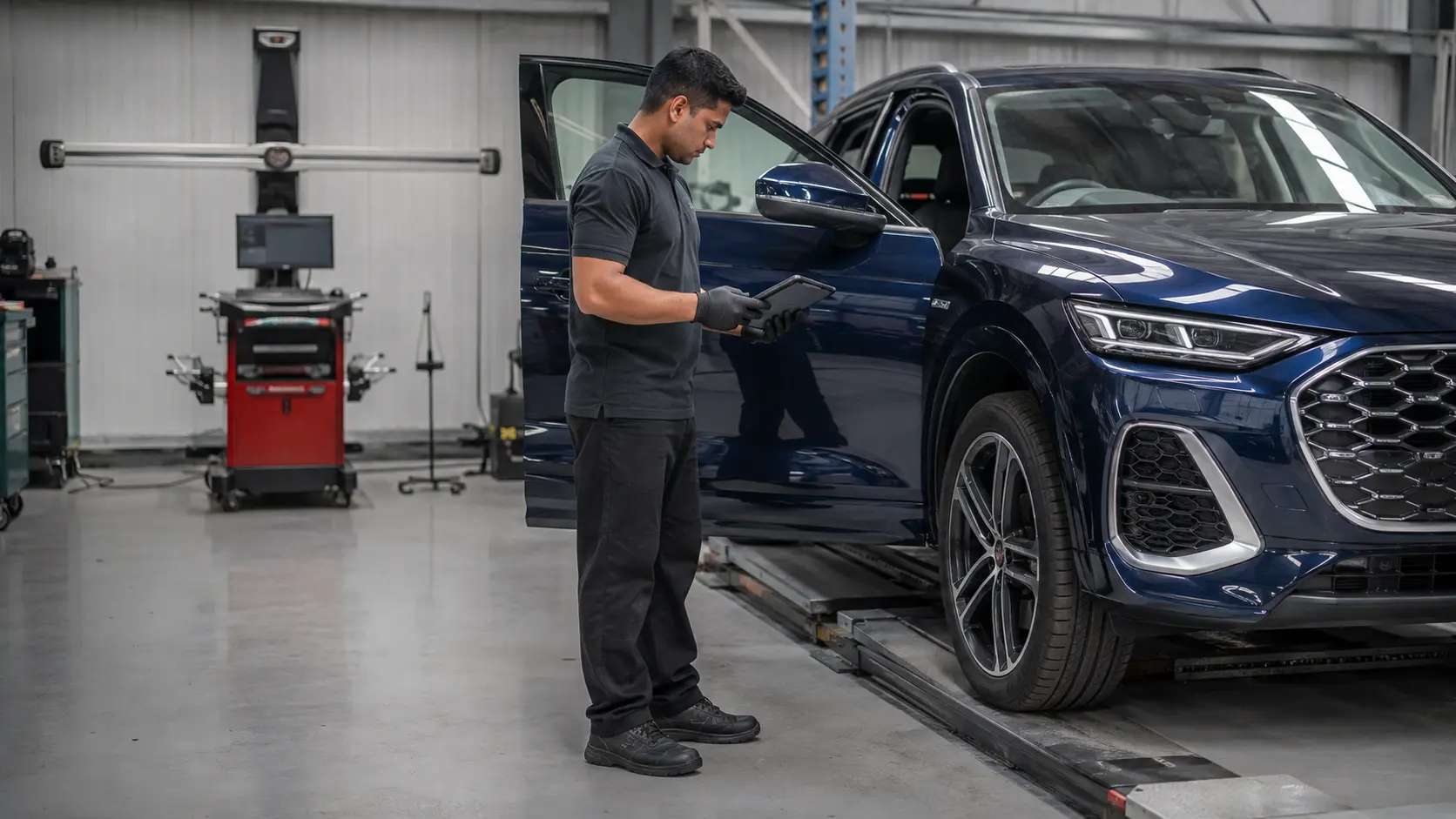
Words such as loose, heavy and unstable describe the driver’s experience, not the failed part. Reproducing the condition safely and inspecting related road-contact systems prevents an expensive steering component being blamed by assumption.
Alignment figures do not repair looseness, a damaged tyre, low voltage or a worn joint. Mechanical and electrical condition should be established before adjustment.
Audi steering assistance, rear-steering equipment, suspension control and driver-assistance features differ across generations and options. The workshop needs the exact vehicle before it selects test information or orders a major component.
An electric Audi can still have ordinary tyre, wheel, joint and alignment faults, while its low-voltage and high-voltage systems require distinct safety boundaries. Do not turn a steering complaint into traction-battery work without relevant evidence.
Non-standard wheels, spacers, altered ride height, suspension parts and previous subframe work can change geometry and steering feel. Provide part references and intended settings where available.
Following repairs, apply calibration or initialization only when it belongs to that vehicle and the operation just completed. A scan-menu option cannot replace mechanical correction.
These AED ranges cover common starting scopes. Your estimate depends on the model, confirmed fault, part choice, alignment and calibration. The workshop inspection is free, and repairs begin only after approval.
Easy workshop access: The steering inspection at our Al Quoz 4 workshop is free, and free pickup and delivery is available across Dubai. A dedicated on-site inspection can be arranged, with any visit charge confirmed before dispatch. Send the Audi model and describe the steering change to begin. If control is uncertain, do not drive the car; ask about recovery so the vehicle can reach the workshop safely.
| Steering service | Estimated price | Typical inclusion |
|---|---|---|
| Workshop steering inspection | Free | Initial symptom, tyre, visible steering and suspension checks. |
| EPS diagnostics | AED 250–650 | Relevant scan, voltage and targeted circuit or response tests. |
| Wheel alignment | AED 150–350 | Measurement and available adjustment after components are confirmed serviceable. |
| Outer tie rod, per side | AED 400–950 | Quality part and installation. Alignment is shown separately. |
| Inner tie rod, per side | AED 550–1,250 | Part and installation, subject to rack condition and access. |
| Steering rack replacement | AED 2,800–7,500+ | Part and labor estimate. Alignment, coding and settings are itemized for the exact Audi. |
Send the Audi model and the steering symptom. We will arrange a free inspection or pickup and explain the next step.
Several faults can create similar steering feedback. The estimate should identify the supporting observation and why the proposed action follows from it.
| Driver report | Evidence to compare | Decision boundary |
|---|---|---|
| Heavy steering without warning | Tyre pressure, mechanical movement, assist current or pressure where applicable, temperature and steering position. | Separate binding, road-contact load and assistance loss before replacing a rack. |
| Steering warning with low voltage | Battery condition, charging result, grounds, returning codes and network stability. | Restore reliable supply and retest before condemning steering electronics. |
| Off-center steering wheel | Tyre and wheel state, alignment values, subframe position, prior impact and suspension repairs. | Correct the verified cause instead of centering the wheel cosmetically. |
| Play or delayed response | Joint movement, rack mounting, column connection, wheel bearing and tyre behavior. | Identify the physical source and decide whether the vehicle should remain off the road. |
| Noise on full lock | Direction, speed, surface, tyre contact, joint movement, mount condition and assistance load. | Distinguish normal load sound from contact, wear, leakage or mechanical damage. |
| Pulling under braking | Brake temperature, caliper movement, tyre condition, suspension joints and road camber. | Treat brake or chassis imbalance rather than using alignment as a blanket fix. |
The image sequence avoids decorative cut-outs. It places recent Audi vehicles inside a diagnostic bay, a lift inspection and a geometry verification area.
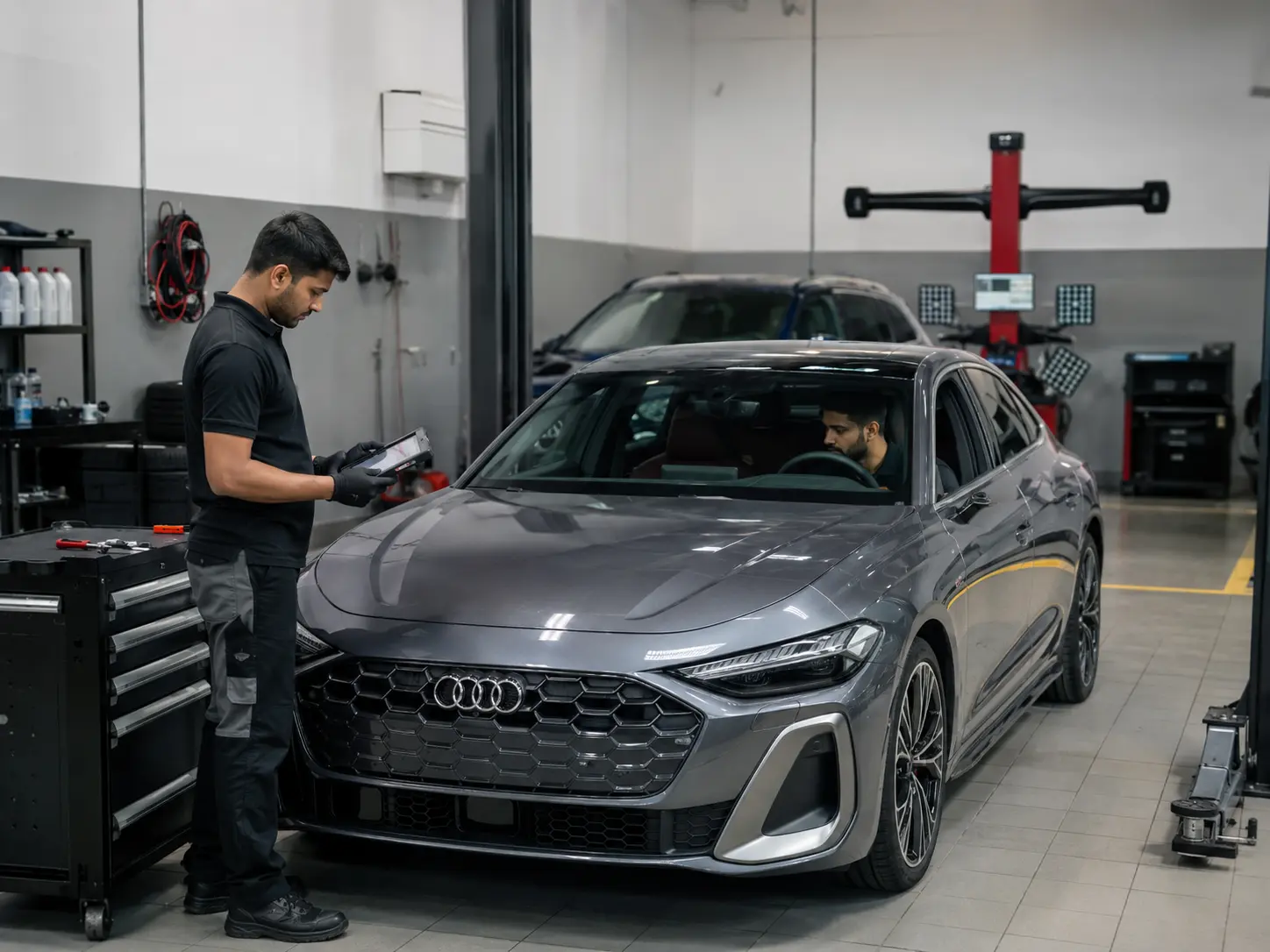
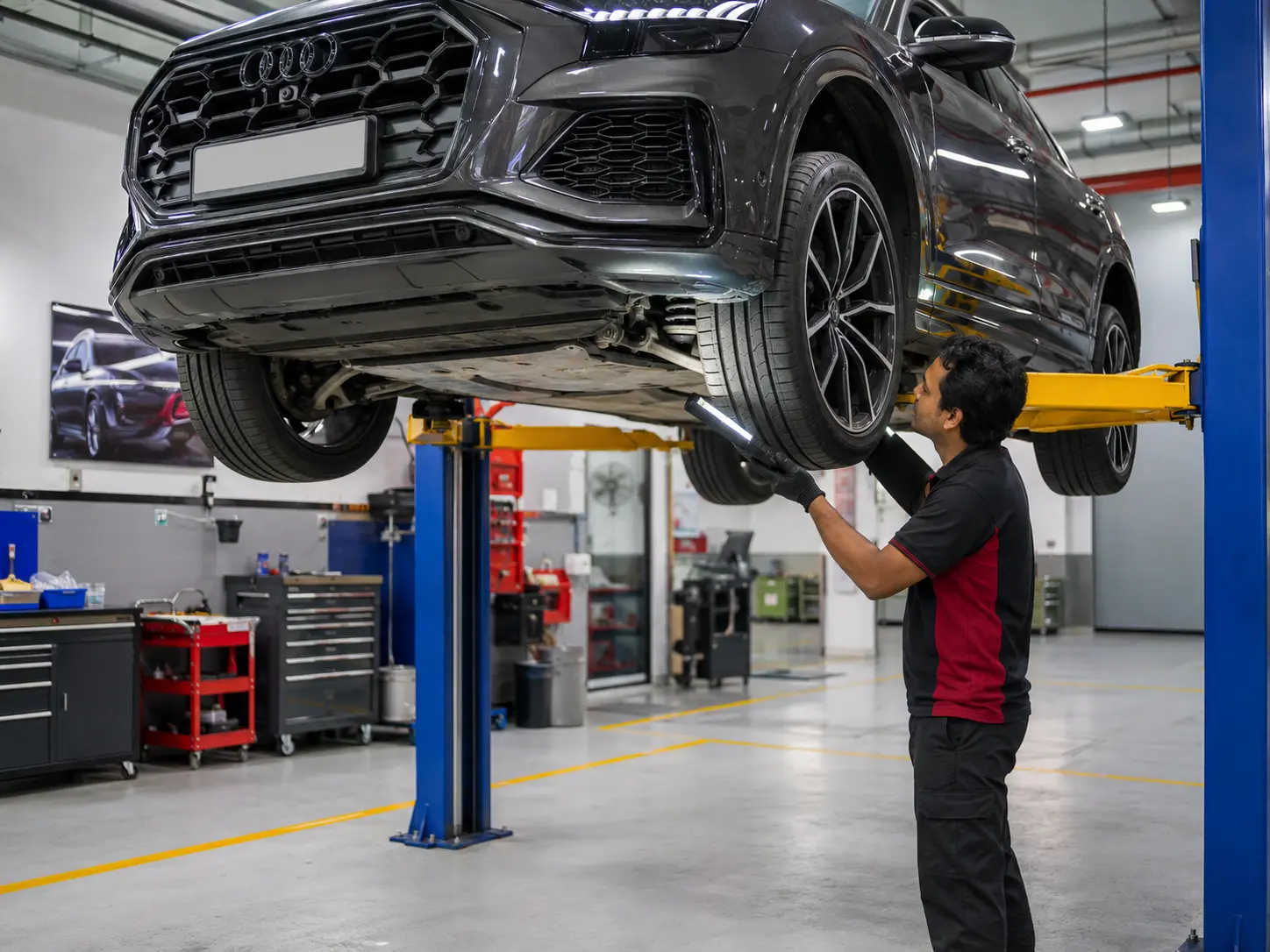
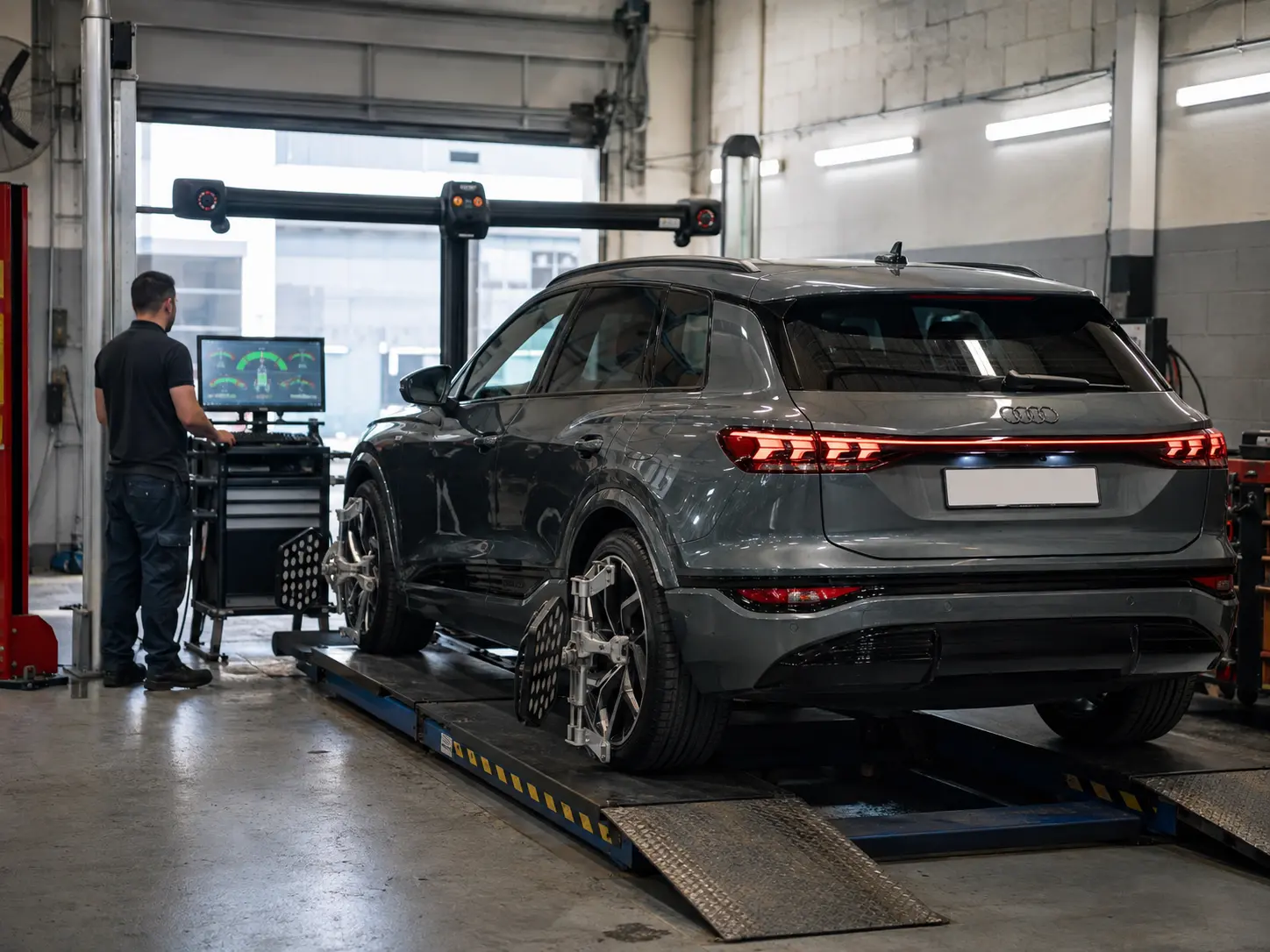
Audi steering complaints often cross mechanical, electrical and chassis boundaries. The booking can start with the strongest symptom, then expand only when the recorded evidence justifies another test.
Record cold pressure, tyre size, age, wear pattern, sidewall condition, wheel damage and balance history. These checks prevent a road-contact problem being mislabelled as steering failure.
View Audi tyre supportCheck relevant joints, boots, tie rods, mounting points and rack condition for movement, damage or leakage. The exact scope varies with model and steering design.
Open Audi repair hubBushes, arms, bearings, dampers, ride height and impact evidence can change directional control. Worn parts should be addressed before geometry is treated as the final answer.
Explore suspension repairAssess battery and charging context when assist warnings, intermittent heaviness or several messages appear. Fault data guides testing but does not automatically identify a replacement unit.
Review electrical repairMeasure alignment after tyres, wheels and relevant joints are suitable. Compare the result with the exact vehicle setup and document any value that cannot be corrected normally.
See wheel alignmentWhere safe and authorized, repeat the conditions that produced the complaint. Steering center, assistance, warning state, noise and directional behaviour should be checked after work.
Book an inspectionThese illustrative quotations show how diagnosis, parts and alignment form the total. Your quotation follows inspection and current parts availability.
Two OEM-equivalent outer tie rods, installation, joint inspection and four-wheel alignment.
Illustrative total: AED 1,550Inner joints and seized adjusters are separate if required.
Scan review, battery and charging checks, targeted wiring tests and steering-system verification.
Illustrative total: AED 650Parts or programming are quoted only when testing confirms the need.
OEM-equivalent steering rack, installation, wheel alignment and applicable basic settings.
Illustrative total: AED 6,200Exact steering configuration and calibration can change the total.
The sequence starts with safety and road-contact condition, then brings in steering data and geometry where the evidence supports them.
Record speed, road, direction, temperature, braking influence and every dashboard message connected to the complaint.
Inspect pressure, wear, wheel damage, joints, mounts, suspension and visible steering condition before adjustment.
Use model-appropriate data, electrical checks or geometry values to test the strongest explanation.
Approve the defined work, complete applicable setup and verify the original steering behavior safely.
Owners can help diagnosis by keeping tyres consistent, recording impacts and describing changes promptly. The goal is stable control, not merely a centered steering wheel.
Use the correct size and suitable specification for the exact Audi. Large differences in pressure, wear, construction or replacement history across an axle can alter straight-line feel and steering response.
Record repeated pressure loss and inspect sidewalls after impacts. A tyre defect can be serious even when the wheel appears undamaged.
A hard impact can affect the wheel, tyre, bearing, linkage, suspension and geometry together. Photograph visible damage and note any immediate change in steering position, vibration or warning messages.
Do not request alignment alone when a new knock, play or pressure loss began with the impact.
Keep the full dashboard wording and the conditions in which it appeared. A generic description such as steering light loses detail about assistance, lane systems or a wider chassis message.
If the steering becomes suddenly much heavier, reduce risk and seek advice rather than repeatedly restarting the car to hide the warning.
Keep alignment results, replaced-part references, calibration notes and the original complaint with the invoice. If the workshop could not reproduce the issue, record that honestly instead of converting uncertainty into a parts recommendation.
Ask what should trigger a return check, especially after tyre replacement, suspension settling or an intermittent electrical event.
Confirm which symptom was reproduced, which tyre or mechanical condition was found, what data or measurement supports the proposal and whether geometry or calibration follows the physical repair. Major assemblies should not be chosen from a fault label alone.
Request the proposed part source, compatibility basis, related fasteners or fluids, labour, alignment treatment, written terms and final verification plan. When the concern is intermittent, agree how uncertainty and monitoring will be recorded.
These answers help owners separate urgent control concerns from symptoms that still require systematic inspection.
Tyre pressure, mechanical binding, electric or hydraulic assistance, low voltage and control faults are possible. The exact model and conditions must be tested.
Only if incorrect geometry is the verified cause and tyres, wheels, brakes and suspension are suitable. Alignment cannot repair worn or damaged hardware.
Tyre variation, balance, wheel runout, hub seating, bearings, suspension and driveline forces can create speed-dependent vibration.
Low supply voltage can affect assistance and stored fault data. Battery, charging, grounds and returning messages should be checked together.
Noticeable play or delayed response can reduce control. Arrange prompt inspection and avoid driving when the vehicle cannot be steered predictably.
Geometry, subframe position, tyre effects, steering setup or incomplete adjustment may be involved. The completed work and alignment data should be reviewed.
Width, offset, tyre size, spacers and ride height can change steering load and geometry. Declare every non-standard fitment before testing.
For Audi steering, contact the Dubai FCP service desk in Al Quoz’s fourth industrial zone. Send the vehicle and symptom details first.
Send the Audi model and describe the steering symptom. We can request warning photos or other details later when they help the diagnosis. The workshop can route the first inspection safely. If the concern appears mainly while braking, continue with the Audi brake repair checks.