Misfire or rough running
Preserve cylinder data and operating state. Ignition, fuel delivery, injector behavior, air leakage, deposits, compression, timing and control inputs should be separated before parts are exchanged.
Book Audi engine repair in Dubai for misfires, warning lights, overheating, coolant loss, oil leaks, smoke, unusual noise or reduced power. Start with the Audi model and symptom. We provide a free workshop inspection in Al Quoz 4 plus free pickup and delivery.

Provide the chassis number, exact Audi derivative, year, odometer reading, sales market and complete dashboard message. State whether the issue began at cold start, after heat soak, during idle, under boost, on a long climb, while braking or immediately after refuelling. Add rpm, vehicle speed, the chosen drive setting, outside temperature and what changes after an ignition cycle.
List fuel grade, oil specification if known, oil and coolant top-ups, the most recent service and every change made before the concern appeared. Battery work, jump starts, intake or exhaust modifications, software tuning, collision, water exposure and previous dismantling can all change the first test plan.
Photograph the instrument display, fluid condition and the first place a leak appeared. A stain spreading across an undertray does not identify its source. Do not add fluid repeatedly without recording quantity, and never open a hot cooling system.
This page owns combustion-engine diagnosis and repair. General Audi maintenance, transmission work, electric-drive concerns, dent repair and upholstery are covered on separate pages.
Audi’s current global portfolio includes four-cylinder, five-cylinder, V6 and V8 TFSI applications, as well as mild-hybrid and plug-in-hybrid combinations. A familiar badge or body shape cannot establish the engine or repair method.
These estimated Dubai ranges provide a useful starting budget. The final quotation depends on the engine, fault, access, parts and inspection findings. A free workshop inspection confirms the appropriate first step before repair approval.
| Engine service | Estimated price | Typical scope |
|---|---|---|
| Workshop inspection | Free | Initial visual assessment and review of the reported engine problem at our Al Quoz 4 workshop. |
| Engine diagnosis | AED 300–750 | Relevant scan, basic pressure or electrical checks and targeted testing. Additional access is quoted separately. |
| Ignition or misfire repair | AED 550–2,200+ | Testing and the approved repair using suitable plugs, coils or related parts where required. |
| Cooling-system repair | AED 650–3,500+ | Pressure testing and the agreed hose, thermostat, pump or related repair. Major cooling parts cost more. |
| Oil-leak repair | AED 750–4,500+ | Leak tracing and the approved gasket, seal or housing repair. Deep engine access increases labor. |
| Carbon-cleaning service | AED 1,200–2,800 | Inspection and suitable intake cleaning where deposits are confirmed as relevant to the problem. |
| Major engine repair | AED 6,500–25,000+ | Partial or extensive repair depending on damage, machining, parts, turbocharging and required access. |
Send the Audi model and the engine symptom. We can recommend the first check and arrange a free workshop inspection or free pickup and delivery.
Audi Dubai states that authorized centres provide genuine parts, certified expertise and warranty support. Exact manufacturer or extended-warranty eligibility depends on the VIN, date, mileage, service history, terms and fault. The authorized network must decide coverage, recall status, protected programming and official record updates.
| Owner question | Independent findings | Authorized decision |
|---|---|---|
| Possible covered engine fault | Preserve messages, condition and agreed non-intrusive measurements. | Audi partner determines eligibility and approved procedure. |
| Recall or service campaign | Provide VIN and symptom without claiming completion. | Official lookup confirms applicability and closes the action. |
| Software, coding or online adaptation | Document current version, battery state and physical repair. | Authorized systems handle supported files and official history. |
| Genuine part requirement | State proposed source and exact part reference. | Audi centre supplies and records parts within its programme. |
| Independent engine repair | Return tests, approvals, components, fluids and verification. | Owner confirms implications before work begins. |
Purpose-made workshop views illustrate protected engine testing, supported underbody access and the results discussion. No Audi endorsement is represented.
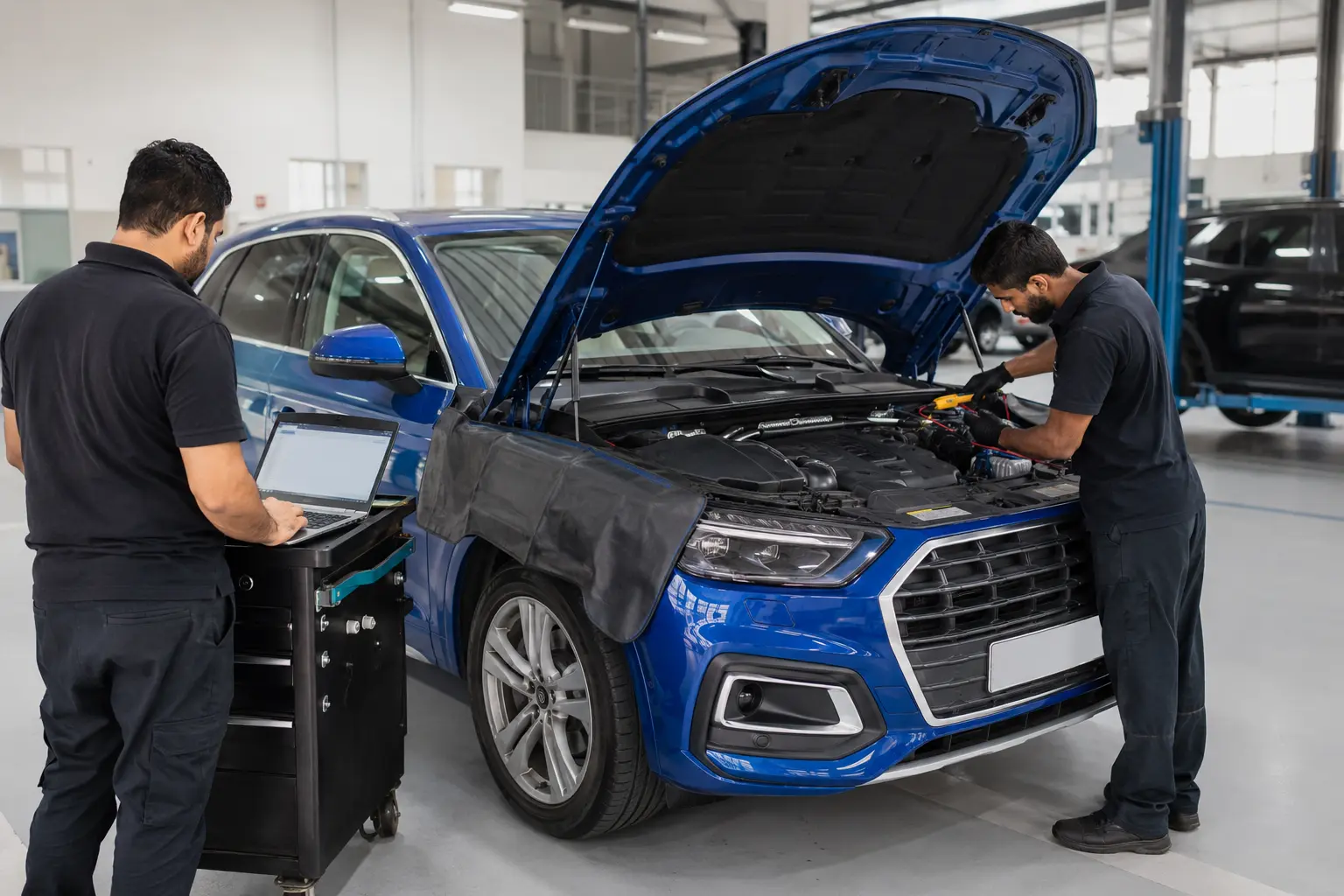
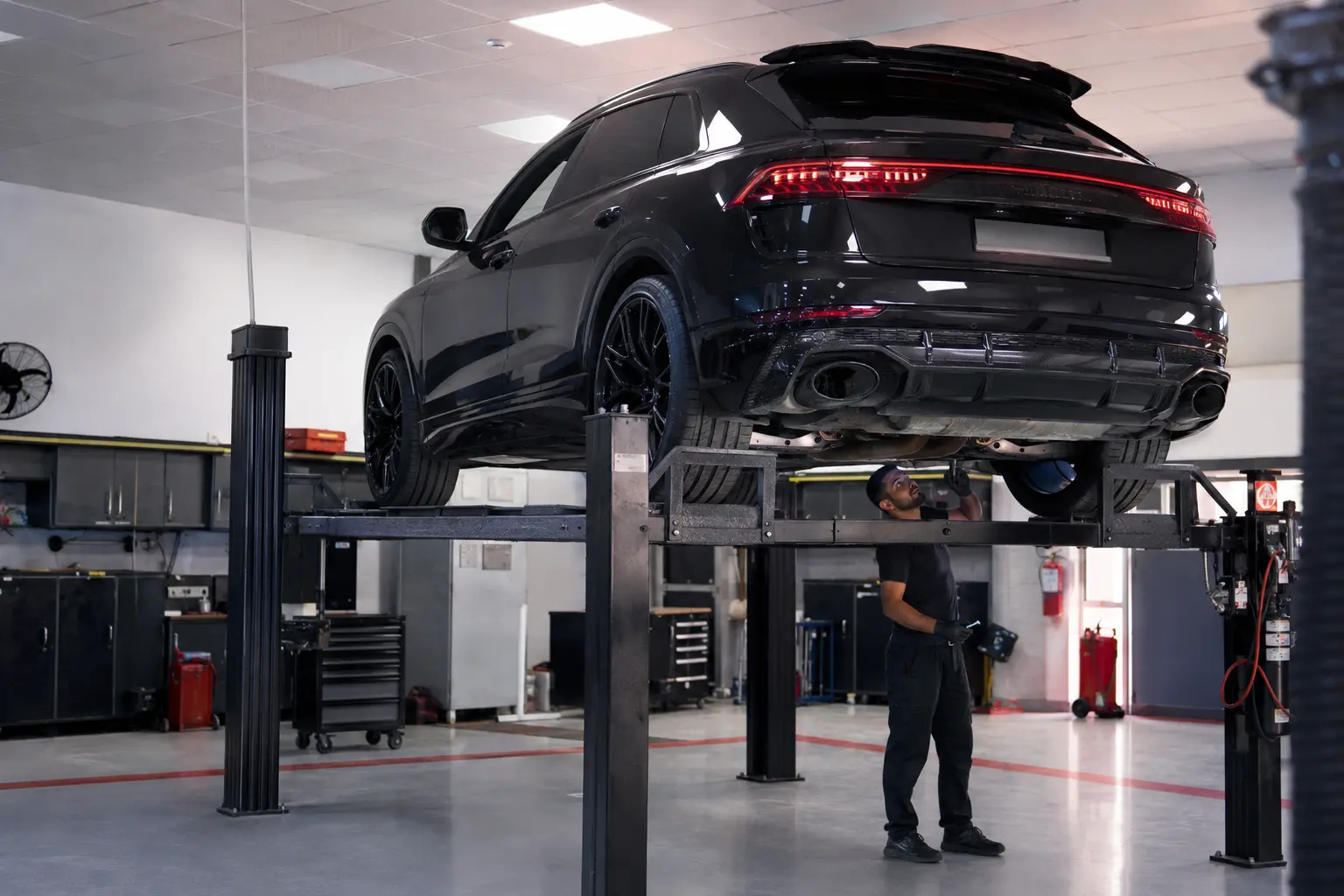

The aim is not to test everything. It is to select the smallest defensible checks that can separate the leading possibilities.
Preserve cylinder data and operating state. Ignition, fuel delivery, injector behavior, air leakage, deposits, compression, timing and control inputs should be separated before parts are exchanged.
Compare requested and actual airflow, boost, pressure, throttle, fueling and exhaust behavior. A protection mode can be a response to another fault rather than the failed component.
Stop for a red pressure warning. Establish level, correct oil, filter, pressure and mechanical noise without relying on a dashboard level message alone.
Record quantity, first leak position, fan behavior and temperature trend. Pressure, circulation, combustion-gas and sealing checks answer different questions.
Note color, start-up duration, load, temperature and location. Oil, coolant, fuel, exhaust and external leakage should not be collapsed into one conclusion.
Capture cold or hot timing, engine speed, load and duration. Accessory drive, exhaust shields, mounts, timing components and internal condition require safe localization.
An owner may describe all three as an oil problem, but they are different investigations. Consumption needs an accurate starting level, distance, driving pattern and measured additions. Leakage needs a clean baseline, the first wet point and a recheck. Pressure needs the specified conditions and suitable measurement.
Do not condemn a gasket from the lowest visible drop. Airflow and undertrays can carry fluid away from its source. Photograph before cleaning, then inspect the engine, filter housing, cooler, lines, turbo supply or return paths and crankcase ventilation as relevant to the installed engine.
Coolant work follows the same discipline. A low reservoir may reflect an external leak, an internal loss, trapped air, cap behavior or a previous fill issue. Pressure, temperature, fan, pump and circulation checks should stay separate until they converge.
Oil or coolant contamination, sustained pressure loss, severe overheating or mechanical noise can require an immediate stop. Recovery protects both the engine and warning signs that a long drive might hide.
Direct-injection discussions often jump immediately to carbon cleaning. Deposits are one possibility, not an automatic explanation for every misfire, poor idle or reduced-power message. The test plan should first establish the affected cylinders, operating condition, fuel correction, airflow integrity, ignition and mechanical state.
Use event data and non-invasive measurements to justify opening the intake. Agree what access will reveal and how findings will be recorded.
Document distribution and severity. Cleaning method, contamination control, component protection and post-work verification should be explicit.
Do not clean as a substitute for diagnosing ignition, fueling, air leaks, timing, compression, exhaust restriction or software-related behavior.
A recommendation for compression testing, cylinder inspection, timing access, turbo removal, cylinder-head work or engine removal should state the question, expected measurements and stop point. It should not silently become permission for a rebuild.
Name covers, intake, exhaust, cooling or front-end parts that must move. Include seals, clips and one-time hardware likely to be affected.
Record pressure, leakage, bore, surface, timing or turbo findings in units and under stated conditions. Photos support, but do not replace, measurements.
Separate in-place repair, component overhaul, exchange assembly and replacement engine. Parts provenance and machining standards belong in the estimate.
Include fluids, priming, adaptations, software, leak check, temperature verification, road test and any official dependency.
High ambient temperature, long idling, outdoor parking and dense traffic can reveal an engine concern that disappears after a cool overnight drop-off. These conditions do not identify a failed part; they define when measurements should be captured.
Give the parked interval, coolant display and cranking response, then say if the alert predates selecting a ratio or follows it. Fuel pressure, supply voltage and temperature inputs can then be compared.
Record fan operation, cabin demand, temperature trend, smell and power change. Cooling airflow, electrical load and engine management should remain in one event timeline.
Note fuel, drive mode, speed range and warning timing. A safe controlled test should stop well before repeated reduced-power events risk further damage.
These illustrative quotations show typical complete scopes rather than customer records. The final price depends on inspection, parts choice, access and engine condition.
Cooling-system repair
Pressure test, suitable thermostat housing replacement, coolant refill and final temperature checks.
Illustrative total: AED 2,350
Misfire repair
Targeted diagnosis, suitable ignition parts, installation, fault clearing and final running checks.
Illustrative total: AED 1,450
Oil-leak repair
Leak tracing, replacement of a suitable failed seal or housing, cleaning and post-repair inspection.
Illustrative total: AED 3,800
The process expands only when the current findings justifies the next action.
Match VIN, code, generation, fuel, hybrid equipment, software and modifications.
Capture messages, freeze-frame data, fluids, sound, temperature and recent changes.
Choose supply, pressure, airflow, fuel, ignition, cooling or mechanical checks.
State the area, question, parts, limit and possible outcomes before dismantling.
Repeat the relevant conditions and return remaining risk or official work separately.
Use the VIN, engine code, production date and component markings. Similar housings can contain different sensors, revisions, connectors or software. A part from another Volkswagen Group application does not prove Audi fitment or completion.
Name the supply type precisely: Audi-branded, OE-maker, third-party replacement, rebuilt, used or customer-provided. Confirm source, warranty, seals, gaskets, single-use fasteners, fluids and coding before purchase. Used engines or major assemblies require provenance, identity and condition checks that a seller’s description cannot replace.
Installation may be only one stage. Priming, filling, bleeding, adaptation, software, calibration, road testing and leak reinspection can all remain. Where factory online access or official history is required, show the authorized dependency before approval.
The final record should identify the initial complaint, data, measurements, authorized access, installed parts, fluids, electronic work, verification and unresolved findings. Preventive recommendations should be listed separately.
Use specialist pages for adjacent work without turning this engine page into a general Audi directory.
Compare stored events with live data, electrical supply checks and physical inspection.
Review diagnosticsUse the coolant service page for fluid replacement and routine cooling-system care.
Review coolant serviceUse the transmission repair page for shift, selection and driveline concerns.
Review transmission repairUse the oil-service route for scheduled lubricant and filter work without an engine fault or internal repair concern.
Review Audi oil serviceUse the battery route when no-start, low-voltage, charging, or power-supply evidence needs to be separated from an engine fault.
Review battery testingSend the engine event when the correct test method is uncertain.
Request an appointmentNo. This page covers combustion-engine diagnosis and repair. Maintenance, transmission, electric-drive, body and interior work are covered separately.
Not alone. The code should agree with event data, live values, electrical supply and relevant physical measurements.
An agreed assessment can establish level method, distance, additions, external leakage, operating conditions and the tests needed before internal access.
No. Repair in place, component overhaul, exchange assembly, replacement or official referral are different outcomes that require inspection findings and approval.
No coverage is promised. Confirm the VIN, policy terms and claim process with an authorized Audi centre before independent dismantling.
Confirm the part’s identity, provenance, condition, fitment, warranty and software requirements, and whether the workshop can install it, before purchase.
Stop for oil-pressure loss, overheating, major leakage, severe mechanical noise, heavy smoke, unsafe operation or a critical warning.
It should separate complaint, tests, measurements, access, parts, fluids, software dependencies, verification and remaining findings.
Send the Audi model and the engine symptom, then choose a workshop visit or pickup. Extra technical details can be requested later if they are needed for diagnosis or parts.