Brake light troubleshooting
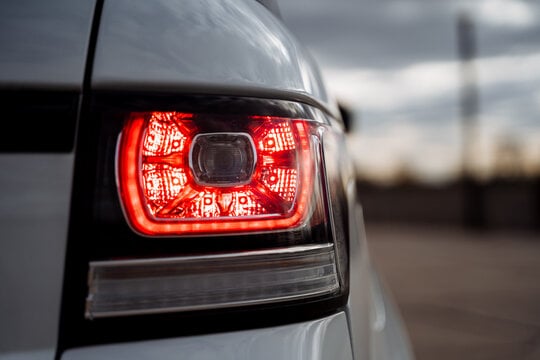
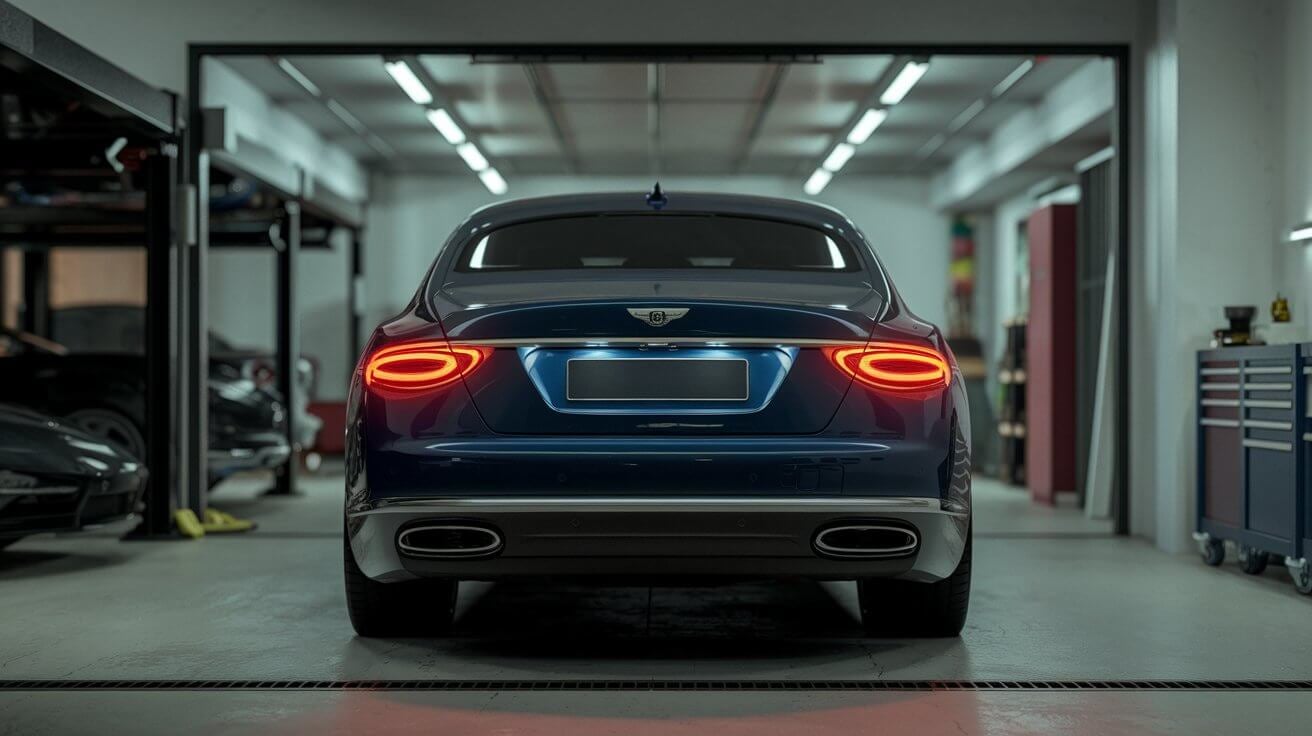
Your engine is off, your foot is nowhere near the pedal, yet the rear brake lamps are still glowing. Leave them like that and the battery may be flat by morning. Drive without fixing the signal and the person behind cannot tell when you are actually slowing down.
Brake Lights Stay On Diagnosis by What You Observe
The phrase “brake light stays on” can describe two separate systems. Mixing them up leads to the wrong test and the wrong repair. Exterior brake lamps tell traffic that the pedal is pressed. A red or amber brake symbol on the instrument panel can refer to the parking brake, fluid level, electronic parking-brake system, ABS-related faults, or another model-specific condition.
| What stays illuminated | Likely system | First check | Driving decision |
|---|---|---|---|
| Both rear stop lamps and the high-mounted lamp | Brake-pedal switch, pedal stopper, pedal return, wiring, or module input | Lift the pedal gently and watch whether the lamps switch off | Avoid normal driving because the stop signal is misleading |
| Only one rear lamp | Lamp holder, LED assembly, moisture, wiring, or backfeed | Compare left, right, and center stop lamps | Arrange electrical testing before night or highway use |
| Dashboard BRAKE or parking-brake symbol | Parking brake, brake-fluid level, hydraulic warning, or electronic fault | Read the owner’s manual and confirm parking-brake release | Stop if pedal feel, braking, fluid level, or another warning is abnormal |
| Rear lamps glow dimly or change with indicators | Ground fault, connector corrosion, incorrect bulb, trailer wiring, or body-control issue | Note which other lamps alter the symptom | Use caution and book circuit diagnosis |
Run These Checks Before Buying a Brake Light Switch
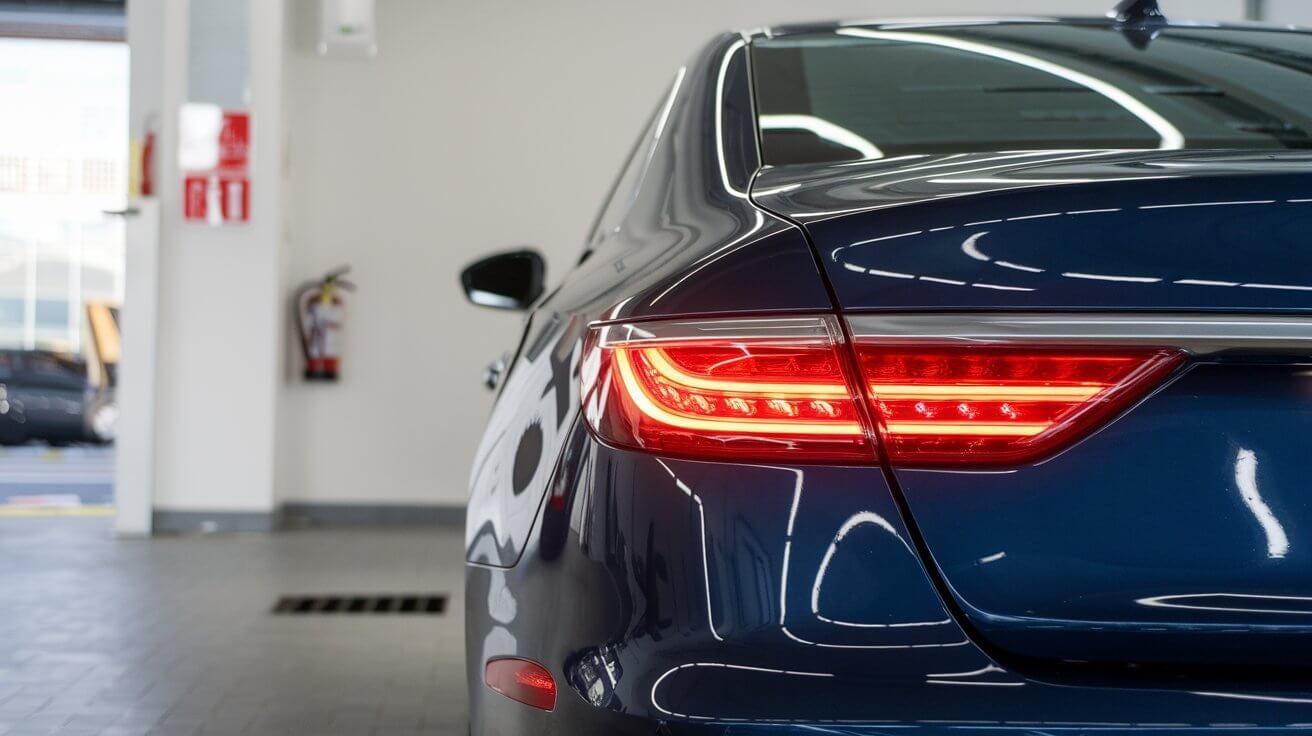
A two-minute observation can narrow the fault without dismantling the car. Ask another person to stand behind the vehicle, or position the car where the lamp reflection is visible on a wall. Keep the transmission in Park, apply the parking brake, and do not crawl near a pedal or moving vehicle.
Why Exterior Brake Lights Remain On
Switch or adjustment fault
The brake-pedal switch changes state as the pedal moves. A worn switch, loose mount, incorrect adjustment, or damaged connector can leave the stop-lamp request active when the pedal is released.
Missing pedal stopper
Some vehicles use a small rubber or plastic pad where the pedal contacts the switch. If it cracks and falls away, the switch plunger may no longer be pressed at rest. Small fragments near the pedal can be a useful clue.
Pedal does not return
A trapped floor mat, dry or damaged pivot, return-spring problem, booster or linkage concern can keep the pedal slightly down. This requires more than switch replacement because the pedal movement itself is wrong.
Wiring short or backfeed
Pinched wiring, water in a connector, incorrect bulbs, trailer accessories, or previous electrical work can feed the stop-lamp circuit when it should be off.
Body-control or network fault
On vehicles where a control module manages exterior lighting, the switch may provide a low-current signal rather than powering the lamps directly. Scan data and wiring diagrams matter here.
Model-specific logic
Hybrid, electric, start-stop, adaptive-cruise, and brake-by-wire vehicles may use more than one pedal-position signal. Calibration and fault-code checks can be required after replacement.
What Usually Does Not Cause All Brake Lights to Stay On
A blown fuse normally opens a circuit, so it is more commonly associated with lamps that do not operate. It is not the first explanation for every stop lamp remaining illuminated. Likewise, low brake fluid concerns the hydraulic warning system on many vehicles, not a direct command to hold the exterior stop lamps on.
Do not top up fluid just to silence a light
A low reservoir can reflect pad wear or a leak. The correct response is to identify why the level changed. Never use fluid level as a guess for an exterior-lamp fault.
Do not replace bulbs as a group
Bulbs and LED units can fail, flicker, or backfeed when incorrect, but three normally bright lamps staying on together points upstream. Test the shared command before buying lamp assemblies.
Can You Drive When the Brake Lights Will Not Turn Off
The safest choice is to avoid routine driving until the fault is corrected. Constantly illuminated stop lamps hide the moment you press the pedal. A following driver may not receive a clear braking signal, especially in traffic, at night, or on faster roads.
If the brake pedal feels soft, sinks, has reduced braking force, or appears with a dashboard hydraulic warning, do not drive. Arrange recovery. The same applies when wiring is hot, insulation smells burnt, a fuse repeatedly opens, or lamps behave unpredictably with indicators and headlights.
How a Workshop Tests a Brake Light That Stays On
A sound diagnosis proves where the stop-lamp command is coming from. The technician should not assume the switch is bad just because it is common. The test sequence changes with the vehicle’s wiring and control strategy.
Mechanical inspection
- Check floor-mat clearance and full pedal return
- Inspect the stopper pad, pivot, spring, bracket, and switch mount
- Measure switch position against the pedal rest point
- Confirm the pedal is not preloaded or binding
Electrical and scan checks
- Compare physical pedal position with live brake-switch data
- Test supply, ground, signal, and continuity as the diagram requires
- Inspect connector tension, moisture, heat, and previous splices
- Check related fault codes and module outputs
On some vehicles, the same signal affects shift-lock release, cruise control, stability systems, start authorization, regenerative braking, or driver-assistance functions. That is why a cheap switch fitted in the wrong position can cause more than a lighting complaint.
Brake Light Repair Costs in Dubai
The selling ranges below are for planning. They cover common passenger vehicles and normal access. A final estimate depends on the model, part type, wiring condition, diagnostic time, programming requirements, and whether another brake or electrical fault is present.
| Service | Typical price | Scope |
|---|---|---|
| Brake-light circuit inspection | AED 150 to 350 | Visual checks, pedal-switch operation, lamp comparison, and basic circuit testing |
| Brake-light switch adjustment | AED 120 to 250 | Adjustment and function confirmation when the existing switch is serviceable |
| Brake-light switch replacement | AED 220 to 650 | Common switch, labor, adjustment, and verification; model-specific parts can cost more |
| Pedal stopper or small contact repair | AED 100 to 280 | Stopper or contact part and installation where separately serviceable |
| Wiring or connector repair | AED 250 to 900 | Tracing and repairing an accessible damaged section; harness replacement is excluded |
| Module diagnosis or coding | AED 350 to 1,200+ | Advanced scan, guided testing, or programming; control unit and dealer security access are excluded |
Prices vary by make, model, condition, part availability, and access. Major harness work, lamp assemblies, modules, brake-system repairs, recovery, and VAT treatment must be confirmed in the written estimate.
Repair the Cause Rather Than the Most Obvious Part
Adjust
Choose adjustment when the switch tests correctly, the mount is secure, and the only fault is its relationship to the pedal rest point. The final test must confirm reliable on and off operation through repeated pedal cycles.
Repair
A stopper, connector, short wiring section, ground, or pedal-return issue may be repairable without replacing a complete harness or lamp. This is often the sensible option when damage is local and access is reasonable.
Replace
Replace a switch, lamp assembly, harness section, or module only after testing supports that decision. Module replacement should include power, ground, input, output, communication, and programming checks.
Do not buy yet
Do not order parts when gently lifting the pedal changes the symptom but the contact point has not been inspected, or when only one lamp is affected. Those clues can shift the repair from a switch to a stopper, holder, ground, or connector.
DIY Checks and Workshop-Only Work
Checks you can make safely
- Confirm which exterior lamps remain illuminated
- Remove loose objects and check the floor mat is not touching the pedal
- Observe whether lifting the pedal switches the lamps off
- Look for loose rubber or plastic pieces below the pedal
- Record recent repairs, water entry, towing accessories, and battery work
Leave these tests to a technician
- Probing module circuits without a wiring diagram
- Bypassing the switch or joining wires
- Removing trim around airbags or knee bolsters
- Programming or calibrating pedal-position inputs
- Diagnosing brake-by-wire, hybrid, or high-voltage systems
If the symptom is actually flickering front lighting or several lamps pulsing with engine speed, use the flickering headlights diagnosis guide. That pattern can point toward charging voltage, grounding, or a wider electrical concern rather than a stuck stop-lamp switch.
Dubai Conditions That Change the Diagnosis
Heat can harden pedal stopper pads and age connector seals. Dust can collect around lower-dash trim, and moisture from cleaning or water entry can affect rear lamp connectors. These conditions do not prove the cause, but they tell the technician where to look before replacing parts.
Heavy stop-and-go driving also creates many pedal cycles. A switch that works intermittently in the workshop may fail after warming up or when the pedal returns slowly. Share whether the lamps stay on only after a long drive, after cabin cleaning, after accessory installation, or after the vehicle has been parked in the sun.
How to Prevent Another Stop-Lamp Fault
- Check all three brake lamps monthly using a helper or a reflection.
- Keep driver-side mats secured with the correct retainers and clear of the pedals.
- Do not hang accessories or route wiring around the pedal bracket.
- Ask for connector and ground checks after water entry or rear collision repair.
- Use the correct bulb specification where replaceable bulbs are fitted.
- After switch work, confirm normal lamp operation, shift-lock behavior, cruise control, and warning lights.
A preventive switch replacement is rarely justified when the lamps operate correctly and no model-specific service information calls for it. Inspection is useful. Guessing is not.
Sources and Technical References
Vehicle wiring, switch adjustment, warning symbols, and battery-disconnection procedures vary. Use the owner’s manual and service information for the exact model and year.
Key Takeaway
When your brake lights stay on, identify the light before buying anything. Exterior stop lamps that switch off when the pedal is lifted point toward pedal return, switch adjustment, mounting, or the contact stopper. One abnormal lamp suggests a local holder, LED unit, connector, ground, or wiring issue. A dashboard brake warning follows a different diagnostic path. Avoid routine driving with a misleading stop signal, and arrange recovery if pedal feel, hydraulic braking, wiring temperature, smoke, or other warnings are abnormal.
Book a Brake Light Diagnosis in Al Quoz 4
We can inspect pedal return, switch adjustment, stopper condition, wiring, lamp behavior, and scan data before recommending parts. Send the vehicle make, model, year, and a short description of which lights stay on.
Brake Lights Stay On FAQs
Why do my brake lights stay on when the car is off?
The pedal switch may still be reporting that the brake is applied. Common reasons include a failed or misadjusted switch, a missing pedal stopper, a pedal that does not return fully, or an electrical backfeed. Confirm whether lifting the pedal turns the lights off.
Will brake lights staying on drain the battery?
Yes. Exterior lamps can consume enough power to discharge a battery while the vehicle is parked. The time depends on lamp type, battery condition, vehicle electronics, and how long the fault continues.
Can I adjust the brake light switch myself?
Some switches are adjustable, while others lock into a set position or require a model-specific installation sequence. An incorrect setting can keep the lamps on, prevent them from illuminating soon enough, or affect other vehicle functions.
Does low brake fluid make the rear brake lights stay on?
Low fluid can illuminate a dashboard brake warning on many vehicles. It does not usually command all exterior stop lamps to remain on. Treat a low reservoir as a separate hydraulic inspection issue rather than topping it up without finding the cause.
Can a blown fuse cause brake lights to stay on?
A blown fuse usually interrupts power, so lamps that do not work are more typical. A wrong fuse, bridged circuit, short, module fault, or accessory wiring can produce unusual behavior, but the circuit should be tested rather than guessed.
Why do the lights turn off when I lift the brake pedal?
That result suggests the pedal is not reaching the correct rest position relative to the switch. The cause may be switch adjustment, a missing contact stopper, a floor mat, pedal binding, spring or linkage trouble, or a mounting problem.
Is a brake light switch expensive to replace in Dubai?
A common switch replacement is typically AED 220 to 650 including normal labor and adjustment. Model-specific switches, restricted access, calibration, wiring damage, or control-module diagnosis can increase the price.
Should I drive to the workshop with the brake lights stuck on?
Avoid routine driving because the lamps no longer provide a clear braking signal. Use recovery if braking feels abnormal, a hydraulic warning is present, wiring is hot, there is a burning smell, or the electrical behavior is unpredictable.