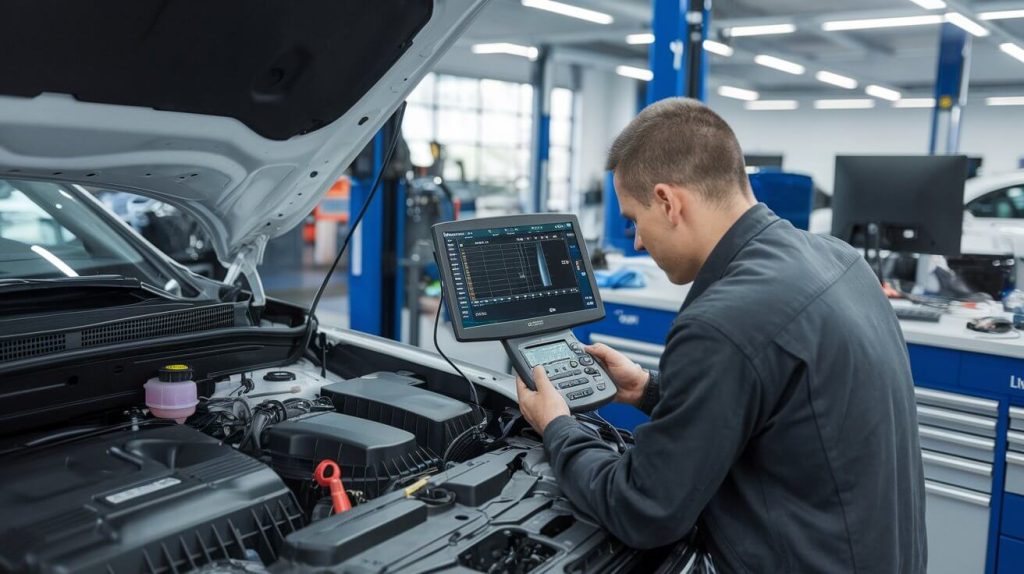
A car that shakes when idling may have an uneven-running engine or worn mounts that let normal engine vibration reach the cabin. Misfires, intake leaks, fuel faults and idle-control problems can disturb combustion. Mounts, exhaust contact and accessories can transmit vibration even when RPM looks steady. The first step is to separate these patterns before choosing a repair.
Is the engine running roughly or is vibration reaching the cabin?
At idle, the engine should hold a controlled speed without repeated stumbling or strong new vibration. Small changes as loads switch on can be normal. Look for a change from your car’s usual behavior.
| What you notice | What it suggests | Useful next check |
|---|---|---|
| Uneven engine sound, stumbling or fluctuating RPM | Combustion, airflow, fueling or idle-control fault | Misfire data, intake condition, ignition and fuel tests |
| Fairly steady RPM with vibration through the seat, floor or steering wheel | Mounts, exhaust contact or an accessory may be transmitting vibration | Engine running quality and physical mounting/contact checks |
| Shake occurs only while moving, accelerating or braking | A road-speed or load-related problem rather than stationary idle alone | Wheel, brake, drivetrain or engine-load inspection matched to the event |
Steady dashboard RPM does not rule out a misfire. The display may not show every small speed change. Mounts and an engine-running fault can also be present together.
If the main problem is weak response while driving, use the separate guide to sluggish acceleration. This page focuses on shaking while the car is stationary with its engine running.
Is it safe to drive when the car shakes at idle?
For a mild, stable vibration without those warning signs, check the vehicle manual and ask the workshop whether a short trip is appropriate. No warning light does not prove the car is safe. Stop if the vibration worsens or braking, steering or acceleration changes.
With an oil-pressure warning or overheating, switch the engine off once safely stopped. Keep clear of moving belts, fans and hot components. Never open a hot cooling-system cap.
What cold, hot and load-related shaking can reveal
Record the conditions once and share them with the workshop. In Dubai, AC use and hot traffic can reveal a marginal fault, but heat alone does not identify a failed part.
| When the shake appears | What needs comparison | What to record |
|---|---|---|
| Only at a cold start | Temperature-related ignition, mixture control, intake leakage or mechanical condition | How long it lasts and whether it happens on every first start |
| Only after warming up | Heat-related electrical faults, fueling, idle control or mount behavior | Traffic, temperature reading and whether a hot restart changes it |
| In Drive, but less in Park or Neutral | Mount loading, idle compensation and transmission engagement | The gear in which you noticed it, without repeated test shifts |
| With AC or another load | Compressor or accessory load, charging condition, idle control and mounts | The setting that changes the shake or causes stalling |
| After refueling | Fuel quality or evaporative-system faults, alongside other possible causes | Station, fuel grade, receipt and when the symptom started |
| After recent repairs or battery work | Disturbed hoses/connectors, settings, mounting or an unrelated fault | The work completed and whether the shake began immediately |
Common causes of a car shaking when idling
Ignition misfire
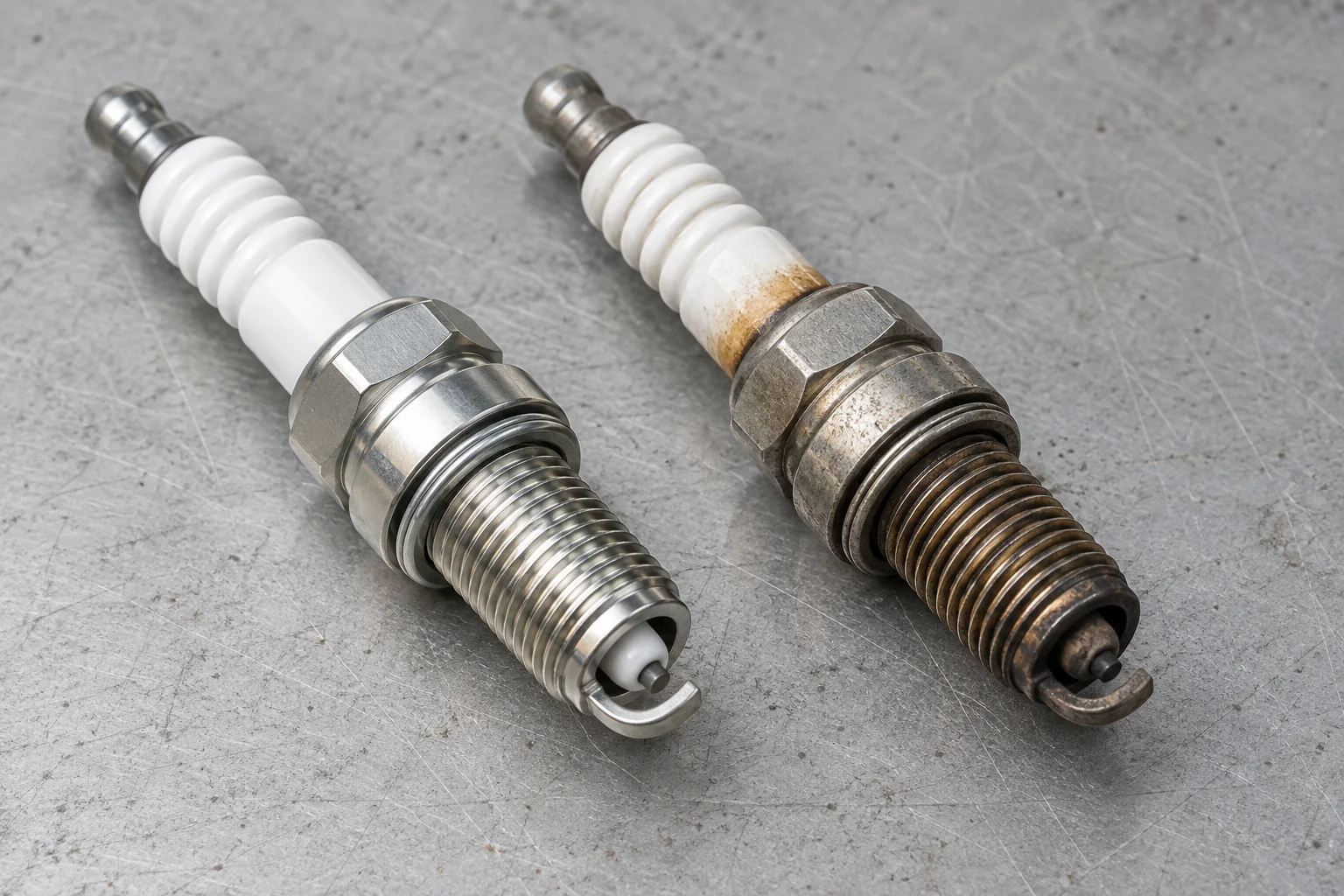
Worn or incorrect spark plugs, weak ignition coils, damaged wiring or another ignition fault can make one cylinder contribute less power.
Intake or vacuum leak
Unmetered air can disturb the mixture most noticeably at idle. Split hoses, seals, intake connections and crankcase-ventilation faults should be inspected and tested rather than replaced from a generic list.
Fuel delivery problem
Injector imbalance, pressure loss, contaminated fuel or an electrical supply problem can cause uneven combustion. Cleaning injectors without evidence may waste money if pressure, ignition or airflow is responsible.
Throttle and idle control
Some vehicles use an idle-control valve, while newer systems control idle through an electronic throttle. Deposits, incorrect adaptation, wiring faults or sensor input can affect control. The vehicle design determines the correct test.
Engine or transmission mounts
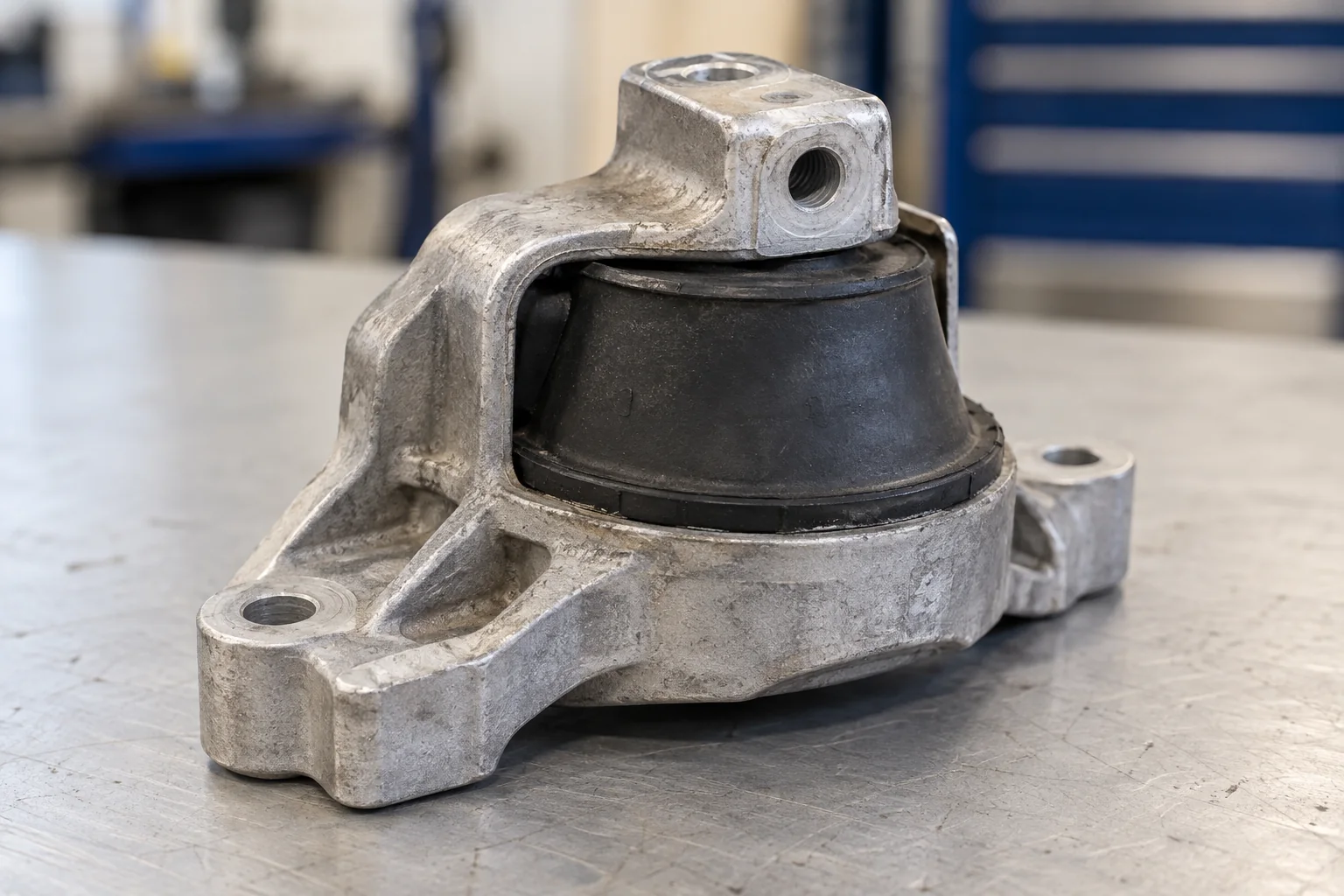
Mounts isolate normal engine movement. When rubber, hydraulic chambers or brackets fail, vibration may become strongest in Drive, with AC load or during gear engagement even if the engine runs evenly.
Exhaust or accessory contact
A loose shield, exhaust section touching the body, pulley, tensioner or driven accessory can create a vibration at a narrow RPM range. Listening and physical inspection help separate it from a combustion fault.
Compression loss, valve-timing faults, charging instability or transmission load can also cause rough running. The symptom and measurements decide which tests come next.
Check both engine operation and its mounts
A mount may amplify vibration from an engine that is already running unevenly. Replacing the mount alone may not solve both problems. The inspection should check the mount’s condition, its brackets and nearby contact points while also reviewing engine running quality.
Do not try a brake-and-throttle load test yourself or place hands near a running engine. Controlled mount testing belongs in the workshop.
How technicians diagnose rough idle and vibration
- Reproduce the reported pattern safely. Use the conditions you recorded. A cold-start fault may require the vehicle to remain overnight.
- Inspect visible causes. Check hoses, intake connections, wiring, leaks, mounts and exhaust contact before dismantling.
- Read codes and operating data. Compare stored and pending faults with misfire information, airflow, fuel correction and the recorded conditions. A cylinder-misfire code does not prove that its coil has failed.
- Confirm the cause with targeted tests. These may include ignition, intake-leak, fuel-pressure, charging, compression or mechanical checks. The same code can arise from different faults.
- Check the original symptom after repair. Complete required adaptations, then repeat the relevant safe operating conditions. A cleared light alone is not proof of a successful repair.
If the shake returns, bring the invoice and note whether it disappeared, changed or never left. The follow-up should compare the new findings with the original tests before more parts are replaced.
Our mass airflow sensor guide explains one possible input to engine control; it should not be assumed to be the cause of every rough idle.
Repair, clean or replace?
A loose hose or damaged connection may be repairable. Cleaning a throttle body or injector is useful only when its condition and test results support it. A failed coil, worn plug, split mount or damaged hose may need replacement.
Ask which test supports the proposed repair, which parts will be used, and what labor, VAT and final checks the written quote includes. Additional tests or repairs need a separate explanation and approval.
Rough-idle diagnostic and repair costs in Dubai
The following amounts match our current diagnostic service and engine repair planning prices. The base amounts exclude 5% VAT. The next column shows the total including VAT. These are estimates for the named work, not a package or a fixed quote for every shaking engine.
| Work | AED before VAT | AED including 5% VAT | What it covers |
|---|---|---|---|
| Computer scan | 145 to 285 | 152.25 to 299.25 | Supported-system fault and status review, with an explanation of the next check. It does not confirm every cause of vibration. |
| Focused warning-light diagnosis | 240 to 525 | 252 to 551.25 | Initial scan and focused checks for one warning or related system. |
| Intermittent fault testing | 475 to 1,145 | 498.75 to 1,202.25 | Agreed extra testing when the symptom needs cold-start, warm-up or repeated observation. |
| Confirmed ignition or minor running repair | 335 to 1,715 | 351.75 to 1,800.75 | Installation of a confirmed faulty plug, coil, sensor, hose or similar accessible item, with a running check. Multiple parts and extra testing change the total. |
Do not add the diagnostic rows together. Agree on the appropriate test first. Repair parts and labor, dismantling, programming and calibration are separate from diagnostic testing unless included in the written quote.
Mount replacement, injector work and difficult-access repairs need a vehicle-specific quote after the fault and required parts are identified. The number of parts, engine access and any second fault can change the price substantially.
What changes by engine and model year?
A model badge can cover several gasoline, diesel and hybrid engines with different injection, throttle and mount systems. Gasoline spark-plug advice does not apply to diesel combustion. Some vehicles use a separate idle-control valve; others regulate idle through the electronic throttle.
Give the workshop the VIN, year and engine, including whether the car is GCC-spec or imported. Use the correct specifications for that vehicle. On a hybrid, distinguish vibration during a normal engine restart from sustained shaking while the engine runs. A fully electric vehicle has no combustion-engine idle, so a stationary vibration needs a different accessory or drivetrain assessment.
Reduce avoidable rough-idle problems
- Follow the vehicle’s schedule for plugs, filters and fluids.
- Use the specified fuel and oil.
- Repair intake, cooling and fluid leaks before they worsen.
- Have charging faults and repeated warning lights investigated.
Routine maintenance helps, but does not replace diagnosis of a new vibration.
Technical references
Ford owner-manual guidance on engine and oil-pressure warnings. Warning instructions vary by vehicle; your own manual takes priority.
Find the cause before choosing parts
A car that shakes when idling needs its engine running quality and vibration-transfer points checked together. Record when it happens, follow the safety warnings, and approve the repair that testing supports.
Book an idle-vibration check in Al Quoz 4
Send the model, year, mileage and when the shaking occurs. Include a warning-light photo if available. We will explain the first checks and their price before paid work begins.
Car shaking when idling FAQs
Why does my car shake at idle but drive normally?
A mild misfire, intake-control problem or worn mount can be most noticeable at low engine speed. The fact that it improves while driving does not identify the cause, so compare RPM behavior, warning lights and mount load.
Why does the shaking get worse when the AC is on?
The compressor adds load at idle. A weak mount, idle-control issue, charging fault or compressor problem may become more noticeable. A small RPM change can be normal, but severe shaking or stalling needs diagnosis.
Can bad spark plugs make a car shake when stopped?
Yes, on a gasoline engine, worn, fouled or incorrect spark plugs can contribute to a misfire. Coils, injectors, compression and air leaks can produce similar symptoms. Diesel engines do not use spark plugs for combustion.
Can engine mounts cause vibration without a warning light?
Yes. A damaged mount can transmit engine vibration without a warning light. Steady RPM and a stronger shake in Drive make mounts worth checking, but do not rule out uneven combustion.
Can low engine oil cause rough idle?
Low oil is a safety concern and may accompany leaks or mechanical problems, but it is not one of the first explanations for every rough idle. Check the level correctly and treat a red oil-pressure warning as urgent.
Should I clean the fuel injectors first?
Only when diagnosis supports restricted or imbalanced delivery. A generic cleaning service will not repair ignition, compression, intake, electrical or mount faults.
Can I drive to the workshop with a flashing check-engine light?
With a shaking engine and flashing check-engine light, stop safely and arrange help. A misfire can damage the catalytic converter. Follow your vehicle manual; do not attempt a hard-acceleration test or a routine drive to the workshop.
Why does the car shake only in Drive?
Drive increases load while the vehicle is held stationary. Engine or transmission mounts, idle compensation and transmission engagement may need comparison with Park and Neutral.