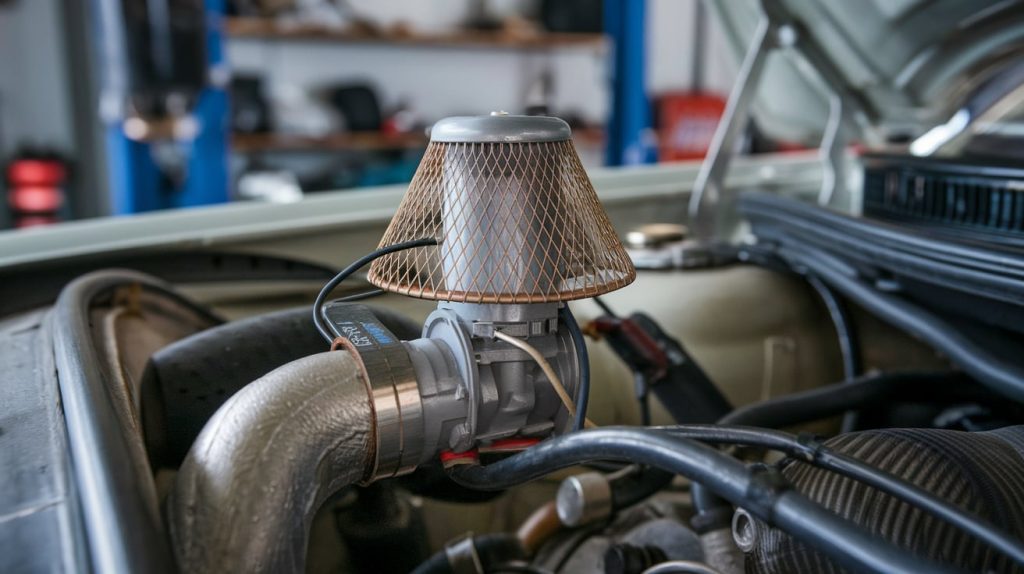
Engine airflow guide
When the Engine Hesitates, the MAF Sensor May Be Lying
The accelerator goes down, but the car pauses. Fuel use climbs. The check-engine light appears, then disappears. A mass air flow sensor can cause that pattern, but replacing it from a fault code alone is a costly guess.
A MAF sensor measures the mass of air entering many fuel-injected engines. The engine control unit uses that reading with other sensor data to calculate fuel delivery and load. Dirt, intake leaks, wiring faults, air-filter problems, and the sensor itself can all distort the result.
Test before replacing
Al Quoz 4
Inspect the intake
What Is a Mass Air Flow Sensor?
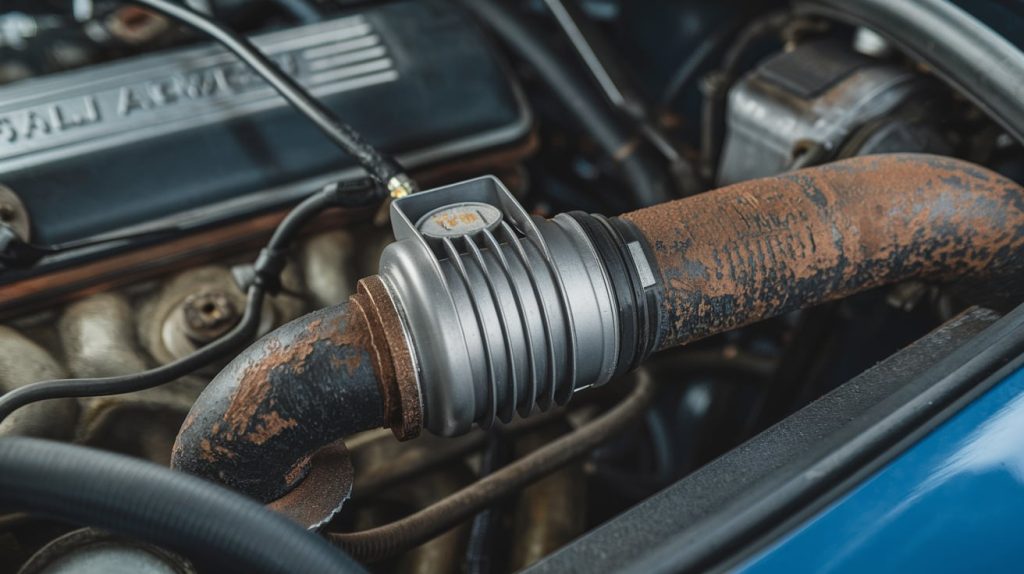
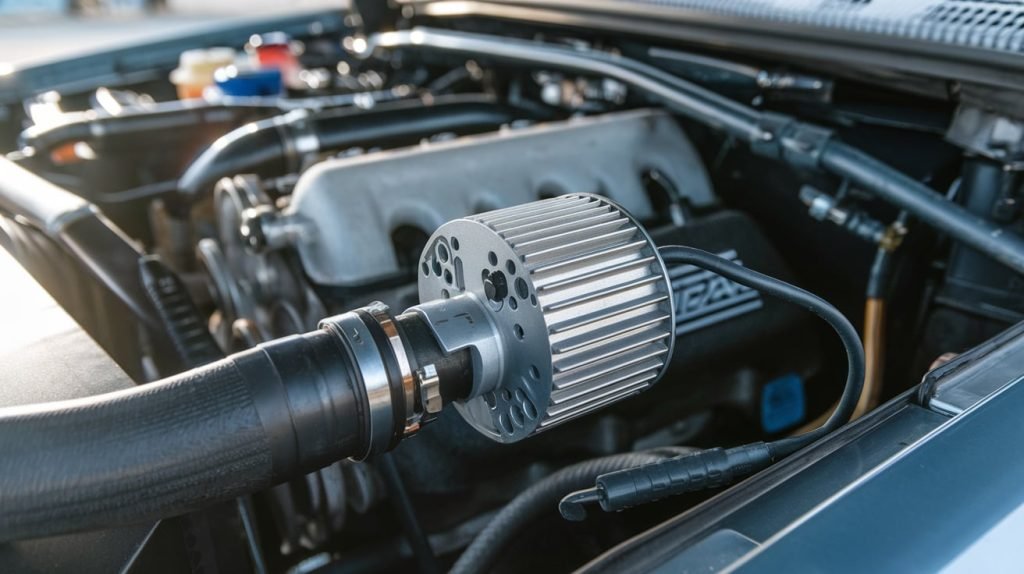
A mass air flow sensor, often shortened to MAF sensor, reports how much air is moving into the engine. That matters because fuel quantity must follow the air charge. The control unit compares MAF data with engine speed, throttle position, intake temperature, oxygen-sensor feedback, manifold pressure on some vehicles, and other inputs. It then adjusts injection and, depending on the system, ignition, boost, torque, emissions control, and transmission strategy.
Most current MAF units use a heated wire or film. Incoming air removes heat from the sensing element. The electronics measure the electrical change needed to control its temperature and convert that change into a voltage, frequency, or digital airflow signal. Older vehicles may use a moving vane. Some engines use a MAP-based speed-density strategy instead of a MAF, while others use both MAF and MAP sensors.
What a Faulty MAF Sensor Feels Like
| What you notice | What may be happening | Urgency | Next check |
|---|---|---|---|
| Hesitation as you accelerate | Airflow is under-reported, over-reported, or interrupted | Book diagnosis soon | Codes, live data, intake leaks |
| Rough idle or stalling | Mixture correction has reached a limit, or unmetered air is entering | Urgent if it stalls in traffic | Smoke test, fuel trims, throttle and PCV checks |
| Black smoke or fuel smell | The engine may be running rich | Limit driving | MAF reading, injectors, fuel pressure, oxygen data |
| Hard starting | Air calculation or another starting input is wrong | Diagnose before repeated attempts | Battery voltage, codes, intake, fuel and ignition |
| Fuel use increases | Fuel trims may be compensating for bad airflow data | Plan an inspection | Compare trims at idle and raised rpm |
| Reduced power or limp mode | The ECU has detected implausible airflow or a related fault | Do not force acceleration | Scan all modules and record freeze-frame data |
These symptoms overlap with boost leaks, vacuum leaks, a dirty throttle body, fuel-pressure faults, ignition problems, exhaust restrictions, and wiring damage. Symptoms can point toward airflow measurement, but they cannot identify the failed part.
Can You Drive With a Bad MAF Sensor?
A short, low-load trip may be possible when the warning light is steady, the engine starts normally, idle is stable, temperature is normal, and there is no smoke, fuel smell, misfire, or loss of throttle response. Even then, drive only as far as needed for diagnosis.
Stop and arrange recovery if the engine stalls, surges into traffic, misfires, produces smoke, smells of raw fuel, enters severe reduced-power mode, or flashes the check-engine light. A rich or misfiring engine can overheat the catalytic converter. A lean condition under load can also raise combustion temperature. “It still moves” isn’t the same as “it is safe to keep using.”
MAF Sensor Codes Do Not Condemn the Sensor
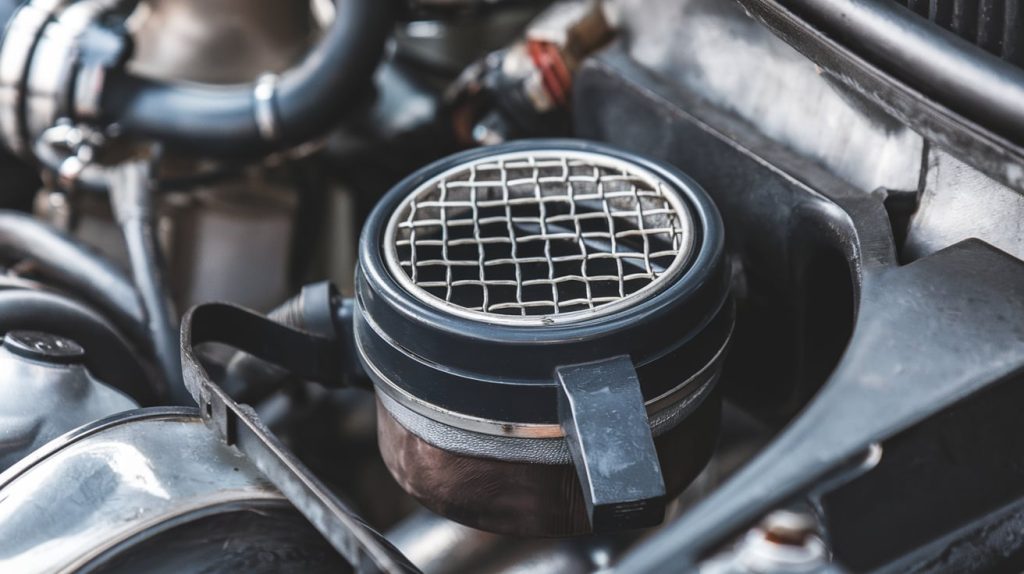
P0100 through P0104 identify circuit, range, low-input, high-input, or intermittent MAF concerns. P0101 is common when measured airflow does not agree with the ECU’s expected model. Lean codes such as P0171 and P0174 may appear when unmetered air enters after the sensor, but fuel delivery, exhaust leaks, PCV faults, and other causes must remain on the list.
P0100
General MAF circuit fault. Inspect supply, ground, signal, connector, harness, and ECU data.
P0101
Range or performance mismatch. Compare airflow with rpm, load, MAP, fuel trims, and vehicle specifications.
P0102 to P0104
Low, high, or intermittent input. Look for an open circuit, short, poor terminal contact, contamination, or signal dropout.
A scanner description is a starting point, not a parts order. Freeze-frame data shows when the code set. Live data shows whether the reading changes with airflow. A scope can reveal a flat, slow, or interrupted signal that a single multimeter reading may miss.
MAF Sensor Versus MAP Sensor
| Question | MAF sensor | MAP sensor |
|---|---|---|
| What does it measure? | Air mass entering the intake | Absolute pressure in the intake manifold |
| Where is it? | Usually after the air filter and before the throttle or turbo | Usually on or connected to the intake manifold |
| How is load calculated? | The ECU uses measured airflow | The ECU estimates airflow using pressure, temperature, speed, and engine data |
| Can a car have both? | Yes. Turbocharged and monitored systems may use both for control and plausibility checks. | |
Confusing these sensors leads to poor diagnosis. A boost leak after the MAF can make measured air disagree with manifold behavior. A restricted intake may affect both readings in a different pattern. The correct test depends on the engine-management design, not a universal grams-per-second rule copied from another vehicle.
How a Workshop Tests a MAF Problem
Record the complaint
Note cold or hot operation, idle or load, rain or dust exposure, recent filter work, warning lights, and when power changes.
Scan before clearing
Read all relevant modules. Save codes, status, freeze-frame data, readiness information, and fuel trims.
Inspect the air path
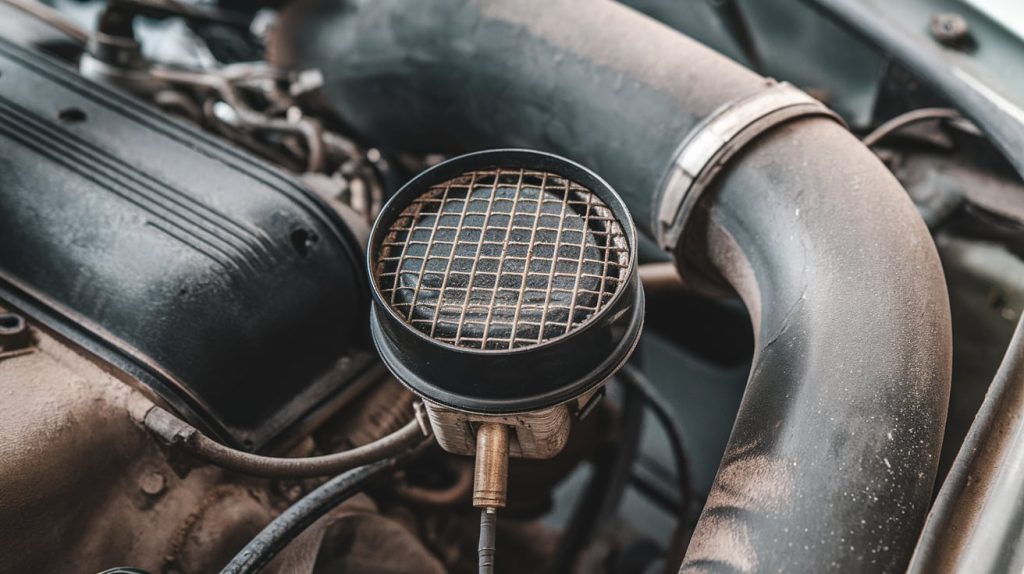
Check the filter, housing, duct clamps, split hoses, PCV connections, turbo pipes, connector pins, wiring, and grounds.
Test under conditions
Compare live airflow with rpm, load, MAP, throttle, intake temperature, oxygen feedback, and manufacturer data. Use a scope when the signal needs closer review.
Verify the repair
Clear codes only after recording them. Repeat the driving condition, recheck trims and airflow, and confirm that no leak or wiring fault remains.
Why Unplugging the MAF Is Not a Complete Test
Owners sometimes unplug the sensor and notice that the engine runs better. That observation is useful, but it does not prove the MAF has failed. With the sensor disconnected, the ECU may switch to substitute values based on throttle, pressure, rpm, and stored maps. The engine can feel steadier because the control strategy changed, even when the original problem is an intake leak or another input.
Disconnecting a sensor also sets faults and may change throttle, transmission, boost, stability, or emissions behavior. Do not use the unplugged condition for normal driving. Record what changed, reconnect it with the ignition off when the vehicle procedure requires that, and test the system properly.
Useful clue, not a verdict: “It runs better unplugged” means the ECU handles substituted data better than the current measured data. The next question is why those measurements are wrong.
Cleaning, Repair, or Replacement
Clean it
Consider cleaning when contamination is visible or plausible, the sensing element is intact, wiring and intake tests pass, and the manufacturer permits the procedure. Use only a product labeled for MAF elements. Do not touch the wire or film.
Repair the cause
Repair split ducts, loose clamps, filter-box gaps, connector damage, poor grounds, wiring faults, PCV leaks, or oil contamination before blaming the sensor. Otherwise, a new part may produce the same code.
Replace it
Replace when the signal fails the correct test, the element or housing is damaged, internal response is slow or intermittent, or cleaning does not restore verified operation. Match the exact engine and calibration.
An oiled reusable filter can contaminate some sensors if excess oil reaches the element. A dry paper filter can also cause trouble when installed poorly or when dust bypasses a damaged seal. The real repair includes the contamination route, not just the sensor surface.
Mass Air Flow Sensor Replacement Cost in Dubai
For planning, MAF diagnosis and replacement commonly falls into separate cost stages. The vehicle-specific total depends on the sensor design, access, engine, part source, intake damage, and whether coding or adaptation is required.
| Work | Estimated price | Typical scope |
|---|---|---|
| Diagnostic inspection | AED 150 to 350 | Code scan, visual checks, live-data review, and basic circuit or leak direction |
| MAF cleaning service | AED 120 to 280 | Removal where required, approved cleaner, drying, refitting, and data recheck |
| Common vehicle replacement | AED 550 to 1,600 | Sensor and labor, subject to part brand and access |
| Premium or integrated assembly | AED 1,200 to 3,200+ | Higher-cost OE unit, housing assembly, added testing, or adaptation where required |
These are estimated AutoRepairUAE planning ranges. Final price varies by model, engine, condition, part choice, fault cause, and work included. VAT and the payable total should be confirmed in the written estimate.
When Not to Buy a MAF Sensor
Do not buy one only because the check-engine light mentions airflow, the engine runs lean, or an online forum solved a similar model with a sensor. First rule out air leaks after the MAF, a loose oil cap on relevant systems, PCV faults, a blocked or poorly seated filter, damaged intake ducting, connector problems, low system voltage, fuel-delivery faults, and software or service-information requirements.
Do not replace it when measured airflow follows load correctly and fuel trims point elsewhere. Do not clean it repeatedly when the element has physical damage or the signal drops out electrically. And do not choose the cheapest look-alike part when its calibration cannot be confirmed. A sensor can bolt in and still report the wrong airflow curve.
The cheaper decision is often one hour of diagnosis. That sounds less satisfying than opening a new parts box, but it prevents the classic result: new sensor, same warning light, lighter wallet.
What Changes by Engine and Model
There is no universal idle airflow number for every car. Engine displacement, turbocharging, valve timing, exhaust-gas recirculation, altitude, temperature, accessory load, idle speed, and calibration change the reading. Some vehicles report grams per second. Others use voltage, frequency, load, or calculated values. A diesel may use MAF data to manage EGR and smoke control in ways that differ from a petrol engine.
- Turbo engines: inspect charge pipes, intercooler connections, bypass or diverter valves, and crankcase ventilation. Air measured before the turbo can escape later.
- Diesel engines: compare MAF behavior with EGR command, boost pressure, intake restriction, and soot-related systems using model procedures.
- Engines with MAP and MAF: use both signals for a plausibility check rather than testing either in isolation.
- Modified intakes: housing diameter, sensor position, turbulence, filters, and tuning can alter readings even when the sensor is new.
- Older vane meters: mechanical wear, flap movement, tracks, and intake backfire damage need a different test from a hot-film unit.
Checks You Can Do Without Buying Parts
- Photograph the dashboard warning and record when it appears.
- Check that the air-filter lid is closed and clips or screws are present.
- Look for a loose intake clamp, disconnected small hose, or split rubber duct.
- Do not touch the MAF element or insert a tool through its screen.
- Check whether symptoms started after an air-filter, battery, engine, or intake repair.
- Record whether the problem happens cold, hot, at idle, during boost, or after refueling.
- Use a scanner to record codes if you know how, but do not erase freeze-frame data before diagnosis.
If the car shakes at idle, the MAF belongs on the list, but it is not the whole list. Our guide to why a car shakes while idling explains mounts, ignition, intake leaks, fuel delivery, and mechanical causes. For a wider pre-repair check, see the car inspection guide.
Common MAF Diagnosis Mistakes
Parts from a code
The code names a circuit or calculation. It does not certify the sensor as failed.
One idle reading
A single value without engine size, rpm, load, temperature, and specifications lacks context.
Skipping smoke tests
Air entering after the MAF can create lean behavior while the sensor reports correctly.
Cleaning with the wrong solvent
Residue or chemical damage can turn a recoverable contamination issue into a failed sensor.
Ignoring power and ground
A good sensing element cannot produce a valid signal through a poor supply, ground, or connector.
No verification drive
A code clear is not a repair. Repeat the original condition and recheck data and pending faults.
How to Prevent Repeat MAF Problems
Fit the correct air filter and make sure its seal sits flat. Repair cracked ducts and loose clamps. Keep water out of the intake during engine cleaning. If a reusable oiled filter is permitted, apply only the specified amount and allow it to distribute before installation. Fix crankcase-ventilation faults that send oil mist into the intake.
Dust and heat in the UAE make intake sealing worth checking during routine service, but a calendar-based MAF replacement is not normal maintenance. Replace the filter according to condition and the vehicle schedule. Inspect after desert driving, construction-zone exposure, intake work, or a backfire. Clean the sensor only when the procedure and evidence support it.
Key Takeaway
A mass air flow sensor helps the ECU calculate engine air and fuel, but MAF symptoms and codes overlap with leaks, wiring faults, filter problems, fuel issues, and other sensor data. The best decision is measured: save the codes, inspect the air path, compare live data under load, test the circuit, then clean, repair, or replace only what failed. Stop driving when stalling, severe power loss, smoke, fuel smell, or a flashing engine light makes the trip unsafe.
Book MAF Sensor Diagnosis in Al Quoz 4
Send the vehicle make, model, year, engine, warning code if available, and when the hesitation or stalling occurs. We can inspect the intake, test airflow data, check related faults, and explain the repair choice before parts are fitted.
Available support
- Free workshop inspection
- Free pickup and delivery
- Dedicated on-site inspection option
- Written estimate before repair
Mass Air Flow Sensor FAQs
What does a mass air flow sensor do?
It measures the mass of air entering the engine and sends that information to the ECU. The ECU combines it with other inputs to calculate fuel delivery, engine load, and related controls.
What are the most common bad MAF sensor symptoms?
Hesitation, rough idle, stalling, reduced power, increased fuel use, black smoke, hard starting, and a check-engine light can occur. These symptoms also have other causes, so test before replacing.
Can a dirty air filter cause a MAF code?
Yes. A restricted filter can change airflow, while a poorly seated filter or damaged housing can let contamination reach the sensor. Inspect the complete intake path.
Will a car run with the MAF unplugged?
Some vehicles run on substitute values, often with reduced function and stored faults. Better running while unplugged is a diagnostic clue, not proof that the sensor has failed or permission for normal driving.
Can I clean a MAF sensor myself?
Only if the vehicle procedure permits it and you can remove or access it without damaging the element. Use MAF-specific cleaner, never touch the sensing part, allow it to dry, and do not treat cleaning as a substitute for testing leaks and wiring.
How long does MAF sensor replacement take?
Physical replacement can be short on an accessible unit, but diagnosis and verification take longer. Integrated housings, intake damage, wiring repair, adaptation, or difficult access can extend the job.
Does a new MAF sensor need programming?
Many are plug-and-test parts, but some vehicles require adaptation, learned-value reset, software procedures, or a specific drive cycle. Follow service information for the exact engine.
How much is a MAF sensor replacement in Dubai?
A common installed estimate is AED 550 to AED 1,600. Premium or integrated units can reach AED 1,200 to AED 3,200 or more. Model, engine, part source, access, diagnosis, and related repairs change the total.
Can a bad MAF damage the catalytic converter?
Incorrect airflow data can contribute to a rich mixture or misfire. Continued operation may overheat or contaminate the catalytic converter. A flashing engine light, smoke, raw-fuel smell, or misfire requires prompt action.
Sources and Technical References
- Delphi MAF operation, checks, and fault-code guidance
- Delphi digital MAF signal testing
- DENSO mass air flow sensor operation and fault guidance
- Bosch mass air flow sensor product information
Use manufacturer service information for the exact model, engine, wiring, test values, tightening steps, adaptation, and driving procedure.