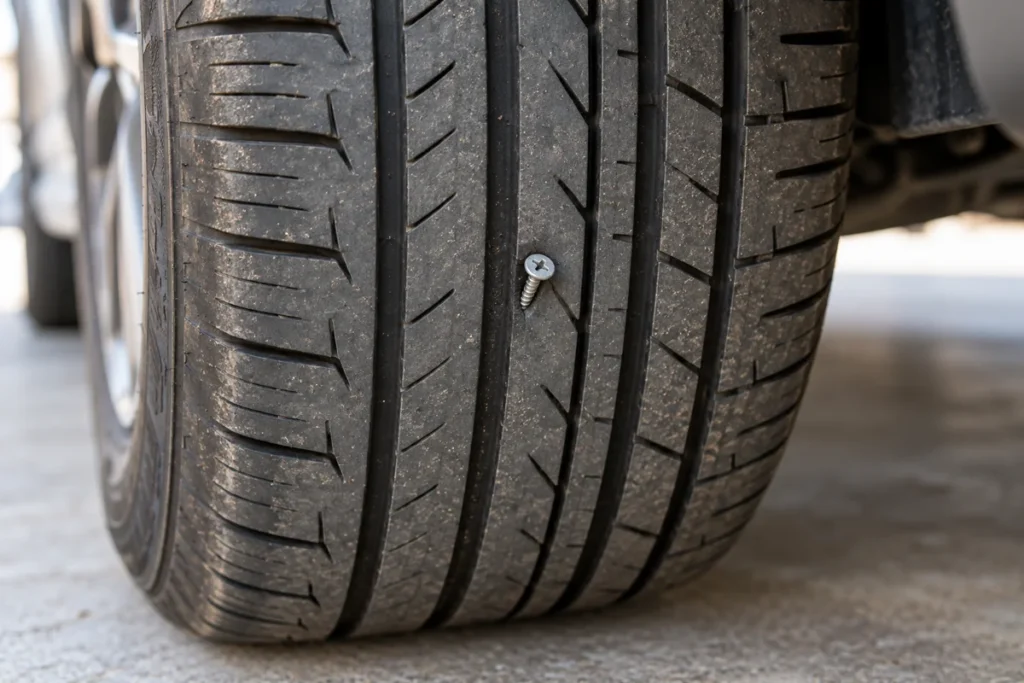
Can your punctured tire be repaired?
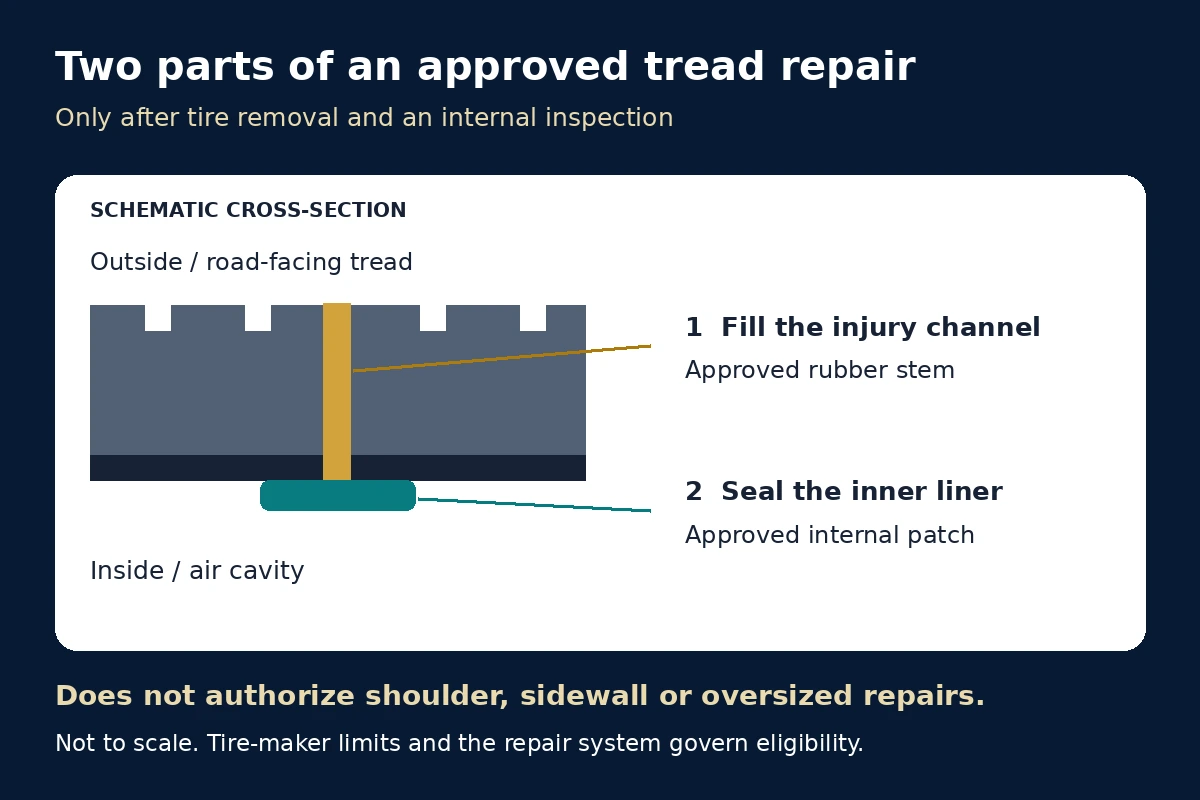
A small puncture in an approved tread area may be repairable after the tire is removed from the wheel and inspected internally. A permanent repair must fill the injury channel and seal the inner liner using an approved repair system. Sidewall or shoulder punctures, structural damage, and injuries outside the tire maker’s limits require replacement.
Stop driving if the tire is flat, loses pressure rapidly, has a bulge or exposed cords, or causes abnormal handling. Arrange suitable roadside assistance or recovery. Adding air does not establish that a damaged tire is safe.
What to do when you notice a puncture
- Reach a safe stopping place. Reduce speed smoothly and avoid sudden steering or braking. Do not continue a journey on a flat tire.
- Keep yourself away from traffic. Do not kneel beside a wheel exposed to moving vehicles. If the location is unsafe, leave inspection and wheel changing to roadside assistance.
- Leave the nail or screw in place. Removing it can release air faster. A visible object does not show the full injury or prove that repair is possible.
- Record useful details only if safe. Note the tire brand, model, size, warning message, pressure-loss rate, and whether the vehicle was driven while underinflated.
- Choose assistance by condition. Use a suitable spare only where a wheel change is safe and the vehicle manual can be followed. Otherwise arrange car recovery in Dubai.
Repair or replacement depends on the whole injury
For passenger and light-truck tires, the usual repair limit is a puncture no more than 6 mm across within the approved tread area. This is a screening limit, not permission to repair every hole that size. The tire manufacturer may impose stricter restrictions.
| Finding | Decision | Why it matters |
|---|---|---|
| Small injury entirely within the approved tread repair area | Assess off the wheel | Hidden damage, condition, prior repairs, and manufacturer policy still decide eligibility. |
| Shoulder, belt-edge, or sidewall puncture | Replace the tire | A larger patch or added “strengthening” does not make this an eligible puncture repair. |
| Angled injury reaching the shoulder | Remove from service | The visible entry point alone can misrepresent the damage path. |
| Oversized hole, tear, bulge, exposed cords, or damaged bead | Replace the tire | Sealing air cannot restore a compromised structure. |
| Flat-running or severe underinflation history | Disclose it before inspection | Internal damage may be invisible outside. Apply the maker’s rejection rules. |
| Overlapping repairs or an existing improper repair | Do not add another repair | Overlapping repairs and existing improper repairs are rejection conditions. |
Ask the technician to show the injury and explain the rejection reason if replacement is recommended. Conversely, a new tire is not automatically necessary just because a nail is visible. Repair eligibility must be established first. When replacement is necessary, our tire inspection and replacement service explains fitment, matching, and fitted costs. A damaged bead, deteriorated rubber, or a shoulder or sidewall injury rules out puncture repair.
Why a plug alone or a patch alone is insufficient
A rubber stem fills the puncture channel. An internal patch seals the inner liner. An approved combination unit provides both functions; some approved systems use separate components. The selected system must suit the injury and comply with the tire and repair-material manufacturers’ instructions.
A patch alone leaves the injury channel unfilled. An outside plug alone does not provide the required internal inspection and liner repair. A combination repair does not expand the permitted hole size or authorize shoulder repairs.
Holding air is not the same as passing inspection. An external plug can hide a leak while internal damage remains unchecked.
What a workshop should check before handover
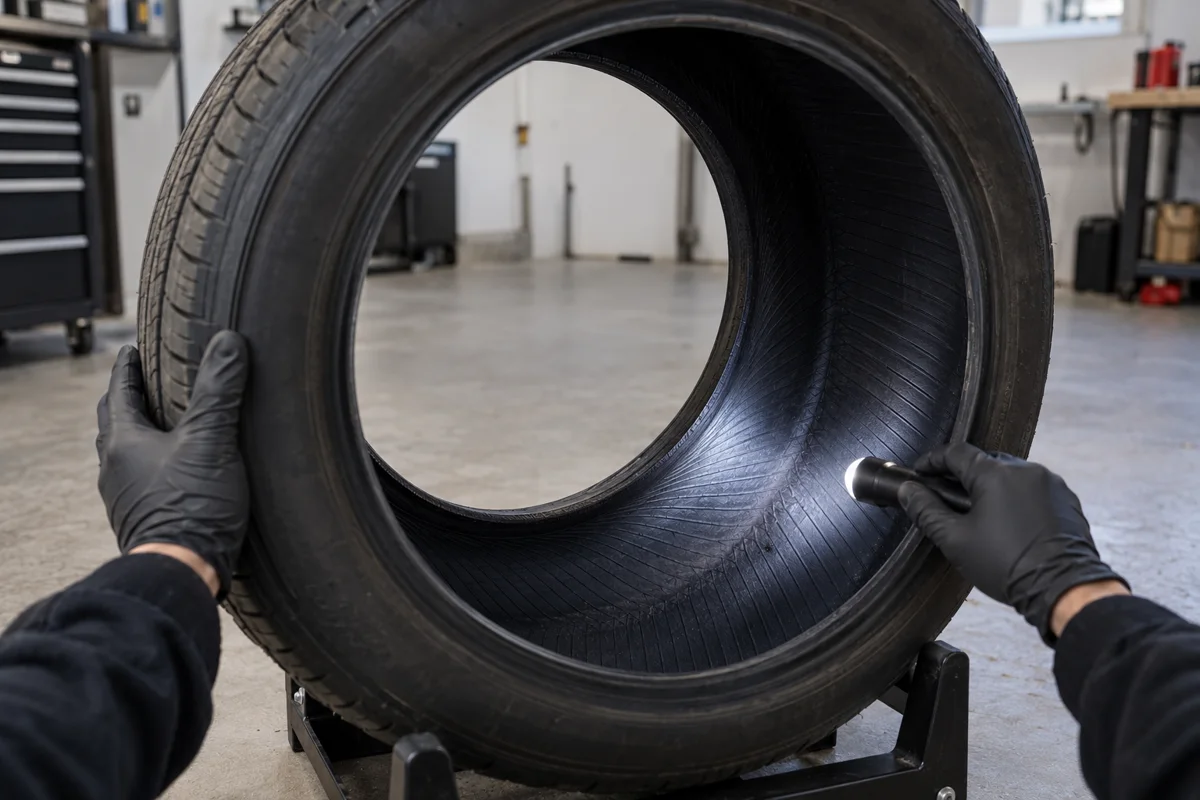
Before the car returns to the road, the leak source, tire condition, and completed work should be clear.
- Confirm the leak source. Examine the tread, valve, bead seating area, wheel, and previous repairs. A pressure warning alone does not identify a puncture.
- Remove and inspect the tire. Check the interior and exterior, injury path, tread condition, and evidence of running underinflated.
- Confirm eligibility before quoting a repair. Identify the exact tire model and applicable limits. Reject damage outside those limits.
- Use the approved repair system. Fill the channel and seal the liner only on an eligible tire. A quicker external-only repair is not an equivalent service.
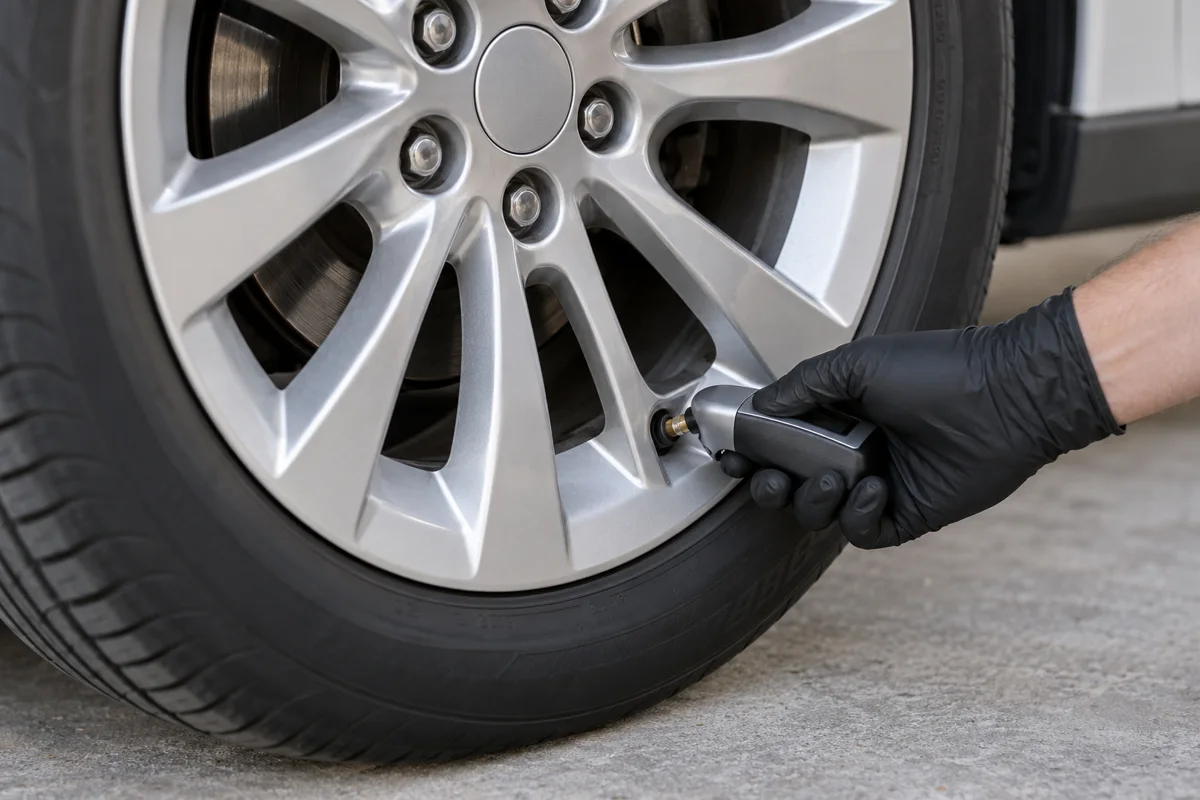
- Complete the wheel checks. Confirm leak testing, correct pressure, mounting, balancing requirements, wheel-fastener procedure, and any applicable TPMS reset or relearn.
Ask for the finding and work performed on the invoice. If a warning, leak, or vibration returns, request a recheck instead of assuming the repair needs more sealant. A leak test verifies air retention at that time; it is not a lifetime safety guarantee.
Temporary kits, run-flat tires, and slow leaks
Compare the repair scope before the price
Compare the complete repair
A model name alone does not establish a puncture repair price or time. Ask whether the Dubai quote includes tire removal, internal inspection, an approved repair if eligible, refitting, leak testing, and balancing. Confirm mobile attendance or recovery charges separately, along with the total payable and VAT treatment.
Confirm the fitted total
Ask what inspection charge applies if the tire is rejected and whether a replacement quote includes fitting, valve or TPMS work, balancing, and disposal. Get the expected completion time after assessment. Do not select an external-only plug because it is advertised as the faster or cheaper equivalent.
Warranty coverage depends on the actual policy. Check road-hazard coverage, exclusions, claim requirements, and remaining coverage before assuming a puncture is included. Ask for the applicable cover in writing.
Tire care in Dubai reduces avoidable damage
Heat, load, pressure, and tire condition matter, but no maintenance routine makes tires puncture-proof. A temperature rating does not guarantee resistance to nails, and “heat-resistant” marketing is not a puncture-prevention method.
- Check cold pressure against the vehicle placard and owner manual, including the appropriate loaded setting. Do not use the sidewall maximum as the routine target.
- Inspect for damage and wear, and check pressure before long trips. Do not bleed a hot tire down simply to match its cold-pressure figure.
- Follow the vehicle’s rotation instructions. Directional tires, staggered sizes, and other configurations can restrict the pattern or prevent rotation.
- Use balancing or alignment to address the relevant vibration or wear issue. Our wheel alignment guide explains when an alignment check is useful. Neither service seals a puncture or guarantees prevention of a blowout.
Avoid debris when it is safe to do so, without abrupt maneuvers that create another hazard.
Technical references Passenger tire repair limits and Continental UAE run-flat guidance. Apply the instructions for the exact tire fitted to your car.
Photos are AI-generated visual examples.
Inspect first and repair only eligible damage
The useful decision is whether this particular tire can safely receive an approved repair. A small visible hole, retained pressure, or a cheap quote is not enough. Keep the vehicle parked when the tire is unsafe, explain its pressure-loss history, and ask to see the inspection findings.
Arrange a tire inspection in Al Quoz 4
Send the vehicle model, tire size and brand, pressure-loss rate, and a damage photo if it is safe to take one. Tell us whether the car was driven flat. Roadside support and recovery depend on location, condition, and availability.
Tire puncture repair questions
Can sidewall strengthening save a punctured tire?
No. A sidewall or shoulder puncture requires replacement. An added patch or plug cannot make that damage eligible for repair.
Does a 6 mm hole automatically qualify for repair?
No. Size is only one limit. The injury must be in the approved tread area, the tire must pass internal inspection, and its manufacturer must permit the repair. A stricter product limit takes precedence.
Can I keep driving if the nail is still in place?
The nail does not establish that the tire is safe. Do not remove it beside the road. Assess the warning and tire condition from a safe location and arrange assistance if pressure is falling, damage is visible, or suitability for driving is uncertain.
Can a roadside string plug be converted into a permanent repair?
Do not assume so. Disclose it to the technician. USTMA guidance rejects tires with an existing improper repair, so replacement may be required rather than adding a patch over the earlier work.
How long will a properly repaired tire last?
No fixed life can be promised. Remaining service depends on condition, wear, age, operating history, and manufacturer restrictions. Continue inspections and pressure checks; a returning leak requires reassessment.
Does one puncture mean I need four new tires?
Not automatically. First establish whether the damaged tire is repairable. If replacement is necessary, check the vehicle maker’s tire-matching and tread-difference requirements, particularly for all-wheel-drive vehicles, before choosing one tire, an axle pair, or a set.