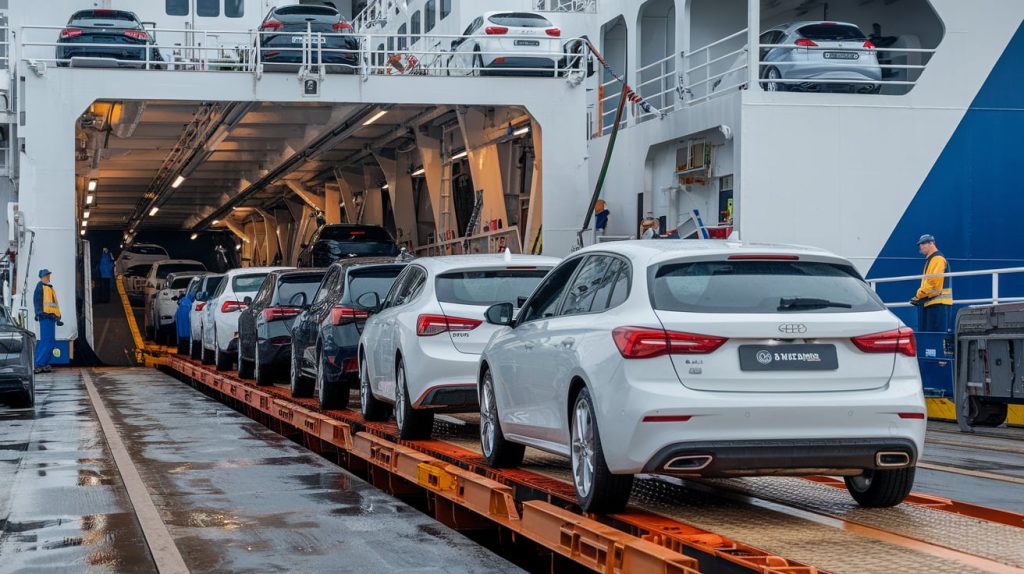
US vehicle import guide
The Auction Price Is Not the UAE Drive-Away Cost
A car can look cheap in a US listing and become expensive before it reaches a UAE number plate. Inland transport, export handling, ocean freight, insurance, customs valuation, duty, VAT, port charges, inspection, repairs, and registration can change the decision.
Shipping a car from the USA to the UAE normally takes several coordinated stages. Check title eligibility, damage history, GCC suitability, total landed cost, parts support, and registration risk before paying the seller.
VIN and title
Landed cost
UAE registration
How Much Does It Cost to Ship a Car From the USA to the UAE?
For planning, sea transport and the work around it can add roughly AED 8,000 to AED 25,000 or more before customs taxes, repairs, local testing, and registration. A standard running car shipped by RoRo may sit near the lower end. An enclosed container, inland haul from a distant state, non-running auction vehicle, oversize SUV, high insurance value, storage delay, or special handling can push the total higher.
The only useful comparison is the complete landed and road-ready budget. Ask whether a quote includes US pickup, port delivery, export filing, terminal handling, ocean freight, insurance, destination handling, customs clearance, local transport, inspection, repairs, and VAT. A low freight figure may cover only one line.
Build the Landed-Cost Budget Before You Bid
| Cost line | Planning range | What changes it | Often missed |
|---|---|---|---|
| US inland transport | AED 1,800 to 7,500+ | State, port distance, running condition, open or enclosed truck | Forklift, winch, storage, auction release delay |
| Export and port handling | AED 900 to 2,800+ | Port, agent, documentation, terminal rules | Title problem, late paperwork, demurrage |
| RoRo ocean freight | AED 4,500 to 9,500+ | Port pair, vehicle size, sailing, fuel surcharge | Limited personal items and running requirements |
| Shared or dedicated container | AED 7,500 to 18,000+ | Container share, loading, route, vehicle size | Consolidation wait, unloading, destination fees |
| Marine insurance | Often value-based | Vehicle value, cover, deductible, title, route | Exclusions for existing damage or poor packing |
| UAE destination and clearance | AED 1,500 to 5,000+ | Port, agent, storage time, inspection, transport | Storage, inspection recheck, local towing |
| Repairs and conversion work | Vehicle-specific | Damage, lighting, cooling, tires, airbags, parts | Hidden structural, flood, module, and calibration work |
These are planning estimates, not carrier or customs quotes. Prices change with route, season, dimensions, fuel, condition, services, and port timing. Confirm the written scope and current tax treatment before purchase.
RoRo, Container, or Air Freight
The transport method should follow the vehicle, not a slogan about “best shipping.” A running mainstream car with no loose parts may suit roll-on/roll-off. A classic, repaired auction car, non-runner, or vehicle with parts traveling alongside may need a container and a loading plan. Air freight is normally reserved for time-sensitive or high-value vehicles because cost can exceed the saving created by buying abroad.
RoRo
The vehicle is driven on and off the vessel. It can reduce handling and freight cost, but the car generally must meet port running and safety rules.
Shared container
Cost is divided across vehicles. Protection can improve, but consolidation and release may depend on other cargo.
Dedicated container
Useful when control, parts, value, or condition justify it. Loading, bracing, unloading, and destination scope must be written.

Should You Import This Car?
Run three tests before buying. First, can the vehicle leave the United States with its title and export documents accepted? Second, can it clear UAE customs and meet the registration requirements for the emirate? Third, does the complete road-ready price still make sense after inspection, repairs, parts, and resale risk?
Good reason to import
A rare specification, known-history vehicle, classic, collector car, or price gap that remains after every verified cost.
Reason to pause
Salvage or flood history, missing title, uncertain airbags, no repair evidence, unavailable parts, or an unexplained seller deadline.
Reason to buy locally
The landed saving is small, the UAE example has a warranty or service history, or registration risk cannot be resolved before payment.
Check the VIN, Title, and Damage Before Payment
A clean-looking auction photo can hide the expensive part of the story. Decode the VIN. Compare it with the title, sale document, dashboard, door label, engine information, and vehicle history. Search for earlier auction images. Confirm whether the title is clean, salvage, rebuilt, junk, parts-only, certificate of destruction, flood, or another state category. Those words affect export, insurance, repair planning, and resale.
Ask for underside, roof, pillar, floor, engine-bay, trunk-well, seat-belt, airbag, tire, and cold-start evidence. A front impact can involve crash structure, cooling packs, wiring, ADAS sensors, restraints, and engine mounts. Flood exposure can reach connectors and modules long after the interior dries. Theft recovery may involve keys, immobilizer modules, harnesses, and missing parts.
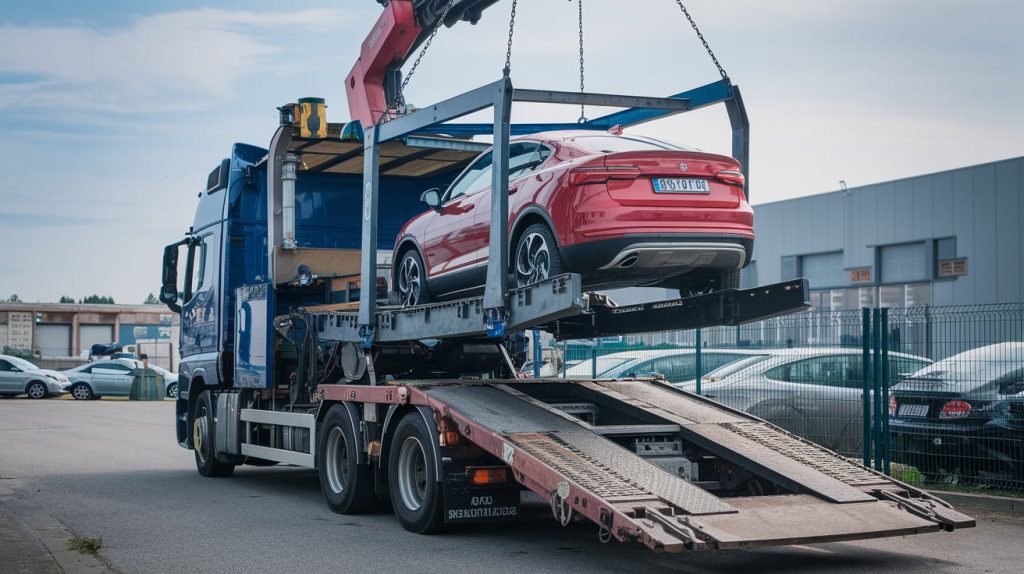
US Export Documents and the 72-Hour Rule
US Customs and Border Protection requires exporters to present the vehicle and required ownership documents to the port of export under the rules that apply to used self-propelled vehicles. A common requirement is that the documentation reaches the port before export, often at least 72 hours before departure. Port procedures can vary, so the export agent must confirm the exact office, timing, title format, lien release, electronic filing, and vehicle presentation requirements.
- Original or accepted ownership evidence matching the VIN
- Bill of sale or purchase invoice
- Seller and buyer details
- Lien release when a lien appears
- Export filing and booking information
- Power of attorney when an agent acts for the owner
- Vehicle condition and key information required by the carrier
A copied title, late arrival, unresolved lien, VIN difference, auction hold, or state document that does not permit export can stop the shipment. Pay for a document check before paying for inland transport.

Documents for UAE Clearance and Registration
The exact file depends on the importer, emirate, port, vehicle, and transaction. Plan for the original title or export ownership document, purchase invoice or bill of sale, bill of lading, passport and Emirates ID or company documents, customs declaration, insurance, and the customs vehicle clearance certificate. Registration can also require inspection results and other emirate-specific documents.
Do not assume a customs release guarantees registration. Customs accepts and values the import. The registration authority decides whether the vehicle and documents meet its requirements. Ask the current authority or a licensed clearance agent about age limits, right-hand-drive restrictions, modified vehicles, salvage categories, classic registration, EV or battery documents, and any model-specific restriction before shipping.
How Customs Duty and VAT Affect the Total
UAE import calculations commonly begin with a customs value based on the vehicle price plus freight and insurance, often called CIF. Customs may review the declared value rather than accept it automatically. A commonly used planning assumption is 5% customs duty, followed by 5% VAT under the applicable import calculation. Exemptions, special categories, free-zone movements, commercial imports, temporary admission, and valuation decisions can change the result.
| Illustrative calculation | Amount | How it is used |
|---|---|---|
| Vehicle purchase price | AED 70,000 | Supported by invoice and payment evidence |
| Freight and insurance | AED 10,000 | Added for an illustrative CIF value |
| Illustrative CIF | AED 80,000 | Starting customs-value example |
| Illustrative 5% duty | AED 4,000 | Subject to customs classification and current rules |
| Illustrative VAT base | AED 84,000 | CIF plus duty in this simplified example |
| Illustrative 5% VAT | AED 4,200 | Subject to current FTA and import treatment |
| Illustrative taxes | AED 8,200 | Excludes port, clearance, storage, inspection, repair, and registration |
This is an explanation, not a customs assessment. Confirm current rates, valuation, exemptions, and VAT treatment with UAE Customs, the Federal Tax Authority, and your clearance agent before purchase.
Steps for Shipping a Car From the USA to the UAE
Set the maximum road-ready budget
Start with the UAE value of a comparable registered vehicle. Subtract a risk reserve, repair budget, taxes, freight, and fees. The remainder is your purchase ceiling.
Check the vehicle and documents
Review VIN history, title category, lien status, auction terms, photos, inspection evidence, keys, running condition, dimensions, and missing parts.
Confirm import and registration eligibility
Give the VIN, title description, year, specification, modifications, and fuel or powertrain type to the responsible UAE authority or clearance professional.
Compare complete shipping quotes
Use the same scope for inland transport, export, freight, insurance, destination handling, storage terms, customs service, and local delivery.
Control pickup and export
Release the car, photograph condition, deliver it to the port, submit the accepted title documents, complete export filing, and meet carrier rules.
Insure and track the shipment
Read coverage, deductible, exclusions, existing-damage rules, loading responsibility, and claim deadlines. Keep condition photos and every receipt.
Clear and inspect it in the UAE
Complete customs entry, pay assessed amounts, obtain clearance documents, move the car safely, and inspect it before normal road use.
Repair, test, insure, and register
Finish required repairs and compliance work, pass the applicable inspection, obtain insurance, and complete registration through the emirate’s current process.
Inspection After the Car Arrives
Do not drive an auction or long-stored import straight from collection. Check fluid leaks, battery condition, tires and date codes, brake operation, cooling, steering, suspension, lights, restraint faults, underbody damage, glass, keys, diagnostic codes, and charging equipment. Compare arrival condition with loading photos before cleaning or repair work removes evidence.
US-market vehicles may differ from GCC versions in cooling packages, lighting, radio frequencies, navigation, telematics, parts numbers, software, emissions equipment, tire specifications, warranties, and recall support. A difference is not automatically a fault, but it belongs in the ownership budget.
Before buying, use our car inspection checklist for Dubai to plan the mechanical and electronic review. If accident damage is involved, inspection must come before cosmetic repair.
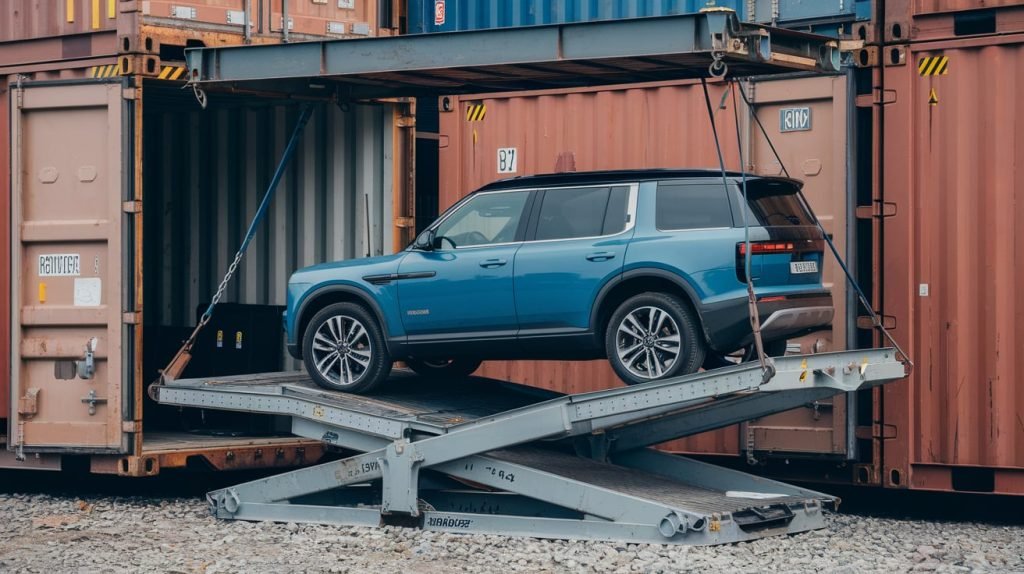
When Not to Import From the USA
Walk away when title eligibility is unclear, the VIN history conflicts with the seller’s story, flood exposure is likely, structural or restraint repairs cannot be priced, or the model cannot be confirmed for registration. Pause when the seller blocks an independent inspection, supplies edited documents, wants payment outside the platform, or creates a deadline before document review.
Buying locally can be the better financial choice when the price gap disappears after taxes and repairs, the US warranty will not apply, parts or software support is limited, insurance terms are poor, or resale buyers will discount the specification and title history. The goal is not to “win” the auction. It is to own the right car at a defensible total cost.
Common Import Mistakes
Bidding before a title check
A cheap vehicle becomes storage cost when the ownership document cannot be exported or registered.
Using freight as the total
Inland haul, handling, insurance, taxes, destination fees, repairs, and registration remain outside many headline quotes.
Ignoring non-running fees
Forklifts, winches, special loading, towing, and terminal refusal can change the route and price.
Assuming clean photos mean clean history
Earlier damage, flood exposure, theft loss, removed airbags, and incomplete repairs may not appear in current images.
Skipping insurance wording
Coverage may exclude existing damage, poor packing, certain contents, delay, or loading performed by another party.
Repairing before documenting arrival
Photograph and report new transit damage before cleaning, dismantling, or authorizing work.
Questions to Ask a Shipping Company
- Is the quote door-to-port, port-to-port, or door-to-door?
- Which US and UAE ports are included?
- Are export filing and title presentation included?
- What are the carrier’s running, fuel, alarm, key, and personal-item rules?
- Which origin and destination terminal charges are excluded?
- How many free storage days apply at each stage?
- Who loads, secures, photographs, and unloads the vehicle?
- What insurance cover, deductible, exclusions, and claim deadline apply?
- What happens if the sailing changes or customs holds the vehicle?
- Who provides the bill of lading and UAE clearance documents?
Put the answers in writing. If one company’s quote appears far lower, align every cost line before deciding. The missing line is usually more interesting than the discount.
Key Takeaway
Shipping a car from the USA to the UAE can make sense for a rare specification, known-history vehicle, or price gap that survives a complete calculation. Check exportable ownership, UAE eligibility, VIN history, damage, transport scope, insurance, customs assumptions, repair needs, parts support, and registration before payment. Build a road-ready budget, not a freight budget. When the margin is thin or the documents are uncertain, buying an inspected UAE vehicle is often the safer purchase.
Try one final test before sending money. Put the local price of a comparable registered vehicle beside your conservative import total. Add a reserve for storage, inspection failure, missing keys, tires, fluids, battery replacement, diagnostic work, towing, and the first repair. Then ask what happens if the shipment arrives four weeks late or the damage estimate doubles. If the imported car still offers a clear reason to proceed, the plan may be sound. If the deal only works when every cost lands at the lowest estimate, it is not a saving yet. It is a bet.
Keep every quote, photo, title copy, payment receipt, condition report, loading record, and message. A clean paper trail helps when a carrier, insurer, workshop, customs agent, or registration authority asks what happened and when.
Inspect an Imported Car in Al Quoz 4
Send the VIN, year, model, title type, auction link, damage photos, and expected arrival details. We can plan a post-arrival inspection and identify mechanical, electrical, cooling, restraint, and repair concerns before normal road use.
Send these first
- VIN and title category
- Auction or seller photos
- Known damage and repairs
- Port or delivery date
- Warning lights or scan report
Shipping Cars From the USA to the UAE FAQs
How long does shipping a car from the USA to the UAE take?
Ocean transit and the full process are different timelines. Port pair, inland pickup, title review, sailing schedule, consolidation, customs, storage, and inspection can move the total from several weeks to longer. Use the carrier’s current written estimate and allow a delay reserve.
Is RoRo cheaper than container shipping?
It is often cheaper for a running standard-size vehicle, but compare the complete route. Inland transport, port availability, destination charges, personal-item rules, condition, and insurance may make a container the more suitable choice.
Can I import a salvage car into the UAE?
Title categories and registration acceptance require case-specific confirmation. Do not assume customs clearance means the car can be registered. Submit the VIN, title wording, year, damage, and intended emirate for current official review before purchase.
How is UAE customs value calculated for an imported car?
Planning commonly uses the purchase price plus freight and insurance, but customs can assess or question the declared value. Duty, VAT, exemptions, and valuation treatment must be confirmed for the actual import.
Can I keep personal items inside the car?
Carrier, port, customs, and insurance rules control this. RoRo operators often restrict loose property. A container does not automatically permit every item. Declare permitted contents and confirm coverage in writing.
Do US cars need GCC conversion?
There is no single “GCC conversion” that solves every difference. Inspect cooling, lighting, tires, software, telematics, emissions equipment, charging, parts, recalls, and registration requirements for the exact model and VIN.
Should I inspect a car before or after shipping?
Both checks serve different purposes. A pre-purchase inspection reduces buying risk. An arrival inspection documents transit condition and checks whether the vehicle is safe before driving, repair, testing, and registration.
Can AutoRepairUAE arrange the international shipment?
This article explains the process and AutoRepairUAE can inspect the vehicle and advise on repair needs. Confirm international freight, customs representation, and registration services directly with the licensed providers responsible for those stages.
Official Sources and Further Checks
- US Customs and Border Protection vehicle export requirements
- Dubai Customs services and current import guidance
- UAE Federal Tax Authority VAT guidance
- Dubai RTA vehicle testing and registration services
Rules, fees, sailing schedules, and eligibility can change. Confirm the current requirements for the vehicle, title, importer, port, and emirate before purchase or shipment.