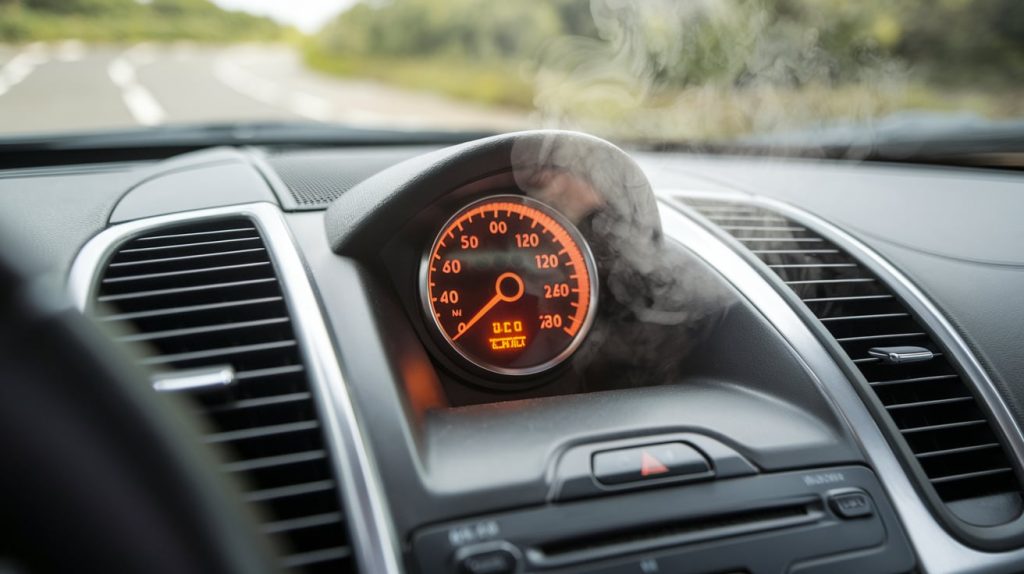
A stuck thermostat can make an engine run too hot or too cold. Learn the warning signs, when to stop driving, how technicians confirm the fault, and what thermostat replacement may cost in Dubai.
What does a bad thermostat feel like?
The most common bad thermostat symptoms are overheating, a temperature gauge that moves unusually, slow engine warm-up, weak cabin heat, coolant leaks near the thermostat housing, and reduced fuel economy. A thermostat stuck closed can restrict coolant flow and cause rapid overheating. One stuck open can keep the engine colder than its intended operating range.
In Dubai traffic and high ambient heat, a cooling fault can become serious quickly. Treat a changed gauge position as useful evidence, not proof of one failed part. Note when the change happens, whether the heater output changes, and whether coolant is visible. This helps the technician test the correct system before recommending parts.
Seven common bad thermostat symptoms
A single symptom does not prove that the thermostat has failed. Low coolant, a leaking hose, a weak water pump, a blocked radiator, a faulty fan, trapped air, or a temperature-sensor fault can look similar. The pattern and test results matter.
Engine overheating
A thermostat stuck closed may prevent hot coolant from reaching the radiator. The gauge can climb quickly, especially in traffic or under load.
Engine stays too cool
A thermostat stuck open may circulate coolant too early. The gauge can remain below its normal position and warm-up takes longer.
Temperature fluctuates
A gauge that rises and falls can point to intermittent thermostat movement, low coolant, trapped air, a sensor issue, or circulation trouble.
Weak cabin heat
If the engine does not reach its intended temperature, the heater may take longer to warm up or continue blowing cool air.
Coolant leak
A damaged housing, failed seal, corrosion, or excess cooling-system pressure may leave wet coolant or dried residue around the thermostat area.
Higher fuel use
An engine that runs colder than intended may stay in a richer warm-up strategy longer, which can increase consumption and emissions.
Cooling-system warning
Some vehicles display a coolant-temperature warning or store a fault code when warm-up speed or measured temperature is outside the expected range.
Can you drive with a bad thermostat?
| What you notice | Driving decision | Next step |
|---|---|---|
| Red temperature warning, steam, coolant smell, or gauge in the hot zone | Stop driving | Pull over safely, switch off the engine, and arrange recovery. Do not open the cooling system while hot. |
| Gauge rises repeatedly but returns toward normal | Avoid continued driving | Have the cooling system inspected before the next normal trip. A temporary drop does not mean the fault is gone. |
| Gauge remains unusually low and the heater is weak | Short trip may be possible | Book a prompt inspection. Monitor the warning lights and gauge closely. |
| Small coolant leak with normal gauge | Risk can change quickly | Do not rely on topping up repeatedly. A minor leak can lower coolant enough to cause overheating. |
When there is any doubt, recovery is safer than testing the car on the road. Overheating can damage the cylinder head, head gasket, seals, and other engine components.
How the two failures differ
Thermostat stuck closed
Coolant circulation through the radiator can be restricted. The engine may overheat rapidly, while the radiator side of the system remains cooler than expected. Continuing to drive can turn a small repair into major engine work.
Thermostat stuck open
Coolant may circulate before the engine has warmed properly. Typical signs include a low gauge reading, slow warm-up, weak heater performance, increased fuel use, and sometimes a stored temperature-related fault code.
Some modern cars use electronically controlled thermostats or integrated thermostat-and-water-pump modules. Their behavior, testing method, parts cost, and access time can differ significantly from a basic mechanical thermostat.
Problems that can look like thermostat failure
Low coolant or trapped air
Air pockets can interrupt circulation and heater output. A pressure test and correct bleeding procedure may be needed.
Water pump problem
A damaged impeller, bearing fault, electrical failure, or drive issue can reduce circulation even when the thermostat works.
Radiator fan fault
Overheating that mainly happens while idling or in slow traffic can involve the fan, relay, control module, wiring, or temperature input.
Blocked radiator
Restricted internal passages or external debris can reduce heat transfer and create uneven temperatures across the radiator.
Sensor or wiring fault
An inaccurate coolant-temperature sensor or circuit problem may produce a false gauge reading or misleading diagnostic code.
Head-gasket trouble
Combustion gases entering the cooling system can cause pressure, coolant loss, bubbling, and overheating. This requires separate testing.
How technicians confirm the cause
A good diagnosis checks the complete cooling system before parts are approved. Replacing the thermostat based only on a high gauge reading can miss the real fault.
- Check coolant level and condition only after the system is safe to inspect.
- Look for leaks, dried coolant residue, damaged hoses, and housing cracks.
- Scan live coolant-temperature data and relevant fault codes.
- Compare warm-up behavior with the vehicle’s expected operating pattern.
- Check temperature differences across hoses and the radiator using suitable equipment.
- Confirm radiator-fan operation and water-pump circulation where applicable.
- Pressure-test the cooling system when a leak or pressure loss is suspected.
- Bleed the system correctly after repair and verify stable temperature on a final test.
What thermostat repair usually includes
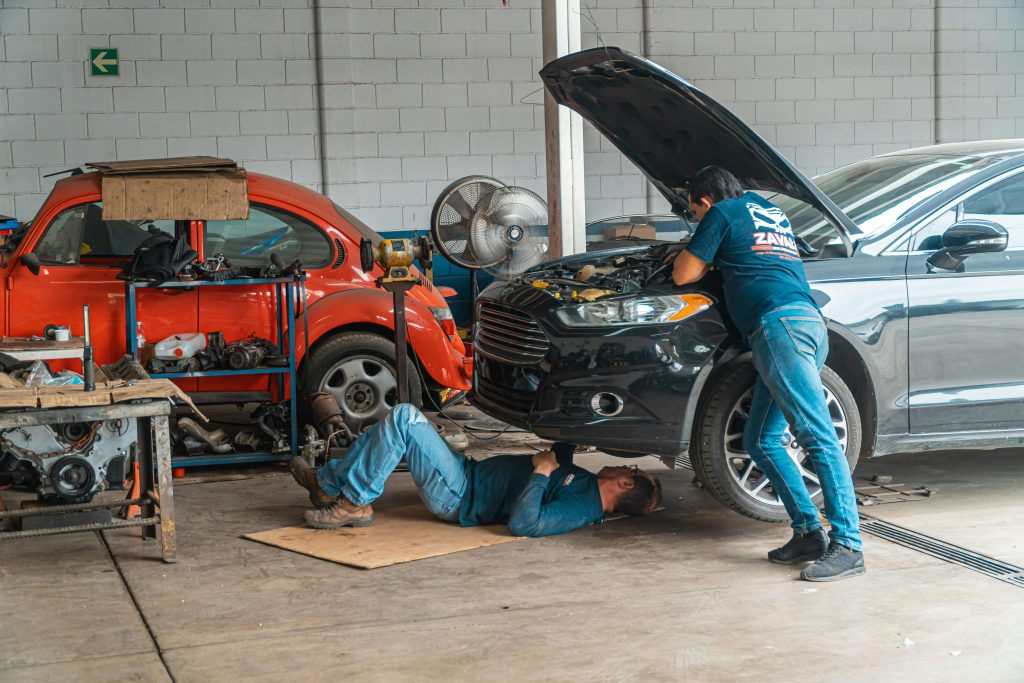
Thermostat replacement
The failed thermostat is replaced with the correct temperature rating and specification for the vehicle.
Housing or module replacement
If the housing is cracked, warped, leaking, or integrated with another component, the complete assembly may be required.
Coolant refill and bleeding
Compatible coolant is restored and air is removed using the correct vehicle-specific procedure.
Leak and temperature check
The repaired system is checked for pressure loss, leaks, stable operating temperature, and proper heater output.
Related repair when needed
Hoses, sensors, connectors, a pump, or damaged seals should only be added when testing shows that they are faulty.
Final road test
The gauge, live temperature readings, fan operation, and cooling performance are checked under suitable conditions.
Why thermostat symptoms vary by model and engine
The thermostat performs the same basic job across most combustion engines, but its design and location vary. Some cars use a simple thermostat in a separate housing. Others combine it with coolant pipes, sensors, an electric actuator, or the water pump. A warning pattern that fits an older mechanical unit may appear differently on a newer electronically managed cooling system.
European vehicles
Many European engines use mapped or electronically controlled thermostats. A scan may reveal warm-up or control-circuit faults, but those codes do not replace a complete cooling-system check. Some engines combine thermostat and water-pump access, so the quote should identify exactly which components are included.
Japanese and Korean vehicles
Many models use conventional thermostats, although access and bleeding procedures still differ. Overheating can also involve a radiator cap, fan circuit, pump, restricted radiator, low coolant, or trapped air.
American vehicles
Engine size and packaging affect access. Some models place the thermostat behind intake or accessory components. The correct coolant specification also varies by make, engine, and model year.
Hybrid vehicles
Hybrids can have more than one coolant circuit. The affected circuit must be identified before blaming the engine thermostat. High-voltage areas require trained handling.
Performance engines
Turbocharged and high-output engines produce substantial heat. Overheating under load can expose a circulation, radiator, fan, pump, or pressure problem that is not obvious at idle.
Older vehicles
Age-related hose deterioration, corrosion, scale, weak caps, and brittle housings can exist alongside a thermostat fault. A complete inspection helps avoid leaving another active leak or restriction unresolved.
The vehicle model and a short description of the gauge behavior are enough to begin. A technician may later request the model year, engine, warning photo, or fault-code report when those details help identify the fitted system.
How much does thermostat replacement cost?
This existing AutoRepairUAE guide range can cover many conventional thermostat replacements. The final quote varies with the vehicle, thermostat location, part choice, coolant requirement, labor access, and whether the housing or an integrated module must also be replaced.
| Cost factor | Why it changes the quote |
|---|---|
| Vehicle and engine | Access can range from a straightforward housing to a deeply positioned assembly requiring removal of surrounding parts. |
| Thermostat design | A basic valve usually costs less than an electronic thermostat or combined housing module. |
| Coolant specification | The correct coolant type and required quantity vary. Mixing incompatible coolant types should be avoided. |
| Related damage | Leaks, damaged connectors, brittle hoses, pressure faults, or overheating damage can add separate repairs. |
| Parts choice | Genuine, OEM-quality, and aftermarket components can have different prices and availability. |
Prices are estimates, not a fixed quote. Inspection is needed to confirm the failed component and complete scope before work is approved.
A useful written estimate should separate the thermostat or housing, coolant, labor, testing, and any additional part that was found faulty. Ask whether the quoted component is a basic thermostat, a complete housing, or an integrated module, since those are not equal repairs. If the engine has already overheated, diagnosis may also include checks for pressure loss, coolant contamination, or combustion gases. Those checks protect you from approving a thermostat replacement while a second cooling-system problem remains unresolved.
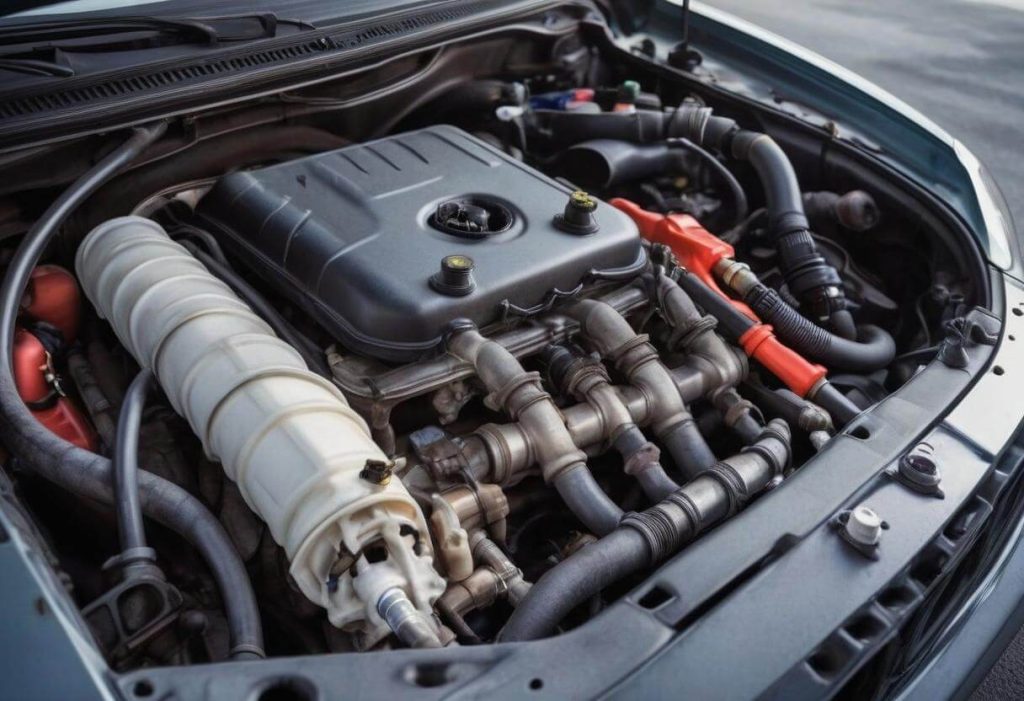
What you can check safely
- Watch whether the gauge reaches its usual position at its normal pace.
- Note whether the problem happens during cold starts, highway driving, traffic, or all conditions.
- Check for warning messages and record them before switching off the car.
- Look under the parked car for coolant only when it is safe to do so.
- Notice whether cabin heat becomes weak when the gauge behaves unusually.
Do not remove a hot cap, place your hands near moving fans or belts, or treat a fault code as proof that one part has failed. Diagnostic codes identify a detected condition, not always the root cause.
DIY replacement or workshop repair?
A thermostat may look simple, but access, coolant handling, sealing, torque, and bleeding can make the job difficult. Incorrect installation can cause leaks or trapped air. DIY replacement is best limited to people with the correct repair information, tools, coolant, and safe disposal method. A workshop is the safer choice when the engine has overheated, access is restricted, or the car uses an electronic cooling module.
When thermostat replacement may not solve the problem
A thermostat should not be replaced only because the temperature gauge moved. The same complaint can begin with low coolant, trapped air, a weak pressure cap, a cooling fan fault, restricted airflow, a water pump problem, a sensor circuit or an internal engine leak. Replacing a part before testing can leave the original symptom unchanged.
The driving pattern provides a useful first filter. Temperature that rises mainly while idling points toward low-speed airflow or fan control as well as coolant circulation. A car that heats under load or on a highway needs a different check. Slow warm-up with a stable low gauge can fit a thermostat stuck open, but a biased temperature sensor may report a similar condition.
If airflow is the stronger suspect, review the radiator fan diagnosis guide. If the system is stable and the issue is overdue fluid rather than a fault, compare the scope of a car coolant flush in Dubai. A flush does not repair a stuck thermostat, leak or failed pump.
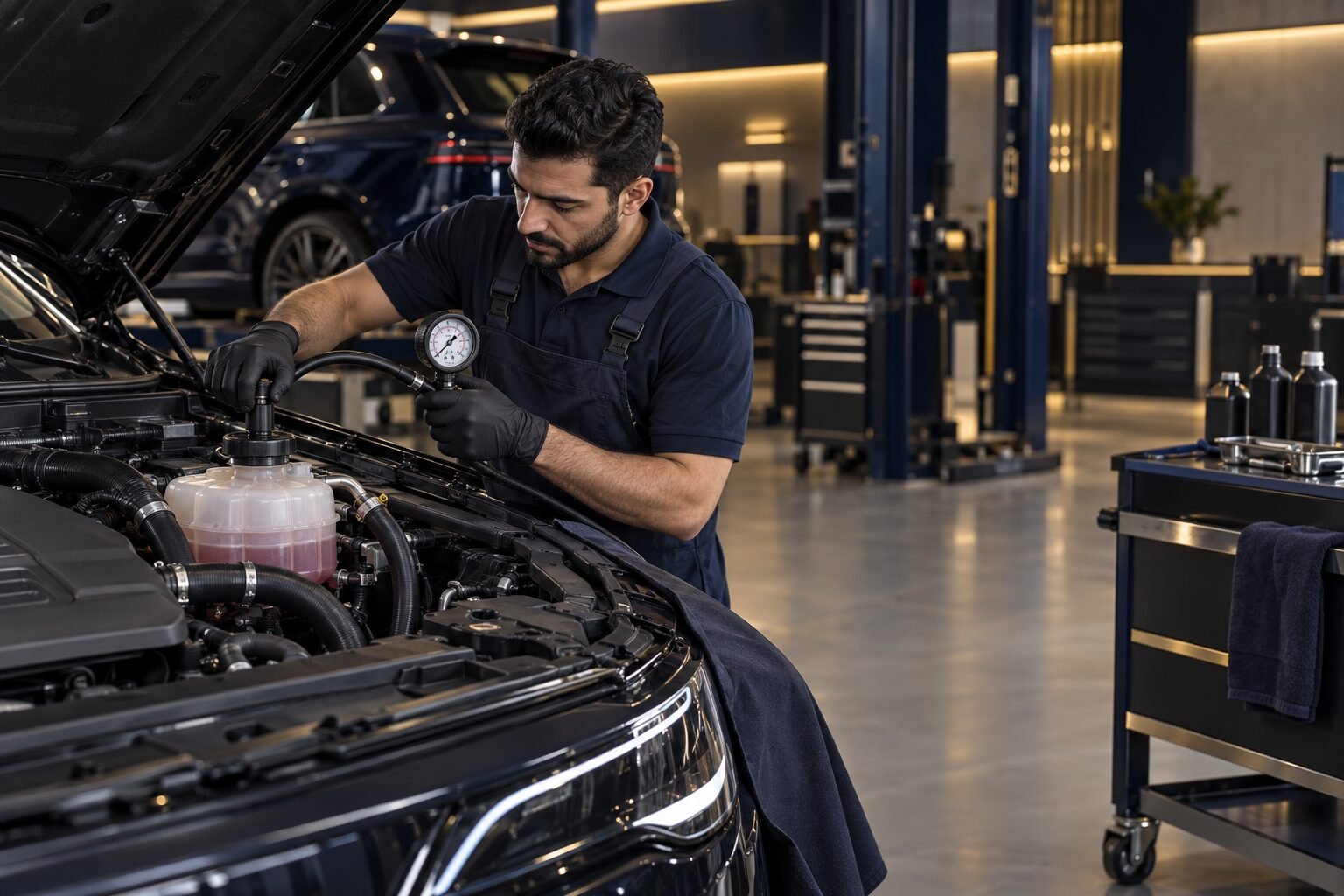
How Dubai conditions change the diagnosis
Temperature climbs in traffic
Low road speed reduces natural airflow through the radiator. Check fan operation, airflow restriction, coolant level and circulation before deciding that the thermostat is responsible.
Gauge rises after parking in heat
Heat soak can make a weak component easier to notice. Record whether the warning appears after restarting, after idling or only when the AC is working.
Highway driving stays normal
Normal temperature at speed but rising temperature at idle can shift attention toward fan performance. It does not rule out a circulation problem.
Coolant needs repeated top-ups
Repeated loss is evidence of a leak or pressure problem, not routine consumption. Find the source before treating a thermostat replacement as the complete repair.
Cabin heat changes
Heater output can help describe coolant flow. Sudden loss of heat while the gauge rises can also occur with low coolant or trapped air.
Several warnings appear
Low voltage or a sensor circuit can create misleading messages. Save the exact warning text and avoid clearing codes before inspection.
Write down the outside conditions, road speed, AC use, gauge position and time since the cold start. A short note gives the technician a better test route than saying the engine was simply running hot. If steam, a red warning or coolant discharge appears, stop safely and arrange recovery.
How to reduce future cooling-system trouble
Use the correct coolant
Follow the vehicle manufacturer’s coolant specification. Color alone does not prove that two coolants are compatible.
Repair leaks early
Small leaks can lower the coolant level, introduce air, and create temperature problems that damage more components.
Follow service intervals
Replace coolant according to the vehicle’s maintenance schedule and use the correct bleeding procedure.
Respond to gauge changes
A gauge that behaves differently from normal deserves attention before the car reaches the red zone.
Check related components
Hoses, the expansion tank, cap, radiator, fan, pump, and seals all influence cooling-system reliability.
Recheck after overheating
Even after the engine cools, the original cause and any resulting damage should be checked before normal driving resumes.
Key takeaway
Overheating is the urgent thermostat symptom. Stop driving when the temperature reaches the red zone, a warning appears, or steam is visible. A low or fluctuating gauge is less immediately dramatic but still needs diagnosis because the thermostat is only one of several possible causes.
FAQs about bad thermostat symptoms
What is the first sign of a bad thermostat?
A temperature gauge that warms too quickly, stays unusually low, or fluctuates can be an early sign. Slow warm-up, weak cabin heat, overheating, and coolant leakage may follow. Testing is needed because several cooling faults can cause the same symptoms.
How can I tell if the thermostat is stuck open or closed?
A stuck-open thermostat commonly causes slow warm-up and a low gauge reading. A stuck-closed thermostat can restrict coolant flow and cause overheating. These patterns are useful clues, but temperature data and cooling-system tests should confirm the cause.
Can a bad thermostat cause coolant loss?
The thermostat itself does not consume coolant. A leaking housing or seal can cause coolant loss, while overheating can force coolant out of a weak cap, tank, hose, or another leak point.
Can a bad thermostat trigger the check-engine light?
Yes. Some vehicles detect that the engine is warming too slowly or that coolant temperature is outside the expected range. A stored code still requires diagnosis because a sensor, wiring problem, low coolant, or another fault may be involved.
Can I drive if the thermostat is stuck open?
The immediate overheating risk may be lower than with a stuck-closed thermostat, but the engine can run too cold and inefficiently. Arrange inspection soon and stop if the gauge rises, a warning appears, or coolant leaks.
Can I drive if the thermostat is stuck closed?
No. A stuck-closed thermostat can cause rapid overheating. If the gauge enters the hot zone or a warning appears, stop safely and switch off the engine.
How long does thermostat replacement take?
Time varies greatly by vehicle. A readily accessible thermostat can be faster, while an integrated module or a unit behind other components may require substantially more labor. Cooling-system bleeding and final testing also take time.
Should the coolant be replaced with the thermostat?
The system usually loses some coolant during replacement. It should be refilled with the correct specification, and contaminated or overdue coolant may justify a more complete replacement. The technician should also bleed trapped air correctly.
Could a bad water pump be mistaken for a thermostat problem?
Yes. Both can cause overheating or poor circulation. Fan faults, radiator restrictions, low coolant, trapped air, and sensor problems can also produce similar signs.
How much is a thermostat replacement in Dubai?
This guide uses an estimated AED 500 to AED 1,200 range for many conventional jobs. Some vehicles cost more because of difficult access or integrated electronic assemblies. The written quote should identify parts, labor, coolant, and any related repair.