
Dubai driver maintenance guide
Your temperature gauge climbs in traffic. A tire-pressure warning appears before a highway trip. Or the car makes one new sound, then goes quiet when you reach the garage. These moments are easy to dismiss. They are also when a small record, a safe check, or a decision to stop driving can prevent more damage.
Car repair tips are useful only when they tell you what you can check, what belongs to a technician, and what should not wait.
The short answer
What should every driver do to reduce repair risk?
Follow the maintenance schedule for the exact vehicle, check tires and fluid levels when the car is cold, record warning messages, and investigate changes in braking, steering, temperature, starting, or fluid use. Do not replace parts from a symptom alone. If control, braking, oil pressure, cooling, smoke, or fuel leakage is involved, stop in a safe place and arrange professional help.
Checks with a purpose
15 car maintenance and repair tips
Use the correct service schedule
Start with the owner’s manual or manufacturer service information for the model, engine, production year, and market. Time and mileage can both trigger maintenance. Dubai heat, dust, short trips, idling, towing, and storage may place the car in a severe-use category, but that must be confirmed from the vehicle guidance. A universal oil or transmission interval is not a substitute.
Check engine oil by the stated procedure
Park on level ground and follow the handbook’s temperature and waiting instructions. Some cars use an electronic level display instead of a dipstick. Note the level and any repeated top-up. Use only the specified grade and approval. Dark color alone does not prove oil is due. A red oil-pressure warning is different from a service reminder and requires an immediate safe stop.
Set tire pressure from the vehicle label
Check pressure when tires are cold and use the driver-door label or handbook, not a generic number for an SUV, sedan, or EV. Load and wheel specification can change the target. Inspect for cuts, bulges, objects, cracking, and uneven wear. Repeated pressure loss needs a puncture and wheel check. Do not inflate to the maximum figure molded on the tire sidewall.
Treat braking changes as evidence
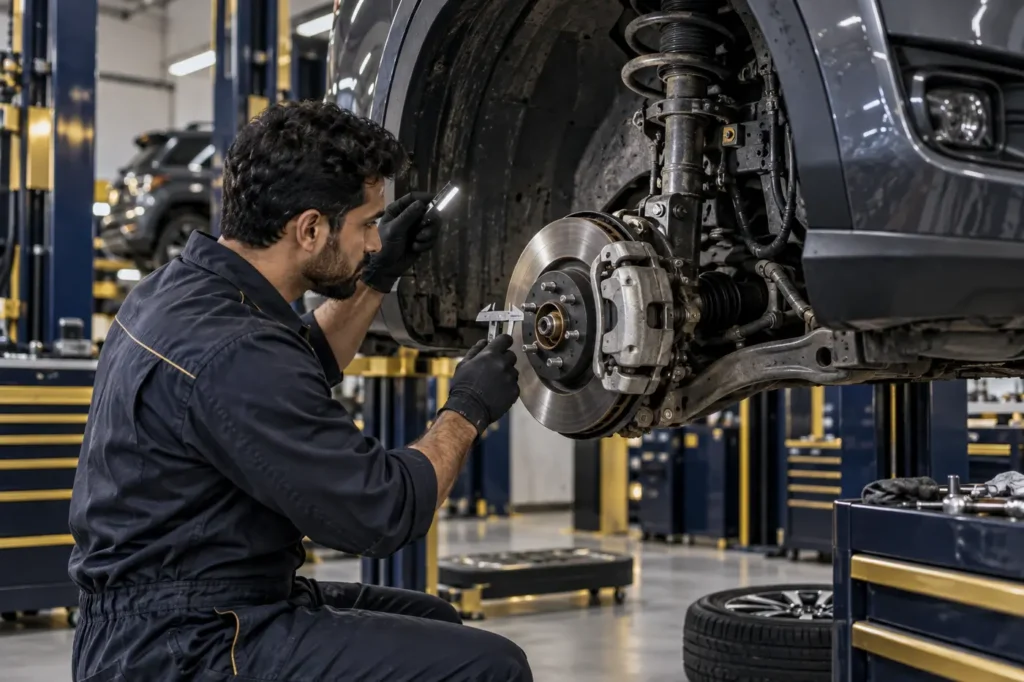
Noise, pedal travel, vibration, pulling, warning lights, or a longer stopping distance should be written down and inspected. Pad thickness is only one measurement. Disc condition, caliper movement, hoses, fluid, tires, suspension, and control-system faults can affect braking. Never open the brake-fluid reservoir casually or “top up” a falling level without finding why it changed.
Watch coolant only when the engine is cold
Check the expansion-tank markings only when the handbook says it is safe. Never remove a pressurized cap from a hot engine. Repeated coolant loss, a rising gauge, steam, a sweet smell, or weak cabin heat can point to a cooling-system fault. Adding water and continuing the journey may hide the leak while overheating damages the engine.
Record battery and starting behaviour
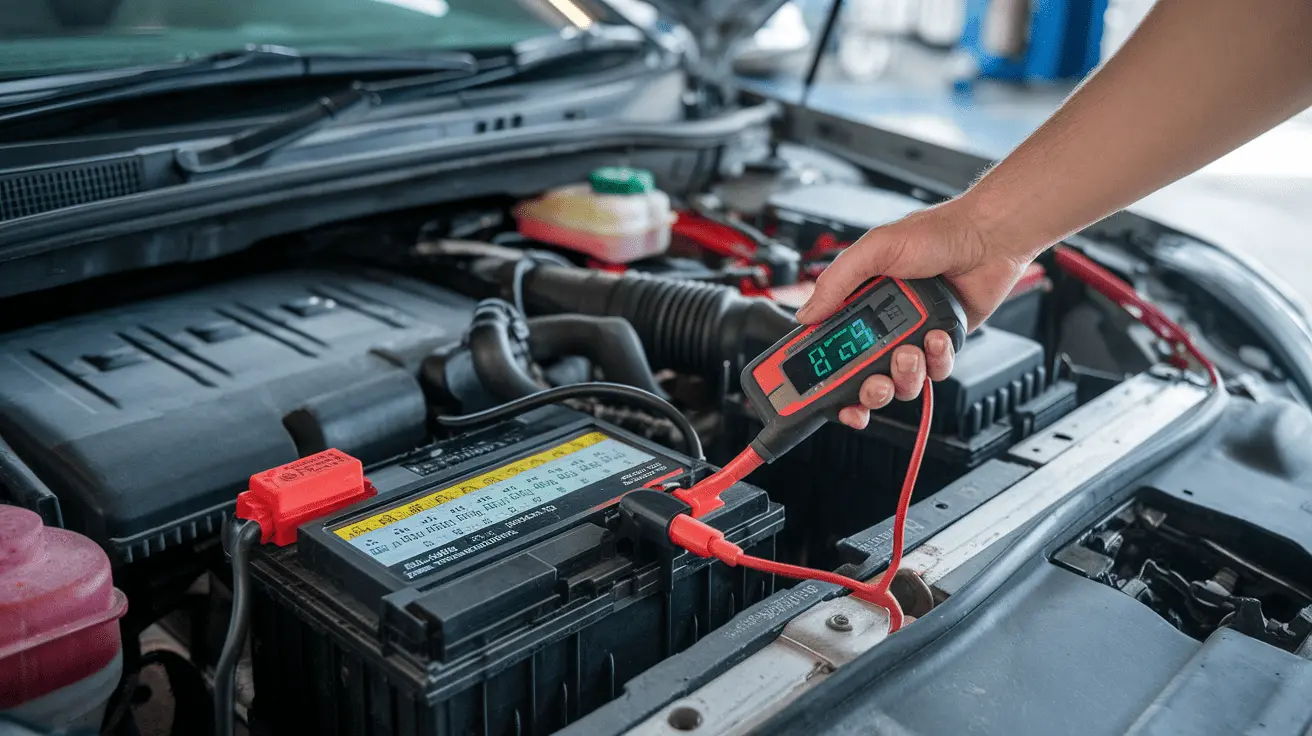
A slow crank, clicking, lost settings, or several warnings after start can follow low voltage, but a battery is not always the cause. Age, state of charge, terminal condition, alternator output, parasitic draw, and driving pattern matter. Photograph the warnings. If jump-starting is permitted, follow the exact connection points and procedure in the owner’s manual.
Keep the AC condenser and intake area clear
Remove loose leaves or debris only where access is safe. Weak airflow can come from a cabin filter, blower, flap, evaporator, or control issue. Warm air may involve refrigerant loss, compressor control, cooling fans, or sensors. Refrigerant should not be added as a guess. A pressure and leak assessment gives the workshop a cause to repair.
Separate engine and cabin filters
The engine air filter protects intake air; the cabin filter serves the ventilation system. Dust can shorten inspection intervals in the UAE, yet replacement still depends on condition and manufacturer guidance. Check for sealing, deformation, moisture, and correct airflow direction. A filter that does not fit can allow unfiltered air around the element.
Photograph dashboard messages
Capture the full message and symbol before switching the car off. Add mileage, fuel level, weather, speed, engine temperature, and what you felt or heard. A scan code is a starting clue, not a failed-part verdict. Good fault diagnosis connects the code with wiring checks, sensor data, mechanical condition, and the circumstances that produced the warning.
Check wipers, washers, and glass
Dubai dust and sun can harden wiper rubber. Replace blades that split, chatter, or leave the driver’s view unclear. Keep washer fluid suitable for the vehicle and make sure jets are aimed correctly. A windshield chip in the swept area can spread with heat or vibration, so assess it before it becomes a larger crack.
Listen for exhaust or fuel concerns
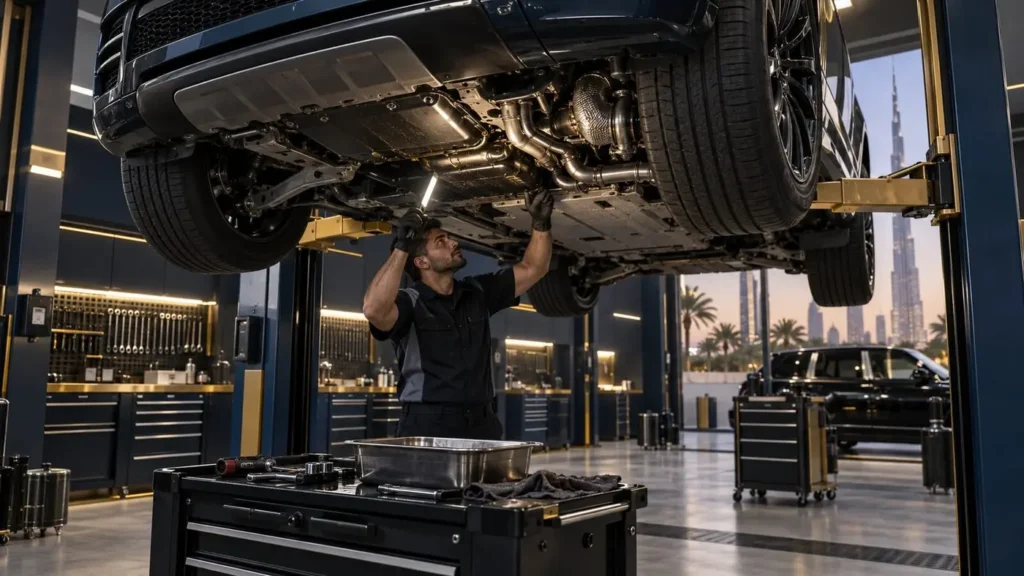
A new exhaust roar, ticking, rattle, fumes, or soot deserves inspection. Exhaust gas entering the cabin is a health risk. A fuel smell or visible leak needs an immediate safe stop, with ignition sources kept away. Do not crawl under a car supported only by its factory jack. Workshop lifting equipment and ventilation are part of safe diagnosis.
Rotate tires only when the setup permits it
Rotation can help manage wear, but not every vehicle allows the same pattern. Directional tires, staggered wheel sizes, temporary repairs, and manufacturer restrictions change the decision. Uneven wear may also signal alignment, pressure, suspension, or load issues. Rotating the tires without addressing the cause can simply move the evidence to another corner.
Do not ignore a change in temperature
The cooling system, engine load, AC operation, fan control, and ambient conditions interact. If the gauge rises above its normal position, reduce risk by stopping safely and following the handbook. Never pour cold coolant into a hot system. A workshop should pressure-test or diagnose the cause rather than replacing the thermostat, radiator, or fan from guesswork.
Protect paint without flooding components
Wash dust away with lubrication and clean tools instead of rubbing a dry panel. Avoid directing high-pressure water at electrical connectors, sensors, damaged seals, or a hot engine bay. Bird residue should be softened and removed. Paint protection cannot repair a chip that has exposed metal, so address damage before corrosion spreads beneath the finish.
Write a useful workshop handover
Describe the first occurrence, frequency, temperature, road speed, steering or braking input, and recent work. Share photos, invoices, and top-up records. Ask the estimate to separate inspection, diagnosis, maintenance, and repair. At collection, compare the invoice with your approval and keep part, fluid, measurement, and warranty details for the next visit.

DIY boundary
What you can check and what needs a workshop
| Task | Owner check | Workshop reason |
|---|---|---|
| tires | Cold pressure, visible damage, tread, warning message | Puncture location, internal damage, wheel leak, alignment, suspension |
| Fluids | Level by the handbook procedure, top-up record | Leak source, pressure test, contamination, correct refill procedure |
| Battery | Starting pattern, warning photos, storage history | Load test, charging output, cable loss, parasitic draw, coding |
| Brakes | Noise, pedal feel, pull, vibration, warning | Measurements, hydraulic integrity, caliper action, control diagnosis |
| Warning light | Exact symbol, message, driving conditions | Scan data, circuit tests, mechanical checks, repair confirmation |
Good maintenance is not a contest to see how much you can do at home. The limit is reached when safe lifting, pressure, high voltage, refrigerant, fuel, brakes, restraint systems, coding, or calibrated tools are involved.
Dubai driving context
Heat, dust, traffic, and storage change the questions
Long idling with the AC running adds heat while road speed and airflow are low. Dust reaches filters, condensers, seals, and moving parts. Short trips can leave a battery undercharged. A car stored for weeks can develop low voltage, tire flat spotting, brake corrosion, or leaks even though its mileage barely changes.
These conditions do not justify invented service intervals. They justify checking whether the manufacturer defines severe use, inspecting condition, and keeping records. If a garage recommends an extra service, ask what evidence supports it and whether the task appears in the vehicle guidance.
Patterns matter
One symptom can have several causes
A weak start may follow a discharged battery, poor connection, charging fault, or current draw while parked. Uneven tire wear may come from pressure, alignment, suspension play, load, or a damaged wheel. Warm AC can involve airflow, fans, sensors, refrigerant loss, or compressor control.
This is why a symptom list should guide testing rather than trigger a shopping list. Ask the technician to state the evidence, the test result, and the confirmation step after repair. That short discipline can prevent several parts from being replaced around the real fault.
Spend with evidence
When not to approve a car repair
Do not approve a large repair from a warning light or scan code alone. Ask what was tested, what failed, and how the proposed work addresses the complaint. Do not buy a flush, additive, or cleaning service because a package says every car needs it. Compare it with the manufacturer procedure and the fluid condition.
Pause when an estimate groups required repairs, maintenance, and optional work under one total. Request parts, labor, VAT, diagnostics, consumables, calibration, and warranty terms in writing. A low initial price can exclude the checks needed to prove the repair worked.
Repair priority
How should you prioritize repairs when the budget is limited?
Start with loss-of-control risks and faults that can multiply damage. Brakes, steering, tires, overheating, oil pressure, fuel leaks, and restraint-system warnings take priority over convenience items. A weak battery may be inconvenient, but a charging fault can stop the vehicle in traffic. A cracked trim panel can wait; a loose underbody shield touching a tire cannot.
Next, separate confirmed faults from recommended maintenance. A confirmed coolant leak and an overdue coolant service are different decisions. One repairs a failure. The other renews fluid at a scheduled point. Ask the workshop to identify which line on the estimate is safety-critical, which prevents secondary damage, which is scheduled maintenance, and which is optional.
| Priority | Typical concern | Reason for the order | Next step |
|---|---|---|---|
| Stop and recover | Oil-pressure warning, overheating, fuel leak, major brake or steering loss | Driving can reduce control or cause rapid mechanical damage | Stop safely, switch off when appropriate, and arrange recovery |
| Inspect before normal use | Severe vibration, repeated coolant loss, charging warning, tire bulge | The vehicle may still move, but the risk is not understood | Limit use and obtain measured diagnosis |
| Plan promptly | Fluid seepage, worn mounts, weak AC, minor suspension noise | Delay may increase wear or cost, depending on the measured condition | Request a written scope and repair window |
| Schedule maintenance | Service items due by time, mileage, or monitored condition | Maintenance reduces preventable wear when it follows the correct schedule | Confirm specification, scope, and records |
| Optional | Appearance work or upgrades unrelated to safety and reliability | The vehicle can often remain in service without this spending | Compare value with other priorities |
This order is a decision aid, not a diagnosis. The same noise can move between categories after inspection. For example, a light rattle from loose interior trim is optional, while a similar sound from steering or brake hardware needs prompt attention.
Written scope
What should a useful repair estimate include?
A repair estimate should name the complaint, diagnostic work, confirmed finding, proposed remedy, parts choice, labor, consumables, calibration, taxes, and warranty terms. It should also state what is excluded. “Front-end repair” is too broad. “Replace both lower control-arm bushings after measured play, align the wheels, and road-test” gives you something to approve and verify.
Ask whether inspection charges are included in the repair, whether dismantling may reveal additional work, and who will contact you before the price changes. If used, aftermarket, OEM, or genuine parts are offered, the estimate should distinguish them. Keep photos and measurements when they help show wear, leakage, or damage.
For maintenance timing, compare the recommendation with the exact vehicle schedule. Our guide to when to change engine oil explains why time, mileage, usage, specification, and warning conditions must be considered together. For tire damage, review the limits in the tire puncture repair guide before assuming every puncture can be plugged.
Takeaway
A maintenance record is one of your best repair tools
Small observations gain value when they have dates, mileage, conditions, and invoices attached. The record helps a technician reproduce an intermittent fault and prevents repeated parts replacement. It also gives a future buyer something more useful than “always serviced.”
Keep the record simple enough to maintain. Note the date, odometer reading, symptom, warning message, fluid added, work approved, parts fitted, and next due item. Photograph invoices before thermal paper fades. If the same fault returns, compare the mileage and conditions with the first event. That timeline can reveal whether the repair addressed the cause, whether a related component has failed, or whether the original complaint was never reproduced.
For a symptom that needs measured diagnosis, compare the workshop scope on our general car repair in Dubai page before booking.
Need help deciding what the car needs?
Send the model, year, mileage, warning photo, and a short symptom history. The workshop can route the request to maintenance, diagnosis, or recovery.
Sources and further reading
Vehicle maintenance references
- NHTSA tire safety guidance
- US EPA vehicle and emissions information
- Your vehicle owner’s manual and manufacturer service information for model-specific procedures.
Driver questions
Car repair tips FAQ
How often should I service my car in Dubai?
Use the time and mileage schedule for the exact model and check whether its manufacturer defines severe operating conditions. Do not substitute a universal interval from a garage package or another vehicle.
Can a warning light tell me which part to replace?
No. A warning and diagnostic code identify a system or condition. Testing must connect that information to the circuit, sensor, mechanical system, or operating condition before parts are approved.
Should I top up brake fluid when it is low?
Do not treat a low level as routine. Pad wear or leakage can change the level, and the hydraulic system is safety critical. Arrange an inspection and use only the specified fluid if the manufacturer procedure calls for it.
Is dark engine oil always overdue?
No. color alone is not a service test. Follow the schedule, oil-life system, correct specification, level, and any fault symptoms. A red oil-pressure warning needs immediate action even if the oil was changed recently.
What should I bring to a repair appointment?
Bring the VIN, mileage, service invoices, warning photos, top-up notes, and a description of when the symptom occurs. Mention recent repairs, jump-starts, overheating, accidents, floods, modifications, or long storage.
When should I use vehicle recovery?
Use recovery when driving may reduce control or increase damage, including overheating, oil-pressure warnings, brake or steering loss, fuel leaks, smoke, severe vibration, or a tire that cannot hold pressure.