Computer diagnosis
AED 180–350Initial scan, warning review and focused basic checks. Deeper circuit or mechanical testing is quoted if needed.
Book BMW repair in Dubai for fault diagnosis, scheduled maintenance and mechanical, chassis, electrical or climate concerns at an independent Al Quoz workshop. Start with the model, generation, powertrain, mileage and exact behavior so the first inspection is specific to the vehicle.

These Dubai estimates give you a useful starting point before inspection. They cover common labour and service items for typical BMW models; engine size, generation, parts choice, access, coding and the fault found can change the written quotation. VAT is confirmed on the quotation and is not added twice.
Initial scan, warning review and focused basic checks. Deeper circuit or mechanical testing is quoted if needed.
Approved-specification engine oil, oil filter, level checks and service reset for common four- and six-cylinder models.
Oil and filter service with selected air, cabin or ignition items according to model, mileage and condition.
Pads, fitting and basic brake inspection. Sensors, discs and performance brake options are separate when required.
Cooling-performance checks and the agreed routine service. Leak repair and failed components are quoted separately.
Suitable battery, installation and registration where required. Capacity and AGM specification affect the total.
Comparable work can be 65% to 70% lower than agency pricing when the parts and repair scope are compared like for like. Your written quotation confirms labour, parts, tests, VAT treatment and any exclusions before work begins.
A 3 Series used for daily commuting, an X5 used for family travel and an i5 used mainly in the city do not present the same operating history. Maintenance planning should begin with the exact car and its records.
Review the applicable maintenance information, calendar time, mileage and completed invoices. A dashboard reminder supports planning but cannot show every fluid, wear item or repair previously carried out.
Ask the advisor to distinguish due work from condition-based recommendations and optional convenience items. This makes the approval easier to understand and reduces repeated service.
Dubai temperature and traffic make cooling, battery reserve, tyres and air conditioning important observation points. Heat alone does not prove that a component needs replacement.
Repeated short journeys can affect charging and operating temperature. Tell the workshop how the BMW is normally used so measurements are interpreted with relevant context.
Long parking can affect battery charge, tyre shape, brake surfaces and fluid condition. State the storage duration, charger use and whether the vehicle was started only for brief periods.
Before returning to regular driving, address serious warnings, pressure loss, overheating or unusual mechanical noise rather than trying to clear the condition through a long journey.
Wheels, suspension height, exhaust parts, tuning, retrofit modules and coding can alter behavior or diagnostic data. Provide invoices, part references and the date the symptom began.
A modified setting should be recognized as intentional only when it is documented. The workshop should not overwrite changes or blame them automatically without evidence.
Ask whether the proposal uses a new original, aftermarket, remanufactured, repaired, used or customer-supplied component. Compatibility, software setup, availability and written terms differ.
Special-order deposits and return limits should be understood before dismantling. A visually similar BMW part may vary by generation, powertrain or option.
Compare the repaired function with the original complaint. Review warnings, leaks, fluid levels and road behavior where relevant, then ask what was retested.
Keep scan findings, alignment data, part references and recommended follow-up with the invoice. Good history helps the next diagnosis begin from known evidence.
Three purpose-made scenes vary vehicle type and camera position. They show an engine-bay inspection, a performance chassis check and a final systems review instead of recycling one floating car.
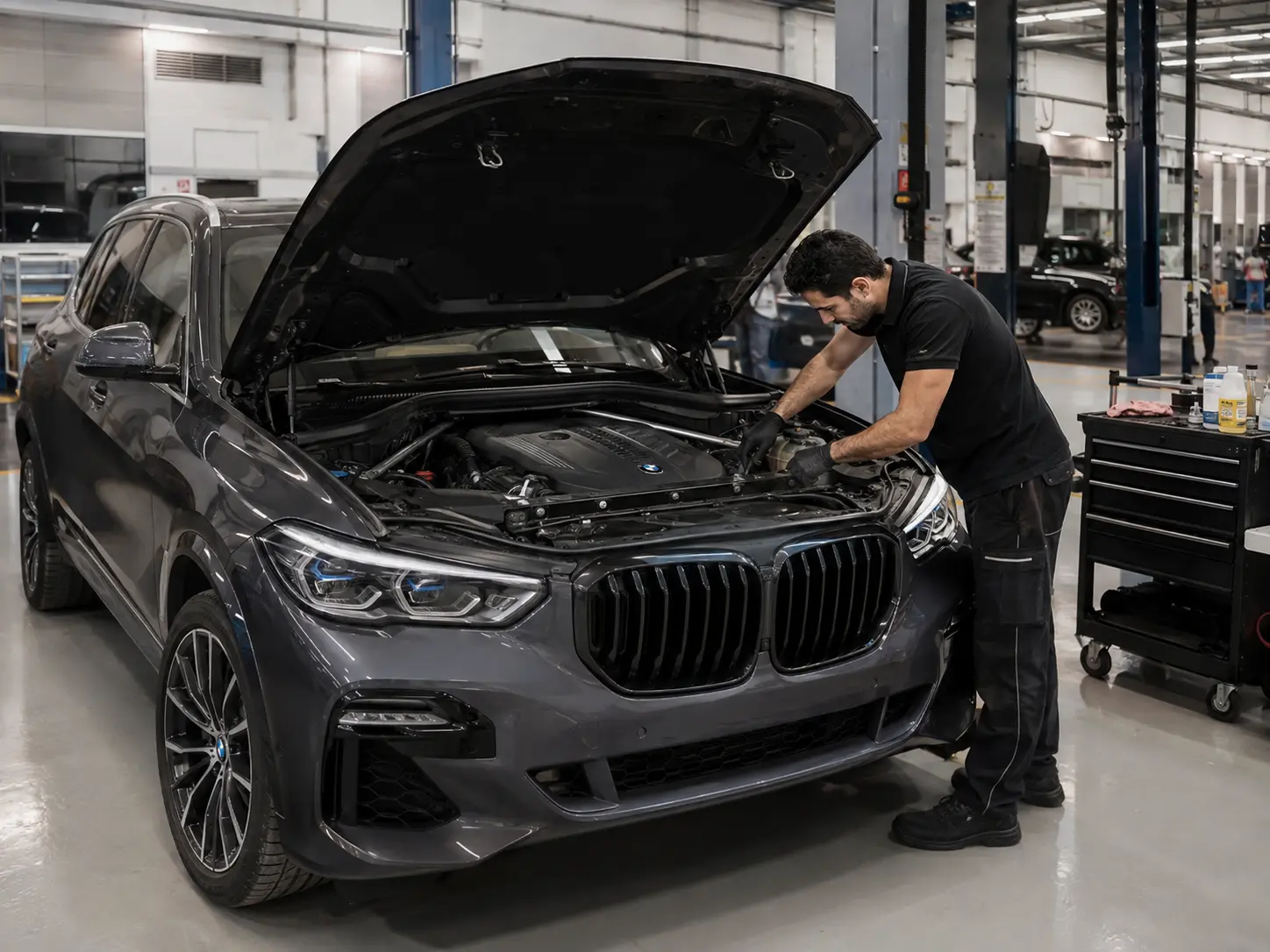
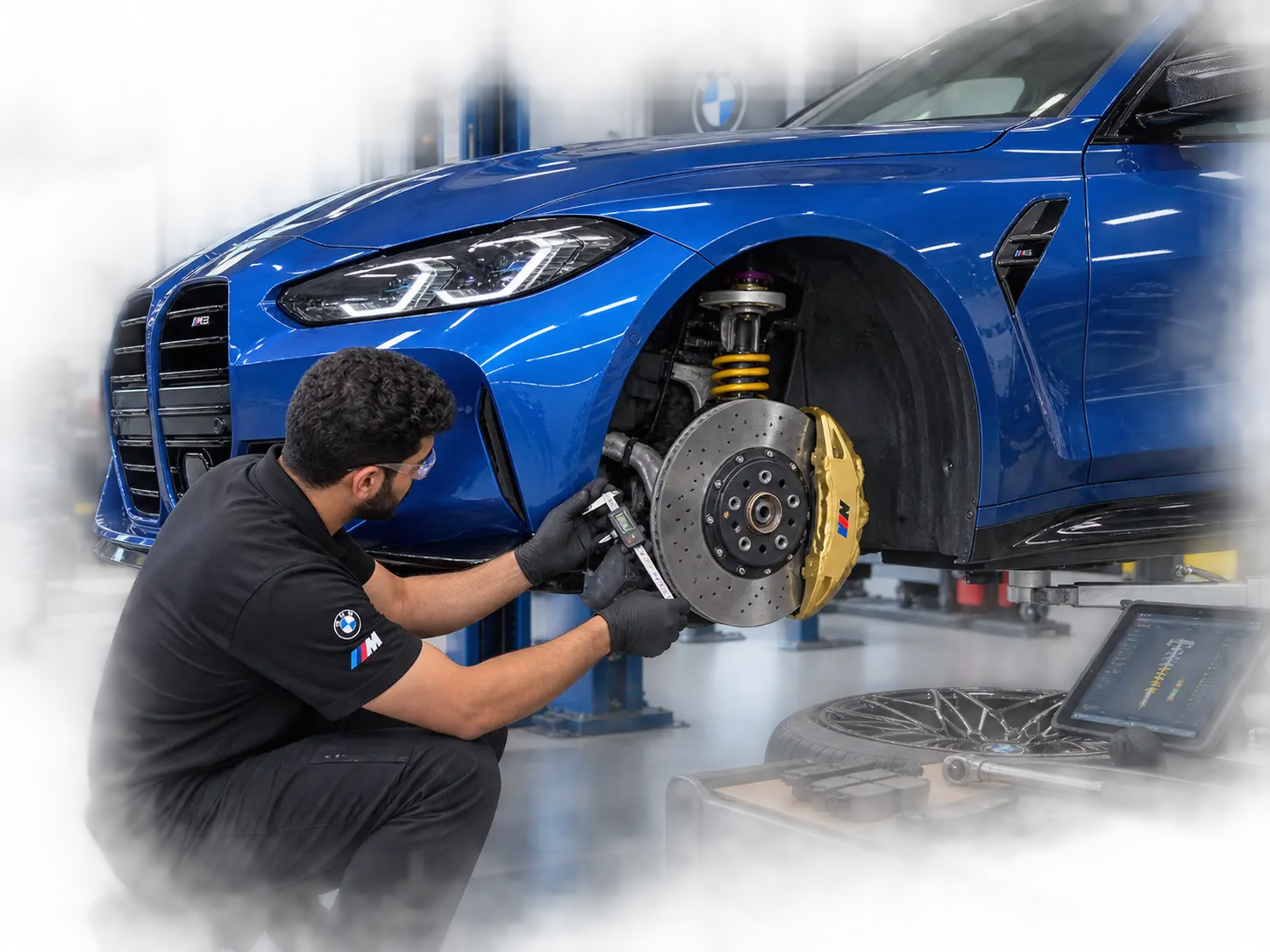
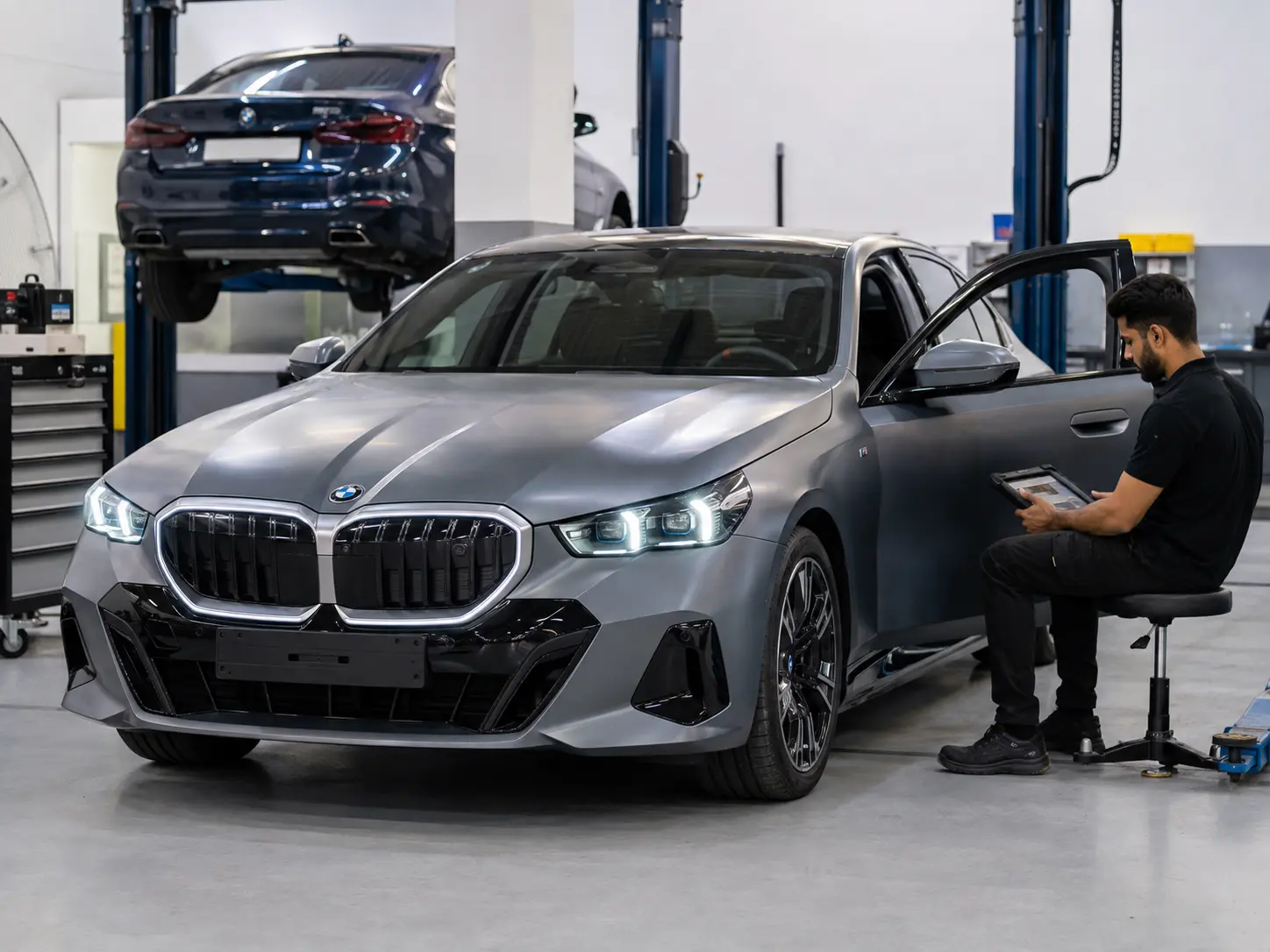
Send the model and a short description of the service or symptom. We can arrange a free workshop inspection in Al Quoz 4, free pickup and delivery, or discuss a dedicated on-site assessment when bringing the car in is difficult.
BMW systems exchange information across powertrain, chassis, comfort and safety networks. A warning shown by one control unit may be caused by supply voltage, a shared sensor, wiring, software data or a physical problem elsewhere.
Diagnostic codes identify recorded conditions. They become useful repair evidence only after the technician checks when they occurred and whether the same complaint returns on the car.
Choose the closest service below. Each specialist page explains the relevant checks, repair choices and booking information in more detail.
For routine engine maintenance, review our BMW oil change service in Dubai. If the car has collision or parking-impact damage, use our BMW accident repair service in Dubai.
Use this route when a message, reduced function or intermittent fault needs to be recorded and tested. Scanning, voltage checks, live data and physical inspection may be combined according to the complaint.
Explore computer diagnosticsBook for leakage, temperature rise, smoke, rough running, unusual consumption or mechanical noise. The estimate should separate external supporting faults from internal engine concerns.
Review engine repairDescribe selection, shift quality, vibration, noises and leak evidence. The first stage can examine mounts, controls, shafts and fluid context before internal work is considered.
View transmission repairRoad-contact systems should be assessed together when the BMW pulls, vibrates, knocks or wears tyres unevenly. Geometry follows mechanical and tyre suitability checks.
See brake serviceStarting issues, warning clusters, lighting faults, accessory problems and battery discharge need circuit-based testing. A module name in a code is not proof that the unit has failed.
Open electrical repairWeak cooling, zone imbalance, odor or blower noise may involve airflow, leakage, controls, compressor operation or heat rejection. Repeat refrigerant loss deserves leak investigation.
Explore AC repairBMW badges span combustion, mild-hybrid, plug-in hybrid and battery-electric vehicles. Equipment can also differ by market and option package. Send the VIN when requested so service information and parts are selected for the actual vehicle.
High-voltage charging, traction-battery and energized propulsion work require a separate capability and safety decision. A broad BMW repair page should not imply that every electric operation can be accepted.
Adaptive suspension, rear steering, performance brakes, xDrive systems and large wheel packages can change access and verification needs. Mention non-running condition, low ride height and transport concerns before arrival.
Older vehicles may have incomplete history, aging connectors and previous repairs that complicate the first test. Agree how additional access will be authorized if the initial evidence cannot be reached safely.
These are realistic planning examples, not fixed offers or claims about previously completed cars. The exact total follows inspection, VIN-level parts matching and your chosen parts basis.
Assumes standard parts access and no separate fault diagnosis.
Part brand, brake option and hub condition can change the total.
Assumes no separate parasitic-drain diagnosis or charging repair is required.
Staging lets the owner approve a focused inspection before parts availability and repair complexity are known.
Send generation, engine or electric variant, mileage, history, warnings, symptom conditions and modification information.
Define the relevant scan, measurement, physical check or road test and confirm safe arrival before the BMW is moved.
Separate verified faults, due maintenance, optional work and conditions that need more access or monitoring.
Confirm parts basis, timing, written terms and the post-repair checks tied to the original complaint.
A useful proposal connects the owner’s report to a measured or observed finding. It also explains what remains uncertain and what could change after dismantling.
| Reported condition | Workshop evidence | Owner decision |
|---|---|---|
| Reduced engine power | Returning fault data, supply voltage, air and fuel values, boost or intake condition, temperature and physical checks. | Approve the test or repair supported by evidence instead of replacing the first named component. |
| Harsh transmission behavior | Temperature, repeatable shift condition, mounts, leakage, driveline joints and relevant control information. | Separate external or adaptation concerns from proposed internal transmission work. |
| Vehicle sits low at one corner | Measured height, leak behavior, air supply, spring or damper condition, sensor data and time parked. | Identify whether the cause is pneumatic, mechanical, electrical or a combination. |
| Battery discharges while parked | Battery condition, charging performance, sleep-state current, accessory history and locking behavior. | Correct the discharge source or use pattern before another battery is damaged. |
| Brake vibration | Pad and disc condition, hub surfaces, wheel and tyre runout, suspension movement and heat dependence. | Define the axle and connected chassis scope before approving replacement. |
| Cooling temperature rises | Leak evidence, pressure behavior, fan operation, airflow, temperature data and earlier repairs. | Repair the verified cooling cause and reassess before assuming internal engine damage. |
Send the BMW model and a short description of the warning, noise, leak, vibration, or service needed. That is enough to start your workshop request.
If a warning is visible, send a clear photograph or copy the message. Mention any change in power, steering, braking, suspension, starting, or charging.
Tell us if the concern appears on a cold start, in traffic, during acceleration, while braking, on rough roads, or after the BMW has been parked.
A recent battery, tire, service, collision, coding, or parts change may help the inspection. Invoices and service history are optional and can be shared later.
Say whether the BMW starts, selects gear, maintains temperature, and can be controlled normally. If driving feels unsafe, ask about recovery or pickup.
Ask which finding was verified, what measurement or inspection supports it, which component and related materials are proposed, and whether coding, calibration, alignment or a follow-up test applies. Keep optional maintenance separate from the primary fault.
Confirm availability, source, labour, taxes, written terms, estimated timing and what could change after access. An independent workshop should not be presented as an authorized dealer, and no broad warranty or completion promise should replace terms for the specific job.
Choose the service that matches the vehicle concern. Each page explains symptoms, inspection steps, repair choices, and planning prices for that job.
Cooling, airflow, leaks, compressor, and climate-control faults.
Collision inspection, safety checks, body damage, and repair planning.
Battery testing, replacement, registration, and charging checks.
Panel, paint, bumper, structural, and exterior restoration work.
Pads, discs, calipers, sensors, fluid, and braking faults.
Paintless dent repair and conventional panel correction options.
Warning lights, leaks, overheating, misfires, and internal faults.
Correct oil specification, filter service, leak checks, and reset.
Bent, cracked, vibrating, or cosmetically damaged wheels.
Part identification, sourcing choices, fitment, and compatibility.
Play, vibration, heavy steering, warning lights, and leaks.
Dampers, air suspension, arms, bushings, mounts, and ride concerns.
Shift faults, leaks, vibration, diagnosis, repair, and rebuild routes.
Tyre selection, fitting, balancing, wear, and safety checks.
Seat, fabric, leather, headliner, trim, and cabin repairs.
Glass replacement, sealing, cameras, sensors, and calibration checks.
These answers cover the common questions owners ask before arranging BMW service or repair.
Send the model, generation, year, mileage, powertrain, service history, full warning message and the conditions that reproduce the concern.
A code records a condition or circuit. Voltage, wiring, live data, software context and physical checks may still be required.
Low-voltage supply, starting, charging, wiring, accessories and module-related symptoms can be assessed within confirmed scope. High-voltage work is separate.
Yes, subject to model and operation. Ride height, leakage, mechanical condition, sensors, supply and control data may all be relevant.
Stop safely when temperature rises sharply, coolant is lost or a serious warning appears. Continued operation can increase damage.
Ask before ordering. Exact compatibility, condition, fitment responsibility, software needs and written terms must be agreed.
Timing depends on repeatability, access, test sequence and whether further approval is needed. Ask after the initial findings are recorded.
BMW visits are arranged at FCP within Dubai’s Al Quoz district. Confirm the appointment before arrival.
Send the generation, powertrain, mileage, warning photographs, service record and a concise symptom timeline. The workshop can confirm the safest arrival and the most relevant first inspection.