Diagnosis before partsHow the brake fault is confirmed
We begin with what you feel, hear, or see. A vibration only during light braking follows a different path from a soft pedal, a wheel that stays hot, or an ABS warning after a battery problem. The initial workshop inspection is free and is used to define the next practical check.
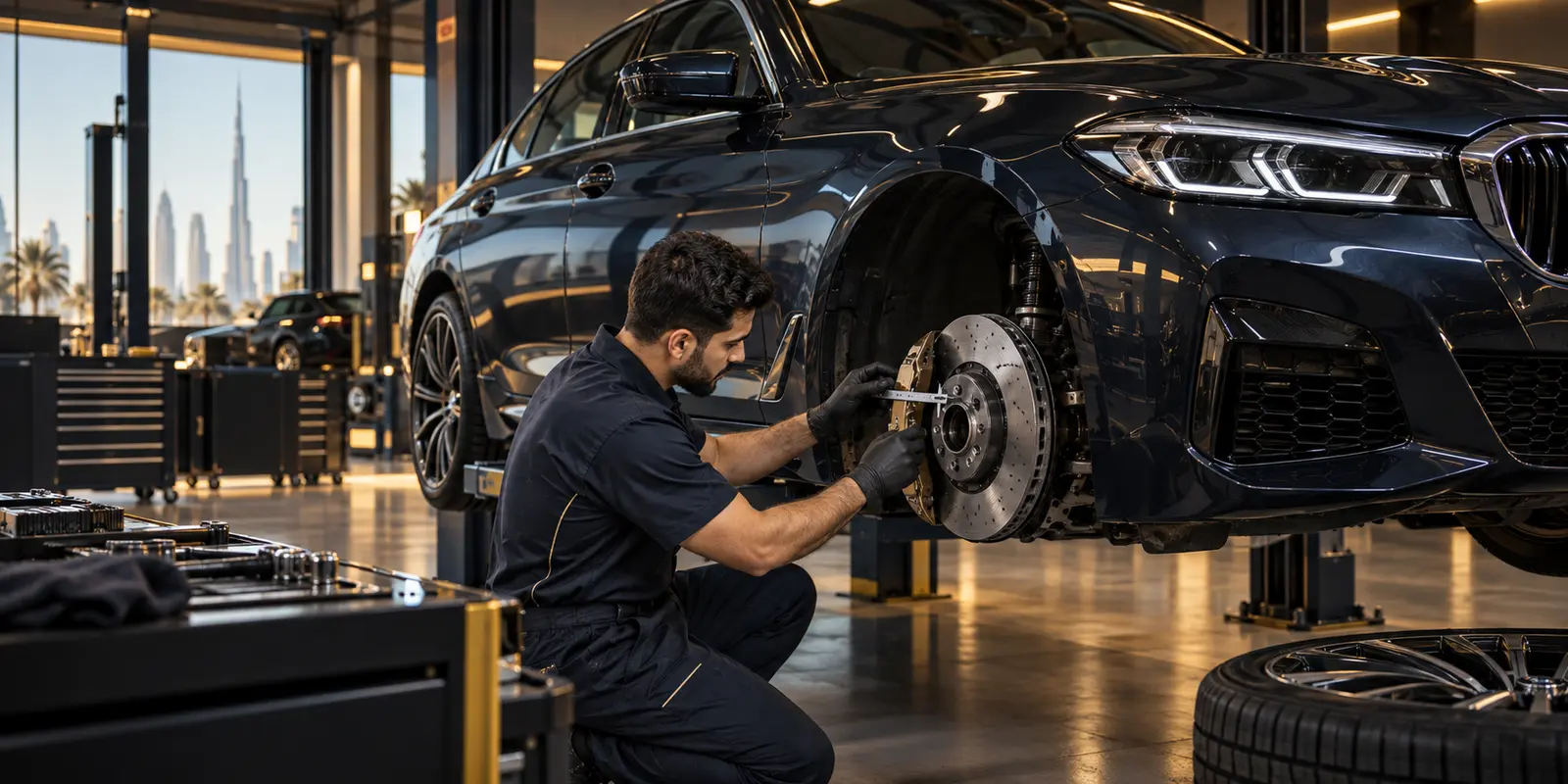
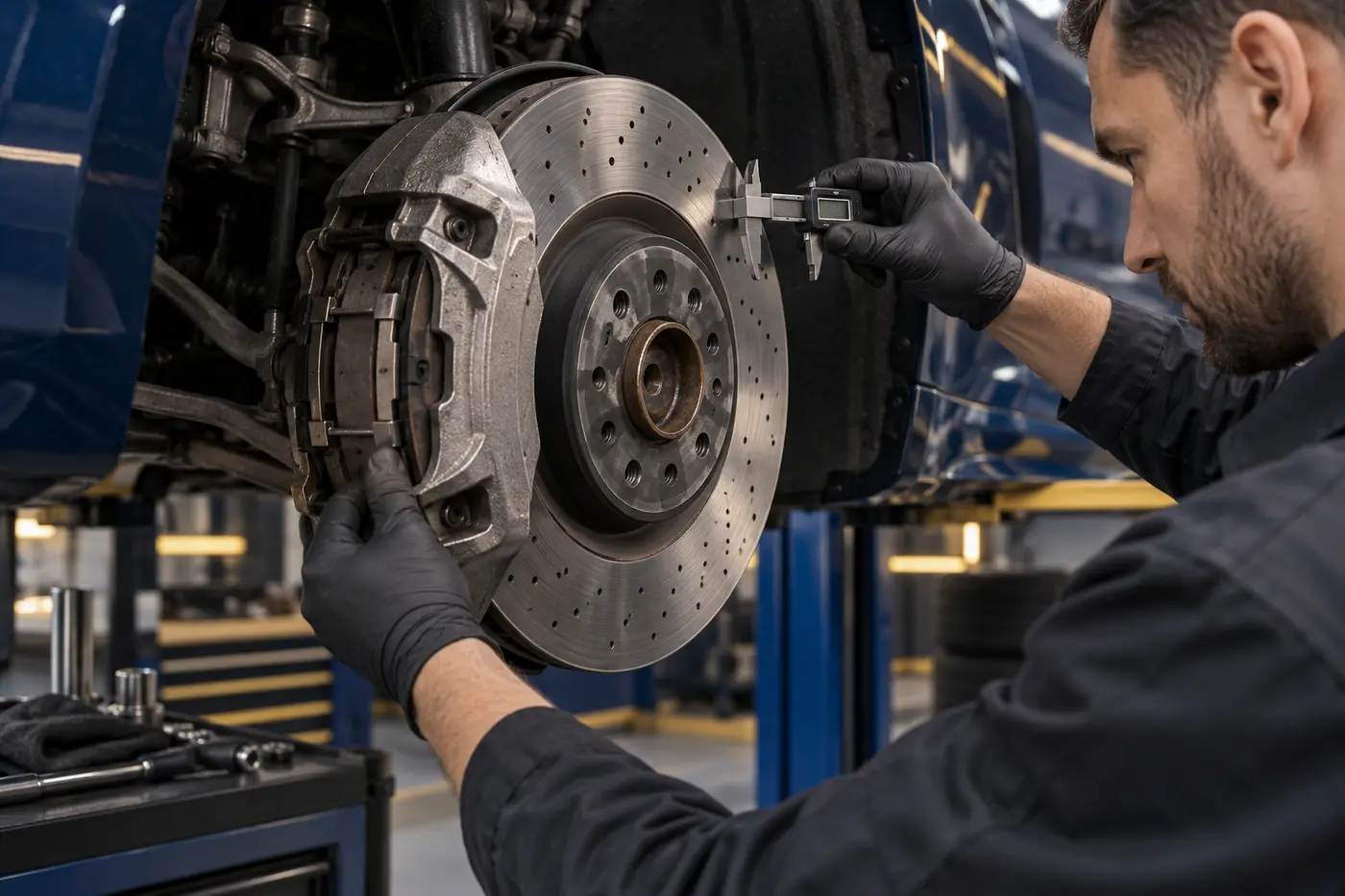
With the wheels removed when needed, we compare inner and outer pad wear, disc thickness and surface, caliper slide movement, piston and boot condition, hoses, hard lines, fluid level, leaks, and mounting hardware. Hub runout and nearby suspension play are considered when vibration or uneven wear is present.
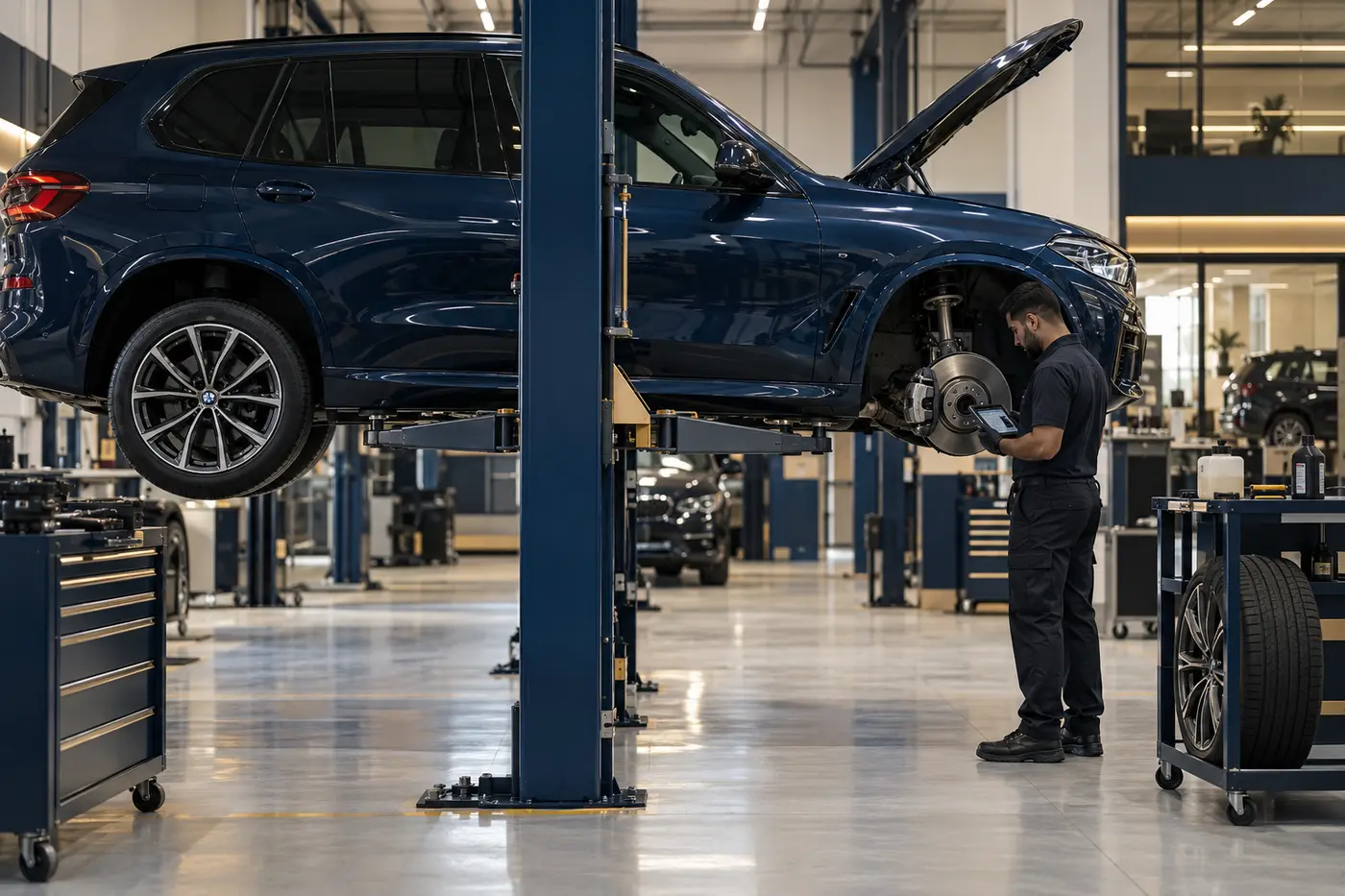
Electronic diagnosis can include BMW-compatible fault reading, wheel-speed comparison, pressure or switch data, voltage checks, wiring inspection, and parking-brake operation. A stored code identifies a system area, not automatically the part to replace. Deeper testing is explained before it becomes chargeable work.
When braking remains predictable enough for a road check, the technician compares pedal feel, pull, noise, vibration, ABS intervention, and the relationship between road speed and braking force. After repair, the relevant warnings, service indicators, fluid level, leaks, and stopping behavior are checked again.