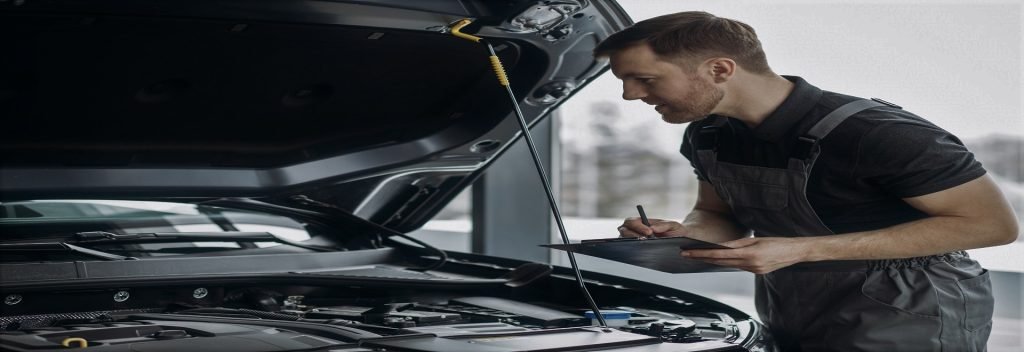
A car inspection in Dubai should match your purpose: an RTA test for a government transaction, a paid safety checklist for a car you own, or a pre-purchase report before buying. Auto Repair UAE offers a free initial visual review; the structured workshop safety check costs AED 150 to 300 before VAT, or AED 157.50 to 315 including 5% VAT.
- Buying a car? Request identity, history, scan, lift, road-test and written-report coverage.
- Renewing registration? Use an RTA-authorized testing center; a workshop report cannot replace its certificate.
- Tracing one fault? Choose the directed diagnostic test that answers it.
- Unsafe to drive? Arrange recovery before an inspection visit.
What does a car inspection cover?
A comprehensive car inspection in Dubai checks the vehicle’s safety, mechanical condition, electronics, body, underbody, fluids, tires, brakes, steering, suspension, cooling system, AC, diagnostic data, and road behavior. The exact scope should match your decision. A registration test, routine workshop check, fault diagnosis, and pre-purchase inspection are not the same service.
If you are buying a used car, the inspection should help you choose one of four actions: buy, negotiate, investigate further, or walk away. If you already own the car, it should separate an urgent safety problem from maintenance that can be planned.
Car inspection prices in Dubai
Price should follow scope. A short visual check cannot be compared with a lift inspection, full-module scan, road test, paint assessment, report, and repair-cost review. Ask what the fee covers before choosing by price alone.
The free initial inspection is a visual condition and symptom review only, excluding the booked safety checklist, measured or scan-based testing, lift or road-test work and a written inspection report; the AED 150 to 300 safety check pays for the structured checklist and recorded findings within its agreed scope.
| Inspection service | Before VAT / including 5% VAT | Typical scope |
|---|---|---|
| Workshop safety check | AED 150 to 300 before VAT AED 157.50 to 315.00 including VAT |
Booked safety checklist covering accessible tires, brakes, lights, fluids, leaks and basic functions, with recorded findings; advanced diagnostics are separate |
| Computer scan | AED 145 to 285 before VAT AED 152.25 to 299.25 including VAT |
Supported-module scan, available code and status review, and explanation of the next check; focused diagnosis is separate |
| Pre-purchase car inspection | AED 430 to 855 before VAT AED 451.50 to 897.75 including VAT |
Broader mechanical, electronic, body and underbody review, computer scan, road test where safe and permitted, and condition report; specialist battery, body and dismantling tests are separate |
| Luxury, performance, hybrid, or EV inspection | AED 500 to 950 before VAT AED 525.00 to 997.50 including VAT |
Deeper system coverage based on model and available diagnostic access |
| On-site inspection | AED 450 to 850 before VAT AED 472.50 to 892.50 including VAT |
Mobile assessment at the vehicle location; workshop-only tests are excluded |
Workshop ranges above exclude 5% VAT; the VAT-inclusive totals are shown beside them. The final price varies with vehicle type, location, scan access, test depth, lift time, report format and directed tests. Repairs, dismantling, compression tests, fluid analysis and manufacturer reports are separate unless included in writing. Government testing and transaction charges are outside these workshop prices.
Choose the inspection that answers your question
“Inspect my car” sounds simple, but it can mean several things. A buyer wants evidence before transferring money. A driver with steering vibration wants a cause. Someone renewing registration needs an RTA technical test. Buying the wrong inspection wastes time because the report may never answer the reason you booked it.
Routine safety inspection
Checks brakes, tires, lights, fluids, visible leaks, steering play, suspension wear, battery condition, cooling, and basic road behavior. Use it before a road trip or when maintenance history is unclear.
Pre-purchase inspection
Adds identity and history questions, body and paint checks, underbody access, scan data, a road test, repair-cost context, and a written decision report before you buy.
Fault diagnosis
Targets one symptom with measurements. It may require pressure testing, smoke testing, circuit checks, compression testing, data logging, dismantling, or a longer road test.
RTA technical inspection
Serves registration, renewal, transfer, export, or another government process. It confirms the applicable roadworthiness requirements but does not replace a buyer-focused condition report.
On-site vehicle check
Useful when the car is at a seller, office, home, or storage location. Lift access and some directed tests may still require a workshop visit.
Post-repair verification
Checks whether the reported fault was addressed, the warning has returned, fluids are stable, repairs are fitted correctly, and the vehicle behaves as expected.
RTA testing and workshop inspection are different
An RTA technical inspection answers a regulatory question. Is the vehicle eligible to pass the required test for the requested transaction? A workshop inspection answers a condition question. What is worn, leaking, damaged, overdue, intermittent, or likely to affect the owner’s next decision?
Passing a registration test does not prove that every control module is fault-free, that the AC performs after heat soak, or that an upcoming maintenance bill is small. In the same way, a workshop report does not issue an RTA test certificate.

What should a comprehensive car inspection include?
A useful checklist records evidence. “Brakes checked” is weak. Pad thickness, disc condition, fluid concerns, warning status, road-test behavior, and an estimated next step tell you more. The same rule applies across the car.
| Inspection area | Checks and evidence | Decision affected |
|---|---|---|
| Vehicle identity | VIN locations, plate and document match, model, year, specification, mileage evidence | Whether the car and records belong together |
| Engine and cooling | Cold start, leaks, fluid condition, smoke, noise, temperatures, fan operation, scan data | Overheating risk, repair depth, further tests |
| Transmission and drivetrain | Engagement, shifts, clutch behavior, leaks, mounts, vibration, supported fault data | Maintenance, diagnosis, repair, or walk-away risk |
| Brakes, tires, and wheels | Wear measurements, cracking, age, pressure, damage, pull, vibration, warning functions | Immediate safety work and near-term cost |
| Steering and suspension | Play, noise, bushes, joints, shocks, air suspension, ride height, alignment clues | Road safety, tire wear, handling, repair budget |
| Body and underbody | Paint readings where available, panel gaps, repair clues, corrosion, impact marks, fluid leaks | Accident questions, structural risk, resale |
| Electronics and AC | Battery and charging, lights, windows, seats, cameras, sensors, vent output, stored faults | Comfort, module faults, calibration, repair cost |
| Road test | Starting, acceleration, shifting, braking, tracking, temperature, noise, vibration | Whether static findings match real behavior |

A computer scan is evidence, not the whole inspection
A diagnostic scanner can read supported modules, stored trouble codes, warning status, and live data. That matters. Still, it cannot see a split tire sidewall, a poor body repair, worn suspension joint, coolant stain, bent wheel, or underbody impact by itself.
Codes also need context. A low-voltage event can trigger faults across several modules. A cleared code may not return until the next drive cycle. One stored fault may be historical while another is active now. The technician should compare scan results with battery voltage, physical condition, service records, symptoms, and the road test.
A clear dashboard is not a clean bill of health. Warning lights can be absent while pending, intermittent, or recently cleared faults remain.
See the computer diagnostic service scope when a warning or recurring symptom needs targeted testing.
How the inspection should happen step by step
-
Define the decision
State whether you are buying, renewing, tracing a fault, checking after repair, or planning a trip. Share symptoms, warning messages, known repairs, and service history.
-
Check identity and records
Match available documents with the car. Review service invoices, previous reports, mileage evidence, recall work, and seller claims where relevant.
-
Inspect the car cold
A cold start can reveal noise, smoke, starting delay, unstable idle, coolant pressure, or leaks that a warmed-up car may hide. Ask the seller not to warm it before a pre-purchase check.
-
Complete static and lift checks
Inspect accessible mechanical, safety, body, electronic, and underbody areas. Record measurements and photos for findings that affect safety or cost.
-
Scan and road test
Read supported modules, then test the car under conditions that can reproduce the concern without taking unsafe risks. Recheck relevant data afterward.
-
Turn findings into a decision
Separate urgent work, near-term maintenance, optional work, and tests that remain inconclusive. Add estimated repair costs and limitations to the report.
When should you stop driving and request recovery?
Some inspection findings can wait for a booked visit. Others should change what you do now. If the car has a braking fault, steering loss, a tire bulge, rapid coolant loss, severe overheating, oil-pressure warning, fuel leak, strong burning smell, repeated stalling in traffic, or an unstable wheel, continuing to drive can increase the danger or damage.
| What you notice | Possible concern | Safer next step |
|---|---|---|
| Red oil-pressure or temperature warning | Loss of lubrication or overheating | Stop safely, switch off, and arrange recovery |
| Brake pedal sinks or stopping distance changes | Hydraulic, friction, or assist fault | Do not continue normal driving |
| Tire bulge, exposed cord, or rapid pressure loss | Structural tire failure | Stop and replace or recover the vehicle |
| Light vibration with no warning | Wheel, tire, mount, driveline, or engine issue | Reduce speed and book inspection; stop if it worsens |
| AC weak but temperature remains stable | Climate-control fault | Workshop inspection can usually be scheduled |
This table cannot diagnose the vehicle. Conditions change quickly, and warning meanings vary by model. If control, braking, visibility, tire integrity, fuel leakage, or engine protection is in doubt, recovery is the safer choice.
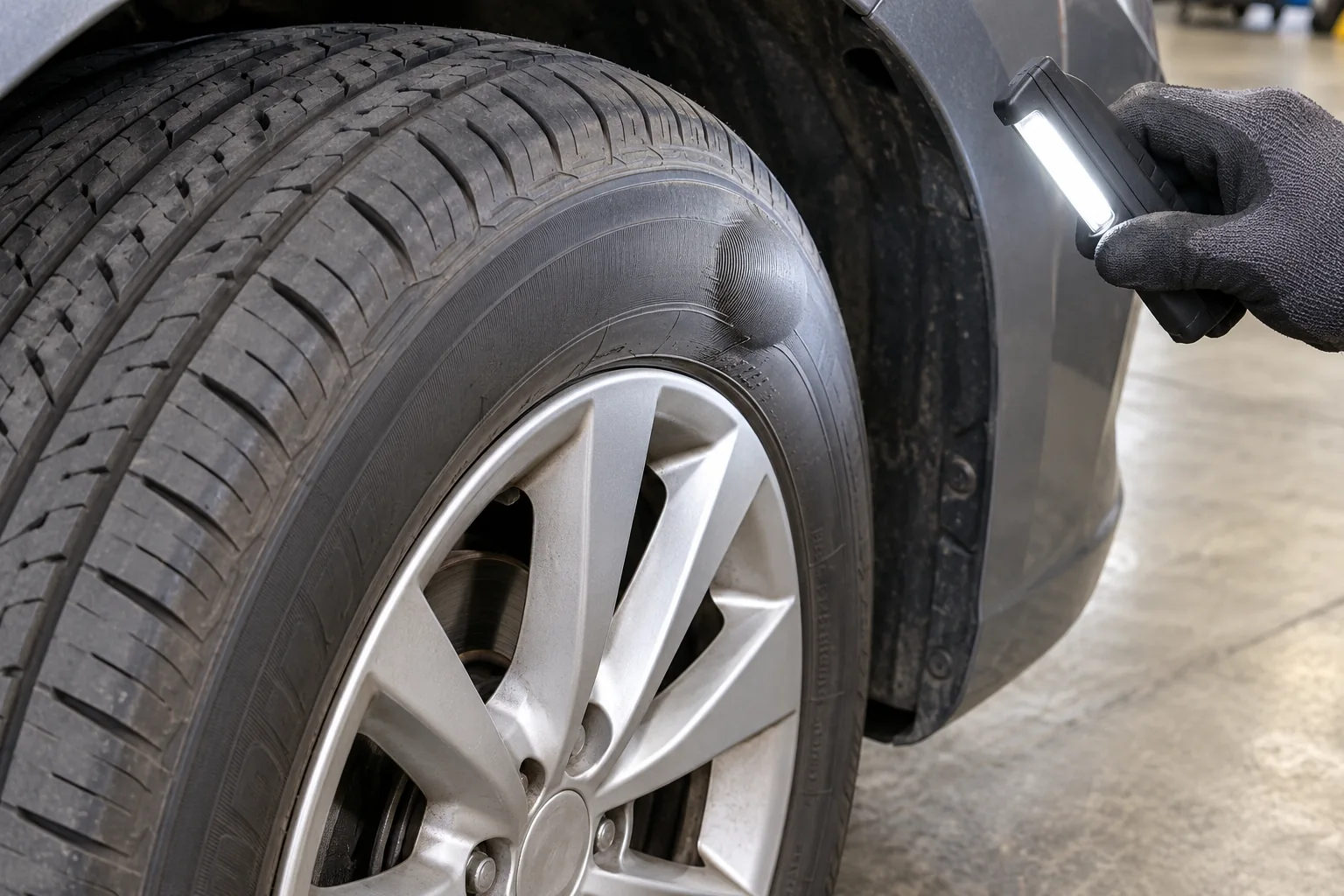
Check safely from outside the car
An outward sidewall bulge indicates structural tire damage and requires replacement. Do not continue driving on it or treat it as a puncture repair. Use a suitable spare only where it can be fitted safely according to the manual, or arrange recovery.
Leave lift checks, hot or moving components, brake measurements and electrical tests to the workshop. Never go under a car supported only by a jack. Do not open a hot coolant cap or touch high-voltage parts on a hybrid or electric vehicle.
What changes the car inspection cost?
- Vehicle type, model, year, and installed systems
- Workshop inspection or travel to the vehicle
- Basic scan or access to several control modules
- Lift time and underbody protection removal
- Paint-depth readings and body repair review
- Road-test length and symptom reproduction
- Hybrid or high-voltage system checks
- Compression, leak-down, pressure, smoke, or circuit tests
- Written report detail, photos, and repair estimates
- Seller access, fuel level, battery condition, and test restrictions
A cheaper inspection may be enough for a routine check on a car you know. It is less useful when buying a vehicle with no history, investigating overheating, checking flood exposure, or assessing a model with air suspension, driver-assistance sensors, hybrid hardware, or several networked modules.
Dubai conditions that deserve attention
Heat does not prove a part is bad, but it changes the inspection priorities. Batteries, cooling systems, AC output, tires, rubber mounts, hoses, seals, and interior electronics work under heat load. Test the AC after the cabin has been heat-soaked when possible. A five-minute check in a shaded area can miss weak cooling that appears in traffic.
Cooling system
Look for staining, pressure loss, fan faults, unstable temperature, weak caps, brittle fittings, and evidence of coolant mixing or repeated topping up.
Battery and charging
Measure battery condition and charging behavior. Low voltage can create starting trouble and fault codes across linked modules.
Tires
Check age, cracking, bulges, repairs, uneven wear, pressure, load and speed ratings, not only remaining tread depth.
Air conditioning
Record vent performance with ambient conditions. Check fans, pressures, stored faults, noises, leaks, and compressor behavior where the scope allows.
Dust and filters
Inspect air and cabin filtration, condenser blockage, intake paths, and seals. Dust can reduce airflow without creating a warning light.
Flood and water clues
Check odor, carpets, connectors, corrosion, module areas, drain paths, and inconsistent replacement parts. No single clue proves flood exposure.
Model, engine, and year can change the checklist
Two cars with the same badge may use different engines, transmissions, suspension, batteries, refrigerants, driver-assistance hardware, or software. The VIN, production date, market specification, engine code, and fitted options help define the correct inspection.
Turbo engines may need attention to boost control, oil leaks, cooling, and intake faults. Dual-clutch, CVT, torque-converter, and automated manual transmissions behave differently, so the road test and data review should match the unit. Air-suspension cars need ride-height and compressor checks. Four-wheel-drive systems add transfer cases, differentials, shafts, and tire-matching concerns.
Hybrid and electric cars need trained handling and suitable equipment. Where supported, check high-voltage fault memory, charging, thermal management, isolation status, battery reports, underbody protection, and prior repair evidence. A general combustion-engine checklist is not enough.
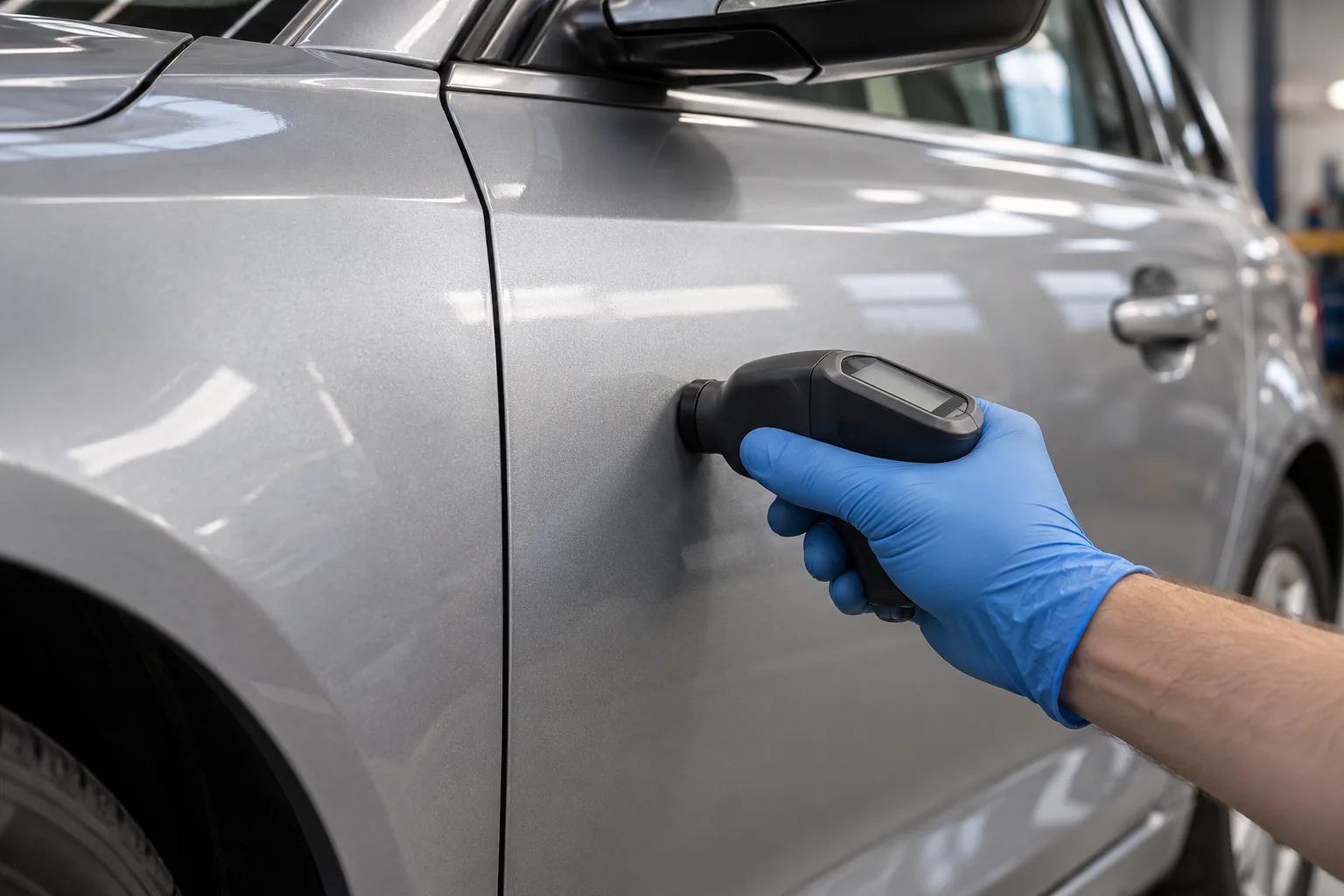
For a premium used vehicle, the used luxury car buying checklist adds ownership-budget and history questions. Paint-depth readings should be compared across suitable panels with the right instrument; a repaint alone does not establish structural damage.
Common inspection mistakes and misdiagnoses
Calling every scan code a failed part
A code identifies a monitored condition, not always the component to replace. Voltage, wiring, leaks, software, and linked faults can produce similar results.
Judging mileage by interior wear
Wear is a clue. Service invoices, inspection history, stored module data, and dated records provide stronger evidence when available.
Skipping the cold start
A warm engine may hide starting delay, smoke, chain noise, unstable idle, or cooling-system pressure behavior.
Accepting an RTA pass as a purchase report
The two checks serve different purposes. A roadworthy vehicle can still need maintenance or repairs that affect the deal.
Pricing repairs before diagnosis
A symptom can have several causes. Use a range with stated assumptions until measurements identify the repair scope.
Ignoring what could not be tested
No road test, no lift access, low fuel, a flat battery, locked modules, or seller restrictions should appear as report limitations.
How to prepare before the inspection
For your own vehicle, send the model, year, mileage, symptom, warning message, and when the problem occurs. Bring service records and previous repair invoices. Do not clear codes or disconnect the battery before the visit unless safety requires it.
For a car you may buy, ask the seller to allow a cold start, scan, road test, lift check, and direct delivery of the report to you. Confirm who pays the inspection fee and whether a deposit is refundable if the report finds a stated problem. Keep important conditions in writing. If the vehicle is coming from the United States, review the USA-to-UAE car shipping cost and document guide before paying the seller.
- VIN or chassis number and registration details
- Make, model, year, mileage, and market specification
- Service history, invoices, and previous inspection reports
- Warning messages, photos, videos, or symptoms
- Seller location and permission for the required checks
- Your purchase deadline or planned travel date
How to read the inspection report
A report should not bury every finding in one list. Ask for categories that support action. Urgent safety items come first. Active mechanical or electronic faults follow. Then list near-term maintenance, monitored items, cosmetic concerns, and tests that remain incomplete.
| Report category | What it means | What to do |
|---|---|---|
| Stop or recover | Driving may affect control, safety, or major component protection | Do not continue normal driving; arrange the stated next step |
| Repair before purchase | Confirmed fault materially affects cost, use, or safety | Request a scoped estimate and repair evidence |
| Investigate further | Evidence suggests a problem but the cause or depth is not confirmed | Approve the directed test before agreeing on price |
| Plan maintenance | Wear or service is due but no immediate stop condition was found | Add the cost and timing to the ownership plan |
| Monitor | Observation has not reached a repair threshold | Record baseline condition and review at the stated interval |
For a purchase, compare the asking price plus immediate repairs plus overdue maintenance. That adjusted total is closer to what the car will cost you. A seller discount is useful only when it covers the measured work and leaves room for uncertainty.
Use the car service cost guide to separate scheduled maintenance from repairs that need diagnosis. Add only work that applies to the inspected vehicle.
When should you walk away from a used car?
Minor wear is negotiable. Unclear identity, structural repair without evidence, missing airbags, warning-light tampering, repeated overheating, water-damaged electronics, major drivetrain faults, mileage conflicts, or a seller who blocks reasonable inspection access deserve more caution.
Sometimes the right answer is not “never buy it.” It is “do not buy it yet.” A directed body measurement, compression test, battery-health report, manufacturer scan, alignment reading, or repair invoice may resolve the uncertainty. If the seller will not allow the test, you are being asked to purchase the uncertainty too.
When not to buy a comprehensive inspection
Do not pay for a large package when a specific test will answer the question. A tire puncture needs tire inspection. A known battery complaint may need a battery and charging test. A current RTA certificate does not need to be purchased from a workshop. Match the spending to the decision.
Key takeaway
A useful inspection ends with a decision
A car inspection in Dubai should do more than produce a checklist. Define why you need the inspection, choose a scope that can answer that question, ask for measurements and limitations, and turn each finding into a safety, repair, maintenance, or buying action. For a used car, inspect before paying a non-refundable deposit whenever possible. For a vehicle you own, stop driving when braking, steering, tire integrity, fuel leakage, overheating, or engine protection is in doubt.
Book a car inspection in Al Quoz 4
Auto Repair UAE in Al Quoz 4 offers a free initial visual condition and symptom review. The structured safety check, pre-purchase report and diagnostic testing are paid services with scope and price agreed before work starts. Free pickup and delivery are available; mobile-van assessments have separate on-site fees.
Send the vehicle model, year, mileage, inspection purpose, symptom, and preferred location. VIN, records, photos, and warning messages help, but they are not required to start the conversation.
Car inspection questions
How much does a car inspection cost in Dubai?
The structured workshop safety check is AED 150 to 300 before VAT, or AED 157.50 to 315 including 5% VAT. A pre-purchase inspection is AED 430 to 855 before VAT, or AED 451.50 to 897.75 including VAT. The free initial visual review does not include either paid package or its report. Vehicle, location, access and extra tests change the price.
Does the free inspection include a written safety report?
No. The free initial inspection is a visual condition and symptom review. The paid safety checklist includes recorded findings within the agreed scope; a full pre-purchase decision report is a separate inspection package. Agree on scan, lift, road-test and report coverage before authorizing paid work.
Is an RTA test the same as a pre-purchase inspection?
No. The RTA test serves a regulatory process. A pre-purchase inspection evaluates condition, repair exposure, service gaps, body clues, diagnostic data, and whether you should buy, negotiate, investigate, or walk away.
How long does a comprehensive car inspection take?
Time depends on the vehicle and scope. A routine check may take less than a detailed pre-purchase inspection with a cold start, scan, lift check, road test, photos, and report. Directed tests or intermittent faults require more time.
Can a car pass inspection and still need repairs?
Yes. A regulatory pass does not mean every maintenance item, intermittent fault, AC issue, module code, or future repair cost has been assessed. Read the purpose and limits of the report.
Should I inspect a new-looking used car?
Yes, if the purchase risk justifies it. Paint finish and a clean cabin do not confirm service history, module faults, underbody condition, previous repair quality, cooling performance, or mileage evidence.
Can an inspection guarantee that the car will not fail later?
No. It records accessible evidence at a point in time. Concealed damage, intermittent faults, parts that require dismantling, and future failure cannot be guaranteed. The report should state what was not tested.
Can you inspect a car at the seller’s location?
A dedicated on-site assessment can be arranged. The available checks depend on access, safety, permission, road-test conditions, power, lighting, and equipment. Lift work and some directed tests may require the Al Quoz 4 workshop.
What should I send before booking?
Start with the model, year, mileage, purpose, symptom, and preferred location. VIN, service records, warning photos, seller details, and videos are useful follow-up information but should not prevent you from requesting an inspection.
What if the seller refuses a scan or lift inspection?
Ask why and record the limitation. If those checks are necessary to assess the vehicle’s risk, do not replace evidence with assumptions. Pause the deal or choose a vehicle whose condition can be verified.