
Your AC is running, but the air feels warm before you reach the next traffic light. In Dubai heat, that quickly becomes more than an inconvenience. Common car AC problems include warm air, weak airflow, uneven cooling, smells and water inside the cabin. Weak cooling can come from low refrigerant, poor condenser airflow, a blocked cabin filter, an electrical control fault, a blend-door problem or compressor damage. Recharging the system without finding the cause can waste money and allow a leak or mechanical fault to continue.
The right first step is measurement. A technician should compare vent temperature, ambient temperature, refrigerant pressures, compressor command, condenser fan operation and airflow. Those results separate an airflow problem from a refrigerant-circuit or control problem.
9 common car AC problems and what they can mean
Warm air from the vents
Possible causes include lost refrigerant, compressor control failure, incorrect pressure, poor condenser cooling or an internal temperature-door fault. A pressure reading alone does not confirm the failed part.
Cooling fades while idling
If cooling improves once the car moves, inspect condenser airflow, cooling fans, condenser contamination and system pressure under idle load. Dubai traffic makes this pattern easy to notice.
Weak airflow
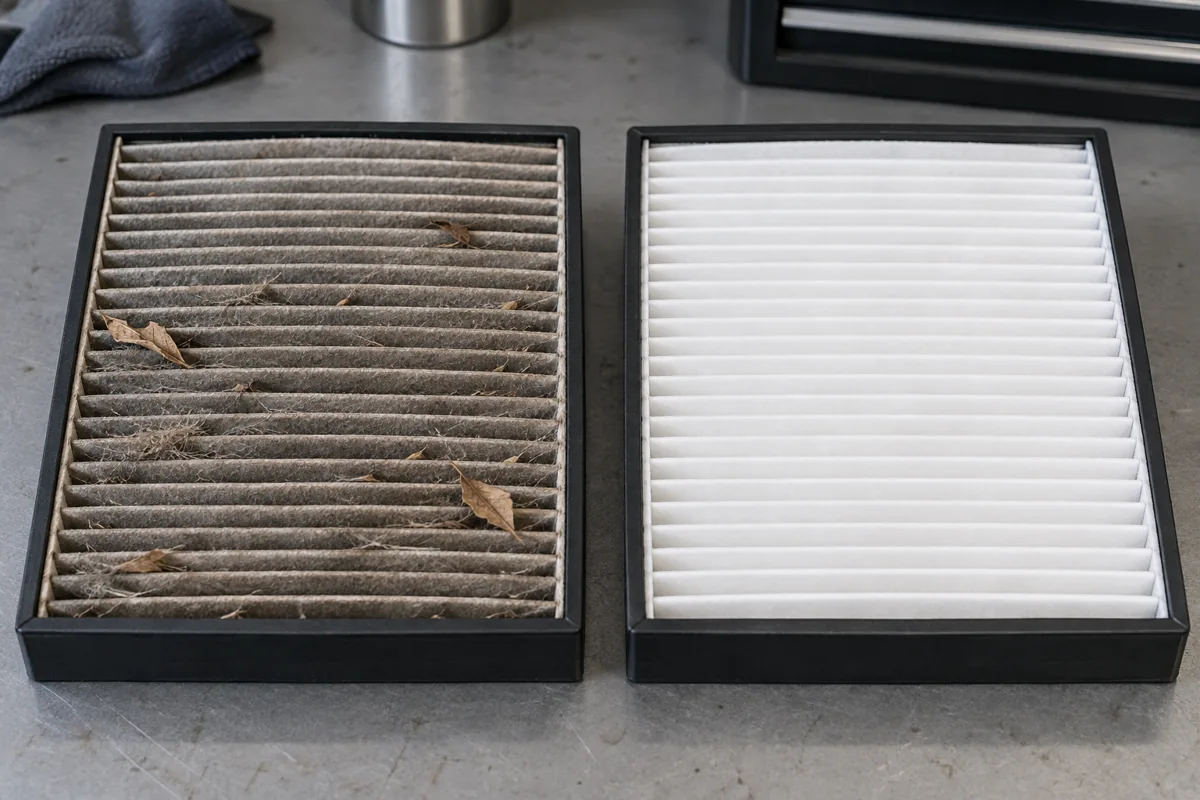
A blocked cabin filter, weak blower motor, failed resistor or control module, damaged duct or frozen evaporator can reduce air volume. Adding refrigerant will not fix a blocked airflow path.
Cold on one side only
Dual-zone imbalance can point to a blend-door actuator, position sensor, calibration problem or refrigerant distribution issue. Scan data and actuator testing help avoid dashboard disassembly by guesswork.
Bad smell after startup
Moisture and contamination around the evaporator or a neglected cabin filter can create a musty odor. A burning or chemical smell needs a different response and should not be covered with fragrance.
Clicking, rattling or grinding
Noises may come from the blower, debris, an actuator, compressor drive, pulley or internal compressor wear. Switch the AC off if a harsh mechanical noise begins and arrange inspection.
AC cycles repeatedly
Rapid cycling can follow abnormal pressure, a sensor or switch fault, evaporator temperature control, low charge or excessive system load. Cycling behavior must be judged against the vehicle design.
Water inside the cabin
A blocked or displaced evaporator drain can wet the carpet. Water can also enter through body drains or seals, so confirm the source before treating it as an AC leak.
AC does not switch on
Check power supply, fuses, relays, pressure data, control requests, compressor command and relevant fault codes. Modern variable compressors may not use a visible clutch.
How a car AC system removes cabin heat
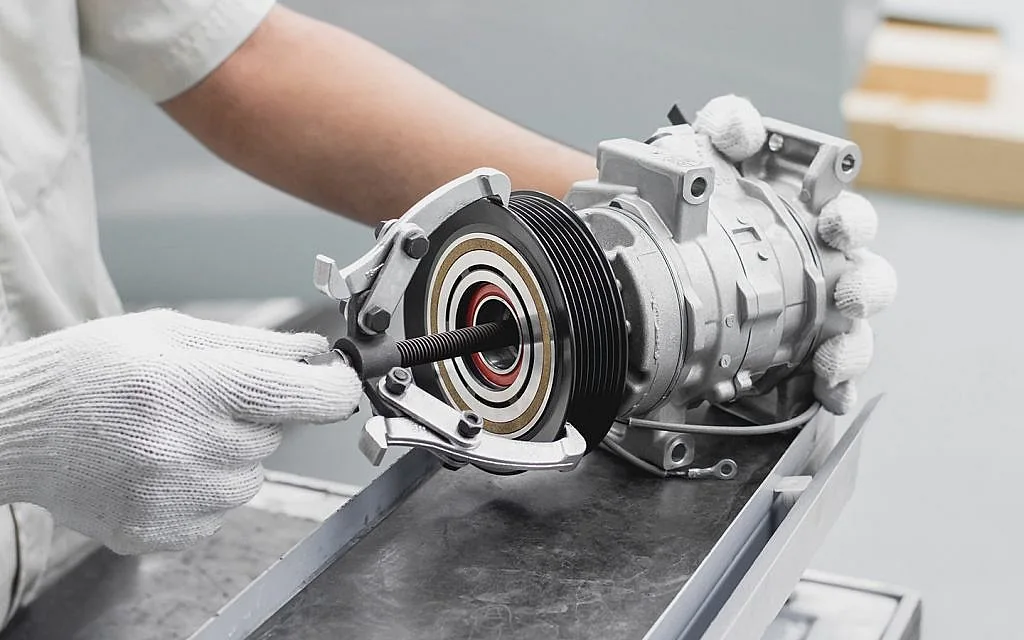
The compressor moves refrigerant through the circuit. The condenser releases heat to outside air. The expansion device controls refrigerant flow, while the evaporator absorbs heat from air before the blower sends that cooled air into the cabin.
The system also manages pressure, temperature, moisture and lubricant. That is why replacing one part without checking contamination, oil balance and the reason it failed can lead to repeat damage. The compressor circulates refrigerant so the system can move cabin heat to the outside air.
Hybrid and electric vehicles may use electrically driven compressors and vehicle-specific insulating oil. Their service procedures are not interchangeable with conventional belt-driven systems.
Can you keep driving when the car AC fails?
| What you notice | Driving decision | Next step |
|---|---|---|
| AC is warm but the engine temperature is normal | Driving may be possible only if the vehicle manual permits it, there are no other warnings, and visibility and cabin heat remain manageable. | Book diagnosis before approving a recharge or part replacement. |
| Engine temperature rises with AC on | If the vehicle shows overheating or an abnormal rising temperature, stop safely and switch off. Follow the manual before restarting. | Check cooling fans, condenser airflow and engine cooling before further driving. |
| Grinding, smoke or burning smell | Stop safely and switch off for smoke or a burning smell. For grinding alone, stop using the AC and arrange assessment. | Arrange inspection or recovery. Do not keep cycling the system. |
| Water dripping under the car | Clear water after AC use can be normal condensate. | Investigate if liquid has color, odor, oily texture or appears inside the cabin. |
| Windshield will not defog | Visibility can become unsafe in humid conditions. | Use safe ventilation and stop if the glass cannot be kept clear. |
Hybrid and EV caution. Some vehicles share refrigerant-based cooling with the traction battery. Follow any battery, thermal-management or reduced-power warning. Failed cabin cooling is not automatically safe to ignore on these vehicles. Never leave a child or pet in a parked car while investigating an AC fault.
What technicians should test before replacing parts
A useful diagnosis begins with the customer’s exact complaint. Does the AC fail only at idle, after twenty minutes, on one side, or after the car has been parked in the sun? Reproducing that condition narrows the search.
Confirm the symptom. Measure ambient and vent temperatures at a known fan setting.
Inspect airflow. Check the cabin filter, blower output, vents and condenser cleanliness.
Read pressures and temperatures. Interpret both sides of the circuit under the correct operating conditions.
Check commands. Read compressor request, pressure sensor data, fan operation and relevant fault codes.
Find leaks. Inspect likely joints and components using a suitable detection method.
Check contamination. Internal debris or incorrect oil changes the repair scope after compressor damage.
Low refrigerant is not a complete diagnosis. Refrigerant does not normally disappear because it is “used up.” If charge is low, the service should include a leak assessment appropriate to the vehicle and the size of the loss.
Common car AC misdiagnoses
“It needs gas” is the most common shortcut. A recharge may temporarily restore cooling, but it cannot repair a leaking seal, damaged condenser, weak fan or compressor-control fault.
“The compressor is bad” can also be premature. The control module may withhold compressor operation because pressure, temperature, voltage or another permission condition is outside range. On variable-displacement systems, the compressor can rotate without producing the expected pressure change.
A musty smell and a burning smell need different investigations. Do not assume every odor means an evaporator leak. Smoke, a burning smell or exhaust entering the cabin requires a safe stop and assessment.
Confirm the odor source, drain condition, filter, evaporator contamination and any water entry first.

What AC diagnosis and repairs can cost in Dubai
These are our current planning ranges for the stated work. The first price column excludes VAT; the second includes 5% VAT. The final quote depends on the vehicle, refrigerant, parts, access and confirmed fault. A “+” means complex work can exceed the upper figure.
| Work | AED before VAT | AED including 5% VAT | Scope and limits |
|---|---|---|---|
| Advanced AC diagnosis | 145 to 430 | 152.25 to 451.50 | Focused temperature, pressure, airflow, electrical or fault-data checks after the initial inspection. |
| Measured refrigerant service | 240 to 810 | 252.00 to 850.50 | Recovery and recharge to the specified refrigerant mass, with output checks when the system is suitable. Leak repairs are separate. |
| Accessible leak or electrical repair | 335 to 1,715 | 351.75 to 1,800.75 | Confirmed seal, valve, hose, sensor, relay or wiring work. The part and access determine scope. |
| Condenser replacement | 855 to 3,335 | 897.75 to 3,501.75 | Compatible condenser, installation, seals, refrigerant service and final testing. |
| Compressor-related repair | 1,430 to 6,190+ | 1,501.50 to 6,499.50+ | Compressor and confirmed protection or cleaning work, refrigerant and final checks. Extensive contamination can raise the total. |
| Evaporator replacement | 1,715 to 7,145+ | 1,800.75 to 7,502.25+ | Confirmed leaking evaporator, cabin access, seals, recharge and verification. |
The free initial workshop check covers an initial assessment and advice on the next test. It does not include advanced diagnosis, refrigerant recovery or dismantling. Any paid testing is explained before work begins. Cabin filters, blower motors and blend-door actuators need a vehicle-specific quote; they are not included automatically in the refrigerant-service price.
Check the complete scope. Ask the quote to identify parts, labor, refrigerant, oil, seals, leak verification and the VAT-inclusive total. Compressor work may also require a dryer, condenser, expansion device or suitable flushing, depending on the failure. Do not add separate rows together unless the quote confirms they are separate charges.
What you can check yourself
You can confirm the climate settings, compare fan speeds, inspect the cabin filter if it is safely accessible, look for debris blocking the condenser, and note when the symptom appears. Make under-hood visual observations only with the vehicle fully switched off and cool. Keep hands and tools away from fans, belts and hot parts; an electric fan may start automatically. Leave running-system checks to a technician.
Do not release refrigerant, bridge pressure switches, force a compressor clutch, open charged lines or add an unknown refrigerant-and-sealant product. A single pressure gauge on a refill can does not show the full operating condition. Too much charge can also reduce performance and raise system pressure.
On hybrids and EVs, keep away from high-voltage components and use the manufacturer procedure. Compressor oil compatibility can be critical to electrical insulation.
Prevent a repeat cooling problem
Follow the vehicle’s filter and AC care guidance, keep accessible air intakes clear, and investigate cooling changes before they become a complete failure. A scheduled service cannot repair an active refrigerant leak or a failed fan.
For routine care, inspection timing and what servicing can prevent, use our separate car AC maintenance guide. This symptom guide focuses on a problem that is already present.
When not to approve a major AC repair yet
Do not approve a compressor solely because the air is warm. Do not approve an evaporator solely because the cabin smells musty. Do not accept repeated recharges when no leak route has been discussed.
Ask for the symptom, measured findings, failed component, cause of failure, included parts and the consequence of delaying work. When a repair estimate includes dashboard removal or contamination cleanup, a second diagnosis may be reasonable before authorizing it.
Repair may also be unnecessary when the issue is an incorrect setting, heavily blocked filter, temporary control fault or normal water drainage. The aim is not to sell the largest job. It is to restore cooling by correcting the confirmed fault.
How Dubai conditions change the diagnosis
A vehicle can appear to cool normally during an early-morning inspection and struggle after sitting outside at midday. Ask for the test to reflect the condition that causes the complaint. Cabin heat soak, low road speed, condenser contamination and fan performance all affect the load placed on the system.
If cooling fades only in traffic, compare the result with the vehicle moving. If it fades after twenty or thirty minutes, check for evaporator icing, heat-related electrical failure, pressure changes and compressor control. If the rear cabin stays warm, compare front and rear airflow, auxiliary evaporator operation where fitted, and the condition of long refrigerant lines on larger SUVs.
Dark glass tint cannot repair an AC fault. Legal, suitable heat-rejection measures can reduce cabin load, but weak vent airflow, poor condenser cooling and low refrigerant still require diagnosis. Likewise, setting the temperature lower does not make a failing system produce more cooling capacity.
Repair, clean or replace the AC component
Clean or service
A blocked cabin filter, contaminated condenser face, dirty evaporator area or obstructed drain may respond to correct cleaning or service. Cleaning is suitable only when the component remains physically sound.
Repair the fault
Some hoses, electrical connectors, wiring, seals or accessible leaks can be repaired without replacing the main component. The estimate should state the leak location and how the repair will be verified.
Replace the component
Replacement becomes reasonable when a compressor has internal damage, a condenser or evaporator leaks beyond practical repair, an actuator has failed mechanically, or the part cannot meet its intended function after testing.
A compressor failure can change the whole job. If internal debris has entered the circuit, simply installing another compressor may not be enough. Depending on the vehicle and contamination, the repair plan can include lines, condenser, receiver dryer or accumulator, expansion device, flushing of suitable components, correct oil and an exact refrigerant charge. Ask what caused the failure and how the new part will be protected.
Refrigerant and oil must match the vehicle
Vehicles can use different refrigerants, service connections, charge amounts and compressor oils. The under-hood label and manufacturer information should control the service. Similar-looking ports or a familiar model name are not enough.
Mixing refrigerants or using a universal oil can affect performance, recovery equipment and component life. Sealant products can also complicate later service. The system should be recovered and charged by mass with equipment suitable for the specified refrigerant.
Hybrid and electric compressors require extra care because the oil may also support electrical insulation. A conventional oil, contaminated equipment or an incorrect procedure can create a high-voltage safety problem. This is one reason a workshop should identify the exact powertrain before connecting AC equipment.
Record the pattern before the appointment
Note whether the air is warm with strong airflow or whether very little air comes out. Record idle versus moving, first startup versus a longer drive, left versus right vents, and any noise, smell or warning. Share the make, model, year and previous refrigerant or compressor work. These details help select the first test.
If sound is the main complaint, use our car AC noise diagnosis guide for clicking, rattling, hissing and grinding patterns.
Test the AC before paying for a recharge or major part
Common car AC problems can share the same symptom. Confirm airflow, temperatures, pressures, fan operation, compressor command and leak evidence before choosing a repair. Ask how the result will be checked under the conditions that caused your complaint.
Arrange AC diagnosis in Al Quoz 4
Share the vehicle details and cooling pattern to discuss the right inspection. See our car AC repair service in Dubai for workshop scope and current prices. Mention overheating, smoke or a burning smell before traveling so the need for recovery can be considered.
Questions about car AC problems
Why does my car AC cool while driving but not at idle?
Reduced condenser airflow is one possibility, especially if a cooling fan is weak or not operating. System pressure, refrigerant charge and compressor control can also cause the pattern, so test it at idle before replacing parts.
Does weak cooling always mean low refrigerant?
No. Weak cooling can come from airflow restriction, fan failure, sensor data, blend doors, compressor control or an incorrect charge. If refrigerant is low, the reason for the loss still needs attention.
Is water dripping under the car after AC use normal?
Clear water beneath the evaporator drain can be normal condensation. Water inside the cabin, colored fluid, oily residue or a sweet smell needs investigation.
Why is one side of the cabin warmer?
A blend-door actuator, calibration issue, temperature sensor or refrigerant distribution problem can create side-to-side differences. Scan data and temperature measurements help identify the route.
Can I use a DIY AC recharge can?
It is not recommended when the system condition and correct charge amount are unknown. A refill can may hide a leak, introduce sealant, mix refrigerants or overcharge the circuit.
How long should a car AC repair take?
Diagnosis or a basic service may take hours. Evaporator replacement, compressor contamination cleanup or dashboard access can require more time. The estimate should state the testing and repair scope.
Should I switch off the AC if it makes a grinding noise?
Yes. Stop using the AC and arrange inspection. Continued operation can spread damage if the compressor, pulley or another driven component is failing.