Independent Italian performance car support
Maserati Repair and Service in Dubai
Warning lights, unusual noise or a service due? Book Maserati diagnostics, maintenance and repair at our Al Quoz 4 workshop in Dubai. Start with a free initial workshop inspection and a written estimate before paid work. Free pickup and delivery are available by arrangement.
Free initial inspectionOn-site inspection: fee confirmed before dispatchFree pickup and delivery by arrangement
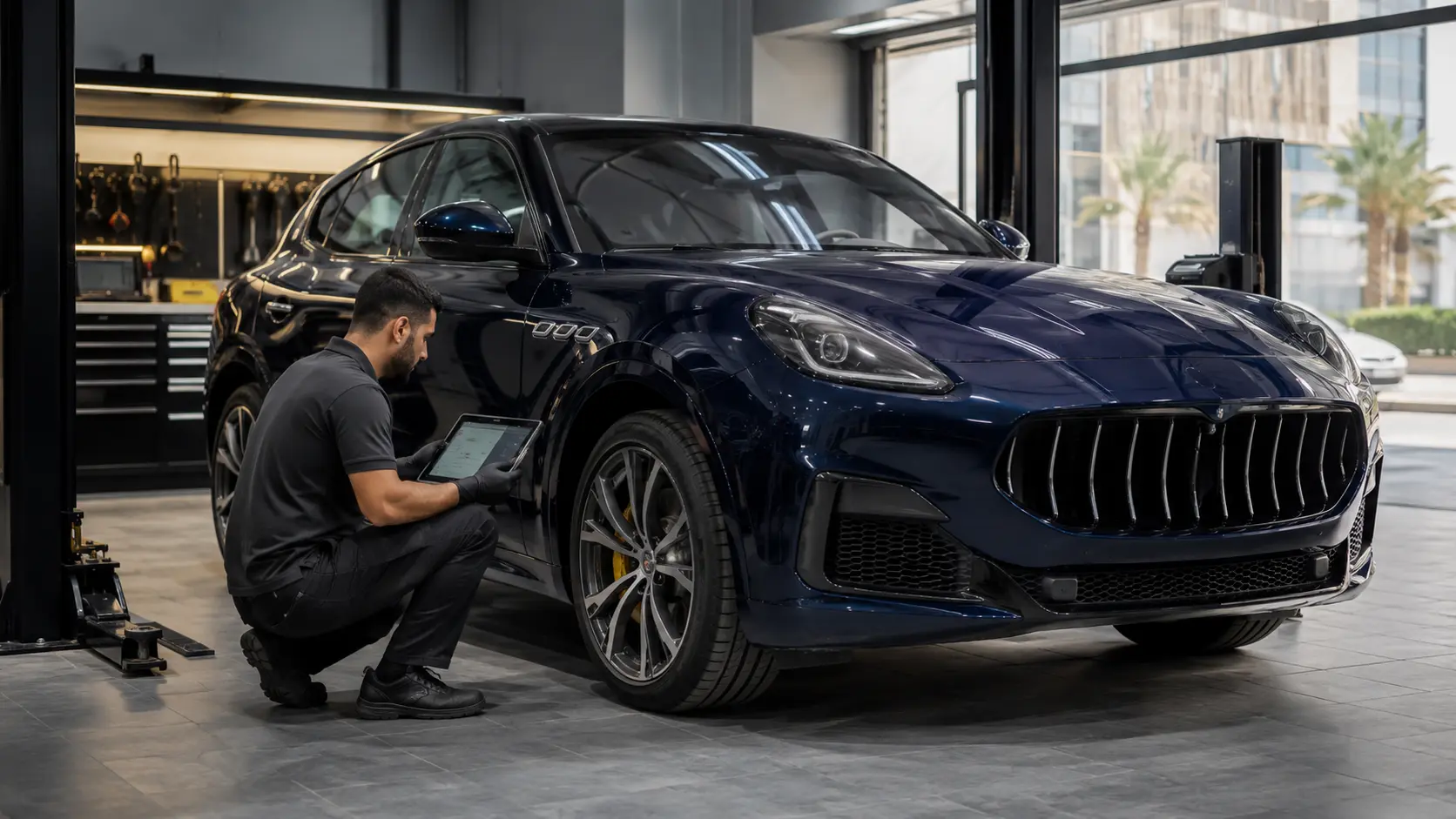
Symptom-led intake
What Your Maserati Symptoms Can Mean
A Maserati warning, vibration, leak or change in performance can have several causes. Tell us what the car is doing and when it happens. We start with the symptom, confirm the affected system and only recommend parts after the evidence supports the repair.
Before repair begins, the written quote should explain the finding, recommended work, parts option, exclusions and anything that may change after access or further testing.
- A warning appears
- Photograph the complete dashboard message and note whether it clears after restarting. A stored fault can show which system reported a problem, but power supply, wiring, sensor readings and physical condition still need to be checked before a component is condemned.
- The engine runs differently
- Describe hesitation, rough idle, smoke, reduced response, unusual sound or increased temperature. The route may include intake, ignition, fuel, cooling, lubrication or control checks. Replacing the first named part without reproducing the behavior can waste time and hide the actual cause.
- The ride has changed
- Clunks, pulling, uneven height, steering vibration and tire wear should be assessed together. Wheel condition, tire age, alignment, bushes, joints, dampers and air-suspension hardware can produce overlapping symptoms, especially after a pothole strike or earlier chassis work.
- Shifts feel abnormal
- Note the selected mode, road speed, temperature and whether the issue is delayed engagement, a harsh change, flare, shudder or driveline knock. Fluid condition, mounts, control data and mechanical wear lead to different recommendations.
- The battery has been low
- Low system voltage can create several warnings at once. A battery test is useful, but charging output, current draw, terminals, grounds and the history of storage or short trips may matter before new modules or sensors are discussed.
- Cooling has weakened
- Report engine temperature as well as cabin cooling. In Dubai heat, radiator airflow, fans, fluid level, leaks and air-conditioning heat rejection can interact. Stop driving if a serious temperature warning or visible coolant loss develops.
Maserati Repair Services in Dubai
Choose the Maserati service closest to your concern. The inspection confirms the fault, suitable parts and approved repair scope.
Maintenance and electrical
Body and interior
Planning cost guide
Estimated Maserati Service and Repair Prices in Dubai
Use these ranges to plan the first budget for a common Maserati job. They are not low starting prices for an undefined repair. The written quotation confirms the exact work and parts after inspection.
| Service or issue | Estimated price | Usually included | What can change the price |
|---|---|---|---|
| Advanced diagnostics | AED 275 to 675 | System scan, live-data review and focused testing after the free initial inspection | Intermittent faults, wiring access, programming or dismantling |
| Oil and filter service | AED 950 to 1,650 | Correct-grade engine oil, oil filter, reset and standard condition checks | Engine size, oil quantity, additional filters and underbody access |
| Major scheduled service | AED 1,850 to 3,450 | Oil and filter service plus the agreed inspection and scheduled filter or fluid items | Model interval, spark plugs, fluids, parts specification and overdue work |
| Brake pads per axle | AED 1,250 to 2,850 | Road-car brake pads and standard installation labor | Disc wear, sensors, calipers, performance materials and model specification |
| Battery replacement and setup | AED 875 to 1,750 | Battery test, compatible replacement and required registration or reset | Battery type, low-voltage faults, coding and access |
| AC diagnosis or recharge | AED 325 to 775 | Performance check, pressure review and recharge when the system is suitable | Refrigerant type, leaks, compressor, condenser or dashboard access |
| External oil or coolant leak repair | AED 750 to 3,400 | Repair of an accessible confirmed hose, seal or related external source | Leak location, cleaning, pressure testing, parts and component removal |
| Transmission fluid and filter service | AED 1,850 to 3,750 | Applicable fluid, filter or pan service and basic adaptation check where supported | Transmission type, fluid quantity, adaptations, leaks and internal faults |
Price note: These are indicative planning Dubai ranges, not fixed quotations. Final cost varies by the exact Maserati model, year and specification, the reported issue, diagnostic findings, fault severity, access and labor time, parts choice and availability, fluids, programming or calibration, and current supplier pricing. The range covers the listed scope only. Additional work and any applicable VAT are itemized in the written quotation.
When to Stop Driving Your Maserati
Stop safely
Do not continue with an oil-pressure warning, overheating, impaired braking or steering, severe wheel vibration or significant fluid loss. Do not open a hot cooling system.
Arrange safe collection
Tell us whether the vehicle can start, roll, steer and select neutral. Follow the exact vehicle recovery instructions. Photograph warnings only when safely parked.
Electric-vehicle damage
For an electric variant, do not charge or touch damaged high-voltage parts after an impact or unusual heat. Move away and contact emergency services for smoke, fire or immediate danger.
Maserati Inspection and Handover Checks
Checks follow the reported concern, from the first inspection to verification after repair.
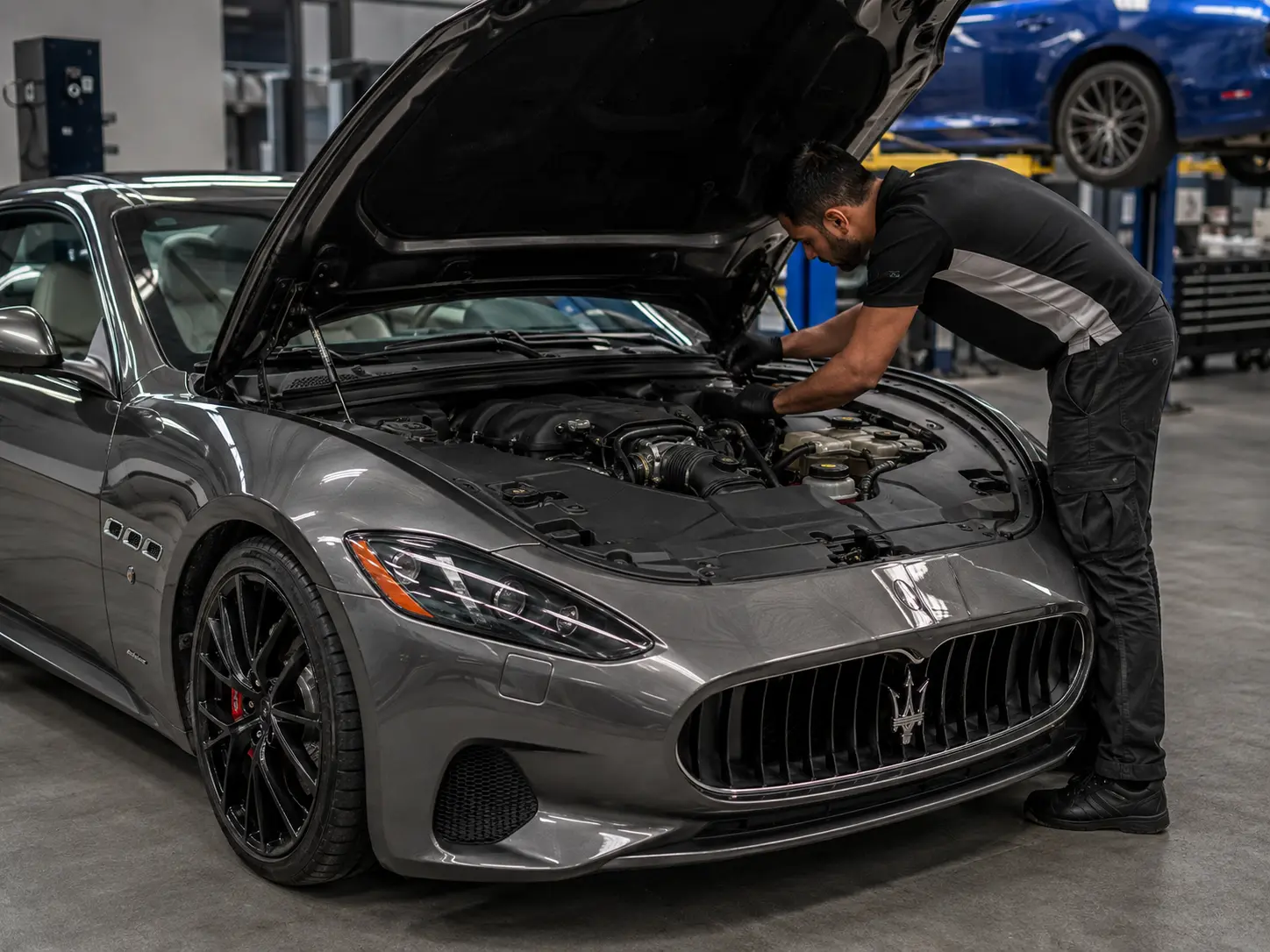
Inspect the condition
Visible leaks, connectors, fluid condition and previous work guide the next test.
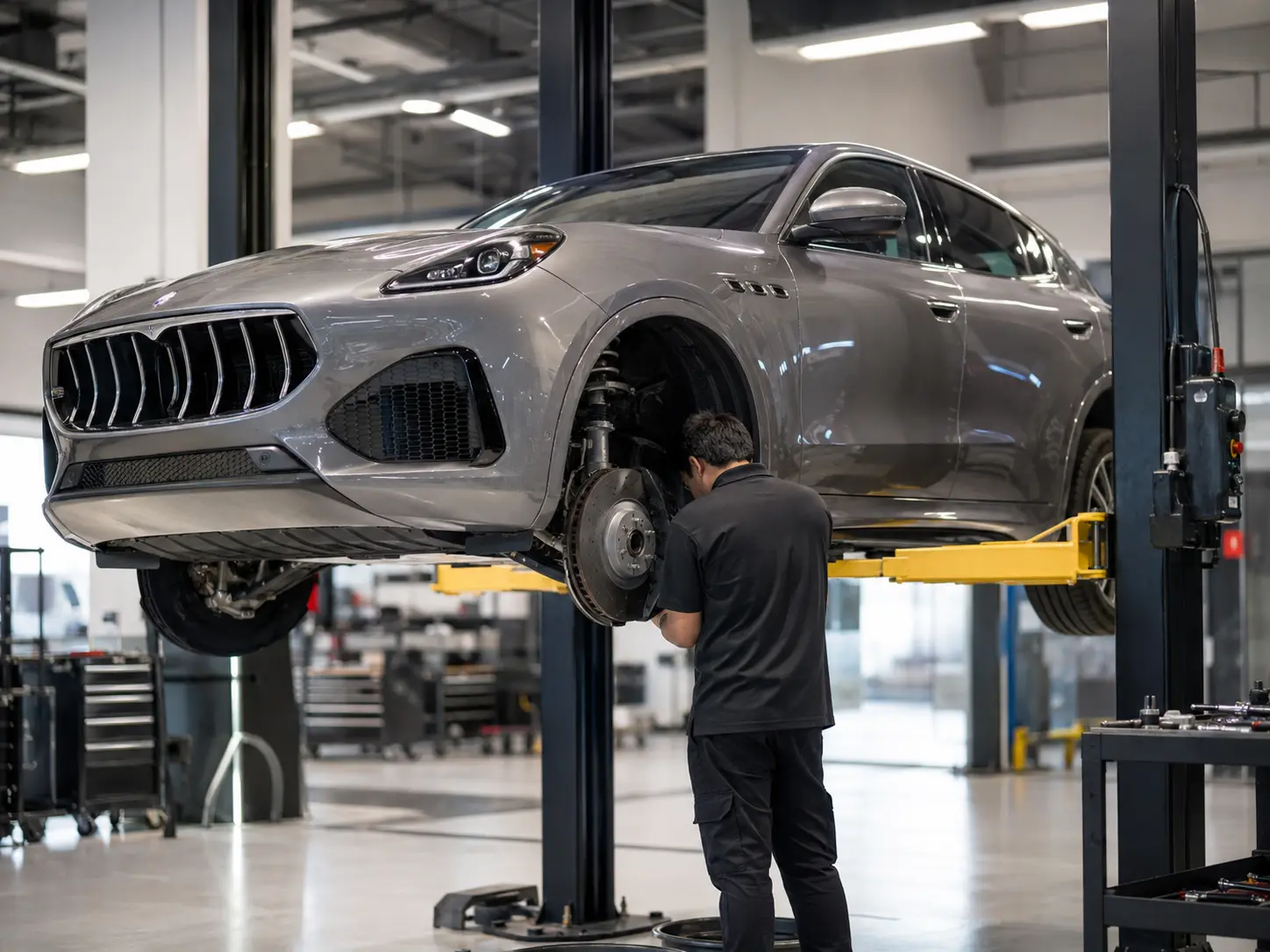
Measure wear and movement
Brake, tire, wheel and suspension measurements support the proposed repair.

Verify the result
Relevant scans and functional checks help confirm what changed before handover.
What Your Maserati Repair Estimate Includes
Confirmed work
The quote connects the reported problem to the inspection findings. It separates due maintenance, required repairs and optional work.
Complete scope
Review parts type, labor, fluids, testing, calibration, applicable VAT and exclusions. Further access or dismantling is approved separately.
Parts and repair options
Compare targeted repair, rebuild and replacement where appropriate. Confirm fitment, availability, lead time and written terms before a special order.
Ownership in Dubai
Maserati Maintenance for Dubai Conditions
Maserati maintenance should reflect the exact model, service history and how the car is used. Dubai heat, short trips and long storage periods can change what needs attention first.
Schedule and history
A Maserati maintenance visit should use the applicable information for the exact model, engine and model year. The dashboard reminder is useful, but invoices, previous recommendations and the date of earlier fluid work give the workshop a stronger starting point. A car that travels short urban journeys may need a different condition review from one used regularly on long roads.
Dubai operating conditions
Dubai temperature places additional attention on cooling performance, battery condition, tires and air conditioning. This does not justify replacing these items automatically. It means the workshop should look for evidence such as pressure loss, weak charging reserve, tire cracking, abnormal wear, poor airflow or repeated refrigerant loss before proposing work.
Storage and Low Annual Mileage
Low annual mileage is not the same as zero wear. Extended storage can affect the battery, tire shape, brake surfaces, seals and fluids. Tell the workshop when the vehicle was last driven normally and whether a charger was used. A careful recommissioning check may be more appropriate than immediately driving the car hard after a long standstill.
Modifications and Vehicle Setup
Modifications need to be declared. Wheels, tire sizes, suspension height, exhaust parts, calibration or non-standard electronics can change measurements and part compatibility. Share invoices and part numbers where available. The objective is not to reject a modified car, but to avoid interpreting an intentional change as an unexplained fault.
Parts Choices
Ask the parts route to be written into the approval. New original, aftermarket, remanufactured, repaired and used components have different availability, compatibility and written terms. A premium badge does not remove the need for a clear sourcing decision. Do not approve an international order until the exact reference and deposit conditions are understood.
Service Records After Repair
After the job, keep the invoice, findings and replaced-part details with the service history. Ask what was tested again and whether a follow-up check is recommended after heat cycles or normal driving. Good records help the next technician distinguish a new concern from something already inspected or monitored.
How Your Maserati Repair Visit Works
Inspect and explain
Start with the reported concern and a free initial workshop inspection. Additional paid diagnosis is explained before it begins.
Approve and repair
Review the written findings, parts options and estimate. Approved work proceeds, with revised approval if access reveals additional damage.
Verify and hand over
Check the relevant function, warnings and leaks after repair. A road test is performed when safe and appropriate. Keep the invoice, findings and follow-up advice.
Maserati Models We Repair
Match the work to your Maserati
The model year, powertrain and installed equipment determine the inspection and parts selection.
Before ordering parts
Confirm the exact reference, availability, programming needs and written deposit terms. Similar-looking parts may have different specifications.
- Grecale
- Share the model year, powertrain and warning message. Explain whether the issue affects driving or charging.
- GranTurismo and GranCabrio
- Describe brake, ride, cooling, electrical or convertible-roof concerns separately.
- Levante
- Report changes in suspension height, tire wear, cooling or driveline behavior.
- Ghibli and Quattroporte
- Bring the service history and note when engine, transmission, battery or chassis symptoms began.
- Grecale Folgore
- Battery, charging and electric propulsion work requires capability confirmation before arrival.
Plan Your Maserati Inspection
Free initial workshop inspection
The first condition review at our Al Quoz 4 workshop is free. Advanced diagnosis, dismantling and specialist tests are separately quoted.
Free pickup and delivery
Available across Dubai by arrangement. Confirm location, access, low-clearance needs and vehicle condition when booking.
On-site inspection
A service-van visit may suit initial checks and collection planning. The fee is confirmed before dispatch. It does not replace workshop testing.
Three Typical Maserati Repair Estimates
Planning examples, not completed customer jobs or fixed offers. Final scope, parts and applicable VAT are confirmed in your written estimate.
2020 Ghibli
Major service
AED 2,200Typical estimated totalConcern Scheduled maintenance without a separate fault complaint.
Included work
Engine oil and oil filter, air and cabin filters, brake and tire inspection, supported service reset and a final leak check.
Separate or variable
Spark plugs, additional fluids and fault repairs are separate unless itemized. Engine specification, oil quantity, parts grade and damaged hardware can change the quote.
2019 Levante
Front brake repair
AED 4,800Typical estimated totalConcern Front-axle brake vibration and noise.
Included work
Inspection, pad and disc measurements, caliper and hardware checks, confirmed front pad and disc replacement, and a functional check when safe.
Separate or variable
Rear brakes, caliper repairs and unrelated suspension work are excluded unless quoted. Parts choice and seized hardware can affect the total.
2022 Grecale
AC diagnosis and minor repair
AED 950Typical estimated totalConcern Cabin cooling weakens in traffic.
Included work
Approved temperature, airflow, pressure, fan and control checks, visible leak observations, and verification after a minor confirmed repair.
Separate or variable
Refrigerant, compressor, evaporator and electrical parts are separate. Leak location, refrigerant quantity and access can change the total.
Compare the same scope. The Levante example includes pads and discs; the general price table lists pads per axle. The AC example includes diagnosis and a minor repair.
Maserati Repair Near You in Al Quoz 4
Visit the workshop
Looking for Maserati repair near you in Dubai? Arrange a free initial workshop inspection in Al Quoz 4. Ask for the location pin before traveling.
Free pickup and delivery
Available across Dubai by arrangement. Tell us about a non-running vehicle, low clearance, locked wheels or other collection needs.
On-site inspection
An on-site check can be arranged for suitable concerns. Its fee is confirmed before dispatch. Advanced tests and repairs may require workshop equipment.
Maserati Model and Owner Information
Use the official Maserati ownership information and the manual for your exact model when planning maintenance. Our Italian car repair workshop page explains wider service coverage.
Maserati repair questions
Maserati Repair Questions
Send the model, year and main problem when you need an answer about parts, timing, safe arrival or the right first check.
What should I send for a Maserati repair booking?
Send the model, year, mileage, service history, dashboard message and a description of when the symptom occurs. Mention modifications, previous repairs and whether the car can be driven safely.
Can a fault code identify the failed Maserati part?
A code identifies what a control unit recorded. It may still require voltage, wiring, live-data and physical checks. The named component is not automatically the cause.
Do you work on current Maserati models?
Coverage is confirmed from the exact model, powertrain and requested job. New electric or highly specialized work may need separate equipment and capability checks before arrival.
Can you inspect a Maserati that overheats?
Yes, but avoid continued driving when temperature rises sharply or coolant is lost. Arrange a safe arrival plan and authorize cooling-system checks before further use.
How are Maserati parts selected?
The estimate should identify the proposed source and basis. Compatibility, availability, calibration needs and written terms should be agreed before ordering.
Can I bring my own Maserati part?
Ask before purchasing. Fitment responsibility, part condition, compatibility and the terms applying to customer-supplied components must be clear before the appointment.
How long will Maserati repair take?
Timing depends on diagnosis, access, parts availability and the approved scope. Ask for an estimate after the initial findings rather than relying on a general website promise.
Where is the Maserati workshop?
The workshop is at FCP, Al Quoz Industrial Area 4, Dubai. Call or WhatsApp before traveling to confirm the appointment and current opening hours. We can also send the workshop pin on WhatsApp.
How much does Maserati service cost in Dubai?
Oil and filter service is estimated at AED 950 to 1,650. Major scheduled service is estimated at AED 1,850 to 3,450. These planning ranges depend on the engine, due items, parts and access. The written quote states applicable VAT and exclusions.
Are pickup and on-site inspection free?
Free pickup and delivery are available across Dubai by arrangement. On-site inspection is a separate service with its fee confirmed before dispatch. The initial workshop inspection is free.
Start with the vehicle details
Send Your Maserati Symptoms for a Free Inspection
Send the Maserati model, year, mileage, warning message and a short description or video of the symptom. We will arrange the free initial inspection, advise whether workshop arrival or a remote van check is more suitable and explain the next step before paid testing or repair begins.
Page updated September 2026.