Independent Lotus workshop support

Lotus repairin Dubai

Book Lotus repair in Dubai for inspection, diagnostics, scheduled maintenance and mechanical fault investigation at our independent Al Quoz workshop. Start with the exact model, year, mileage, warning messages and symptoms so the first workshop check matches the car rather than a guessed replacement part.

Al Quoz Industrial Area 4Independent multi-brand workshopScope confirmed before repair
Current Lotus Emira inside a modern independent Dubai workshop
Prepare the car before arrivalConfirm ground clearance, warning lights, drivability and any recent work when booking.
Identify the modelShare the exact variant, model year and powertrain before the visit.
Describe the symptomExplain when the noise, warning, vibration or performance change appears.
Protect low clearanceMention recovery, ramp and access needs before moving a non-running car.
Approve the scopeReview findings, parts basis, timing and exclusions before work begins.
Diagnosis before parts

Choose the first check

A Lotus can arrive with a clear maintenance request or with a symptom that crosses several systems. The first job is to separate the evidence from assumptions.

A fault code, warning light or unusual sound is a starting point. It is not automatically proof that the named component must be replaced.

Warning light
Record the exact message and whether the car limits power. A diagnostic scan can identify the reporting module, while live data and physical checks help confirm the cause.
Temperature change
Overheating, coolant loss or a rising gauge needs prompt assessment. Avoid continued driving when temperature rises sharply or fluid loss is visible.
Noise or vibration
Note road speed, engine speed, steering angle, braking input and surface type. These details help separate wheel, brake, suspension, driveline and engine-related causes.
Starting problem
Describe whether the engine cranks, starts slowly, stalls, or only fails when hot. Battery condition, supply voltage, sensors, fuel and ignition may require different tests.
Handling change
Pulling, instability, steering play or an altered ride height should be inspected before alignment settings are changed. Worn or damaged parts can make an alignment result temporary.
Service request
Provide the service history and current mileage. The correct scope depends on the model, powertrain, age, previous work and the applicable maintenance information.

Workshop routes

Lotus service and repair routes

Use the closest route for the initial enquiry. Inspection may show that the work crosses more than one system, but the booking should begin with the main symptom or maintenance need.

01

Diagnostics and drivability

Book this route for warning lights, intermittent faults, loss of power, poor throttle response, starting trouble or unexplained running changes. The first stage can combine scanning, visual inspection, voltage checks and symptom-based testing.

Explore computer diagnostics
02

Engine and cooling

Cooling performance matters in Dubai traffic and heat. Ask for inspection when the temperature changes, coolant drops, fans behave unusually, fluid appears below the car or the engine develops a new noise.

Explore engine repair
03

Transmission and driveline

Report delayed engagement, harsh shifts, clutch concerns, driveline vibration or a change under acceleration. Fluid leaks, mounts, controls and mechanical wear require different repair decisions.

Explore transmission repair
04

Brakes and suspension

Grinding, pedal change, pulling, clunks, uneven tyre wear or steering instability should be inspected before parts or geometry are approved. Confirm wheel and tyre condition at the same visit.

Explore brake repair
05

Electrical and battery

Low voltage can create multiple warnings and communication faults. Battery condition, charging performance, grounds and power supply should be checked before unrelated modules are condemned.

Explore battery replacement
06

Air conditioning

Weak cooling can involve airflow, refrigerant loss, controls, sensors, the compressor or heat rejection. A refill alone is not a complete diagnosis when cooling fades again.

Explore car AC repair
Workshop evidence

These workshop scenes show the type of controlled inspection discussed on this page: access around the engine bay, brake and suspension condition, and diagnostic testing before parts are approved.

Technician inspecting the engine bay of a current Lotus Emira
Begin with safe accessRecord the symptom, visible condition and relevant measurements before proposing work.
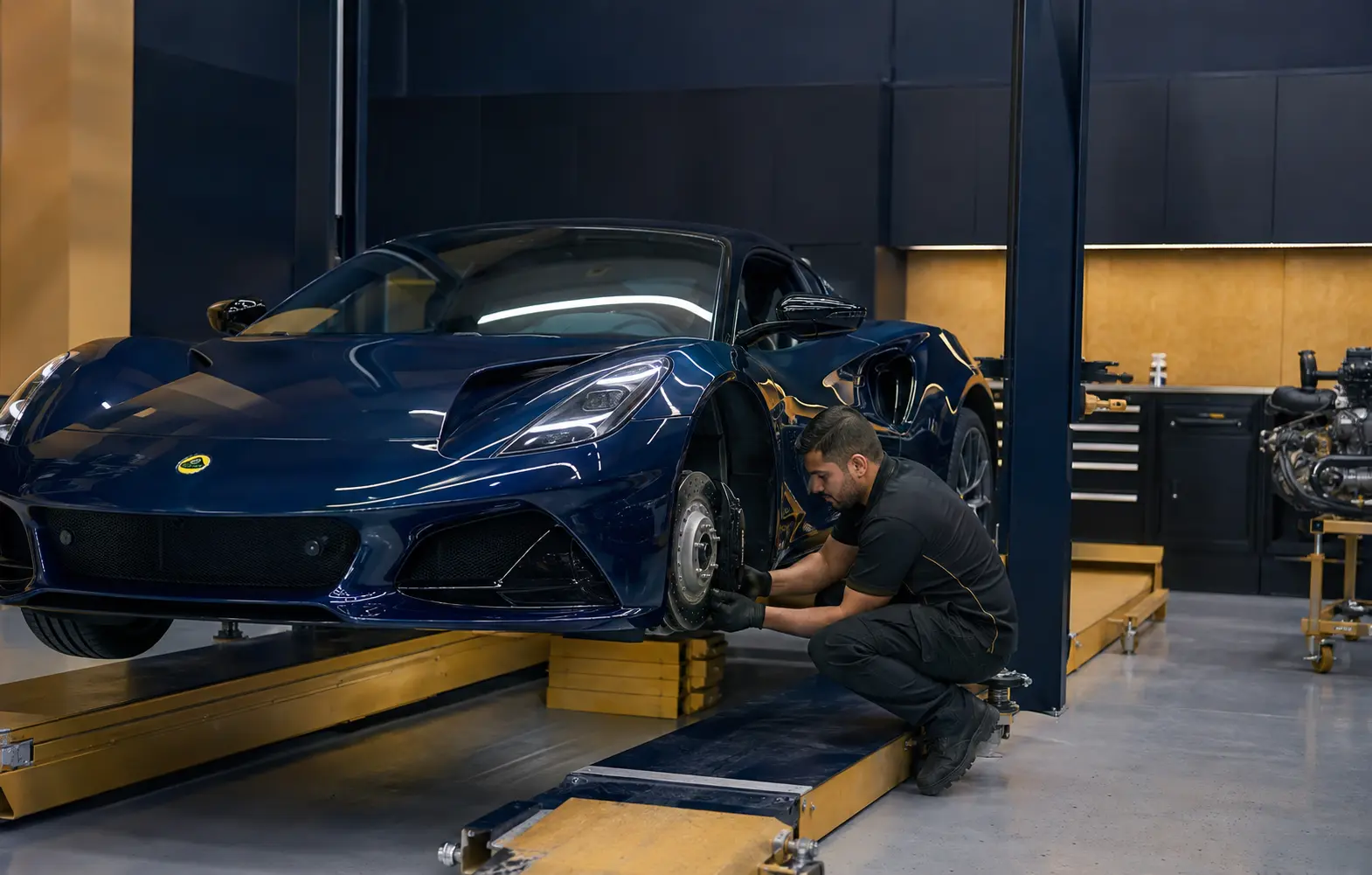
Technician inspecting Lotus Emira brakes and suspension on a low-rise lift
Measure the chassis conditionBrakes, tyres, joints and geometry evidence belong in the same decision.
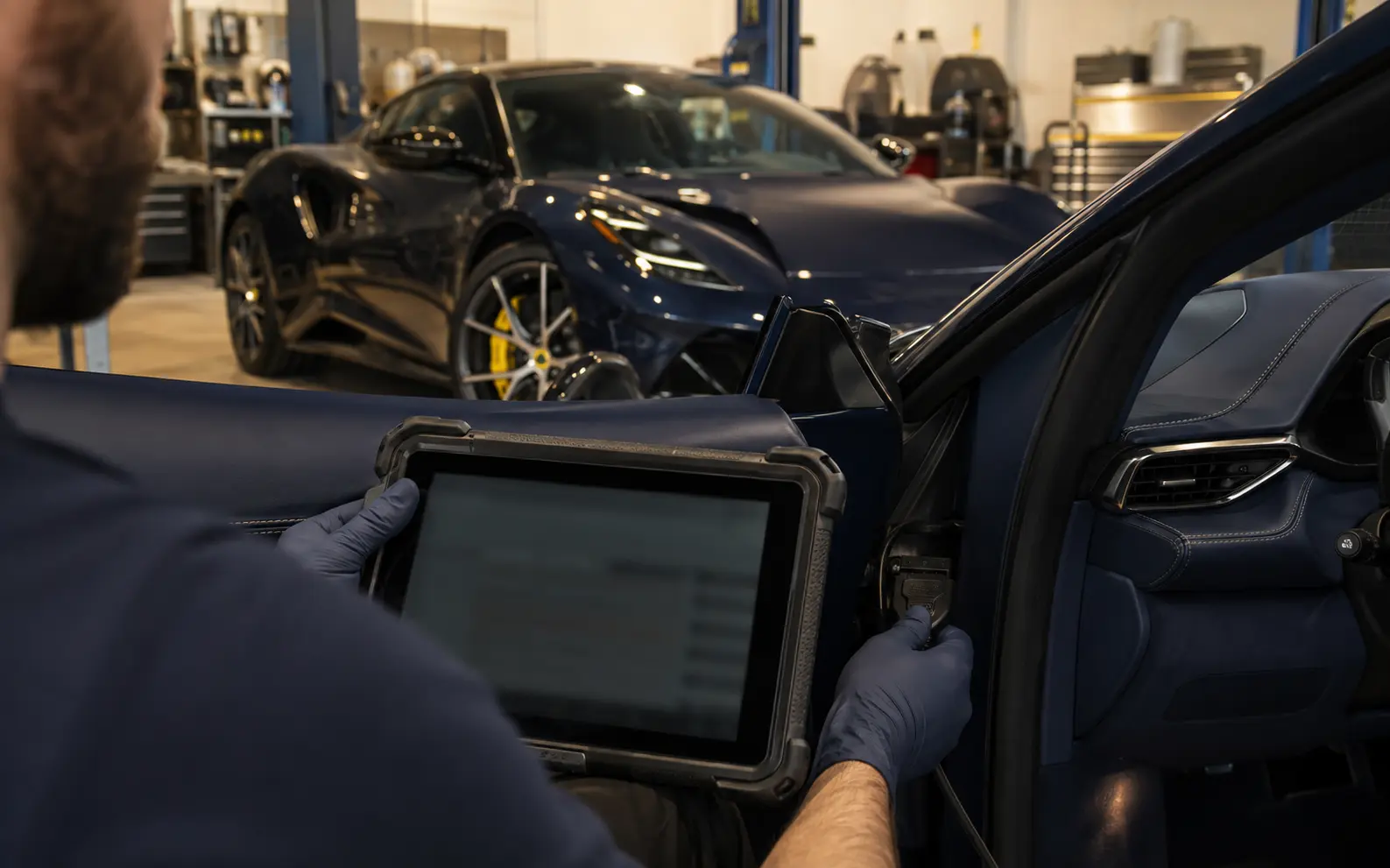
Technician connecting diagnostic equipment to a current Lotus Emira
Use scan data in contextA stored code is a lead to test, not automatic proof that a component must be replaced.
A controlled workshop path

How the repair decision works

The goal is to keep the first approval separate from later repair decisions. That is especially useful when access, parts availability or a secondary fault changes the scope.

  1. 01

    Send the details

    Share the model, year, mileage, history, warning messages, symptoms and whether the Lotus can be driven safely.

  2. 02

    Confirm workshop access

    Discuss low clearance, recovery needs, non-running condition and the appropriate arrival method before moving the car.

  3. 03

    Inspect and test

    Start with the agreed checks. Findings may require scan data, measurements, visual access or a controlled road test where safe.

  4. 04

    Review the repair scope

    Discuss what was found, what is proposed, the parts basis, expected timing and any items that remain uncertain.

Evidence for the estimate

What changes the repair decision

Two cars with the same warning can need different work. The estimate becomes more useful when the workshop records the evidence, separates immediate concerns from monitoring items and identifies what remains unknown.

Workshop findingUseful supporting evidenceDecision to confirm
Fluid leakFluid type, source area, current level, pressure or temperature behaviour and evidence of contamination.Repair the leak source, clean and recheck, then decide whether related components need further testing.
Electrical faultBattery state, charging voltage, grounds, relevant fault data, wiring condition and whether the fault is repeatable.Repair the supply or circuit issue before replacing a control unit that may only be reporting the problem.
Brake concernPad and disc condition, hydraulic inspection, tyre condition, road-test symptom and any warning data.Agree the axle or system scope and confirm whether wear, damage or contamination changes the parts list.
Suspension noiseLocation, load, steering angle, road surface, joint or bush movement and wheel or tyre condition.Replace only the confirmed worn or damaged items, then decide whether alignment is required.
Cooling problemFluid level, leak evidence, pressure behaviour, fan operation, temperature data and previous repair history.Address the verified cause and reassess before assuming a major engine repair is necessary.
Maintenance with context

Plan maintenance from the car

A Lotus maintenance visit should start with the applicable schedule and the actual history of the vehicle. Mileage alone may not show long storage, repeated short trips, heat exposure, track use or previous modifications. Bring invoices and records where possible rather than relying only on a dashboard reminder.

Fluids and filters

Confirm which fluids and filters are due for the exact model and powertrain. Inspect for leaks, contamination and previous service evidence. A generic package should not replace the schedule or the condition found on the car.

If the vehicle has been stored, ask for battery, tyre, brake and fluid checks before regular use. Age, moisture and heat can matter even when annual mileage is low.

Tyres and geometry

Record tyre make, size, age, pressure and wear pattern. A pull or vibration may involve tyres, wheels, bearings, suspension or geometry. Alignment should normally follow any necessary mechanical repair rather than hide looseness or damage.

For a modified car, provide the intended ride height and known alignment specification. Road and track priorities may not be the same.

Heat and cooling

Dubai traffic and ambient temperature make cooling and air-conditioning performance important ownership checks. Ask about coolant condition, leaks, fan operation and temperature behaviour when the car is stationary as well as moving.

Do not continue driving to complete a journey when a serious temperature or oil-pressure warning appears. Safe recovery is usually cheaper than increasing the damage.

History and modifications

Previous repairs, non-standard parts and calibration changes can affect fault data and replacement decisions. Share what changed, when it changed and whether the current symptom began before or after the work.

Where parts availability is uncertain, confirm the source and lead time before dismantling. This keeps the vehicle, storage plan and approval route clear.

Model and powertrain fit

Confirm Lotus coverage first

Lotus vehicles span lightweight legacy sports cars, later combustion models and new high-voltage vehicles. The correct equipment, information, lifting approach and parts route can differ substantially. Confirm the exact vehicle before arranging recovery or approving an inspection.

For Elise, Exige, Evora, Emira and older models, share the engine, transmission and any modifications. Non-standard suspension, wheels, exhaust, calibration or track-use parts can change both the diagnosis and the suitable replacement route.

For Eletre, Emeya and other electric Lotus enquiries, high-voltage work requires a separate capability and safety check. Sending the VIN, dashboard message and requested service does not guarantee that every electric-vehicle repair can be accepted. The workshop should confirm its scope before the vehicle is moved.

Make the parts decision traceable

Ask whether the proposal uses a new original part, an aftermarket alternative, a remanufactured unit, a repair service or a used component. These are not interchangeable decisions. Availability, compatibility, calibration needs, written terms and expected lead time may differ. The workshop should identify the proposed route before you approve ordering or dismantling.

For an older or modified Lotus, provide part numbers, previous invoices and photographs where useful. A visually similar component may not match the specification required by the car. If a part must be ordered internationally, agree how deposits, cancellation, storage and unexpected fitment issues will be handled. This is especially important when the vehicle cannot be reassembled while waiting.

After completion, ask what was replaced, what measurements or checks were repeated and whether a follow-up inspection is recommended. Keep the invoice and repair notes with the vehicle history. Clear records make later maintenance, resale discussions and future fault diagnosis more useful.

  • Elise and ExigeShare ride-height changes, track use, tyre specification, cooling history and any non-standard components.
  • EvoraDescribe transmission behaviour, cooling changes, warning messages, service history and when the symptom occurs.
  • EmiraConfirm the engine and transmission variant, model year and the current maintenance or fault request.
  • Older Lotus modelsParts availability and previous repairs should be reviewed before the vehicle is dismantled.
  • Eletre and EmeyaRequest a specific high-voltage capability check before booking battery, charging or propulsion work.
Before you approve work

Ask for a clear repair scope

Confirm which finding is verified, which test supports it, what parts basis is proposed, whether any related work is optional, and what could change after access. Ask how old parts will be handled and what written terms apply to the approved job. Warranty, timing and parts availability should be stated for the specific repair rather than assumed from a general website claim.

Lotus repair questions

Questions before booking

These answers explain the booking and diagnostic boundaries. The final recommendation depends on the actual vehicle and findings.

What details should I send for a Lotus repair enquiry?

Send the model, variant, year, mileage, service history, exact warning message and a description of when the symptom appears. Mention modifications, low-clearance concerns and whether the car can be driven safely.

Can you diagnose a Lotus warning light?

A scan can identify the module and fault information being reported. The cause may still require live data, voltage checks, visual inspection, measurements or symptom testing before a repair is recommended.

Should I drive a Lotus that is overheating?

Stop safely when temperature rises sharply, coolant is visibly lost or a serious warning appears. Continued driving can increase damage. Arrange advice on recovery and workshop access before moving the vehicle.

Do you repair every Lotus model?

Coverage must be confirmed from the exact model, year, powertrain and requested work. Older vehicles, modified cars and high-voltage Lotus models can require different equipment, information and parts routes.

Can you service a modified or track-used Lotus?

Send the modification list and intended use before booking. Non-standard suspension, wheels, brakes, exhaust or calibration can change specifications, diagnostic results and suitable parts decisions.

How is a Lotus repair estimate prepared?

The useful sequence is initial inspection, documented findings and then a proposed scope. Parts, labour, timing and exclusions should be discussed before approval. Some estimates may change if hidden damage or additional access is discovered.

Can I supply my own Lotus parts?

Ask before ordering or bringing parts. Compatibility, condition, source, fitment responsibility and applicable written terms should be agreed before the appointment.

Where is the Lotus repair workshop?

Auto Repair UAE receives repair enquiries at FCP, Al Quoz Industrial Area 4, Dubai. Confirm the appointment, arrival route and any low-clearance or recovery requirements before travelling.

Start with the evidence

Book a Lotus inspection

Send the car details and main symptom first. The workshop can then confirm the suitable first check, access needs and whether the requested work falls within the available scope.