Slow or no crank
Low battery charge, internal battery weakness, loose terminals, damaged cables, starter demand, or engine-related resistance may be involved. Repeated jump-starting without testing can hide the cause.
Test before fittingBook battery testing, replacement, charging-system checks, terminal service, and repeated-discharge diagnosis for your Jeep. We confirm the installed battery specification and test the supply before fitting a replacement, so a weak alternator, loose connection, excessive current draw, or start-stop requirement is not missed.
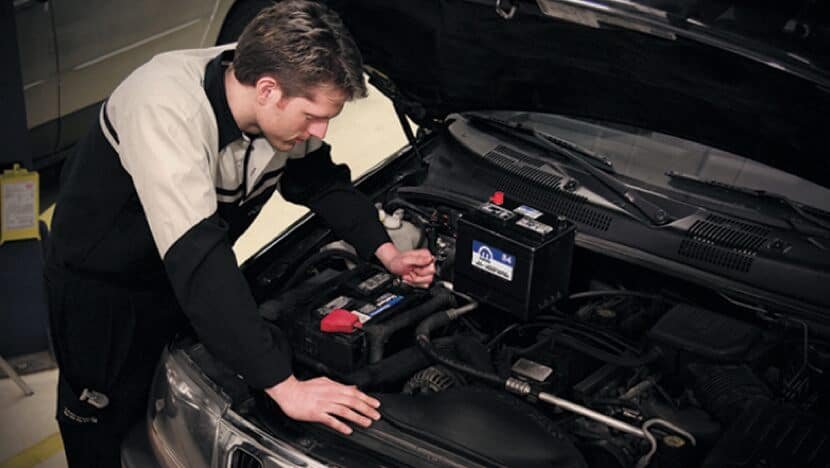
A slow crank or warning does not always prove the battery has failed. Battery condition, charging output, cable resistance, terminal security, starter demand, parked current draw, and vehicle use can create similar symptoms. Testing protects the new battery and gives you a clearer repair decision.
Low battery charge, internal battery weakness, loose terminals, damaged cables, starter demand, or engine-related resistance may be involved. Repeated jump-starting without testing can hide the cause.
Test before fittingVoltage can drop while the starter operates and cause multiple control units to record faults. We restore and test the supply, then identify which warnings return under stable voltage.
Scan after voltage checkThe battery may be weak, but an accessory, module, light, wiring fault, or charging issue can also drain it. Sleep-state current testing may be needed when discharge repeats.
Check for current drawBattery condition is one possible reason. Temperature, state of charge, cabin demand, system faults, and the fitted battery type can also affect start-stop availability.
Confirm the full contextThe next step follows the measured condition, not battery age alone. A written estimate shows the recommended battery, installation, setup, and any separate electrical work.
These are planning ranges for common low-voltage battery work. Final pricing varies with battery technology, capacity, model access, auxiliary battery requirements, setup, diagnosis, and supporting electrical repairs.
Condition, charge state, connections, and relevant charging checks. The initial workshop inspection remains free; extended testing is quoted first.
Suitable battery, removal, installation, terminal check, and startup verification for compatible models.
Correct AGM specification, installation, and applicable system setup based on the Jeep.
Access and specification vary. Main-battery condition is checked when the systems interact.
Staged testing after modules enter sleep mode. Repair parts are separate if a drain source is found.
Cleaning, securing, voltage-drop checks, or minor connection work. Damaged cables are quoted separately.
We inspect terminal security, cable and ground condition, visible corrosion, charging behavior, and startup voltage before treating replacement as the complete solution. If the battery repeatedly goes flat, the diagnosis may need the Jeep to remain undisturbed while control modules shut down. Testing too early can make normal awake current look like a fault.
After installation, the battery is secured, connections are checked, the Jeep is started, and relevant warnings are reviewed. Where a model requires battery registration, adaptation, or another setup step, that requirement is confirmed for the exact vehicle rather than assumed for every Jeep.
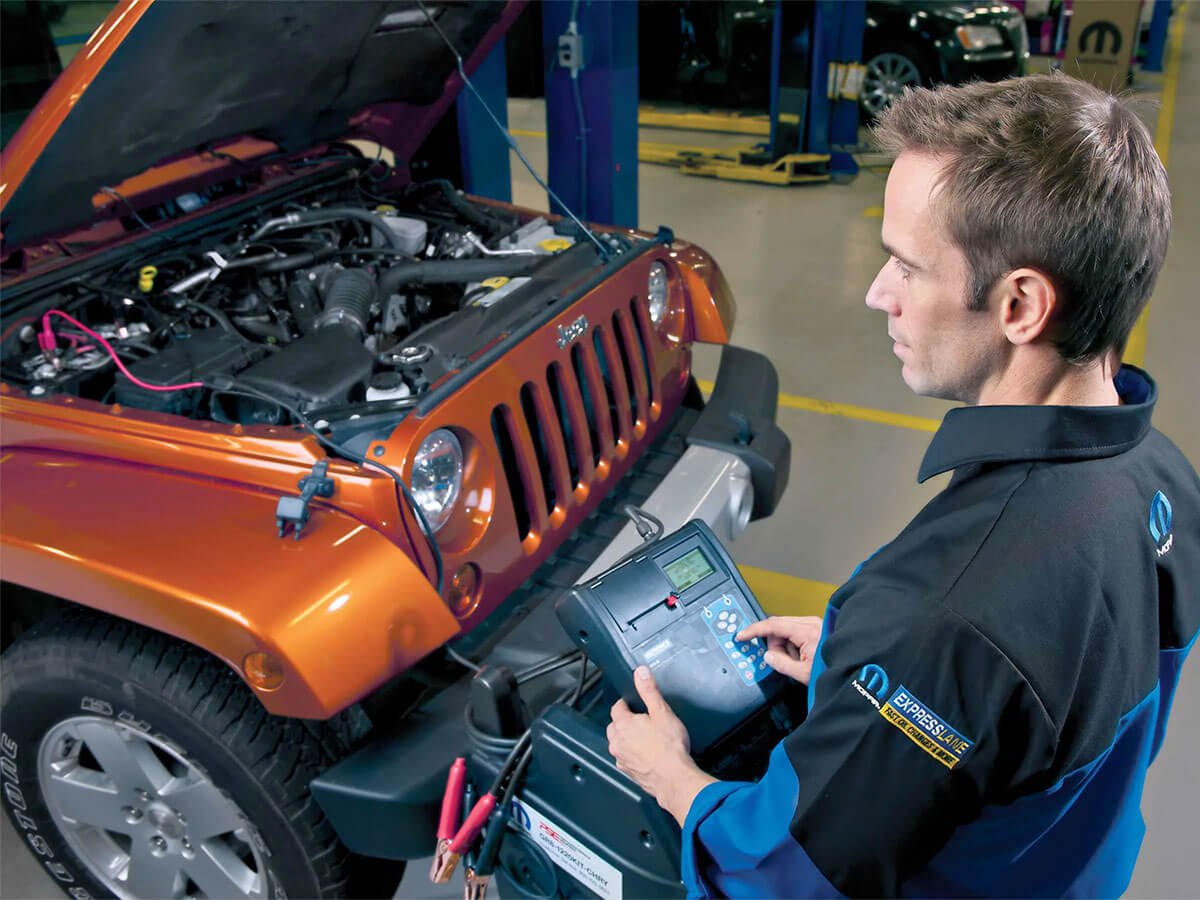
Battery test, correct AGM replacement, terminal inspection, installation, and startup and charging verification. No cable or alternator repair included.
Main and auxiliary battery testing with replacement of one confirmed weak auxiliary battery and final warning review.
Battery and charging tests, staged parked-current diagnosis, suitable battery replacement, and final startup check. Fault-part replacement remains separate.
These are estimates, not completed-work claims or fixed offers. Inspection, battery specification, access, electrical condition, and parts choice determine the final amount.
Accessory lighting, winches, trackers, camping equipment, and long storage can affect battery demand. Tell us about added electrical equipment when discharge repeats.
Battery access, start-stop systems, and possible auxiliary-battery arrangements vary by generation and powertrain. We identify the fitted system before supply.
Starting warnings and unavailable start-stop operation require battery, charging, and fault context. Correct technology matters more than choosing by physical size alone.
Slow starting, intermittent electrical behavior, or discharge after parking may require connection and current-draw checks alongside battery testing.
Do not continue driving when a charging warning remains on with dimming lights, steering or braking assistance changes, burning odor, smoke, a hot or swollen battery, leaking battery material, or repeated engine shutdown. Stop safely and arrange guidance or recovery.
Do not touch damaged cables, bridge terminals with tools, or jump-start a visibly damaged or frozen battery. If the Jeep only has a slow crank but otherwise remains stable, arrange testing promptly rather than waiting for a complete no-start.
Send the model and explain slow starting, warnings, or discharge.
Check battery condition, charging, terminals, and relevant faults.
Match technology, capacity, dimensions, and terminal layout.
Secure the battery and complete applicable vehicle setup.
Recheck startup, charging behavior, and relevant warnings.
For related electrical and climate complaints, compare our car battery replacement service and Jeep AC repair guidance.
Slow cranking and warnings are clues, but condition testing, charging checks, and connection inspection should support replacement.
Yes. We test the battery and supply, match the specification, install it, and complete relevant final checks.
Battery weakness, storage, accessories, charging faults, or excessive current draw may be responsible. Repeated discharge needs diagnosis.
Some models and start-stop systems do. We identify the exact arrangement before quoting or replacing either battery.
Yes. Incorrect technology, capacity, terminal layout, or dimensions can reduce reliability and may interfere with start-stop operation.
Yes. Free pickup and delivery can be arranged. Tell us if the Jeep does not start or shows a charging warning.
A dedicated on-site inspection can be requested. The fee depends on location and checks required; the workshop inspection is free.
Send the Jeep model and starting or discharge symptom. We will confirm the suitable workshop visit, pickup, or on-site inspection route.