Charging faults
Charging will not start, stops early, runs slowly or works only at one charger. We compare the vehicle alert, cable, charge port, supply and temperature conditions.
EV diagnostics and repair · Al Quoz 4
Get an initial workshop inspection for charging faults, warning lights, cooling concerns, 12-volt problems or braking issues. We identify the system, explain the repair options and quote the next step before work begins. Selected fitted repairs and estimates before VAT appear below.
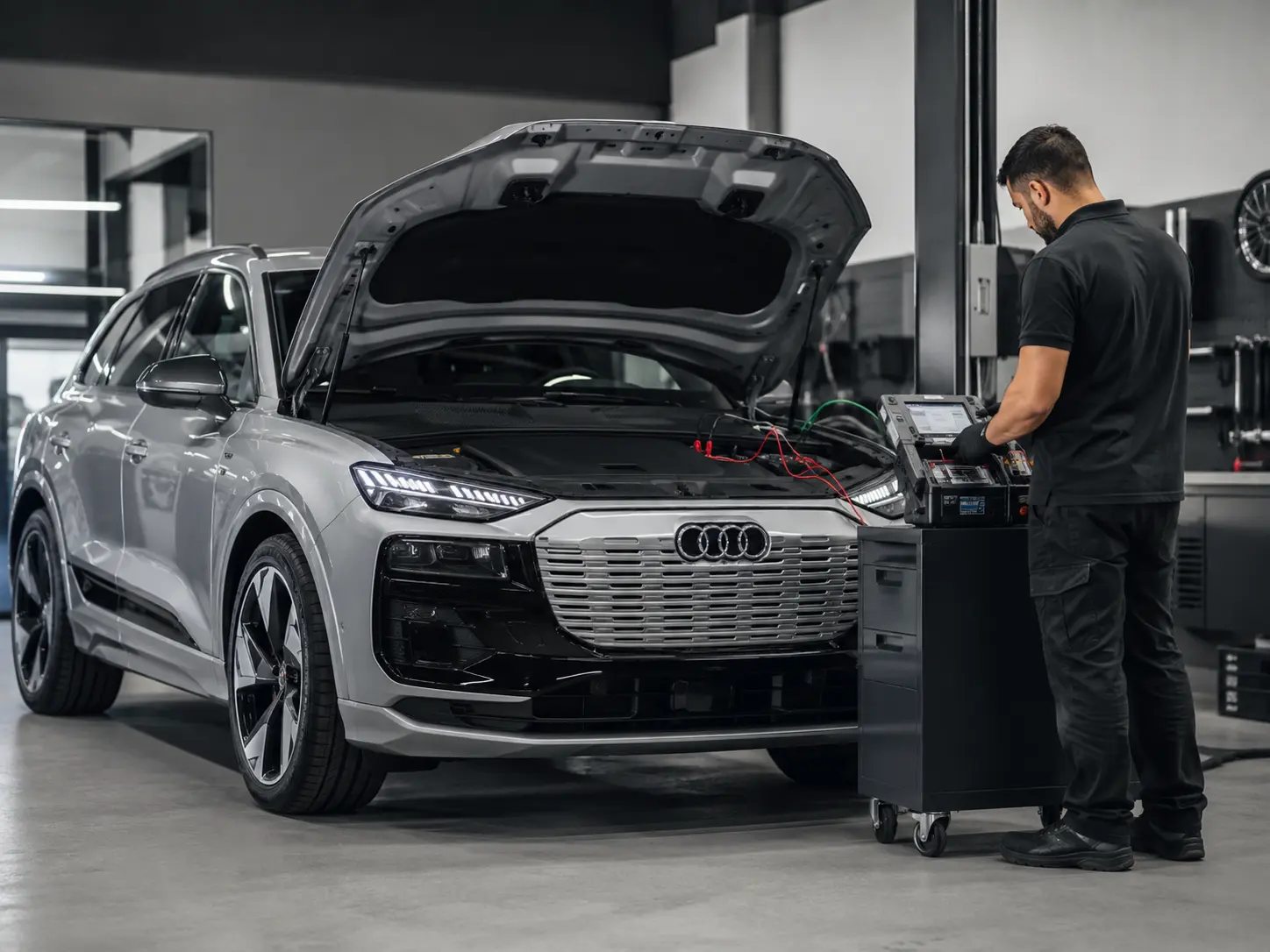
01
When to book
An EV can show a serious-looking warning for several different reasons. The traction battery is only one possibility. A weak 12-volt battery, charging connection, cooling circuit, sensor, tire or conventional brake component may create the symptom. Our first job is to separate those systems and avoid replacing parts on an assumption.
Charging will not start, stops early, runs slowly or works only at one charger. We compare the vehicle alert, cable, charge port, supply and temperature conditions.
Range changes, state-of-charge irregularities and battery or isolation alerts need measured diagnosis. A dashboard message alone does not prove that the battery pack requires replacement.
A weak auxiliary battery can prevent an EV from waking, unlocking or entering drive-ready mode. Testing covers battery condition, supply and likely causes of discharge.
Cabin cooling and battery thermal management can share operating conditions. Weak AC, loud fans, temperature warnings or reduced charging should be assessed together.
We review the exact warning, when it appeared and whether the car drives normally. Diagnostic data then directs physical checks of the relevant system.
Electric cars still need friction brakes, correct tires, wheel alignment and suspension care. Regenerative braking does not remove ordinary wear or age-related inspection needs.
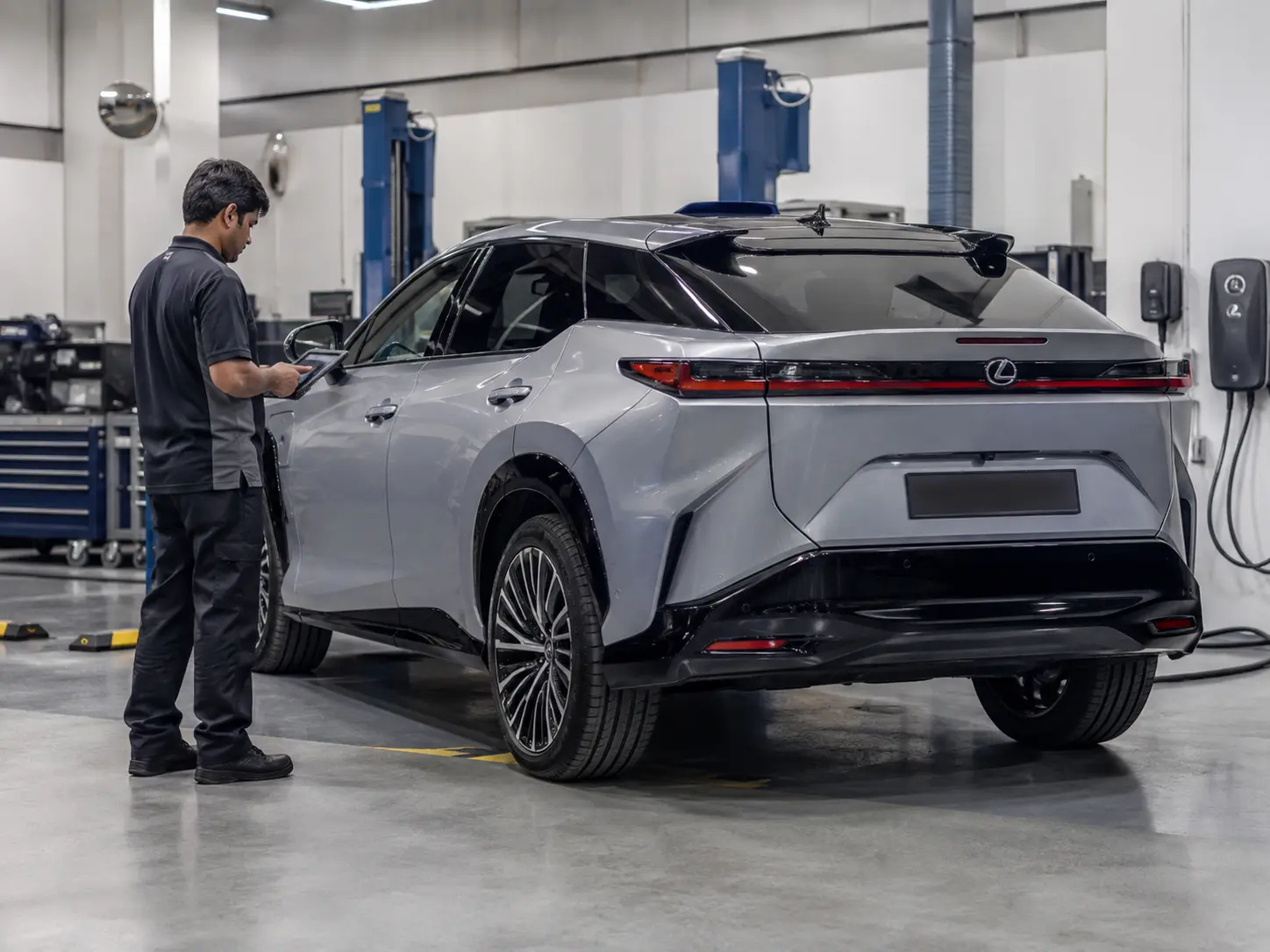
Workshop scope
We can assess common electric-car concerns across the low-voltage network, charge input, thermal management and conventional mechanical systems. The appointment starts with a free initial inspection. If electronic testing, isolation procedures, refrigerant work, dismantling or specialist access is needed, we explain that paid stage and its price before continuing.
High-voltage work depends on the exact make, model, fault and required procedure. Internal battery opening, cell-level repair, manufacturer-controlled programming and some advanced calibration work require specific equipment and information. We check those requirements before quoting and explain when a specialist or manufacturer procedure is more appropriate.
You receive clear findings, a repair proposal or a referral when the required procedure is outside the available workshop capability. Dismantling does not begin without an explained and approved next step.
02
Estimated Dubai prices
All AED ranges below are before VAT; 5% VAT is not included in the displayed prices. Diagnosis pays for testing; it does not include replacement parts. The repair ranges apply only to the supported BYD applications described below. Other EV makes, high-voltage components and programming requirements need an individual written quote after inspection.
| Diagnosis or test | Estimated price before VAT | What is covered |
|---|---|---|
| Initial workshop inspection | Free | Visual review, symptom discussion and the next recommended step; advanced testing is separate. |
| EV computer diagnostics | AED 240–525 | Relevant warning scan and system checks. Test time depends on the vehicle and fault history. |
| Charging fault diagnosis | AED 335–715 | Checks of accessible charge input, supply conditions and communication; cable, port and control parts are separate. |
| 12-volt battery and supply testing | AED 145–335 | Low-voltage condition and supply checks. Battery replacement is separate. |
| Cooling or thermal-system diagnosis | AED 285–665 | Accessible circuit checks and warning review. Fluids and component repairs are separate. |
| Brake condition check | Free initial inspection | Pad, disc and visible brake condition. Extended fault testing, cleaning and repairs are quoted separately. |
These are the workshop’s existing estimates for compatible BYD vehicles. They are useful budgets for the stated work, not universal EV prices. We confirm the part specification, access, parts availability and final VAT-inclusive total before you approve a repair.
| Supported BYD repair | Estimated fitted price before VAT | Included and excluded work |
|---|---|---|
| 12-volt battery replacement | AED 620–1,380 | Compatible low-voltage battery, fitting and supply checks for supported models. The vehicle’s battery specification and any registration requirements are confirmed first; traction-battery work is excluded. |
| Brake pads, one axle | AED 620–1,190 | Compatible pad set, fitting and brake checks where discs and calipers are serviceable. Discs, sensors, hydraulic repairs and special procedures are separate. |
| Accessible AC or thermal repair | AED 525–3,335 | Selected diagnosed component repair with matching parts and labor. The particular circuit and component are named on the quote. High-voltage battery-pack repair and major thermal assemblies are not represented by this range. |
Charging-port components and high-voltage work need an individual quote. Diagnostic fees, parts and repair labor are itemized; there is no universal battery-pack price.
03
A simple visit
You do not need to diagnose the car before contacting us. Start with the EV model and a short description of the warning, charging problem or driving change. We will request other details only when they help with diagnosis, parts or safe transport.
Send the model and a short description of when the problem occurs. If available, add the year, warning photo and state of charge. Recent impact or water exposure should always be mentioned.
We advise whether a normal workshop visit is suitable. Free pickup and delivery is available in Dubai, and a recovery route can be arranged when the car should not be driven.
The free initial inspection defines the likely system. Any paid scan, measurement, leak test or dismantling stage is explained before it starts.
You receive the findings, recommended work, parts basis, price and expected timing. Repair begins only after your approval.
Completed work is checked against the original concern. We explain what was repaired, what was tested and any future observation or maintenance advice.
Before you approve
A useful EV estimate names the symptom being addressed, the authorized test or repair and the point where further approval may be needed. It should distinguish diagnostic labor from replacement parts, programming, fluids, calibration and outside specialist work. If a warning could not be reproduced, the estimate should say what evidence was found and what remains uncertain.
For parts, confirm the exact part basis: new original equipment, new aftermarket, remanufactured, used or customer supplied. Compatibility and programming can matter as much as the physical fit. High-value used components may carry different testing and warranty conditions, so those terms should be visible before purchase.
At handover, the explanation should connect the completed work to the original concern. Ask which warnings were active, what measurements changed, what road or charging check was completed and whether any related item still needs observation. Clearing a stored code is not, by itself, proof that the cause was repaired.
We keep the decision practical. You approve a defined stage, receive the result and then choose the next step. That structure makes it easier to compare quotations and prevents a simple warning-light visit from becoming an open-ended repair.
04
Choose the right next step
The correct choice depends on the confirmed fault, component condition, parts availability and any programming or safety procedure required. We explain the practical options before parts are ordered.
A repair may be appropriate when testing identifies serviceable wiring, a connector, charge-port mechanism, seal, hose or another accessible component. The estimate should identify the affected part, the repair work and the checks used afterward. Repair is not recommended when damage, overheating, contamination or manufacturer instructions make replacement the safer option.
Replacement may suit a failed 12-volt battery, pump, valve, sensor, control part or conventional brake and suspension component. The quote should state the part condition and source, installation work, fluids, programming or calibration, and what is excluded. A warning light alone is not enough reason to order an expensive component.
Some battery-pack, high-voltage, security, software and calibration work requires restricted information or dedicated equipment. When that applies, we explain the finding and the appropriate next route instead of opening the vehicle or ordering parts without a verified completion plan. This protects the vehicle and keeps the decision clear.
Safety and recovery
Stop and request advice if the vehicle shows heat, smoke, an unusual chemical or burning odor, visible damage near the battery, exposed orange cabling, severe water exposure or a high-voltage warning combined with abnormal behavior. Keep people away from a damaged vehicle and contact emergency services if there is smoke, fire or immediate danger.
After a collision, flood exposure or underbody strike, tell the recovery provider that the vehicle is electric. Do not charge it simply to test whether it still works. A car that selects drive may still require a cautious inspection because battery enclosures, cooling lines and protective undertrays sit low in the vehicle.
For a normal non-start or charging complaint without those danger signs, contact us with the exact dashboard message. We can help distinguish a workshop visit from an appropriate recovery plan.
05
Dubai driving conditions
Displayed range changes with outside temperature, traffic, speed, cabin cooling, tire pressure, payload and recent fast charging. A single lower range figure is not enough to declare a battery fault. Compare similar journeys and bring any warning history so diagnosis can separate normal operating variation from a developing problem.
Cooling concerns deserve timely attention in Dubai. The thermal system may support the cabin, battery and power electronics, depending on the vehicle. Weak air conditioning, louder-than-usual fans, reduced charging speed or a temperature message should be described together because they may share a condition even when they do not share the same failed part.
Tires also influence range, noise, braking and stability. Use the vehicle-approved size, load rating and pressure. Sudden pressure loss, sidewall damage, vibration or uneven wear needs physical inspection. Electric-vehicle weight and immediate torque can make an existing alignment or suspension issue more noticeable, but measured tread and chassis condition should guide the repair.
Model-specific details
Our initial inspection identifies the system and any manufacturer access or parts restriction. Use the dedicated Tesla, BYD, Rivian, NIO or Polestar page when you need model-specific service information.
For conventional chassis work, our brake repair service explains pad, disc and hydraulic choices. We confirm EV-specific procedures and part fitment before quoting.
Common questions
Yes. The initial workshop inspection is free. If the fault requires a paid diagnostic scan, extended testing, isolation, access or dismantling, we explain the scope and price before starting that stage.
No workshop should make that universal claim. Battery work depends on the model, warning, enclosure condition, safe isolation procedure, parts and required manufacturer information. We first confirm what the job actually needs and whether it fits our capability.
Yes. The auxiliary battery supports control systems and vehicle startup, so low voltage can create multiple messages or prevent drive-ready mode. It still needs testing because replacement without checking the charging supply or discharge cause may not solve the problem.
No. The power supply, charger, cable, connector, settings, temperature and vehicle can all affect charging. Tell us whether the fault occurs on home AC, public AC, DC fast charging or every source.
Free pickup and delivery is available in Dubai. Describe the warning and whether the vehicle moves before collection is arranged. Collision, battery-area damage, smoke, heat or water exposure may require a vehicle-specific recovery method.
Prices depend on the fault, available parts and required access. Compare like-for-like written quotations including 5% VAT, diagnostic work, programming, parts and warranty terms. Some restricted procedures require manufacturer or specialist support.
Warranty terms depend on the completed job and the parts supplied. Ask for the job-specific warranty on your quotation. Diagnostic findings and customer-supplied, used or remanufactured parts may have different terms from new workshop-supplied components.
Book electric car repair
Share your EV model and a short description of the warning, charging problem or driving change. We will request a photo or other details only when useful, then confirm the visit, collection or recovery route and explain any paid testing before work begins.