Front or rear bumper-kit fitting
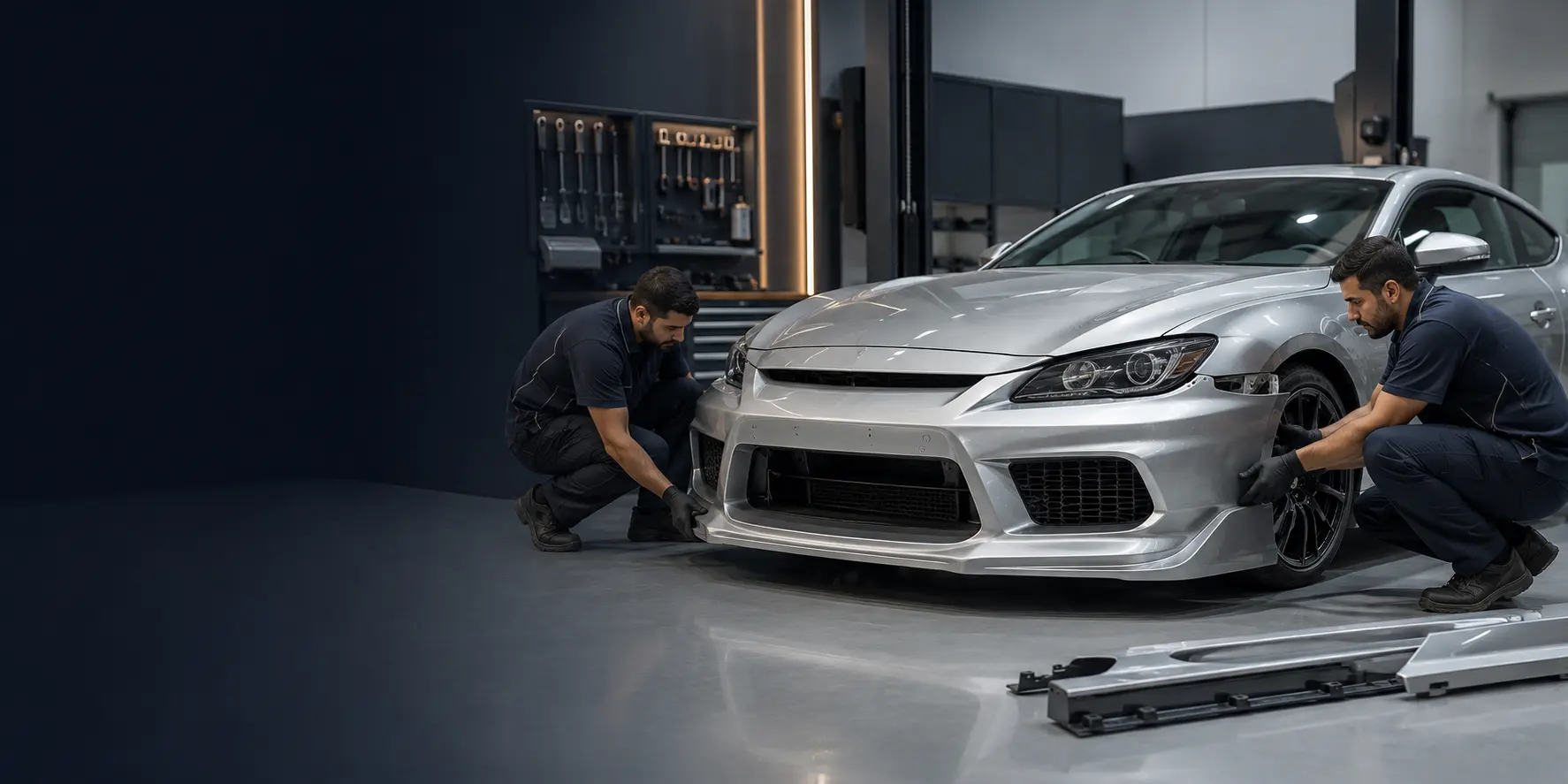
We dry fit the bumper, check mounts, gaps, liners, ducts, lights and sensors.
Body-kit fitting and painting · Al Quoz 4
We install customer-supplied car body kits in Al Quoz 4, from lips and side skirts to bumper conversions and complete kits. Estimated fitting starts at AED 335 for a lip or spoiler; full-kit installation labor is AED 2,380 to 7,145. The kit and paint are quoted separately. Send your model, year and kit photos so we can check fit and give you a written installed estimate.
Installation services
We inspect the vehicle and supplied kit, confirm compatibility and quote the required fitting, preparation, paint and function checks before work.
We dry fit the bumper, check mounts, gaps, liners, ducts, lights and sensors.
We check mounting points, clearance and hardware before final installation.
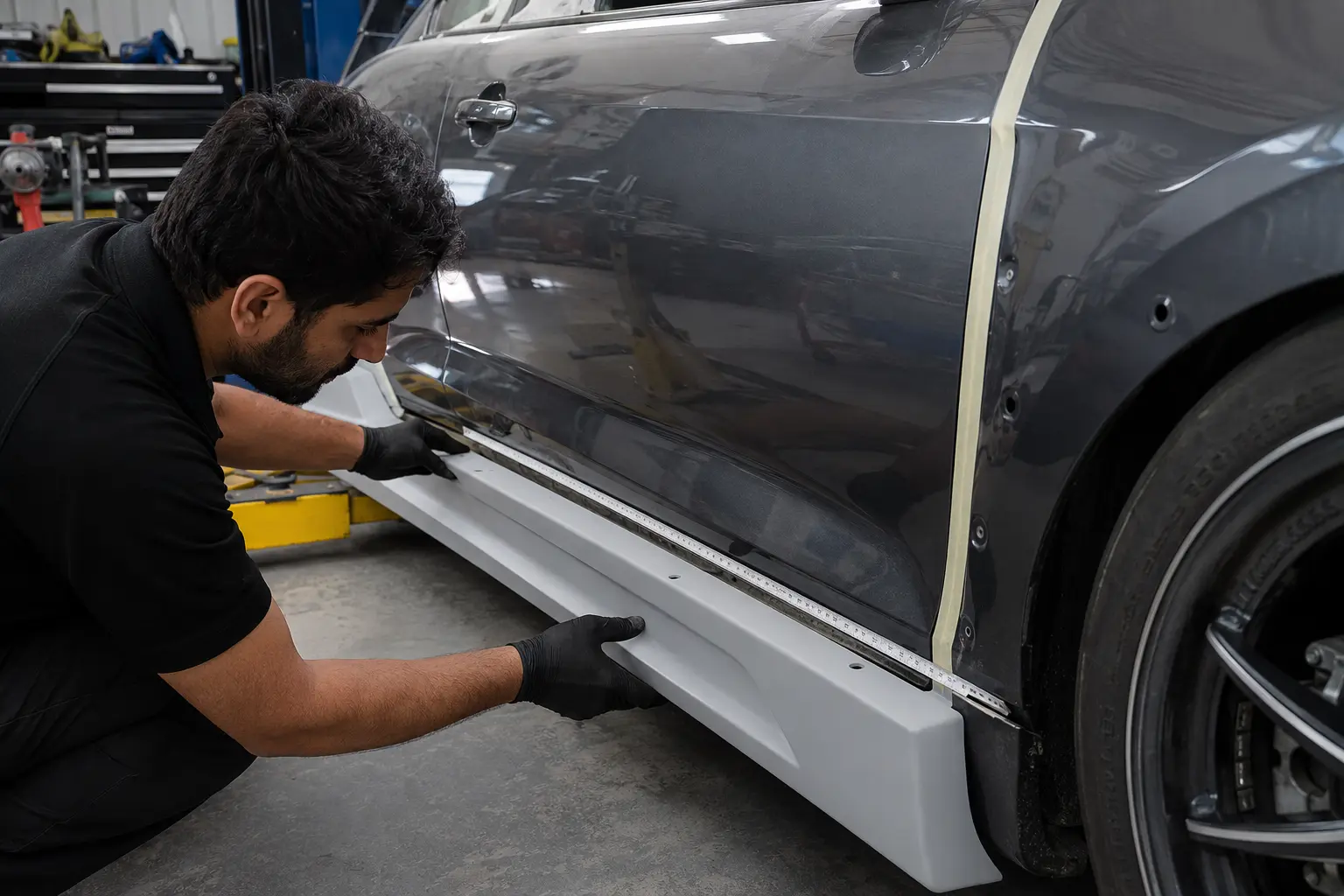
We align the skirts with doors, arches and lifting points, then verify safe clearance.
We coordinate dry fitting, adjustment, mounting, function restoration and final checks.
We repair agreed surface defects, prepare the exact material and match the approved finish.
Price planning
The prices below are planning estimates before 5% VAT for the work named in each row. Fitting prices assume a compatible, complete kit and sound mounting points. Kit supply, preparation, paint, missing hardware and sensor work are separate unless your written estimate includes them.
The final price changes with the vehicle, kit material and fit quality, number of pieces, paint finish, missing brackets and any repair needed underneath. We state the included work, exclusions, 5% VAT added and expected timing before paid work begins.
Material-specific work
We identify the supplied material before choosing surface preparation, fastening, bonding, heat control and repair methods. This protects fit, finish and durability.
We inspect mold quality, thickness, edges, mounting faces and visible defects before paint. Any trimming, reinforcement or reshaping beyond normal preparation is added to the written estimate for approval.
| Body-kit material | Service we provide | Installation and finish check |
|---|---|---|
| Polyurethane or flexible plastic | Material-compatible conditioning, preparation, flexible fastening and paint process | We verify molded mounting points, panel shape and movement clearance. |
| ABS or similar thermoplastic | Plastic-safe preparation, bracket fitting, aperture correction and finishing | We confirm sensor, light, duct and mounting openings before paint. |
| Fiberglass composite | Dry fitting, agreed trimming, local reinforcement, surface correction and paint | We identify pinholes, waves, stress points and repairable defects. |
| Carbon-fiber composite | Mounting inspection, dry fitting, edge protection and clear or painted finish | We verify inserts, visible weave condition and whether the part is cosmetic or structural. |
| Mixed-material kit | Separate preparation, adhesive, fastener and paint methods for each component | We document the material and fitting method used for every major piece. |
Choose the right scope
The right quote depends on what you already have and how much preparation the kit needs. We separate installation, body preparation and paint so you can compare complete totals instead of a low fitting price that leaves essential work outside the estimate.
This suits a complete, compatible kit that has already been painted or supplied in its final finish. We still dry fit the main pieces, check brackets, fasteners, panel gaps and clearance, then confirm that lights, sensors, liners and access points can be restored correctly.
Damage, poor molding, missing hardware or color correction is quoted separately because it changes the work beyond straightforward fitting.
Choose this when the kit needs surface correction, primer, color matching or clear coat before installation. The material matters because flexible plastic, ABS, fiberglass and carbon composite require different preparation and repair methods.
We agree which pieces will be painted, whether blending is included and how visible defects in the supplied kit will be handled.
This combines compatibility checks, dry fitting, agreed corrections, painting and final installation. It is usually the clearest option for a full kit because one written estimate covers the sequence and identifies any work that depends on the first dry fit.
The kit cost itself is separate unless the quotation specifically includes workshop-sourced components. If the body kit is part of a wider upgrade involving suspension, exhaust or performance work, review our car modification service before finalizing the project scope.
Send the vehicle model and kit photos. We will tell you the right first inspection.
Before ordering or painting
A body kit advertised for a model name may still differ by production year, trim, bumper style, wheel-arch shape, parking-sensor layout or regional specification. Confirming the exact vehicle and inspecting the supplied components before paint protects you from paying to finish a part that cannot be installed cleanly.
A complete kit should be unpacked and checked piece by piece. Look for transport cracks, waves, thin edges, damaged mounting tabs and differences between the advertised photos and the delivered parts. Grilles, mesh, brackets, clips, fasteners, sensor holders, reflectors and tow-eye covers may not be included even when the main bumper or skirt is present. Missing small parts can delay a project or change the fitted total.
Daily use matters as much as appearance. A deeper front lip changes the angle available for ramps, parking entrances and speed humps. Side skirts must preserve door movement and safe lifting points. Wider arches or revised bumper edges need tire clearance checked through steering and suspension movement. These practical checks should happen during dry fitting, before the final paint is applied.
If the car already has accident damage, uneven panel gaps or repaired mounting points, the base vehicle may need correction before the kit can align. Structural mounting damage and major panel repairs should be assessed through our car body shop. The estimate should separate repair to the vehicle from preparation of the body kit so old damage is not hidden inside a general installation charge.
Installation process
We confirm fit and function before paint, then complete final installation and quality checks after the finish is approved.
Share the vehicle model, body-kit photos and the finish you want. We may request the VIN or exact part details later when compatibility needs confirmation.
We inspect the kit and mounting base, including supports, liners, tabs, brackets, lamps, arches and previous repairs.
We position major pieces, measure gaps and confirm clearance, sensor, lighting, duct and access requirements.
We correct agreed defects, use material-compatible preparation and match the approved paint or finish plan.
We fit the specified brackets, fasteners or bonding method and restore liners, ducts, lights and sensors.
We verify panel security, gaps, tire and ramp clearance, lighting, sensors, camera views and warning status.
Fit and finish checks
We check panel gaps, mounting security and the transition into the original body during dry fitting. Side skirts must clear doors and lifting points, while front lips must retain suitable ramp and curb clearance.
Your written estimate states whether the kit is customer-supplied or workshop-sourced, which defects are included, the paint area covered and how hidden damage or missing parts will be approved.
A complete installed price
A body-kit quotation should make the boundary between the kit, fitting, preparation and finishing obvious. If you supply the kit, the estimate should state that its purchase price is excluded. If we source lamps, brackets, grilles or replacement body components, our car spare parts service confirms the exact items and availability before ordering.
Fitting labor should identify the pieces covered and whether routine fasteners or brackets are included. A front bumper conversion may also need grilles, ducts, liners, tow-eye access, light mounts, sensor holders or camera-related work. Those functions should not disappear behind a single “bumper fitting” line.
Painting should name the panels and preparation allowance. New aftermarket parts can still need pinhole correction, sanding, reshaping or reinforcement. If dry fitting reveals work beyond the allowance, we pause before paint and explain the revised total.
Final checks should cover panel security, consistent gaps, tire and door clearance, usable lifting points, ramp clearance and the functions disturbed during installation. The handover should separate the completed project from any unrelated body damage or maintenance advice.
Before permanent changes
Modification rules and inspection outcomes depend on the vehicle and exact change.
Dubai RTA states that vehicles with modified bodies can be referred to its Technical Inspection Committee. Review the current RTA vehicle inspection requirements before irreversible fabrication. We explain known fitment issues but do not guarantee an external approval outcome.
Before ordering
The kit should first be identified and inspected. Fitment depends on the exact vehicle, material, completeness, mold quality and whether the required mounting and functional parts are included.
Major pieces should normally be dry fitted first. This allows mounting points, gaps, sensors, lights and clearance to be checked before the final finish makes correction more expensive.
A prepared lip takes fewer stages than a multi-piece kit that needs correction, paint and curing. The workshop confirms a realistic completion time after inspecting the car and parts, then states it in the estimate.
They may require correct holders, orientation, surface position and testing. Some vehicles may also need diagnostic or calibration procedures after the bumper arrangement changes.
Some composite damage can be repaired, but the crack location, previous repair, mounting stress and finish must be inspected. Replacement may be more appropriate when the structure or fit is unreliable.
Many lips, bumpers and side skirts reduce practical clearance. Ramp angle, curbs, speed humps, tire movement and lifting points should be checked for the intended daily use.
No approval should be guaranteed without assessing the exact modification and current requirements. Confirm the applicable road-use and inspection route before installation.
Book body-kit service
Send the vehicle model and body-kit photos. We will start with a free inspection and request additional part details only when needed.