Stone-chip repair
A small, clean chip away from the driver’s main view and glass edge may be repairable when it has not developed long cracks. Resin repair improves strength and appearance, but a faint mark can remain.
Replace cracked, damaged, or leaking Cadillac windscreen glass with the correct specification for the vehicle. We check rain sensors, cameras, heating, acoustic layers, moldings, and driver-assistance calibration before confirming the glass and installed price.
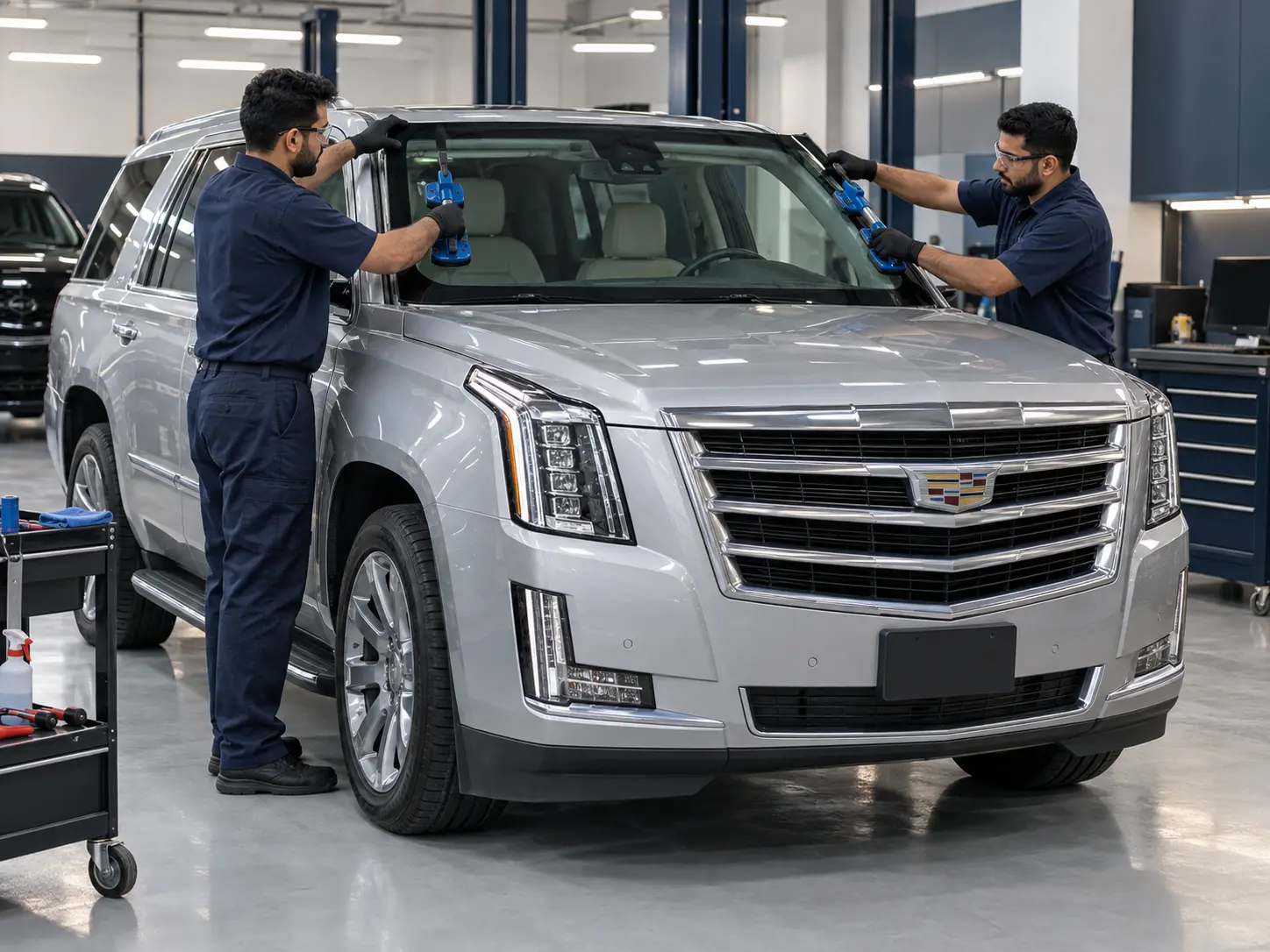
The safest and most economical choice depends on damage size, position, depth, contamination, and the features built into the glass. We inspect these points before recommending chip repair or a complete replacement.
A small, clean chip away from the driver’s main view and glass edge may be repairable when it has not developed long cracks. Resin repair improves strength and appearance, but a faint mark can remain.
Long cracks, edge damage, multiple impacts, deep damage, or impaired visibility normally require replacement. We remove the old glass, prepare the bonding surface, install the correct windscreen, and refit usable trim.
Forward cameras, rain sensors, light sensors, head-up display, heating, and acoustic layers affect glass selection and installation. A camera may require static or dynamic calibration after replacement.
A windscreen is part of the vehicle’s weather sealing and body structure. Correct adhesive, glass position, surface preparation, curing conditions, and trim fit matter. A low quote that excludes moldings, sensor gel, calibration, or damaged clips may not represent the complete customer-payable job.
These Dubai estimates show common service levels. The correct total depends on the Cadillac model and year, glass manufacturer, acoustic or heated layers, head-up display, sensor bracket, camera, moldings, and calibration needs.
| Glass service | Estimated price | Typical inclusion | Main price variables |
|---|---|---|---|
| Windscreen inspection | Free | Damage position, crack, edge, feature, seal, and visibility review | Electronic diagnosis is separate when a warning is present |
| Stone-chip repair | AED 250 to 450 | One suitable clean chip, resin treatment, curing, and finish review | Chip size, position, contamination, and number of impacts |
| Standard replacement glass | AED 1,200 to 2,500 | Correct basic glass, removal, bonding materials, installation, and leak review | Model, glass brand, moldings, and trim condition |
| Acoustic or rain-sensor glass | AED 2,000 to 4,500 | Specified glass, sensor transfer where suitable, installation, and function check | Acoustic layer, heating, sensor mount, and genuine or equivalent glass |
| Camera or head-up display glass | AED 3,000 to 6,500 | Feature-compatible glass, installation, and system preparation | Camera bracket, HUD layer, heating, calibration, and availability |
| ADAS camera calibration | AED 650 to 1,500 | Applicable static or dynamic calibration and fault review | Model procedure, targets, road conditions, and related faults |
| Molding, seal, or trim replacement | AED 250 to 800 | Required surrounding item and installation | Part availability, number of pieces, clips, and prior damage |
Prices are estimates in AED and vary by Cadillac model, glass specification, damage, service scope, and parts choice. The written quote states glass, adhesive, labor, VAT treatment, calibration, moldings, optional work, and exclusions. Equivalent installed work may be 65% to 70% below agency pricing when the glass specification and full scope are compared like for like.
A chip near the edge can spread because that area carries stress. A crack crossing the driver’s view can reduce visibility, especially with sun glare or night traffic. Damage around a camera bracket, mirror mount, or sensor area may also affect system operation.
Water entry needs prompt attention because it can stain the headliner, damage trim, create odor, and reach electrical components. Wind noise after a previous replacement can indicate a molding, fit, seal, or body-opening issue that should be checked rather than covered with surface sealant.
We plan the glass and electronic requirements before removal, then protect the vehicle and confirm the installation before it returns to the road.
Model, year, visible features, photos, and VIN when needed confirm the specification.
Damage, moldings, sensors, prior sealant, trim, and body edges are reviewed.
The vehicle is protected while old glass and adhesive are removed and surfaces prepared.
Correct adhesive, placement, trim, sensor components, and curing time are followed.
Leaks, trim, camera or sensor functions, warnings, and calibration needs are verified.
Two pieces of glass can look similar while supporting different features. The chosen windscreen must match the vehicle’s optical and mounting requirements, not only fit the body opening.
Genuine glass follows the vehicle brand’s original supply route. A suitable quality equivalent can offer a lower price when it matches the required dimensions, tint, acoustic layer, heating, sensor area, camera bracket, and head-up display performance.
We state the proposed glass type in the quote. We do not describe basic glass as feature-compatible when the required layers or brackets are missing.
A forward camera looks through a defined part of the windscreen. Glass curvature, optical quality, bracket position, and vehicle ride geometry can affect what the camera sees. Replacement may require calibration even when no warning appears immediately.
Calibration is not a cosmetic add-on. It is included or listed separately according to the model’s confirmed procedure and the equipment required.
Rain and light sensors may need a correct mounting pad, gel, or bracket. Head-up display glass uses an optical layer intended to prevent a double image. Heated areas and acoustic interlayers also change the part. A full feature check before ordering reduces delays and prevents the wrong glass from being installed.
Send the Cadillac model, year, chassis number when available, and clear photographs from inside and outside. Include the top-center camera or sensor area, the lower corner markings, the complete crack or chip, and any head-up display image. Tell us about lane assistance, automatic braking, rain sensing, heating, acoustic glass, tint, or a camera warning. These details help identify the required glass before the vehicle arrives.
The written estimate should identify the proposed glass type, bonding materials, moldings or clips, sensor transfer, camera calibration, and disposal of the removed windscreen. It should also explain whether corrosion, previous adhesive, damaged trim, or a bent body aperture would be additional work. A low glass-only price is not the complete installed cost when the Cadillac requires feature-compatible glass and post-installation procedures.
Before replacement, remove toll tags, cameras, and hanging accessories if practical, and point out any device that must be refitted. Keep the dashboard clear so the glass can be removed safely. If water entered the cabin, mention the wet area and when the leak occurs. Water near a windscreen may come from the bond, body seam, roof drain, or another path, so leak diagnosis should not rely only on the location of a damp carpet.
At handover, check the glass edge, trim fit, mirror and sensor covers, wiper sweep, warning status, and outward view. Follow the stated safe drive-away time. Avoid slamming doors, pressure washing the glass edge, or disturbing retention tape during the initial cure period. Report wind noise, water entry, optical distortion, a duplicated head-up display image, or a driver-assistance warning promptly for review.
These scenarios show typical price differences between chip repair, sensor glass, and camera-equipped windscreens. They are estimates rather than completed customer records.
Feature-compatible acoustic windscreen, removal, bonding materials, installation, reusable trim transfer, camera calibration, and leak review. New moldings or body-edge repair are excluded.
Rain-sensor-compatible windscreen, installation materials, sensor transfer where serviceable, trim refitting, and function check. Camera calibration is separate if the fitted vehicle requires it.
One clean repairable chip outside the critical driver view and away from the edge, resin treatment, curing, and finish check. Additional chips or a spreading crack change the scope.
We can assess windscreen damage on Cadillac sedans, crossovers, and full-size SUVs. The exact glass can change within one model year according to camera, sensor, heating, acoustic, tint, and head-up display equipment.
Imported vehicles or unusual equipment combinations may require VIN confirmation and a photo of the markings printed on the old glass. We request this only when it helps match the part. It does not prevent you from starting with a simple photo enquiry.
The first hours after installation matter. Follow the stated drive-away time and handling guidance so the adhesive, moldings, sensors, and glass position remain undisturbed.
Do not drive before the stated safe time. Avoid slamming doors, rough roads, or unnecessary body twisting during the early curing period. Leave any temporary retention tape in place for the instructed time.
Check for water marks, unusual wind noise, loose trim, or a visible edge change. Do not apply extra sealant yourself because it can hide the location and complicate a proper inspection.
Report a camera, lane, rain-sensor, light-sensor, or head-up display problem after replacement. A returning warning needs a scan and system-specific check rather than repeated code clearing.
Keep the glass clean with suitable products and replace worn wiper blades that can scratch or chatter across the new surface. Do not aim a high-pressure washer directly at fresh moldings during the initial curing period. If calibration includes a road procedure, follow any instructions about tyre pressure, loading, and clear road markings.
These answers cover the most common decisions before Cadillac windscreen repair or replacement.
Estimated replacement ranges begin around AED 1,200 to 2,500 for basic glass, AED 2,000 to 4,500 for acoustic or sensor glass, and AED 3,000 to 6,500 for camera or head-up display glass. Calibration may be separate.
A small clean chip may be repairable when it is away from the edge and critical driver view and has not formed a long crack. We inspect the size, position, depth, and contamination before confirming.
Many camera-equipped vehicles require calibration after windscreen replacement. The exact procedure depends on the model and system. We identify this before the glass is ordered and state it in the quote.
A small stable chip may allow careful travel for inspection, but a growing crack, edge crack, poor visibility, loose glass, or damage near a camera needs prompt attention. Stop if visibility or glass security is affected.
The glass may include acoustic laminate, heating, tint, a rain-sensor area, camera bracket, or head-up display layer. Moldings, calibration, and prior body-edge damage can also change the complete installed cost.
Serviceable parts can be transferred where the design permits. Brittle, damaged, missing, or single-use components are quoted separately. The inspection explains what can be retained.
Installation timing depends on glass availability, removal condition, sensors, calibration, and adhesive curing. We confirm the expected completion and safe drive-away time with the quote.
Yes, free pickup and delivery are available. A dedicated on-site inspection can be arranged separately for an initial assessment. The actual replacement is planned in a suitable controlled work area.
Send the model, year, three glass photos, and any camera or sensor warning through WhatsApp, or call +971 50 608 7150. We may request the VIN later to confirm a specific part.
Send your Cadillac model, year, and clear glass photos. We will identify the likely windscreen specification, explain calibration or molding needs, and provide an estimated installed price before the work is approved.