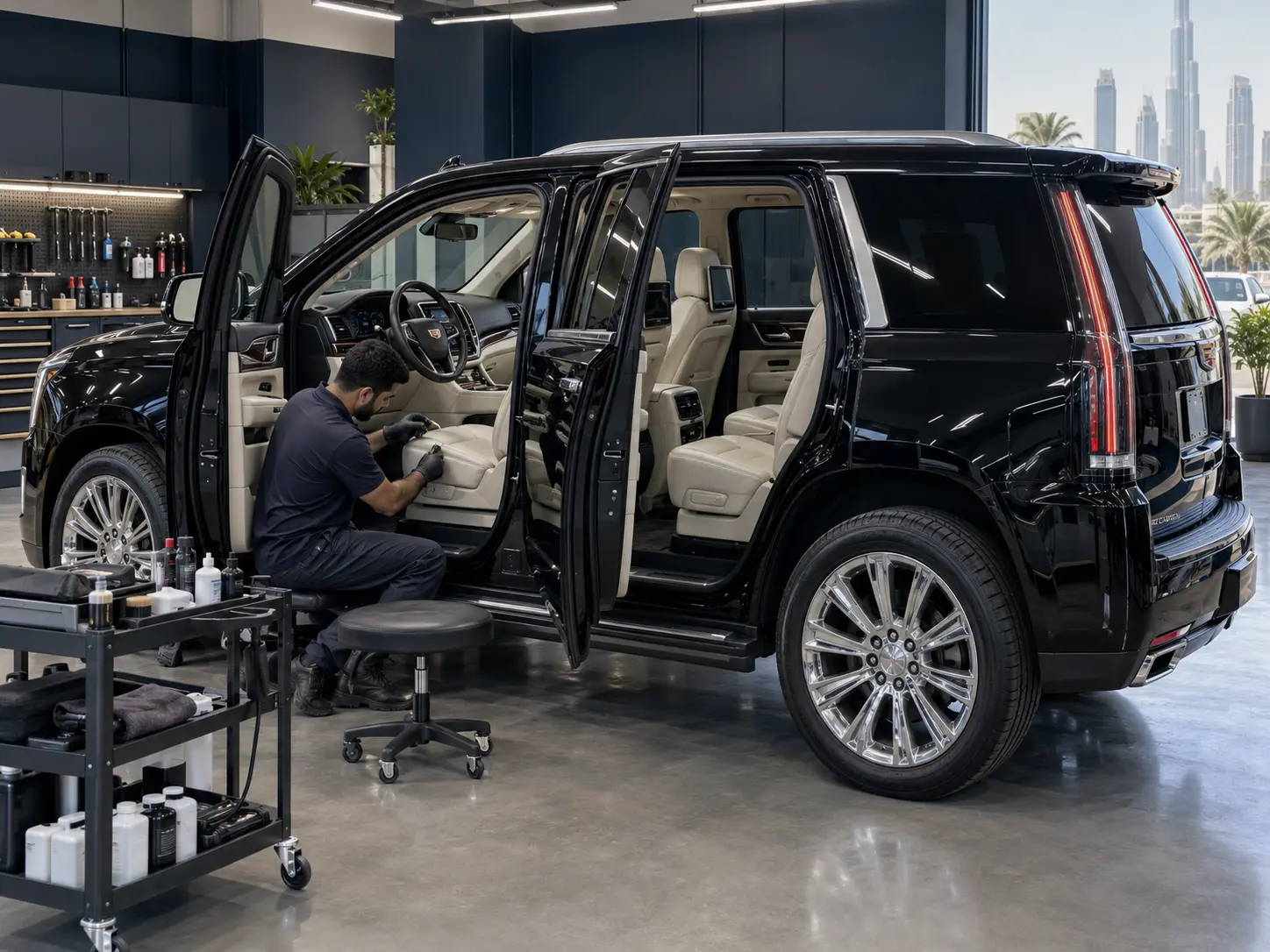
Match appearance and daily useLeather, fabric, vinyl, and trim choices
The closest-looking material is not always the best match. Grain, sheen, thickness, stretch, perforation, backing, and stitch behavior all affect how a repaired section sits beside the original cabin.
Preserve the original material
Localized cleaning, filling, color correction, and protective finishing can retain original leather where the surface remains stable. This is useful for light bolster wear, scuffs, dye transfer, and small cracks. The repair is blended across a sensible area so the finish does not end abruptly.
Original material cannot always be made visually new. We explain reasonable expectations for grain, prior creasing, texture, and color difference before starting.
Replace the damaged panel
A new panel is more suitable when leather has torn through, stretched, become brittle, or lost strength. The new piece is patterned to the existing section and joined at the original seam route where practical. Perforation and piping must be considered on ventilated or detailed seats.
A panel replacement is different from covering the complete seat. It targets the failed area while retaining surrounding sections that remain serviceable.
Custom colors, contrast stitching, quilting, and full retrims require a wider design decision. We confirm whether the customer wants an original-style result or a customized cabin before material is ordered. A custom change should be consistent across connected panels rather than appearing as one unrelated patch.
How to prepare for an accurate interior repair estimate
Send one photo of the complete seat, door, roof, steering wheel, or trim area and two close views of the damage in natural light. Include the Cadillac model, year, interior color, and whether the seat is heated, ventilated, powered, or fitted with a side airbag. Wider photographs help us judge how a local color or material match will sit beside the surrounding cabin.
A clear quote should name the area being repaired, the proposed method, the material or finish, removal and refitting work, and the expected appearance. Surface restoration, panel replacement, foam repair, stitching, headliner replacement, and full retrimming are different scopes. We explain which route is suitable and whether an exact match is limited by age, sun exposure, previous coatings, or material availability.
Before handing over the vehicle, remove child seats and personal items from the work area. Tell us about prior interior repairs, water leaks, odors, damaged seat controls, or warning lights. Upholstery work should not cover a moisture source, broken frame, failed occupancy sensor, damaged heater, or airbag-related seam. Functional issues are checked and quoted separately when necessary.
At collection, inspect the repaired area from normal seating distance as well as close up. We review seam position, panel tension, trim fit, movement, and the operation of functions disturbed during removal. Care instructions depend on the material and finish, so avoid unapproved cleaners, conditioners, or steam until the advised curing period has passed.