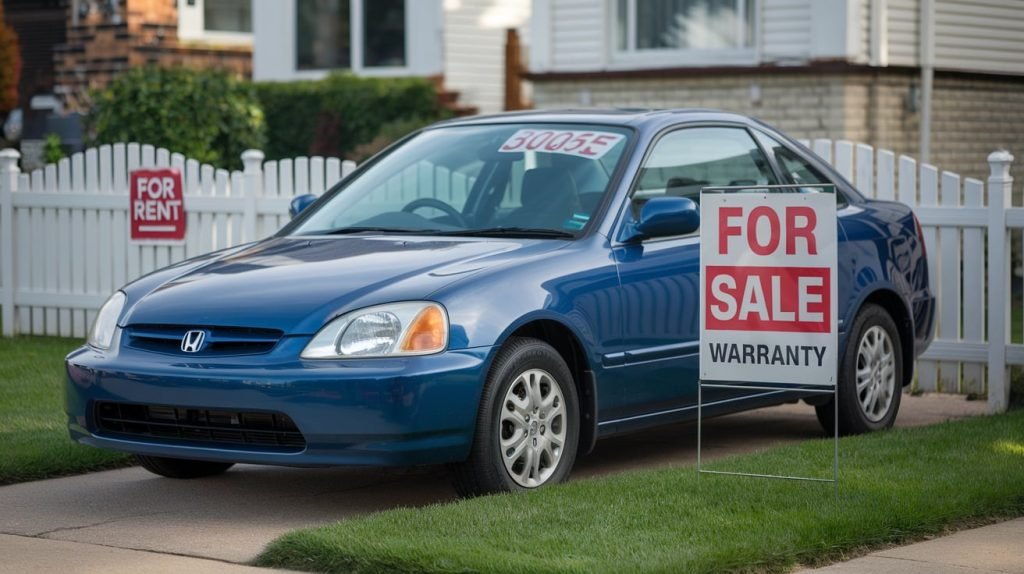
A low monthly payment can hide an expensive car loan. The vehicle looks affordable until processing fees, insurance, interest, a balloon payment, and overdue maintenance are added. When buying a used car on installment in the UAE, compare the total amount payable and the vehicle condition together. A cheap payment does not protect you from a costly repair.
Choose the car only after receiving a written finance illustration that shows the cash price, down payment, financed amount, annual rate, monthly installment, loan term, fees, final payment, and total payable. Then make the sale conditional on document checks and an independent inspection. If the lender or seller will not provide clear figures, ownership records, or inspection access, do not proceed.
This guide explains bank finance, dealer-arranged plans, affordability, documents, inspection, and the points that deserve a written answer before you sign. Lending rules, approval criteria, rates, and fees change, so the lender’s current regulated documents always take priority.
How Used Car Installments Work in the UAE
| Item | What it means | What to verify |
|---|---|---|
| Cash price | The vehicle price before finance costs | Whether VAT, registration, warranty, accessories, and other charges are included |
| Down payment | The amount paid before the financed balance begins | Amount, refund terms, and whether a booking deposit is separate |
| Principal | The amount actually financed | It should reconcile with the price, deposit, trade-in, and added fees |
| Rate | The lender’s charge for credit | Whether the illustration uses a reducing balance or flat-rate presentation |
| Term | The number of months used for repayment | A longer term lowers the payment but can raise total finance cost |
| Fees | Processing, valuation, early settlement, late payment, or other charges | Each fee, its trigger, and whether VAT applies |
| Final payment | A larger amount due at the end in some plans | Whether one exists and what happens if refinancing is unavailable |
Bank Finance and Dealer Installment Plans
Bank auto finance
A bank pays the approved seller and takes security over the vehicle under its agreement. Eligibility, age limits, salary transfer rules, valuation, insurance, and vehicle age can affect approval.
Dealer-arranged finance
The dealer introduces a lender or finance provider. Convenience does not remove the need to read the lender name, rate basis, fees, early-settlement terms, and total payable.
In-house installment claim
Confirm who legally provides the credit and holds the vehicle. Do not rely on social-media messages, blank cheques, or an informal agreement that does not identify rights and obligations.
A legitimate rejection is not a reason to move immediately toward an unclear arrangement. It may be safer to reduce the vehicle budget, increase the deposit from genuine savings, improve the application record, or wait.
Documents Commonly Requested
- Emirates ID and passport
- Valid UAE residence visa where applicable
- UAE driving license
- Salary certificate or employment evidence
- Recent bank statements
- Proof of address when requested
- Seller quotation and vehicle details
- Insurance and valuation documents
Requirements differ for salaried applicants, business owners, and self-employed buyers. The lender may also review existing debts, credit history, employer category, vehicle age, and repayment term.
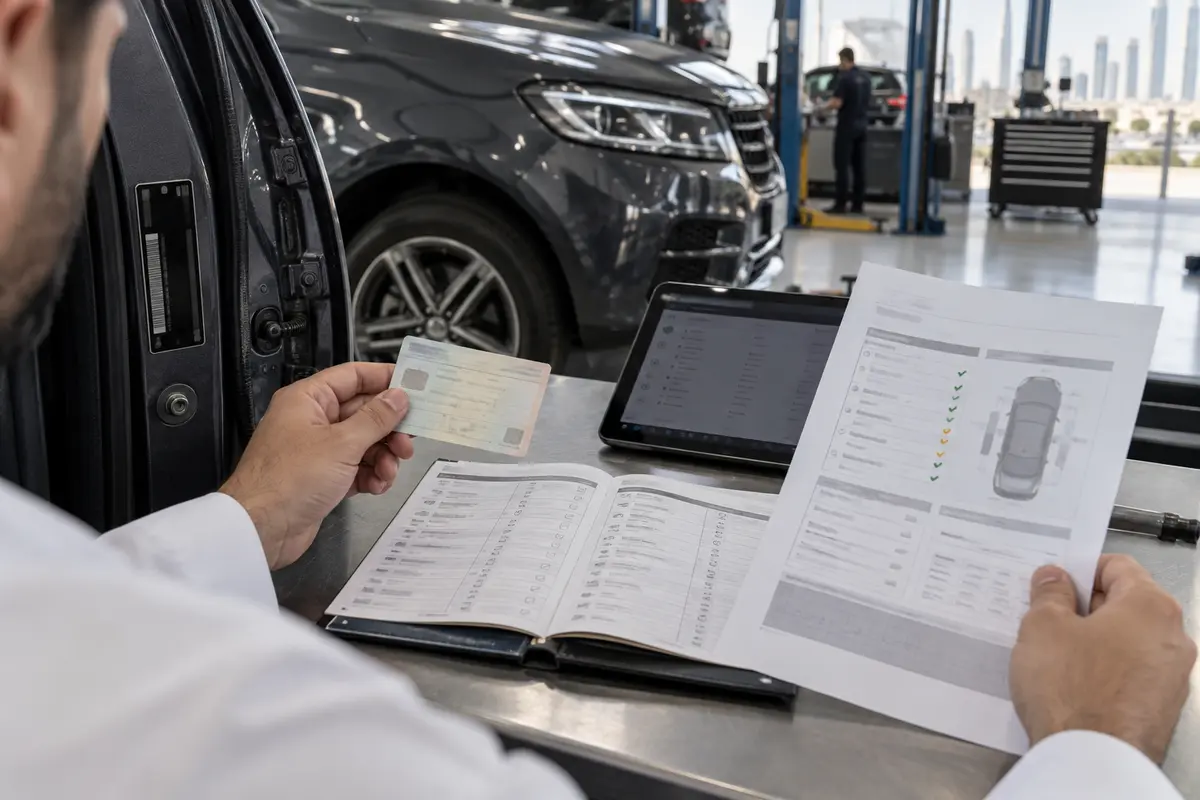
Calculate What the Car Really Costs
Start with the cash price. Add finance charges, processing fees, valuation, insurance, registration, testing, warranty products, and any final payment. Then add the ownership costs that do not appear in the credit agreement: fuel, parking, Salik, servicing, tires, battery replacement, repairs, and annual renewal.
Monthly commitment
Use the installment plus insurance, fuel, parking, and a repair reserve. If the budget works only when nothing goes wrong, it does not work.
Deposit risk
Read whether a booking payment is refundable if finance fails, valuation is lower than expected, or inspection reveals a problem.
Long-term risk
A longer loan can keep you paying after the vehicle needs major repairs or is worth less than the settlement amount.
For planning, build three budgets: the expected month, a high-cost month with a repair, and a month with reduced income. The third figure is uncomfortable, but it is the one that shows whether the agreement leaves any margin.
Check the Vehicle Before Signing

A finance company assesses credit and security. It does not perform a buyer’s full mechanical inspection. Arrange an independent car inspection in Dubai before the transaction becomes irreversible.
- VIN and registration details match
- Ownership and finance clearance are documented
- Accident, flood, and import history are investigated
- Airbags and warning lamps are checked
- Engine, cooling, gearbox, and driveline are tested
- AC performance is tested after heat soak
- Tires, brakes, suspension, and underbody are measured
- All control modules are scanned
Used Car Finance Red Flags
- The seller wants money sent to an unrelated personal account.
- The advertisement and written quotation show different prices.
- The monthly payment is promoted without the total payable.
- Blank forms, blank cheques, or incomplete contracts are requested.
- The VIN, owner, seller, or registration details do not match.
- Independent inspection is refused.
- A guaranteed approval is promised before documents are reviewed.
- You are pressured to sign before reading the settlement and default terms.
Do not hand over an original passport or Emirates ID as informal security. Use the lender’s documented process and keep copies of every signed page, quotation, receipt, inspection report, and message that defines the deal.
Flat Rate and Reducing Balance Are Not the Same
A flat-rate presentation calculates interest against the original financed amount for the stated period. A reducing-balance calculation applies interest to the outstanding balance as it declines. The percentages cannot be compared as if they mean the same thing.
Ask for the annual percentage rate or equivalent regulated disclosure used by the lender, the repayment schedule, and the total amount payable. If an advertisement gives only “from AED X per month,” it has not given enough information to compare the credit cost.
Vehicle Age, Valuation, and Loan Approval
Lenders may set maximum vehicle-age rules at the start or end of the finance term. They can also limit finance to a percentage of their valuation rather than the seller’s asking price. If the valuation is lower, the buyer may need a larger cash contribution.
An older premium car can pass a valuation yet remain expensive to own. Air suspension, cooling systems, electronics, large tires, and transmission repairs do not become cheaper because the monthly installment is small. Compare condition and expected repairs with the used luxury car checklist when relevant.
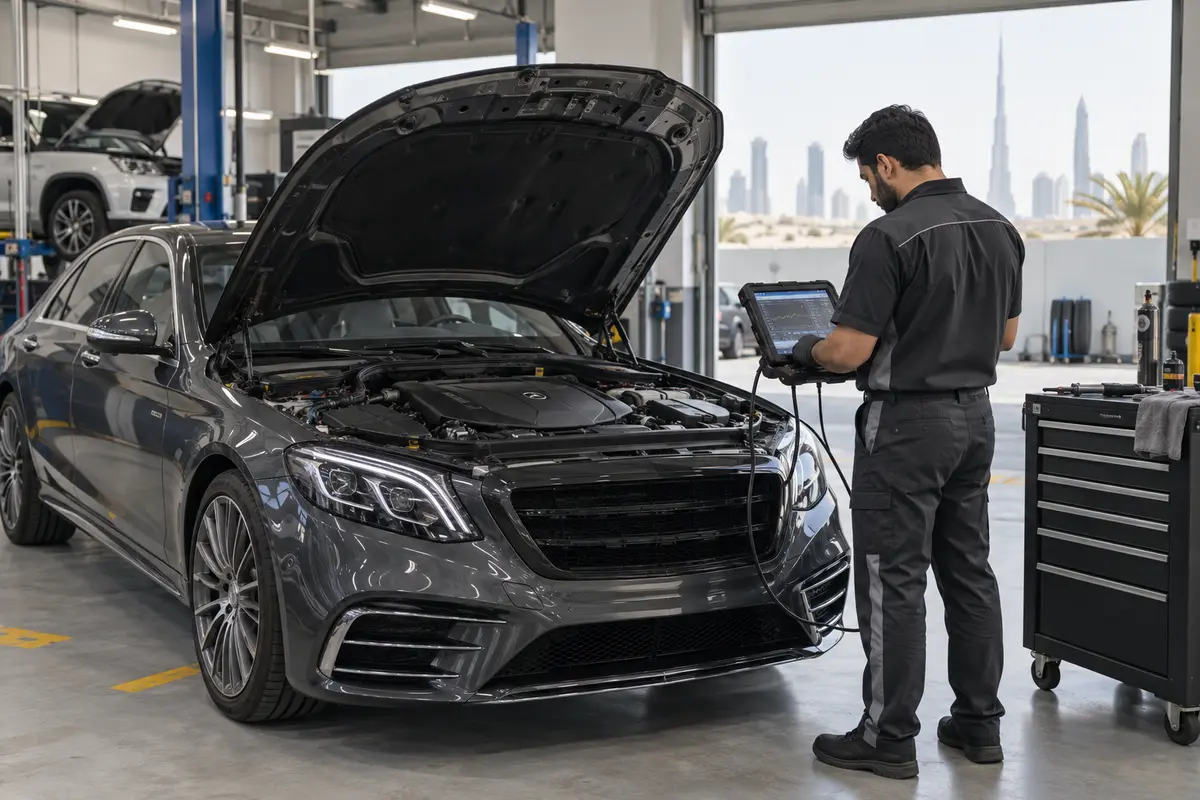
Insurance, Registration, and Ownership
Confirm who is registered as owner, what security interest appears on the vehicle, and which comprehensive-insurance conditions apply during the finance term. Ask whether the lender must be named on the policy and what happens after a total loss.
Registration transfer, inspection, insurance, fines, and finance clearance must be coordinated. Do not assume a paid deposit reserves a legally transferable vehicle. If an existing loan remains, use the bank and traffic-authority process rather than paying the seller to “clear it later.”
Early Settlement, Late Payment, and Default
| Situation | Question to ask | Why it matters |
|---|---|---|
| Early settlement | What fee and outstanding amount apply? | You may sell, refinance, or leave the UAE before the term ends. |
| Partial payment | Does an extra payment reduce term, payment, or principal? | The result may not work as expected without written instructions. |
| Late installment | What fees and credit-reporting consequences apply? | A missed due date can affect more than the current month. |
| Insurance total loss | How is the insurer payment applied and who covers a shortfall? | Insurance value may not equal the finance settlement. |
| Job or residency change | What notice and settlement obligations apply? | Changes in employment or residence can affect the agreement. |
A Step-by-Step Buying Process
- Set a total ownership budget and repair reserve.
- Obtain credit information from the named lender.
- Shortlist cars that meet lender age and valuation rules.
- Check VIN, ownership, service, accident, and import records.
- Arrange an independent mechanical and structural inspection.
- Compare cash price, total payable, fees, and insurance.
- Read cancellation, settlement, late-payment, and final-payment terms.
- Sign only complete documents and retain copies.
- Complete insurance, registration, and lender security procedures.
- Confirm keys, documents, service records, and handover condition.
When Not to Buy on Installment
Do not finance a car when the payment requires using emergency savings every month, the deposit is borrowed at additional cost, income is uncertain, or the agreement is unclear. Do not use a long term to make a vehicle with known major faults appear affordable. A cheaper car bought later can be the better decision.
Cash is not automatically safer if it empties your reserve. The useful comparison is not finance versus cash in isolation. It is total cost, liquidity, reliability, and how long you expect to keep the vehicle.
Compare Two Offers With the Same Car Price
Suppose two lenders finance the same vehicle. Offer A asks for a larger deposit and uses a shorter term. Offer B advertises a lower monthly payment but stretches repayment and adds a final payment. Looking only at the EMI makes Offer B feel cheaper. Adding every payment can reverse the result.
| Comparison line | Offer A | Offer B |
|---|---|---|
| Vehicle cash price | Write the exact amount | Write the exact amount |
| Deposit and booking payment | Separate refundable and nonrefundable amounts | Separate refundable and nonrefundable amounts |
| Number of installments | Record months and first due date | Record months and first due date |
| Total scheduled installments | Monthly payment multiplied by the number of payments | Monthly payment multiplied by the number of payments |
| Fees and final payment | Add every mandatory amount | Add every mandatory amount |
| Total payable | Deposit plus payments plus fees | Deposit plus payments plus fees |
This worksheet does not replace the lender’s regulated disclosure. It makes differences visible. Use the same insurance assumptions and vehicle price on both sides, or the comparison becomes misleading.
Questions to Ask the Seller and Lender
Ask the seller
Who owns the car now? Is finance outstanding? Is the listed price the cash price? Has the vehicle been imported, flooded, written off, or repaired after structural damage? Can it be inspected independently before the deposit becomes nonrefundable?
Ask the lender
What is the financed amount, rate basis, total payable, payment date, fee schedule, security arrangement, early-settlement process, and consequence of late payment? Which insurance cover is mandatory?
Ask yourself
Would the budget survive tires, insurance renewal, and a repair in the same month? How long will you keep the car? Would a smaller deposit leave a safer emergency reserve, even if the total finance cost changes?
After Handover
Photograph the odometer, body condition, wheels, keys, and dashboard at collection. Confirm that the registration card, insurance, finance record, invoice, warranty terms, inspection report, and service records match the vehicle.
Schedule maintenance by the manufacturer’s time and mileage requirements. If the history is incomplete, do not replace every fluid blindly. Establish what can be verified, inspect condition, use the correct specifications, and create a maintenance baseline with the workshop.
Set reminders several days before each installment. Keep lender contact details outside the car and report payment or employment problems early. Ignoring correspondence can turn a manageable issue into fees and credit-record damage.
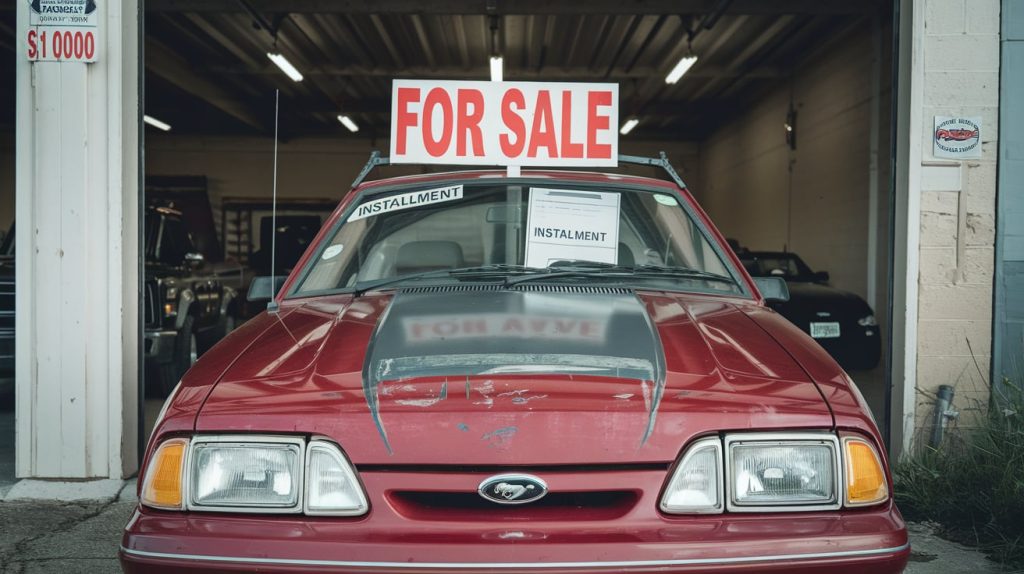
Compare Finance Offers on One Worksheet
Finance conversations become confusing when one seller talks about monthly cost, another talks about rate, and a third changes the deposit. Put every offer on the same worksheet. Record the vehicle cash price, deposit, trade-in allowance, financed amount, term, monthly payment, fees, insurance, final payment, and total payable. If a number cannot be confirmed in writing, mark it as unknown instead of filling the gap with an assumption.
| Comparison point | Offer A | Offer B | Decision check |
|---|---|---|---|
| Cash price | Write amount | Write amount | Is the same vehicle and equipment included? |
| Deposit and fees | Write amount | Write amount | Which payments are refundable? |
| Total payable | Write amount | Write amount | Which offer costs less from start to finish? |
| Settlement terms | Write terms | Write terms | What happens if you sell early? |
| Vehicle condition | Inspection result | Inspection result | What repairs are due within 12 months? |
The worksheet exposes sales tricks. A lower installment may come from a longer term, a larger deposit, or a final balloon amount. A higher-priced car may include insurance or a warranty that the other quote excludes. There is no useful comparison until all rows describe the same scope.
Questions to Ask Before Paying a Booking Deposit
- Who receives the deposit and issues the receipt?
- Is it refundable if finance is declined?
- Is it refundable if the inspection finds structural or mechanical defects?
- Does the price depend on using a particular lender or insurance policy?
- How long is the offer valid?
- Can the seller change the vehicle price after valuation?
- When does the first installment fall due?
- What confirms that existing finance has been cleared?
Read the booking form before transferring money. The word refundable in a chat message may not match the signed terms. Keep the payment reference and receipt connected to the exact VIN, not merely the model name.
Plan for the First 90 Days of Ownership
A financed used car can need work immediately even when it passes inspection. Set aside money for baseline fluids, filters, tires, battery, brakes, registration items, or manufacturer-scheduled maintenance. The inspection should separate urgent safety work from repairs that can be monitored and maintenance that can be scheduled.
Do not use the entire emergency fund for the down payment. If a cooling leak, tire replacement, or insurance excess appears in the first month, borrowing again can turn one manageable agreement into several obligations. A smaller car with cash left for ownership is often the stronger decision.
Check What Happens if Life Changes
Ask how the agreement works if you change jobs, leave the UAE, want to sell the vehicle, or experience an insurance total loss. These are not pleasant scenarios, but they are normal planning questions. Confirm the process for obtaining a settlement letter, releasing the lender’s interest, transferring ownership, and dealing with any shortfall between an insurance payment and the finance balance.
If another person will drive or contribute to payments, do not assume that this changes the named borrower’s obligations. The signed customer remains responsible under the agreement. Private arrangements between family members or friends should never replace the lender’s written terms.
Sources
Key Takeaway
The safest used car installment plan in the UAE combines a clear regulated finance agreement with a car that passes document, history, and mechanical checks. Compare total payable, protect the deposit with written conditions, and never let approval pressure replace inspection.
Frequently Asked Questions
Can I buy a used car on installment without a bank?
Some dealers advertise alternative arrangements, but you must confirm the licensed credit provider, ownership structure, written costs, and legal terms. Avoid informal agreements and payments to unrelated accounts.
How much down payment is required?
The amount depends on current lender rules, vehicle valuation, applicant profile, and product. Obtain a written illustration rather than relying on a general percentage.
Can finance be approved for an old car?
Possibly. Lenders may restrict vehicle age at application and at the end of the term. Valuation and condition can also affect the financed amount.
Does finance approval mean the car is safe?
No. Credit approval and valuation do not replace a mechanical, structural, diagnostic, history, and document inspection.
What does total payable include?
It should combine the deposit, scheduled installments, finance cost, mandatory fees, and any final payment. Insurance, registration, servicing, and repairs may remain separate.
Can I settle the car loan early?
Usually there is a process, but fees and calculations depend on the agreement and current rules. Request an official settlement figure from the lender.
What if the seller refuses an inspection?
Walk away. Inspection access is a basic condition when you are accepting both vehicle risk and a multi-year payment obligation.
Should I finance a used luxury car?
Only if the payment, insurance, maintenance, and repair reserve fit the budget. A low installment does not reduce the cost of complex components.