Restraint-system diagnosis · Al Quoz 4
Car Airbag Repair in Dubai
An airbag warning or a deployed airbag needs more than a code reset. Our Al Quoz 4 workshop checks the restraint system, identifies the parts that need attention and provides a written estimate before repair. We assess airbags, seat belts, pretensioners, sensors, wiring and control modules.
Airbag deployed or vehicle control affected? Do not drive. Call before moving the car so we can discuss safe transport.
The first workshop inspection is free. If advanced SRS testing is needed, the estimate is AED 330–900. A single airbag replacement is estimated at AED 1,710–7,140+, depending on the vehicle and part. Free pickup and delivery are available for planned workshop visits. We confirm the transport method and any separate recovery charge before dispatch.

Estimated airbag repair costs
Airbag repair prices in Dubai
The first workshop inspection is free. If the warning needs a scan, circuit tests or dismantling, we explain any paid diagnosis before starting. Advanced SRS testing is estimated at AED 330–900; replacing one airbag at AED 1,710–7,140+. The estimated totals exclude 5% VAT for the listed work and can change with the car, parts, collision damage and required programming. Your written estimate states the full price and any separate work.
- Initial workshop inspection
- Free. First condition check and discussion at our Al Quoz 4 workshop. More involved testing is explained and priced before it begins.
- Advanced SRS diagnosis
- AED 330–900. Relevant scan, warning review, circuit or component tests, and written findings. Extended wiring isolation or dismantling is quoted separately.
- Clockspring or steering circuit
- AED 850–2,660. Confirmed component, installation, fault clearing, steering controls check, and calibration where required.
- Seat-belt pretensioner or buckle
- AED 710–2,380 per position. Correct belt or pretensioner component, installation, connection checks, and SRS verification.
- Single airbag replacement
- AED 1,710–7,140+. Correct airbag component, fitting, affected trim, programming where required, and system check.
- SRS control module assessment
- AED 1,140–4,280+. Diagnosis, the module procedure or replacement specified for the vehicle, programming where required, and a post-work scan.
- Multi-airbag collision repair
- AED 7,610–33,330+. Airbags, belts, related sensors and module procedures listed in the estimate, plus required trim work, installation and final checks.
Collision estimates cover the restraint work listed above. Structural repair, paint, glass or recovery is priced separately unless your written quote includes it.
Choose the correct starting point
Choose the right airbag service
An SRS warning without a collision needs diagnosis. A deployed system needs a complete damage inventory. Interior, seat, steering, dashboard, windscreen, or body work can also disturb restraint components and wiring. The inspection tells us whether the job is an electrical fault, replacement after deployment or a seat-related repair.
Airbag warning diagnosis
We read relevant faults and inspect power supply, connectors, wiring, clockspring circuits, seat occupancy inputs, buckle switches, pretensioners, sensors, and module communication as applicable.
Best for: a warning that appeared without deployment, after battery work, seat movement, interior work, water entry, or an intermittent electrical fault.
Post-collision restraint repair
We identify every deployed or damaged airbag, pretensioner, belt, sensor, trim, dashboard component, wiring item, and control-module procedure required by the vehicle and collision.
Best for: front, side, curtain, knee, or seat airbag deployment and locked or fired belt systems.
Seat and interior-related faults
Seat removal, upholstery work, damaged under-seat wiring, occupancy sensors, buckle switches, steering work, and dashboard work can affect the restraint system. Correct repair protects both appearance and safety function.
Best for: SRS warnings after cabin work or faults that change when a seat moves.
Do not hide an SRS fault
A reset does not repair the fault
An airbag warning means the restraint controller has detected a condition that needs attention. Erasing a code, disconnecting a warning lamp, adding a resistor, bypassing a component, or fitting an unverified replacement does not prove the system can protect occupants correctly. A fault may return immediately, remain hidden until a self-check, or leave a restraint component unavailable.
The repair must address the cause and match the vehicle. Airbag modules, inflators, belts, pretensioners, sensors, clocksprings, occupant sensors, and control units can differ by model year, seat type, side, trim, market specification, and part number. A deployed airbag or fired pretensioner must be replaced according to the vehicle manufacturer’s procedure. SRS wiring and control-unit decisions also follow the model’s service information; where a harness or module cannot be repaired under that procedure, it must be replaced.
After the approved work, we review fault status and complete the applicable component, communication, coding, calibration, seat, steering, and warning-lamp checks. A cleared dashboard alone does not confirm that the restraint system is ready.
The system behind the warning
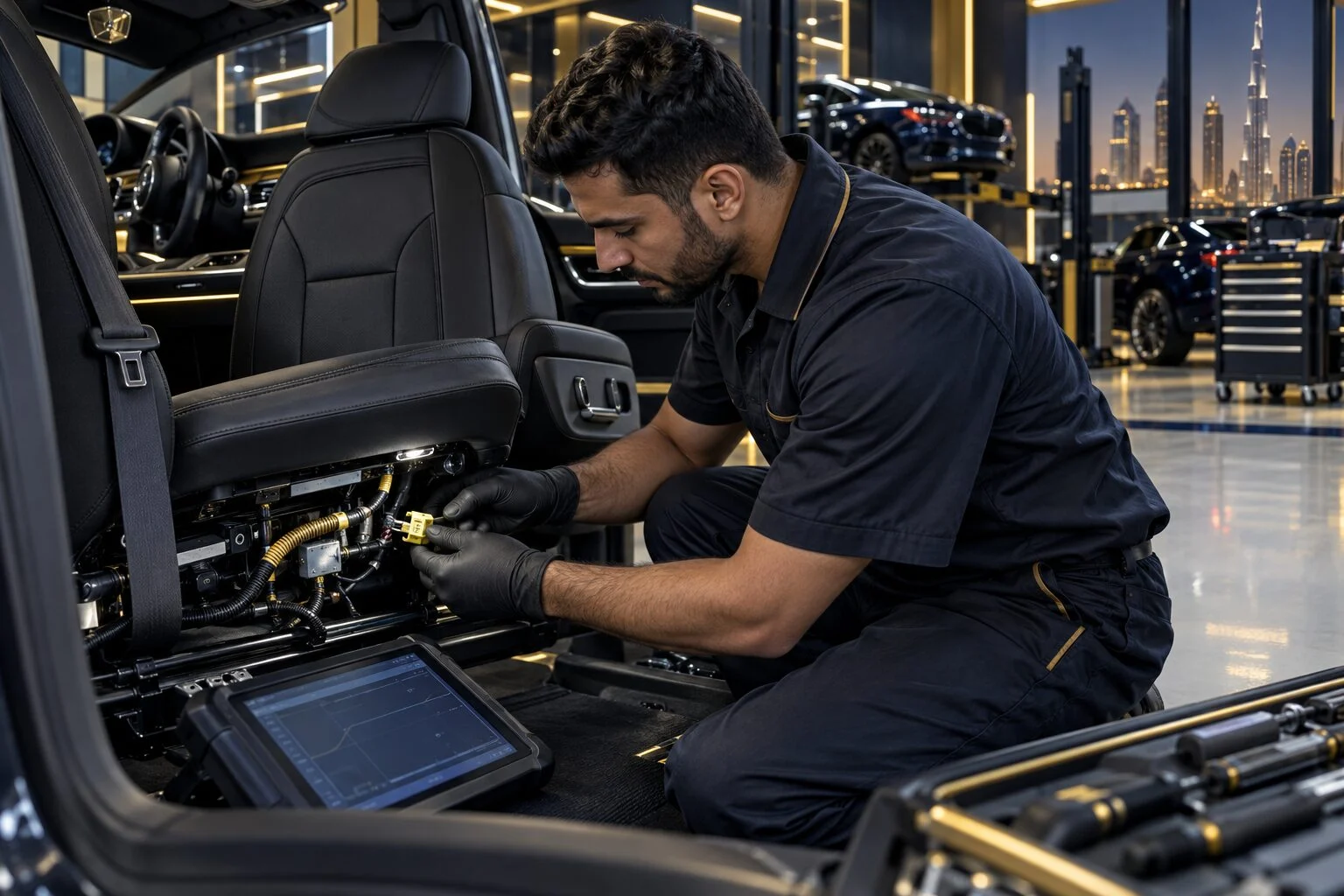
What the SRS warning can involve
The restraint control module monitors circuits and uses crash and occupant information to manage deployment decisions. Front, side, curtain, knee, and seat airbags may be fitted. Seat belts can include pretensioners and load-limiting functions. Seats may contain occupancy classification, position, buckle, and side-airbag circuits. Steering wheels use a clockspring or spiral-cable path for the driver airbag and controls.
A fault description guides the inspection. A driver-airbag circuit fault can involve the module, airbag, clockspring, connectors, steering work, or wiring. An under-seat fault may change with seat movement because a connector or harness is strained. A passenger-occupancy fault can involve the seat sensor, wiring, seat configuration, calibration, or control data. Collision faults require inspection of deployed components and the impact areas that activated them.
Tell us the vehicle model and when the warning appeared. We can request the VIN later if it is needed to match a specific component.
After an airbag deployment
What a deployed airbag can affect
Deployed airbags are only the most visible part of collision-related SRS work. The inspection should identify every fired pretensioner, locked or damaged belt, affected sensor, torn trim, damaged seat, steering-wheel or dashboard component, wiring concern, module procedure, and related body repair. The estimate should cover the related work, including any collision repair, so the complete job is clear before you approve it.
| Area | What we check | Possible repair | Final check |
|---|---|---|---|
| Steering wheel and driver side | Driver airbag, wheel, clockspring, column trim, steering controls, and wiring | Correct module and damaged supporting parts, with installation procedures followed | SRS status, steering controls, horn where applicable, and steering-angle needs |
| Dashboard and passenger side | Passenger airbag, dashboard tear path, mounts, trim, windscreen relationship, and wiring | Airbag and correct dashboard or trim components rather than cosmetic covering | Secure fit, warning state, passenger system indication, and cabin finish |
| Seats and side protection | Seat airbags, curtain airbags, occupancy system, pretensioners, buckles, belts, and connectors | Vehicle-specific deployed or damaged parts plus seat and headliner work | Seat operation, belt retraction, buckle status, occupancy input, and SRS scan |
| Structure and sensors | Impact zones, crash sensors, mounts, wiring routes, water entry, and structural repair | Sensor or harness replacement and correct mounting after body dimensions are restored | Secure mounts, correct connections, fault status, and related calibration |
Parts must match the vehicle
Airbags, sensors, belts, and control units
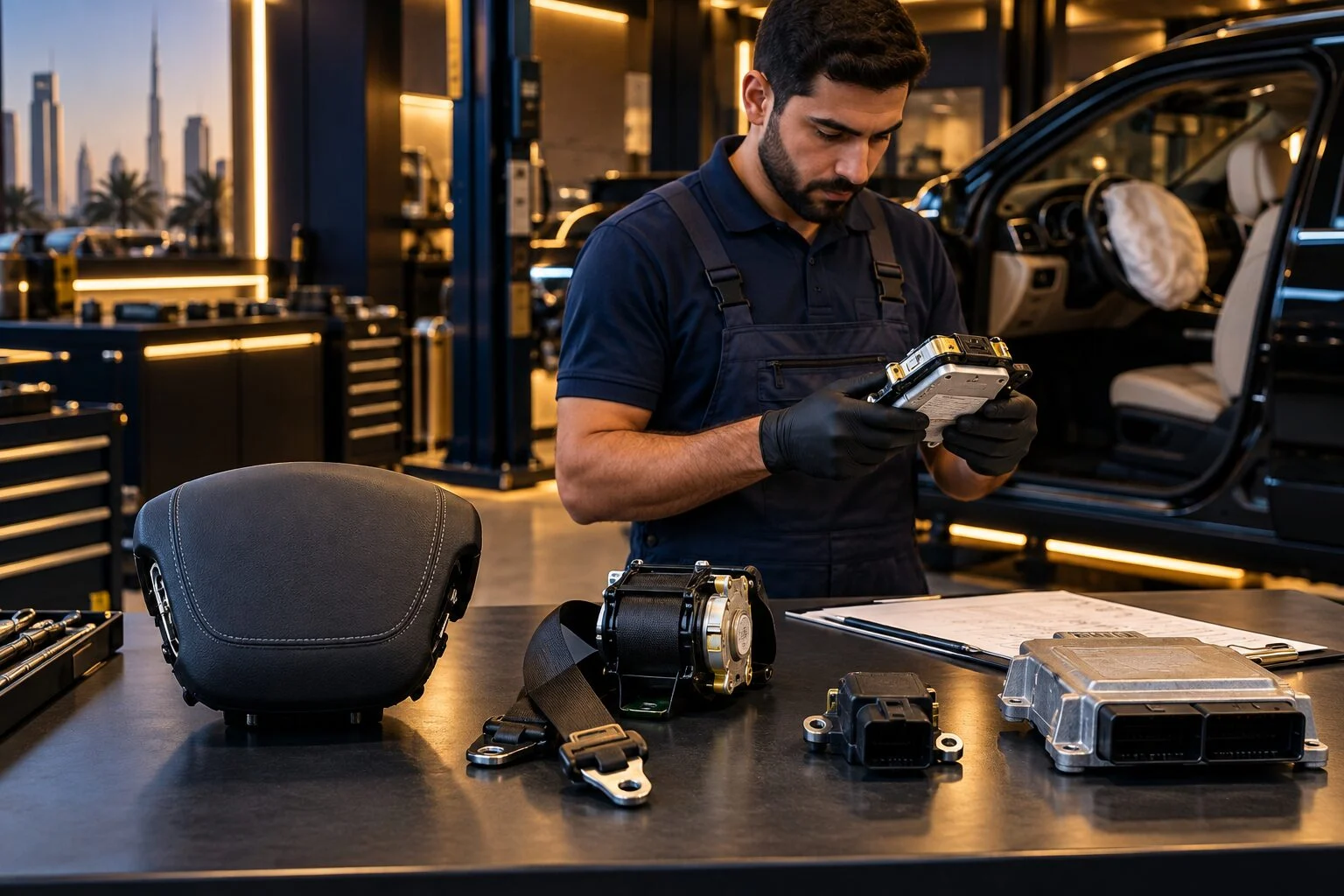
The manufacturer’s procedure for the exact vehicle identifies which airbags, pretensioners, sensors, wiring and control units need replacement or inspection. A similar-looking airbag or matching connector is not proof that a part is safe to install. We identify each required part and document its source in the written estimate.
For a deployed airbag or fired pretensioner, the quote follows the manufacturer’s replacement requirements. We do not substitute a used, salvaged or unverified inflator because it appears to fit. If the required replacement or procedure is unavailable, we explain the limitation before accepting the job. The quote identifies the selected part, its source and any required programming or calibration.
Airbag modules and pretensioners require careful handling and storage. Electrical tests follow the vehicle’s service information; some SRS wiring repairs are prohibited and require a replacement harness. This is not a suitable DIY repair area.
Safe repair sequence
From diagnosis to final check
-
01
Describe the warning or collision
Share the vehicle, whether any airbag deployed, and your preferred visit or pickup. A dashboard photo is optional.
-
02
Arrange safe arrival
Use the free workshop inspection or arrange pickup. If an airbag deployed or the vehicle may be unsafe, call about recovery before driving; we confirm the transport method and any recovery charge first.
-
03
Scan and inspect
We read relevant faults, inspect affected components and circuits, and create a complete collision inventory when deployment occurred.
-
04
Review the written estimate
The quote identifies airbags, belts and other parts, labor, trim, programming, outside services and the VAT-inclusive total. We ask before adding work if dismantling reveals another problem.
-
05
Complete approved repairs
Correct components are installed and related wiring, trim, seats, belts, steering, sensors, or module work is completed.
-
06
Verify the restraint system
We check the SRS warning sequence, stored faults, connections and any coding or calibration the repair requires. You receive a record of the work completed.
Direct safety answers
Car airbag repair FAQs
Can I drive with the airbag warning on?
The vehicle may still move, but a restraint function may be unavailable. Arrange inspection promptly. If an airbag has deployed, do not drive the car before the system and other crash damage are assessed and repaired; call to arrange safe transport.
Can an airbag warning simply be reset?
A code can be cleared only after the cause is understood and repaired. If the fault remains, the warning may return or the system may remain unreliable. Bypasses are not a proper repair.
How much does airbag repair cost?
The first workshop inspection is free. Advanced SRS testing is estimated at AED 330–900 a pretensioner or buckle repair at AED 710–2,380 per position, and one airbag replacement at AED 1,710–7,140+. These estimated totals exclude 5% VAT for the listed work; collision repairs involving several restraints can cost more.
Do seat belts need replacement after deployment?
Fired pretensioners, locked belts, damaged webbing, and affected buckle or anchor components must be identified. The correct action depends on the vehicle and collision, not appearance alone.
Does the SRS module need programming?
Some vehicles require control-unit replacement, coding, programming or calibration after a collision. We follow the model’s service information and list the required procedure in the written estimate.
Can you repair an airbag after a collision?
We can inspect the complete restraint system and quote the correct airbags, belts, sensors, module work, wiring, trim, and related procedures. Cosmetic covering of a deployment opening is not a safe substitute.
Is mobile airbag repair available?
A dedicated on-site inspection can assess suitable concerns; we confirm any separate visit fee before dispatch. Most dismantling, programming, replacement and final checks require workshop equipment.
What information is needed to book?
The vehicle model, warning or collision description, and preferred visit or pickup are enough to start. We may request the VIN or photos later for parts identification and transport planning.
Related repairs after a collision
Arrange safe transport after a collision
Collision damage can affect steering, suspension, brakes, glass, body structure, wiring and driver-assistance sensors. Even after the restraint repair, a displaced wheel, fluid leak, loose panel or blocked view can make the car unsafe to drive. Tell us what is visible so we can discuss suitable transport and the checks needed before collection.
Before transport
Check for fire, smoke, fuel odor, coolant or oil loss, unstable body parts, high-voltage warnings, and red stop instructions. Do not touch deployed inflators, damaged wiring, or exposed electrical parts. Call with the location and visible condition. Free planned pickup and delivery are available; we confirm any separate recovery charge and safe transport method first.
Before collection
We explain the completed restraint work, the parts fitted and the final SRS checks. If other collision repairs remain, they are identified separately before you drive.
Airbag and SRS repair · Al Quoz 4
Get the restraint system checked
Tell us the vehicle model and whether the SRS light is on or an airbag deployed. We will arrange the right inspection, explain the repair choices and give you a written estimate. After a collision, call before moving the vehicle.