Steering repairs · Al Quoz 4
Car Steering Repair in Dubai
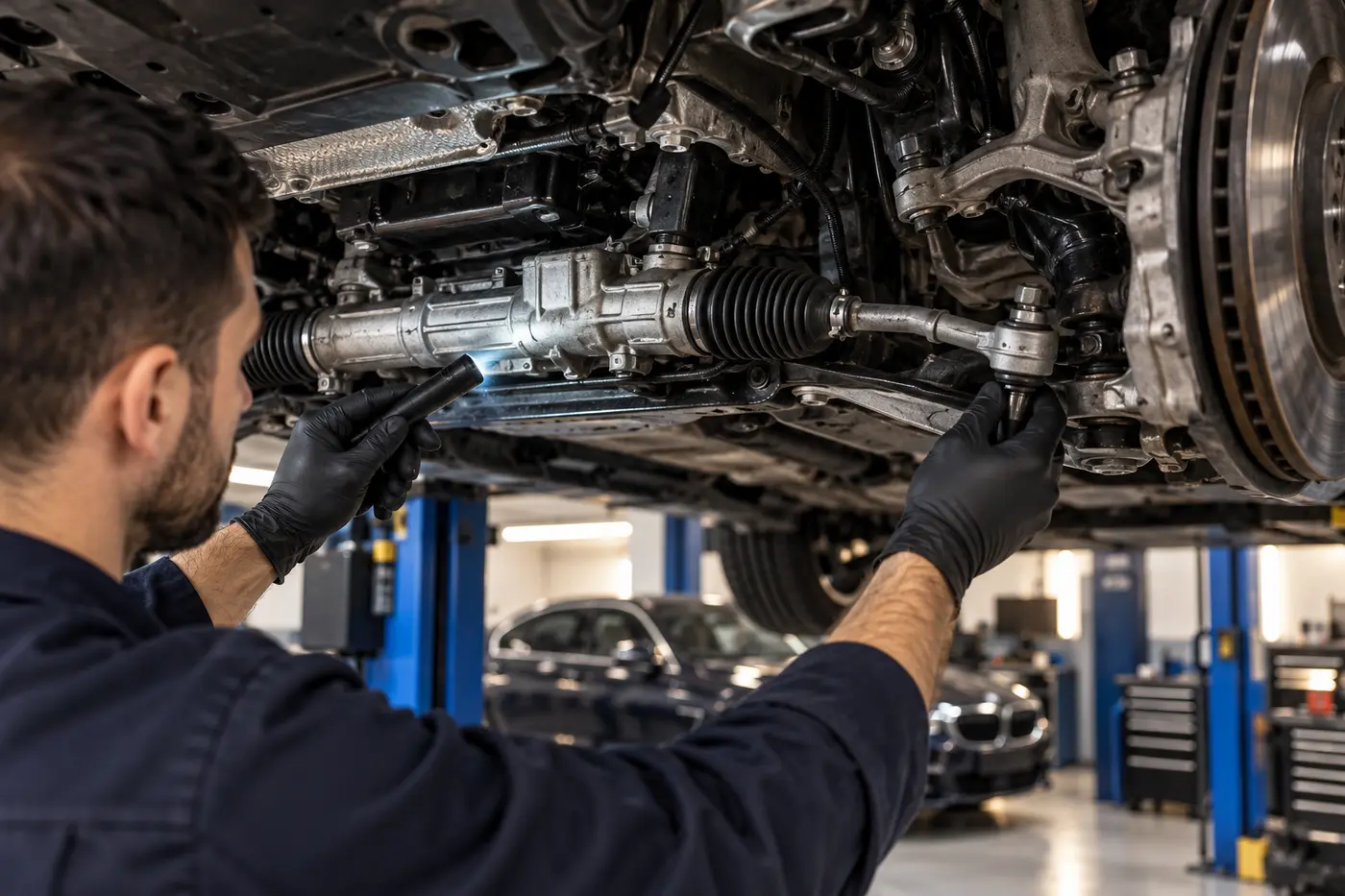
Heavy, loose or noisy steering needs the right repair, not a guessed part. Our Al Quoz 4 workshop checks the rack, joints and power assistance, then gives you a written estimate. An outer tie-rod end is estimated at AED 350 to 850 per side fitted, before VAT; the price table covers other common work.
01
Estimated fitted costs
Steering repair prices in Dubai
These estimated ranges cover the parts and labor described in each row and exclude 5% VAT. The written quote shows the VAT and final payable total. Alignment, coding, calibration or extra parts are added only when needed and listed separately.
| Service | Estimated price before VAT | Typical inclusion |
|---|---|---|
| Initial workshop inspection | Free | Symptom review and initial steering, tire and connected-system assessment. Paid dismantling or extended electrical testing is quoted first. |
| Computer diagnosis | AED 250 to 600 | Fault scan, live-data review and focused power or sensor checks for electric assistance. Extended testing is separate. |
| Outer tie-rod end | AED 350 to 850 per side | New compatible joint and installation. Alignment, seized hardware and additional worn joints are separate. |
| Inner tie rod | AED 500 to 1,100 per side | Compatible inner joint, labor and basic play check. Rack damage and alignment are not included. |
| Power steering hose | AED 600 to 1,500 | Defined hose replacement, compatible fluid and labor. Rack, pump and extensive leak cleanup are separate. |
| Power steering pump | AED 1,400 to 3,200 | New or quality replacement pump, fitting and required fluid. Pricing varies strongly by model and part source. |
| Steering rack replacement | AED 2,200 to 6,500+ | New, refurbished or quality replacement assembly and installation. Alignment, coding and luxury-car units may add cost. |
| Front wheel alignment | AED 150 to 280 | Geometry measurement and adjustment where suitable after mechanical faults are repaired. Parts and calibration are separate. |
02
Signs to have checked
Heavy, loose or noisy steering
You do not need to identify the failed part. Tell us the vehicle model and what has changed. We will connect the symptom with the right checks and advise whether it is sensible to drive the car to our Al Quoz workshop.
Heavy steering
Extra effort at parking speed, assistance that comes and goes, or a steering warning can involve power supply, a hydraulic pump, electric assistance, sensors, fluid loss or mechanical resistance. We compare both turning directions and check when the assistance changes.
Loose or wandering
Free movement at the wheel, delayed response or difficulty holding a straight line can come from steering joints, rack mounting, suspension wear, wheel bearings or tires. Physical play must be found before an alignment is used as the answer.
Pulling to one side
A pull can be caused by tire pressure, mismatched tires, brake drag, alignment, ride height, impact damage or steering wear. We inspect the connected systems so the repair targets the cause rather than only centering the wheel.
Noise when turning
Knocks, clicks, rubbing, groaning or pump noise have different causes. The direction, speed and road surface help separate joints, mounts, tire contact, hydraulic assistance and suspension movement without expecting you to diagnose it.
Steering vibration
Shaking through the wheel may relate to wheel balance, tire damage, brake condition, hubs, suspension or driveline parts. We note whether it appears at one speed, during braking or under acceleration before recommending steering work.
Leak or warning light
Fluid below the front of the car does not automatically mean the rack has failed, and a warning light does not name one component. Leak tracing, voltage checks, fault data and a physical inspection establish the next step.
Repair options
Steering repairs and parts
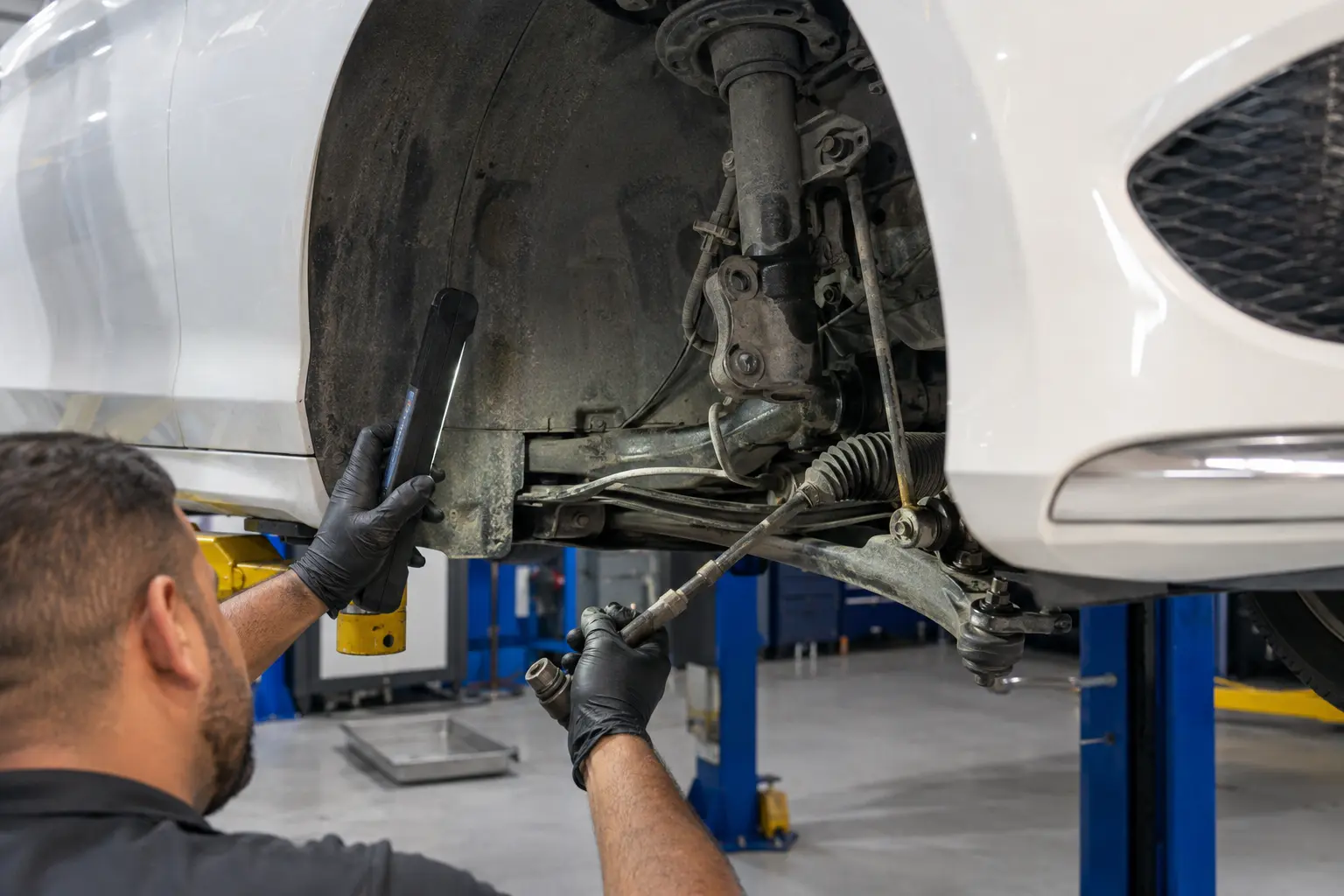
The correct repair depends on the system fitted to your car and the part that has actually failed. We handle mechanical steering components, hydraulic assistance and electric power steering, with related alignment or suspension work when it is required to complete the job.
- Steering rack repair
- Leak, internal wear, excessive play, damaged boots, mounting condition and assistance faults are checked before repair or replacement is proposed.
- Tie rods and joints
- Inner and outer joints, steering ends and linkages are checked for looseness, damage and restricted movement. Alignment is assessed after replacement.
- Power steering pump
- Hydraulic systems are inspected for fluid condition, leaks, hose restrictions, pump noise and pressure-related symptoms before a pump is condemned.
- Electric power steering
- Battery voltage, charging supply, wiring, sensors, fault data and mechanical load are considered before replacing a motor, column or control unit.
- Steering column
- Column joints, bearings, locks, switches and electronic functions are checked according to the model and complaint.
- Alignment and calibration
- Wheel alignment, steering-angle reset or driver-assistance calibration is added only when the confirmed repair and vehicle specification require it.
Repair or replacement
Repair or replace steering parts
A worn joint, hose, boot or connector may be repairable without replacing the rack or pump. If an assembly has failed, we compare compatible new and refurbished parts where suitable for your car.
Your written quote names the part and its condition, labor, and any required fluid, alignment, coding or calibration. Job-specific terms for a refurbished unit are explained before approval.
- Repair
- Best where the existing assembly can be restored reliably without hiding wider wear.
- New part
- Quoted with the brand, specification, installation work and required completion steps.
- Refurbished part
- Offered only with clear condition, compatibility and written job-specific terms.
- Related work
- Fluid, alignment, coding or calibration shown separately when the repair requires it.
03
Your visit
From inspection to handover
The process begins with the symptom and ends by checking the result against the reason you booked. Additional vehicle details are requested later only when they are needed for diagnosis or parts matching.
- 01
Tell us what changed
Share the vehicle model and a short description of heavy, loose, pulling, vibrating, leaking or noisy steering. Choose a workshop visit, pickup or on-site assessment.
- 02
Inspect the connected systems
We check the steering components and consider tires, wheels, brakes and suspension where they can produce the same symptom. The initial workshop inspection is free.
- 03
Confirm the fault
Measurements, scanning, leak checks or controlled movement identify the affected part. Any paid dismantling or extended testing is explained before it starts.
- 04
Review your options
You receive the repair recommendation, parts basis, necessary related work, expected timing and estimated total. You decide what is approved.
- 05
Repair and verify
The approved work is completed, followed by appropriate checks of assistance, free play, warning status, wheel center, geometry or road behavior.
When driving is unsafe
When steering is unsafe
Stop driving and contact us if the steering suddenly becomes very heavy, locks, has severe free play, does not return normally, or changed after a collision, curb strike or deep pothole. The same caution applies when a wheel is visibly displaced, a tire touches the body, fluid is rapidly escaping or a red stop warning appears.
A slower change still deserves inspection. Uneven tire wear, a steering wheel that sits off-center, light knocks, occasional assistance loss or a mild pull can worsen and may affect tires or related suspension parts. Early inspection normally leaves more repair choices available.
Free pickup and delivery is available across Dubai. If the car is unsafe to drive, call us to arrange suitable transport and confirm whether recovery has a separate charge before collection. On-site inspection is available by arrangement; its fee is separate from the free workshop inspection.
Matched to your car
Mechanical, hydraulic and electric steering
The system fitted to your car decides the checks. Hydraulic assistance needs fluid, leak and pump checks; electric assistance needs power-supply, sensor and mechanical checks. Some cars combine both. A fluid mark or stored fault code alone cannot prove the rack has failed. We identify the system before quoting parts or any required calibration.
- Hydraulic system
- Check fluid, leaks, hoses, pump operation and mechanical movement.
- Electric system
- Check voltage, fault data, sensors, wiring, motor assistance and mechanical load.
- After parts fitting
- Complete the required fluid service, alignment, coding or calibration for the job.
- Final result
- Confirm steering effort, wheel center, warning status and the original driving concern.
Common questions
Steering repair questions
How much does steering repair cost in Dubai?
Estimated prices before 5% VAT are AED 350 to 850 per side for an outer tie-rod end, AED 1,400 to 3,200 for a pump and AED 2,200 to 6,500 or more for a rack replacement. These are different repairs, not charges automatically added together. Your quote shows any alignment, calibration and the total including VAT.
Is the steering inspection free?
Yes. The initial workshop inspection is free. If the fault requires extended electrical testing, scanning, dismantling or specialist access, that paid stage is explained before it begins.
Will wheel alignment fix a pulling car?
Not always. Tire pressure, tire construction, brake drag, ride height, worn steering or suspension parts and impact damage can all cause pulling. Alignment is useful after those conditions are checked and any mechanical fault is repaired.
Does steering vibration mean the rack is damaged?
No. Wheel balance, tire damage, brakes, hubs, suspension and driveline parts can transmit vibration through the steering wheel. The speed and driving condition in which it appears help narrow the cause.
Can you repair electric power steering?
We inspect electric steering concerns, including power supply, wiring, sensors, fault data and mechanical resistance. Repair, coding or replacement requirements depend on the vehicle and confirmed fault.
Can a leaking steering rack be repaired?
That depends on the leak location, rack condition, parts availability and whether reliable rebuilding is available for the unit. The quotation may compare repair, refurbished replacement and new replacement when suitable.
Do you provide pickup and delivery?
Yes. Free pickup and delivery is available across Dubai. Tell us if steering control is uncertain so an appropriate movement method can be arranged.
Can you inspect the car at my location?
Dedicated on-site inspections are available through our service van by arrangement. Some tests and repairs still require workshop lifting, alignment equipment or programming access.
How long does steering repair take?
Timing depends on diagnosis, parts availability, access and whether alignment, programming or calibration is required. The estimate provides the expected timing for the confirmed work before you approve it.
What do I need to send when booking?
The vehicle model and a short description of the steering problem are enough to start. We may request the year, VIN, warning photo or recent impact details later if they are needed for safe collection, diagnosis or parts matching.
What will I receive after repair?
The handover explains the confirmed fault, approved work, parts supplied and checks completed. Your invoice records the main labor and parts, along with any job-specific written terms or follow-up advice.
Book steering repair
Arrange your steering repair
Tell us the vehicle model and what has changed. We can arrange a free workshop inspection, pickup and delivery, or an on-site assessment before quoting the repair.