Large repairs · Al Quoz 4, Dubai
Major Car Repair in Dubai
Facing an engine rebuild, gearbox overhaul or extensive accident repair? Auto Repair UAE inspects the fault, explains repair and replacement choices, and gives you a written estimate before major work. Engine and transmission overhaul budgets start around AED 6,190 before 5% VAT for the work shown below. Collision repairs involving several systems are quoted after inspection.
Free initial workshop inspection · Free pickup and delivery by arrangement · Paid tests and dismantling quoted first.
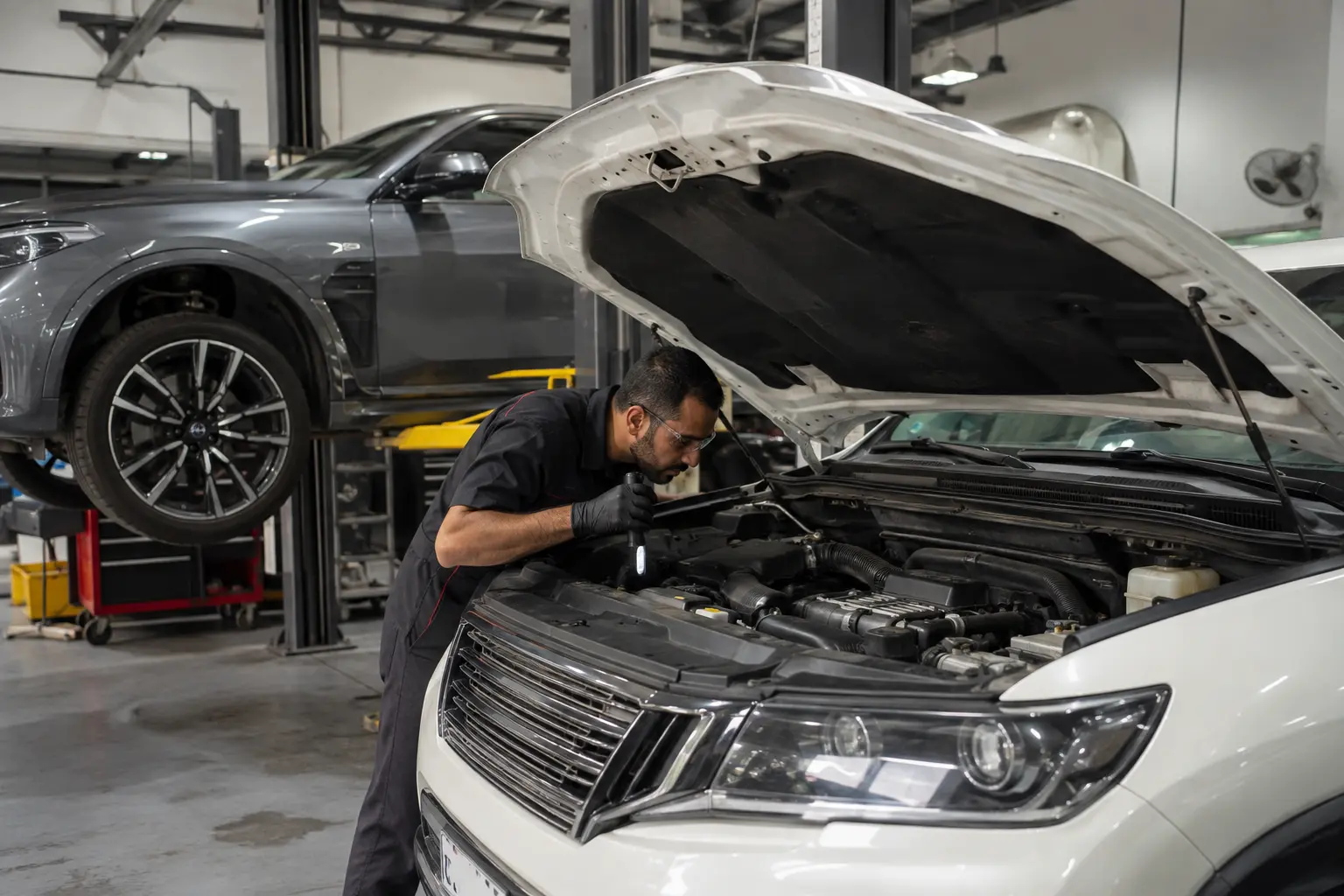
Plan the repair budget
What can a major car repair cost?
These are estimated budgets before VAT for the named overhaul work; 5% VAT is not included in the displayed prices. The estimates cover ordinary removal, installation, selected repair parts, required fluids and final checks. They are not fixed prices for every vehicle. The written quote confirms the exact parts, labour, any machining or programming, exclusions and total before you approve the repair.
| Work | Estimated total before VAT | What changes the total |
|---|---|---|
| Engine rebuild or overhaul | AED 6,190–20,950+ | Damage found after measurement, machining, internal parts and access |
| Transmission overhaul | AED 6,190–17,145+ | Gearbox design, hard parts, electronics, fluids and adaptation |
The ranges cover the named overhaul only and do not include unrelated faults or additional damage found after access. A collision repair involving body, chassis or electronic work needs an individual VAT-inclusive quote after inspection; individual panel prices do not describe a complete multi-system repair. The free initial workshop check reviews symptoms and visible condition. Advanced diagnosis, dismantling and repairs are explained and priced before they start.
Choose by condition and total cost
Repair, rebuild or replace?
A focused repair can be enough when the failure is contained and the surrounding assembly is sound. A rebuild makes sense when internal wear or damage can be measured and corrected with suitable parts. A replacement can be better when repairability is poor or an identified unit offers a sounder installed result.
Compare complete fitted totals on the same basis. An engine or gearbox unit price alone leaves out removal, installation, seals, fluids, programming, testing and any related damage. For a used or remanufactured unit, confirm compatibility, condition, what comes with it and the written warranty terms for that specific option.
- Focused repair
- Fix a confirmed area when other components remain serviceable. Include access, related seals and verification in the same quote.
- Rebuild
- Inspect and measure the assembly, then list the internal work and any machining. Review a revised quote if access reveals more damage.
- Replacement
- Compare genuine, supplier, remanufactured and suitable used parts where available. Match the exact specification and quote the installed total.
Before bringing the car in
When should you stop driving?
Call before moving a car with an oil-pressure warning, rapidly rising temperature, heavy knocking, a large fluid or fuel leak, unreliable gear engagement, unstable braking or steering, smoke, or collision damage around a wheel. Switch the engine off after a serious oil-pressure or overheating warning once you have stopped safely. Further driving can extend damage or make the car unsafe to control.
Free pickup and delivery can be arranged, but an undriveable vehicle may need suitable recovery. Tell us where it is and what happened so the movement plan matches its condition.
What to tell us first
- Make and model, plus the warning or symptom
- Whether the car starts, moves and brakes normally
- Where the vehicle is parked for collection
- Photos or an existing quote if you have them
You do not need to identify a failed part before contacting us.
One plan for connected work
What the major repair can include
Major work may involve one assembly or several systems affected by the same failure. We identify the main repair, related work required for a reliable result and separate advisory items. Detailed fault and component information belongs on the dedicated service pages.
- Engine and cooling
- Internal damage, head work, oil-pressure problems, overheating and connected cooling or lubrication repairs. See engine repair choices and costs.
- Transmission and driveline
- Confirmed internal wear, hydraulic or electronic control faults, clutch or converter concerns, and the fluids and adaptations involved. See transmission repair options.
- Accident damage
- Panels, structural measurements, cooling, wheels, suspension, lights and sensor mounts after an impact. See collision repair assessment for the bodywork and safety checks.
For an unclear symptom that has not yet become a defined major project, start with general car repair. The services directory lists smaller, separately priced work.
Before you say yes
What should the written estimate show?
The first inspection may show enough to quote the job. If damage is hidden, we can quote a defined test or dismantling stage first. The main repair should begin only after the findings, repair choice and total have been reviewed with you.
The estimate should state what is confirmed, what still depends on access, the parts condition, labour, necessary fluids and consumables, outside machining or calibration, testing, expected timing, VAT and exclusions. If new damage changes the job, we explain the finding and revised total before additional work. A lower assembly price is useful only when the complete installed work is comparable.
Already have an agency or workshop estimate? Share it with your vehicle details. We can compare the same parts condition, labour, fluids, testing and VAT basis after checking the car.
Ask these before approval
- Which fault has been confirmed by tests or inspection?
- Which parts and related work are included?
- What might change after dismantling?
- What is the VAT-inclusive amount payable for approved work?
- How will the repair be checked before handover?
Planning example, not a completed job
If engine compression is low
Suppose an engine runs poorly and one cylinder shows low compression. The free initial workshop check records the symptoms and visible condition. If further testing is appropriate, a separately priced compression or leak-down test helps narrow the cause before anyone approves an engine rebuild.
The result might point toward a sealing problem in the cylinder head or wear deeper inside the engine. More access may be needed to confirm the condition and compare a focused repair with rebuilding or replacing the engine. This example has no fixed test or repair price; the quote for each stage is given for the actual vehicle.
- First approval
- Agree the specific test, price including VAT, and what it can establish.
- Possible findings
- Review measured results and any parts that must be removed to identify the damage.
- Pause point
- Receive the findings, repair choices and revised total before the main work starts.
From assessment to handover
How the repair proceeds
Bring the car to our Al Quoz 4 workshop, arrange free pickup and delivery, or ask about a separate on-site inspection. We confirm any mobile inspection charge before the visit.
- Inspect and test
- Start with the reported fault and accessible condition. Explain any paid testing or access needed to establish the repair.
- Compare the choices
- Present a focused repair, rebuild or replacement when more than one suitable option is available. Quote parts, labour and the VAT-inclusive payable amount.
- Approve and carry out
- Proceed with the agreed stage. If access reveals a materially different problem, pause and request approval for the revised work.
- Verify and hand over
- Check the result against the original concern: for example, leak or pressure tests, temperature, gear operation, warning status, alignment or road behavior as applicable. Explain completed work and any remaining advisories.
Completion time depends on inspection findings, dismantling, parts lead time and any specialist work. We confirm an expected date when the parts and required work are known.
Before you commit
Major repair questions
Is a fault code enough to approve a major repair?
No. A code points to a system or condition to investigate. A large repair should be supported by relevant tests or physical findings that connect the fault to the recommended repair.
Can the estimate change after dismantling?
Yes. Some internal or impact damage is hidden until access. Approve the priced inspection stage first; new findings and the revised repair total should come back to you before additional work.
Does the initial inspection include dismantling?
No. The free initial workshop inspection reviews the symptom and visible condition. Specialist tests, removal of parts and internal inspection are separately explained and quoted before they begin.
How long will a major repair take?
It depends on the fault, access, parts availability and any machining, programming or calibration. We give an expected timeframe once the required work and parts are confirmed.
What if I have another garage’s quote?
Send it with the vehicle model and concern. We can compare the listed work and parts, but an inspection is needed before confirming our own diagnosis, total and applicable warranty terms.
Independent workshop · Al Quoz 4, Dubai
Request a major repair assessment
Tell us the model, the main symptom or damage, and whether the vehicle can be driven safely. Share an existing estimate if you have one. We will arrange the right first inspection and explain the next price and approval step.
Start with a free workshop check
Free pickup and delivery are available by arrangement in Dubai. If safe movement is uncertain, call first so recovery or an on-site assessment can be discussed before you drive.