
Car modification in Dubai starts with three checks: approval, compatibility, and total cost. Decide what you want to change, confirm the route for your registered vehicle, and price the supporting work before buying parts. A wheel, body kit, exhaust, or tune must work with the rest of the car.
- Approval: settle licensing requirements and insurer acceptance before work.
- Fitment: check the exact model, part number, sensors, clearances, and supporting systems.
- Budget: include parts, installation, testing, any approval fees, and VAT.
For substantial changes covered by Article 26, do not use the modified vehicle until the licensing authority has inspected it and approved the changes.
What Counts as Car Modification
A repair puts a failed system back into working order. A modification changes the vehicle from its factory specification. Sometimes the line is obvious. A body kit is a change. Replacing a worn factory shock with the correct equivalent is a repair.
Other cases sit in the middle. Larger wheels may look like a simple swap, but their width, offset, load rating, and tire profile can change clearance and steering behavior. A new screen may seem like cabin work until its wiring interferes with a camera, amplifier, or vehicle network.
A part can fit in the workshop and still be wrong for road use, inspection, daily driving, or the rest of the car.
That is why vehicle modification planning matters. The first question is not “Which part looks best?” It is “What result do you want, and what else will that result affect?”
Choose the Result Before Choosing Parts
Drivers usually arrive with one of five goals. They want a different look, more engine response, better road handling, equipment for desert use, or a cabin that suits how they use the car. Each goal points to a different build path.
Appearance
Wraps, paint, wheels, trim, spoilers, body kits, upholstery, and lighting can change how the car looks without chasing engine output.
Road handling
Tires, alignment, dampers, springs, bushings, and brakes should be considered as a system, not separate purchases.
Engine response
Diagnostics, cooling, fueling, intake, exhaust, and calibration determine whether a power change can work without creating another fault.
Off-road use
Ground clearance, tire construction, suspension travel, underbody protection, cooling, and recovery equipment matter more than stance.
Cabin use
Audio, cameras, screens, insulation, upholstery, storage, and lighting must work with the car’s wiring and safety equipment.
Reversibility
Bolt-on parts may be removable. Cutting, welding, paint, wiring changes, and drivetrain work can be costly to undo.
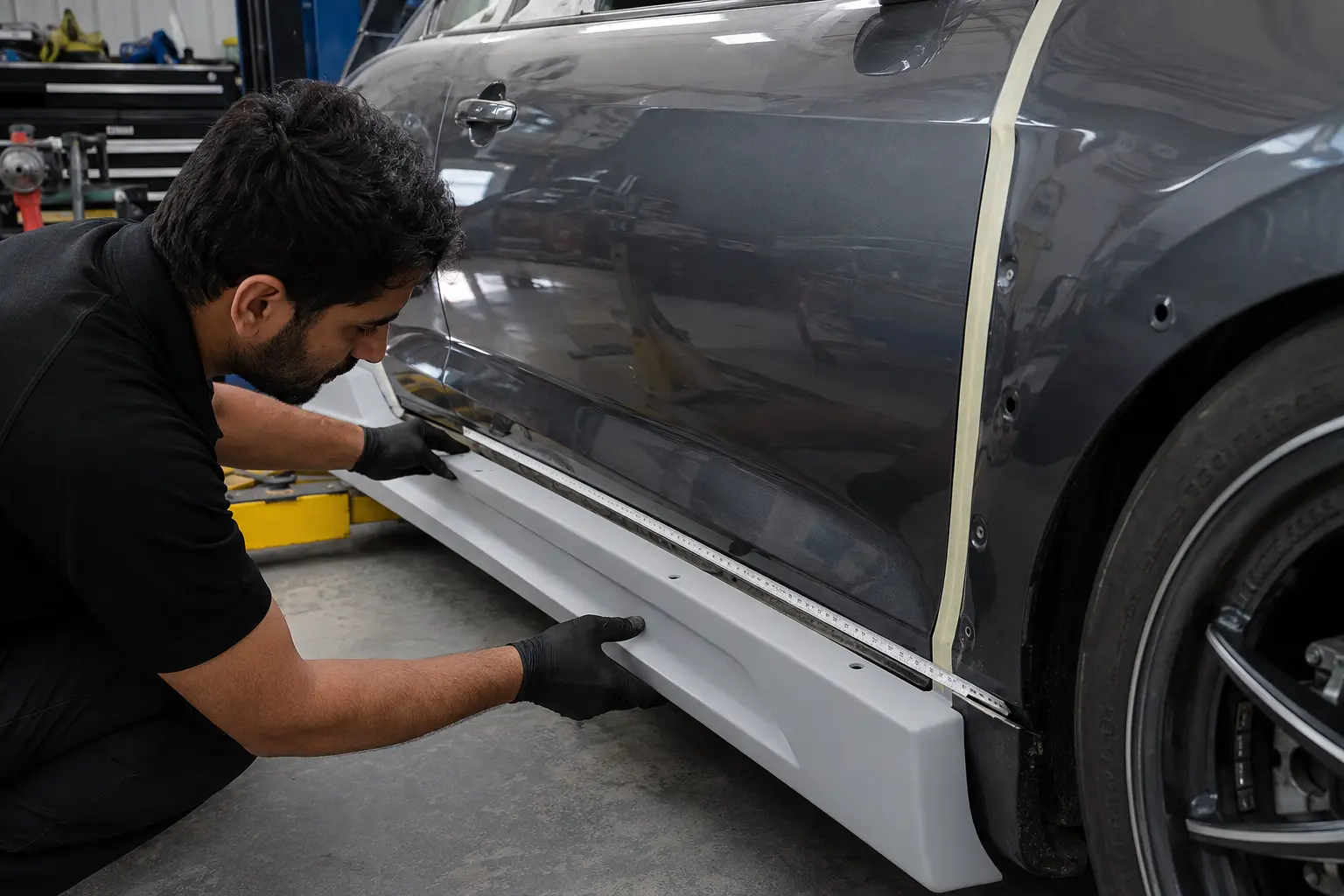
Exterior and Body Changes Need More Than Fitment
Car customization in Dubai often starts with a wrap, wheel set, spoiler, grille, bumper, or body kit. The visual result matters, of course. Yet the hidden checks decide whether the car remains usable.
Body kits and exterior parts
A front bumper can change cooling airflow. A side skirt can reduce ramp clearance. A grille or trim panel may cover a radar sensor. Parking sensors can sit at the wrong angle after a panel change and trigger false alerts.
- Dry-fit panels before paint or bonding
- Check parking sensors and camera positions
- Confirm tire and steering clearance
- Inspect cooling and brake airflow
- Check sharp edges and mounting points
- Measure ground clearance on ramps
Wraps, paint, and color changes
Preparation controls the finish. Dirt under trim, weak paint, peeling clear coat, and rushed edge work do not disappear under vinyl. A color change may also affect registration records, so confirm the current process before committing to material.
Wheels Tires Suspension and Brakes Work Together
This is where “just one change” often becomes four. A wider wheel changes the tire position. A lower ride height changes geometry. A different tire profile changes ride, clearance, and speedometer behavior. Brake clearance may disappear even when the wheel diameter increases.
| Change | Check first | Supporting work | Reason to pause |
|---|---|---|---|
| Wheels and tires | Diameter, width, offset, load rating, tire profile | Balance, alignment, full-lock clearance check | Rubbing, low load rating, or brake contact |
| Lowering springs | Damper match, ride height, suspension travel | Alignment and tire-clearance inspection | Coil bind, tire contact, or no bump travel |
| Coilovers | Vehicle fitment, adjustment range, mounting type | Corner-height setup and geometry | Unknown parts or unstable alignment |
| Lift kit | Steering angles, driveshaft angles, brake hoses | Geometry, calibration, road-use check | Binding, warning lights, or stretched hoses |
| Brake upgrade | Wheel clearance, brake balance, tire grip | Fluid, bedding, leak check, road test | Incorrect bias or incompatible parts |
Here is the awkward bit: larger parts do not automatically mean shorter stopping distances. Tires create the contact with the road. Pad compound, operating temperature, brake balance, fluid condition, and installation all matter. A brake package chosen for repeated track stops may feel poor during a short morning commute.
Inspect Supporting Systems Before Performance Upgrades
Want more power? First make sure the car can manage the power it already has. A tune cannot repair an ignition fault, weak fuel supply, coolant leak, worn mount, slipping transmission, or overheating problem. It may expose the issue sooner.
What the baseline inspection should cover
- Stored and pending diagnostic fault codes
- Fuel trims, misfire data, and sensor readings
- Cooling-system pressure and operating temperature
- Oil leaks, coolant leaks, and intake leaks
- Transmission behavior and fluid concerns
- Brakes, tires, mounts, and driveline condition
Performance upgrades in Dubai also face heat. Intake temperature, cooling capacity, oil temperature, and repeated low-speed driving can change how a setup behaves. A dyno number is only one data point.
Engine Exhaust and ECU Tuning Decisions
An intake, exhaust, turbocharger, supercharger, or ECU calibration changes more than sound. Airflow, fueling, ignition, heat, torque delivery, transmission load, and emissions-related systems can all be involved.
ECU tuning
ECU tuning in Dubai should begin with the correct software identification and a health check. The calibration must suit the engine, fuel, hardware, and intended use. Copying a file because two cars share a badge is a bad shortcut.
Exhaust modification
An exhaust system modification needs clearance, support, leak testing, heat protection, sensor compatibility, noise review, and an approval check. Removing emissions equipment or creating excessive noise can cause legal, inspection, and drivability problems.
Forced induction and engine work
A turbo or supercharger build can require fuel-system changes, cooling work, stronger internal parts, clutch or transmission planning, brake capacity, and calibration. If the budget covers the headline part but not the supporting systems, stop. The build is not funded yet.
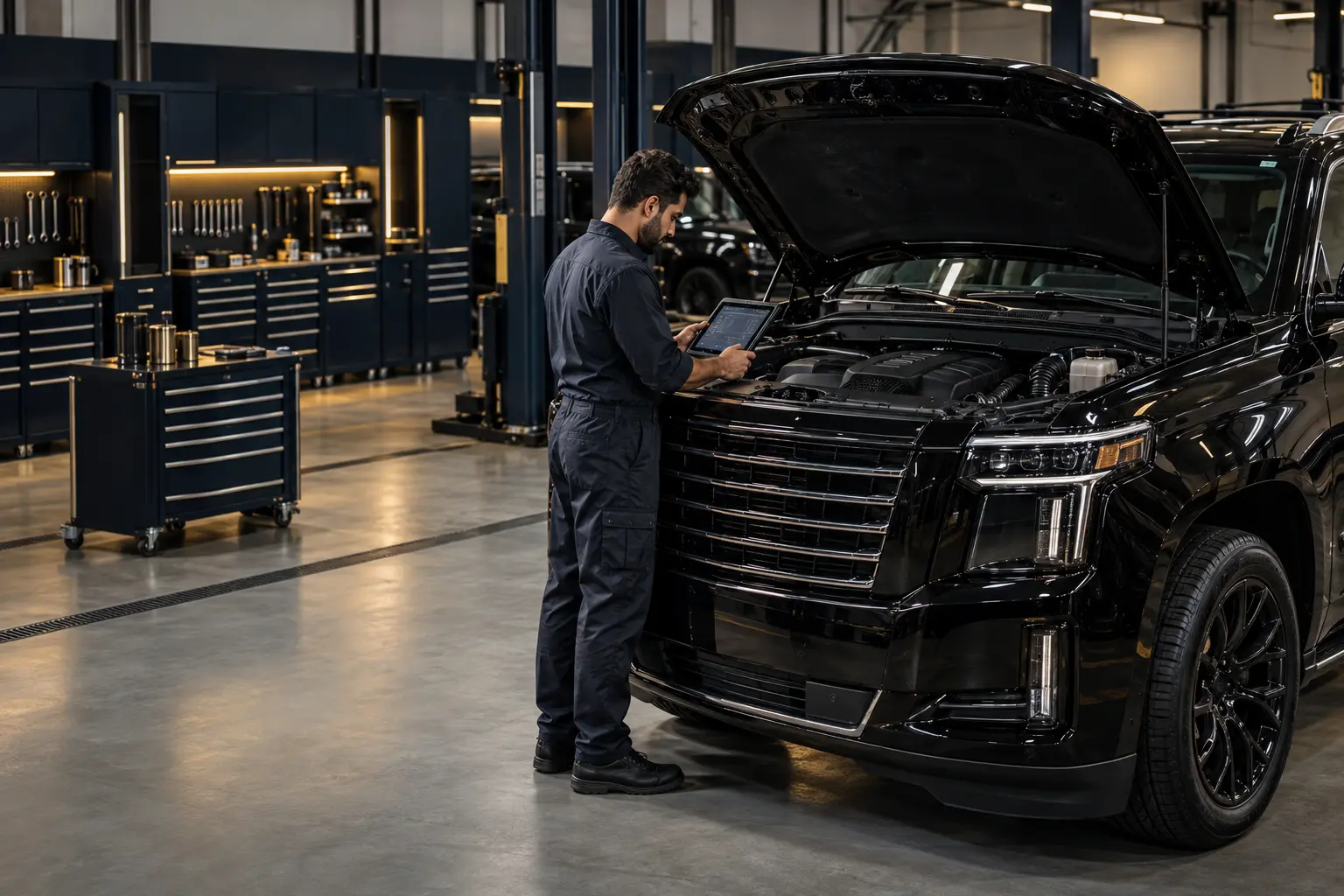
Electrical Interior and Technology Upgrades
Cabin changes can look harmless. Then a low-quality connection creates battery drain, audio noise, warning messages, or network faults. Modern vehicles share data across control modules, so power and communication wiring cannot be treated like household wiring.
Plan the electrical load
Audio amplifiers, screens, ambient lighting, cameras, trackers, and accessories need the correct fuse protection, cable size, ground points, routing, and sleep behavior. Airbag paths and seat wiring must remain clear.
Keep factory systems working
Steering controls, parking sensors, factory amplifiers, microphones, cameras, and vehicle settings may depend on the original head unit. An interface or coding step can be necessary.
If you are planning a sound-system change, read our car audio installation cost and setup guide before choosing components.
What Car Modifications Need Approval in Dubai?
Article 26 of Federal Decree-Law No. 14 of 2024 requires licensing-authority approval for substantial changes to vehicle shape, chassis, body, engine power, or color. It also requires authority inspection and approval of those changes before the vehicle is used. A workshop invoice or a part sold in the UAE does not establish that approval.
Choose the route for your vehicle and change
The RTA inspection guidance distinguishes these cases:
- Licensed vehicle color change: apply in person or through the Dubai Police app for the Criminal Investigation Department permit.
- Unlicensed vehicle with a customs card: RTA describes technical inspection first, followed by the application and approved changes.
- Substantial engine or body changes: RTA identifies specific modifications through the local importing dealer, and technical-committee referral for vehicles imported already modified. Its terms also refer modified bodies to the committee.
These cases do not provide one universal application route for every aftermarket build. Ask RTA to confirm the route for your vehicle, registration, and proposed parts before work.
After an approved color change
Complete the vehicle inspection before applying to amend the vehicle ownership data. The RTA online flow requires sign-in, vehicle selection, validation of relevant inspection, insurance and NOC records, then payment. The updated ownership certificate records the changed color. Existing ownership must be valid.
Keep approval, insurance, and fitment separate
Give the authority and insurer the exact proposed change. Ask the insurer for written confirmation of coverage, valuation, excess, and any exclusions. Retain part specifications, invoices, installation records, approval documents, and the required test results. Government approval does not settle every insurance or warranty question.
RTA procedures checked September 27, 2026. Confirm the vehicle-specific documents and fees before ordering nonreturnable parts.
Car Modification Cost in Dubai
The workshop planning ranges below exclude 5% VAT. The next column shows the same ranges with 5% VAT added. These are the current published workshop ranges, checked September 27, 2026, not fixed packages or complete-build totals.
| Work | AED before VAT | AED including 5% VAT | Confirm in the estimate |
|---|---|---|---|
| Body kit fitting | 1,430–6,190+ | 1,501.50–6,499.50+ | Kit purchase, paint, sensor work, and fabrication may cost extra. |
| Wheel and suspension setup | 1,145–7,620+ | 1,202.25–8,001+ | Wheels, tires, springs, or coilovers may be extra. Confirm alignment. |
| Interior customization | 760–11,430+ | 798–12,001.50+ | Price depends on material, coverage, wiring, trim work, and supplied components. |
| Exhaust or intake fitting | 855–7,145+ | 897.75–7,502.25+ | Confirm hardware, fabrication, sensors, heat protection, and testing. |
A “+” means the upper figure is not a cap. Parts, paint, fabrication, alignment, coding, and testing are included only when itemized. Authority fees and any required approval support must also be identified separately. The written quote should show the agreed work, exclusions, VAT amount, and total payable.
Wraps, ECU calibration, lighting, wheel purchases, and forced-induction builds need a vehicle-specific quote. Their cost changes with the equipment, preparation, supporting repairs, and approval requirements; do not treat a fitting allowance as the price of a complete upgrade.
Modify the Car in Stages or Complete One Build
A staged plan
Stages make sense when the owner wants to control spending, test each change, or keep the vehicle in use. A practical order is maintenance first, then tires and brakes, suspension and alignment, cooling, power work, and finally appearance.
A complete build
A single build can reduce repeated disassembly when body, wiring, paint, and mechanical work overlap. It needs a written parts list, dependencies, testing plan, exclusions, and completion criteria.
| Approach | Works well when | Main risk | Control |
|---|---|---|---|
| Staged changes | The car is used daily or the owner wants to test each step | Repeated labor or mismatched later choices | Use one build plan even when work is phased |
| Complete build | Systems overlap and the car can remain off the road | Scope and cost can expand during disassembly | Set written boundaries and approval points |
Wrap and Interior Material Choices
A finish has to survive heat, cleaning, skin contact, luggage, shoes, and daily use. Color gets attention, but preparation and material choice decide how the work ages.
Before wrapping the vehicle
Inspect paint repairs, clear-coat failure, chips, dents, trim, seals, and sensor positions. Vinyl follows the surface beneath it. It does not repair weak paint or remove a dent.
Before changing the cabin
Check seat airbags, occupancy sensors, heating, ventilation, switches, door wiring, and trim clips. Material around an airbag seam needs the correct construction. Added lighting and audio equipment also need fused power and a battery-drain check.
Interior car modification is worth planning around touch points. A material that photographs well may be uncomfortable after the car has sat outside or difficult to clean after regular use.

When Modification Is Worth Paying For
Spending makes sense when the change solves a defined use problem, compatible parts exist, the vehicle is mechanically fit, and the owner plans to keep it long enough to enjoy the result. Documentation helps too.
Pause the purchase when
- The car has unresolved engine, gearbox, cooling, brake, or electrical faults
- The approval or insurance position is unclear
- The part number does not match the exact vehicle
- The change depends on supporting work outside the budget
- The owner expects a visual part to fix a mechanical problem
- The vehicle will be sold soon and reversibility matters
Sometimes the better answer is maintenance, alignment, tires, paint correction, or a removable accessory. That is not boring advice. It is how you avoid paying twice.
Common Modification Mistakes
Buying before checking compatibility
Model year, trim, engine code, brake package, sensor equipment, market origin, and software version can change fitment.
Tuning around an existing fault
More boost or timing does not repair worn plugs, low fuel pressure, a cooling fault, or a slipping transmission.
Changing ride height without geometry work
The car may look level while toe, camber, steering position, or tire clearance is wrong.
Letting electrical accessories share weak connections
Poor grounds, missing fuses, undersized cable, and constant power feeds can create heat, noise, faults, or battery drain.
Assuming modification raises resale value
Some buyers value documented work. Others pay more for factory condition. Keep original parts where practical and retain invoices, approvals, alignment sheets, calibration reports, and photographs.
Plan Your Modification Before Buying Parts
Send Auto Repair UAE in Al Quoz 4 your vehicle model, year, intended change, part details, and budget. A workshop inspection helps establish compatibility and existing faults before the estimate is agreed.
Agree on the parts, installation, supporting work, exclusions, and required checks first. At handover, review the relevant scan, clearance, alignment, leak, temperature, or electrical tests and keep the records. Required authority approval remains separate from workshop testing.
See our car modification service and booking details for installation scope and a written estimate.
Car Modification in Dubai FAQs
How much does car modification cost in Dubai?
Current workshop ranges include interior customization at AED 760–11,430+ and body kit fitting at AED 1,430–6,190+, before 5% VAT. With VAT, those ranges are AED 798–12,001.50+ and AED 1,501.50–6,499.50+. Supplied parts and supporting work must be itemized; these are not complete-build packages.
Do car modifications need approval in Dubai?
Substantial changes to the vehicle shape, chassis, body, engine power, or color require Licensing Authority approval under UAE traffic law. Other changes may also affect inspection or registration. Confirm the specific route before work. For changes covered by Article 26, the vehicle must be inspected and the modifications approved by the licensing authority before use.
Can I modify my car exhaust?
An exhaust change needs a check for noise, emissions equipment, sensors, leaks, heat, mounting, ground clearance, and approval requirements. A part being available for sale does not prove it is accepted for road use.
Is ECU tuning legal in Dubai?
There is no useful universal answer for every tune and vehicle. The change in engine power, installed hardware, emissions effect, registration, inspection requirements, and insurer position all matter. Check these before calibration.
Can I install larger wheels?
Possibly, but diameter alone is not enough. Width, offset, load rating, tire profile, brake clearance, body clearance, steering clearance, and overall rolling diameter need review.
Will suspension modification cause tire wear?
It can when ride height changes leave toe or camber outside a usable range. Worn bushings, incorrect spring or damper combinations, and tire contact can add further problems. Alignment and a clearance check should follow suspension work.
Can modification affect insurance?
Yes. Tell the insurer about relevant proposed changes and request written confirmation about coverage, valuation, excess, and claim handling. Approval and insurance acceptance are separate questions.
Should I repair the car before modifying it?
Resolve faults that affect the proposed work. Engine, transmission, cooling, brake, steering, suspension, tire, and electrical problems can make a modification unsafe, unreliable, or impossible to evaluate.
Can you inspect parts I already bought?
We can review the vehicle and the apparent part specification before installation. Final suitability depends on exact fitment, condition, installation requirements, and any approval restrictions.
What should I send when asking for a quote?
Send the vehicle model, model year, the change you want, any part links or photographs, and whether you prefer a workshop visit or pickup. VIN, engine details, service records, and fault photos can follow when they are needed.