Initial diagnostic assessment
AED 220 to 480Complaint review, relevant scan and targeted first checks. Extended testing and dismantling require a separate agreement.
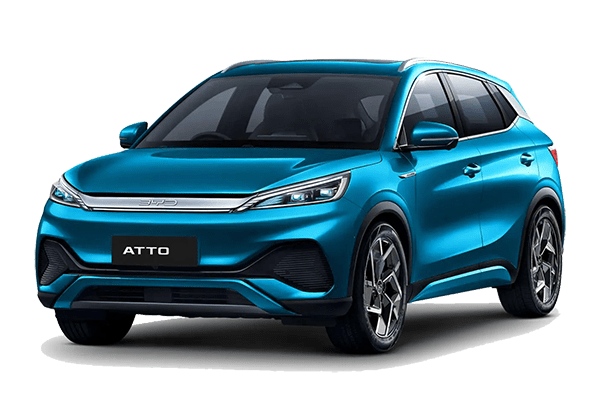
Your BYD won’t charge, a warning keeps returning, or the AC has stopped cooling. You need to know what is wrong before paying for parts. We assess EV and DM-i concerns in Al Quoz 4 and explain the suitable repair before you approve it.
Initial diagnosis is estimated at AED 220 to 480. A free workshop inspection is available; scan testing, dismantling and specialist checks are separate.
Use these planning estimates to compare the work involved. Model, battery specification, parts availability and testing time can change the price. Ask for the final total including VAT before approval. These are estimates, not fixed offers; VAT treatment is confirmed in your written quote.
Complaint review, relevant scan and targeted first checks. Extended testing and dismantling require a separate agreement.
Checks of charging conditions, port, low-voltage supply and accessible systems. Charger repair and vehicle parts are extra.
A compatible battery, fitting and supply checks where this estimate applies. Exact voltage, chemistry and setup are confirmed by model.
Specified engine oil, oil filter, labor and basic condition checks. Other filters, plugs, fluids and existing faults are separate.
Matching pad set, fitting and brake condition checks. Discs, calipers, sensors and hydraulic repairs are extra.
The diagnosed repair, matching parts and labor are itemized before approval. This is not a flat fee for every cabin or battery cooling fault.
Selected worn joints, bushes or dampers with fitting, depending on the car. Major assemblies, tires and additional alignment work are quoted separately.
Battery-pack, inverter, motor and onboard-charger work requires vehicle-specific access, procedures and parts confirmation before acceptance.
An initial scan and a charging assessment may overlap. Ask which tests your quote includes and whether any earlier diagnostic charge is included in the proposed total. Further testing must be agreed before it starts.
Send the model and what happens when you start, drive or charge the car. We can explain the first check without asking you to identify the failed component.
Tell us whether the problem occurs at home, at one public charger or at several locations. Charging settings, the cable or supply, the port and the vehicle can each affect the session. That context helps narrow the first checks.
The low-voltage battery powers control systems; it is separate from the traction battery that drives the car. We check the applicable power supply and fault information before recommending several unrelated modules.
Cabin AC performance and battery temperature management need different checks. Note whether the change began with hot weather, a warning or a recent repair. A range display alone does not establish battery failure.
An Atto 3, Han or Seal EV has no combustion-engine oil service. Follow the schedule for the exact model and market. Brake condition, tires, suspension, cabin filtration and specified fluid checks still matter.
Routine EV maintenance is quoted from the due items, rather than sold as an engine-service package. We can discuss electric-car maintenance and repair when you share the model.
DM-i models combine electric drive with a gasoline engine. The engine still needs the specified oil and filter service. Low engine use does not replace the time-based requirements in the vehicle’s maintenance schedule.
An accessible damaged connection or a failed compatible low-voltage battery may justify a targeted repair. Recheck the original warning afterward. A battery replacement will not correct a separate wiring or charging-system fault.
Pads can be replaced while serviceable discs remain in use. Damaged discs, sticking calipers or worn joints need their own decision. Regenerative braking does not remove the need to inspect the friction brakes.
A confirmed leak or failed accessible component may be repairable without replacing the whole assembly. Pressure, temperature and operation checks help determine the work. Refrigerant or coolant should not simply be added repeatedly without finding the cause.
Traction-battery, inverter and motor concerns need model-specific procedures and equipment. We confirm whether the work can be accepted before opening or replacing a high-voltage assembly. Referral may be the appropriate next step.
For parts, compare the correct specification, supplier, condition, fitted cost and written warranty. A cheaper used component is not automatically a suitable option for a safety-related or high-voltage repair. Check manufacturer warranty or recall eligibility before agreeing to independent work that may be covered.
These are planning scenarios, not completed customer repairs. Each assumes the described fault is confirmed and matching parts are available. The written quote confirms VAT, availability and any job-specific warranty.
Typical job estimate
AED 980
For a vehicle configuration with a compatible replacement available at this estimate.
Excludes DC-DC converter, wiring or control-module repairs. A different battery specification changes the estimate.
Typical job estimate
AED 1,180
For worn front pads with serviceable discs and calipers.
Excludes discs, calipers, sensors and brake-fluid repairs.
Typical job estimate
AED 760
A scheduled oil and filter service for the gasoline engine.
Extra filters, spark plugs, other fluids and fault diagnosis are separate. This is not a pure-EV service.
Move away from the vehicle and call Civil Defence on 997 if there is smoke or fire. Keep other people away and tell responders it is an electric or hybrid vehicle. Do not approach it to disconnect the charger or inspect the battery.
The UAE emergency guidance lists 997 for fire emergencies.
Do not drive or reconnect charging after visible battery-case damage, exposed orange cables, flooding around high-voltage areas or a warning instructing you to stop. Do not touch damaged high-voltage parts. Arrange suitable recovery once the situation is safe.
A warning without those signs still needs the exact message checked. Call before traveling if you are unsure whether the car can be moved safely.
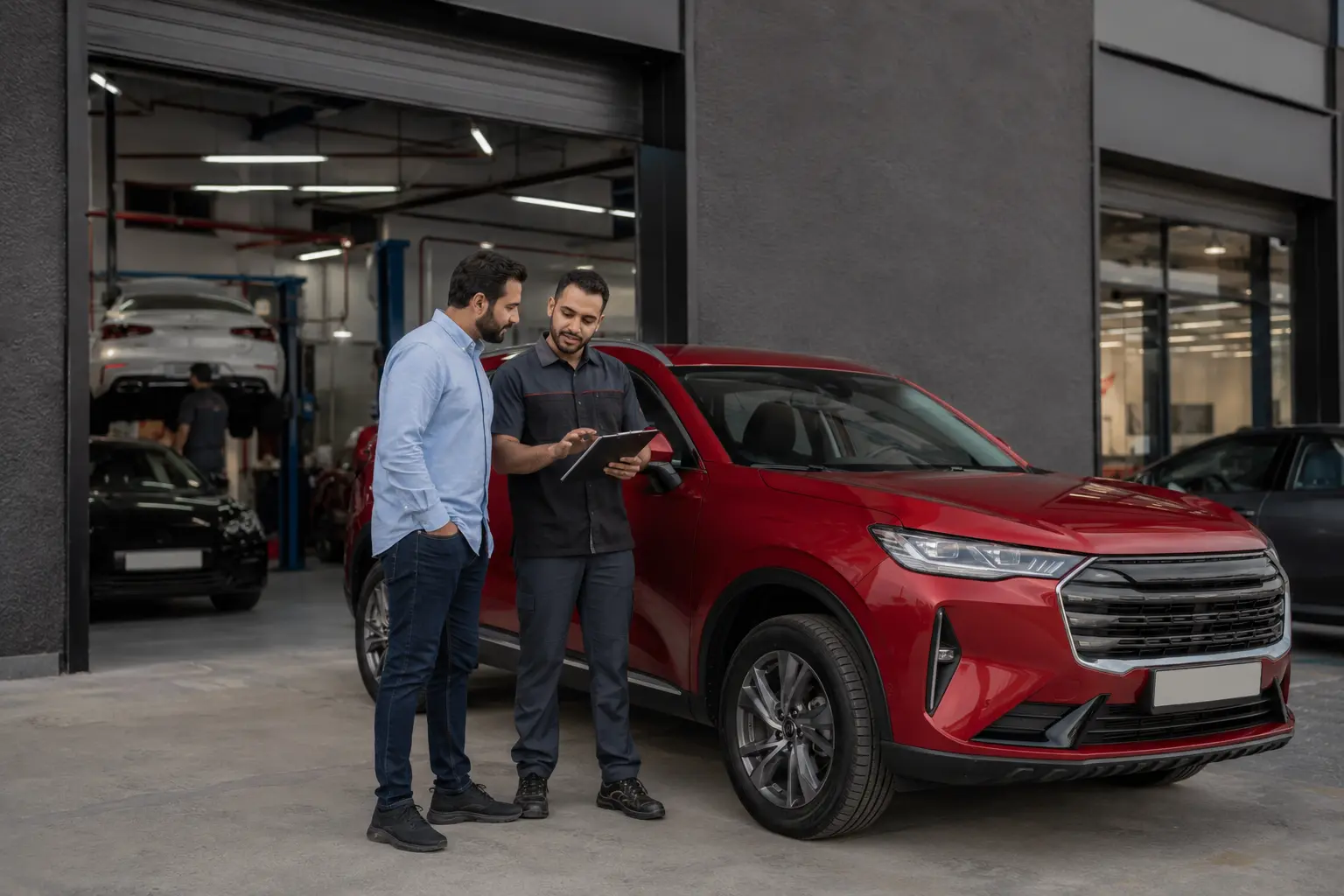
Looking for BYD repair near you in Dubai? Our independent workshop is in Al Quoz 4. Start with your model and symptom, then ask for the location pin or pickup arrangements.
Free Dubai pickup and delivery applies to approved jobs, subject to scheduling and access. A mobile assessment van is available by arrangement. Confirm its visit fee and limits separately; a mobile check is not a promise of roadside high-voltage repair.
An initial diagnostic assessment is estimated at AED 220 to 480. Charging assessments are estimated at AED 320 to 850. We explain the applicable tests and any overlap before you approve them; further testing is quoted separately.
The initial workshop condition review is free. Scan diagnosis, extended electrical testing, dismantling and mobile visits are separate and must be agreed first.
No. A pure electric BYD has no combustion-engine oil service. A DM-i hybrid does have an engine with its own oil and filter requirements. Other scheduled maintenance depends on the exact vehicle.
No blanket acceptance is promised. The vehicle condition, model-specific procedure, equipment and parts availability must support the work. We confirm this before agreeing to a high-voltage repair.
A weak low-voltage supply can affect multiple control systems. Testing is needed to distinguish the battery from a charging, connection or separate system fault. The correct replacement specification depends on the vehicle.
Do not reconnect charging if there is battery damage, exposed high-voltage wiring, flooding around high-voltage areas or a warning instructing you to stop. Stay away and call Civil Defence on 997 for smoke or fire. Otherwise contact the workshop about a safe assessment.
Ask about free Dubai pickup and delivery on approved jobs, subject to scheduling and access. Mobile assessments are arranged separately, with the visit charge and work limits confirmed before dispatch.
No. Auto Repair UAE is an independent workshop in Al Quoz 4, Dubai. If the concern may involve a manufacturer warranty, recall or restricted software function, check the applicable manufacturer support before approving paid work.
Your BYD model and a short description of the problem are enough to start. A warning photo, year, mileage or VIN can follow if needed. Take photos only when it is safe.
Will it not charge, not enter ready mode, or does a warning return on the road? Call or WhatsApp Auto Repair UAE in Al Quoz 4 and we’ll help arrange the appropriate first check.
For another vehicle in your household, see our Chinese car repair services.