Steering rack and tie rods
We inspect inner and outer joints, boots, mountings, rack play, fluid leakage where applicable and impact damage. A worn joint may create looseness or knocking without requiring a complete rack.
Book inspection and repair for heavy steering, play, pulling, vibration, warning messages, fluid leaks, steering rack noise or an off-center wheel. We test the complete system before recommending parts.

Steering diagnosis should confirm the cause before rack, pump, column or suspension parts are ordered.
A steering complaint can begin at the wheel, column, electric assistance unit, hydraulic system, rack, tie rods, suspension joints, tires or wheel alignment. Replacing the most expensive part first is not a diagnosis.
We inspect inner and outer joints, boots, mountings, rack play, fluid leakage where applicable and impact damage. A worn joint may create looseness or knocking without requiring a complete rack.
Modern BMW models use electric assistance and control electronics. We read relevant faults, check voltage and wiring, review live data and test assistance behavior before deciding between repair, programming or replacement.
On applicable models we check fluid condition, reservoir, hoses, pump noise, pressure behavior and rack seals. A leak source is cleaned and identified so the quote addresses the failed area rather than topping up fluid repeatedly.
The same sensation can have several causes. This table helps you describe the concern, but the workshop inspection determines the repair.
| Symptom | Possible areas | Urgency | Next step |
|---|---|---|---|
| Heavy or intermittent steering | EPS supply, motor, sensor, hydraulic pressure or binding joint | High if assistance changes suddenly | Stop safely and call before driving |
| Loose steering or delayed response | Tie rod, rack play, column joint, control arm or wheel bearing | High when control feels uncertain | Arrange inspection and avoid speed |
| Knock while turning | Joint, mount, spring, rack mounting or steering shaft | Medium to high | Inspect before the noise worsens |
| Vehicle pulls or wheel sits off-center | Alignment, tire, bent arm, worn bush or steering-angle setting | Medium | Check mechanical condition before alignment |
| Steering warning message | Low voltage, EPS fault, sensor, communication or calibration | High if assistance is reduced | Read faults and test the system |
| Fluid beneath the front of the car | Hose, reservoir, pump or hydraulic rack seal | High | Do not run the system low on fluid |
Prices are estimated complete-job ranges in AED and vary with the BMW model, fitted steering system, parts choice, access, programming and related damage. Your written quote confirms the work and total before repair.
AED 0 to 450
The initial workshop inspection is free. Chargeable scan work, circuit testing, pressure testing or dismantling is explained first when deeper diagnosis is needed.
AED 650 to 1,900
Typical range for an affected joint or tie-rod repair with labor and basic checks. Alignment and additional damaged parts are quoted according to findings.
AED 2,800 to 9,500
The total changes significantly between seal repair, mechanical overhaul, remanufactured assembly and new part. Fluid, programming and alignment depend on the fitted system.
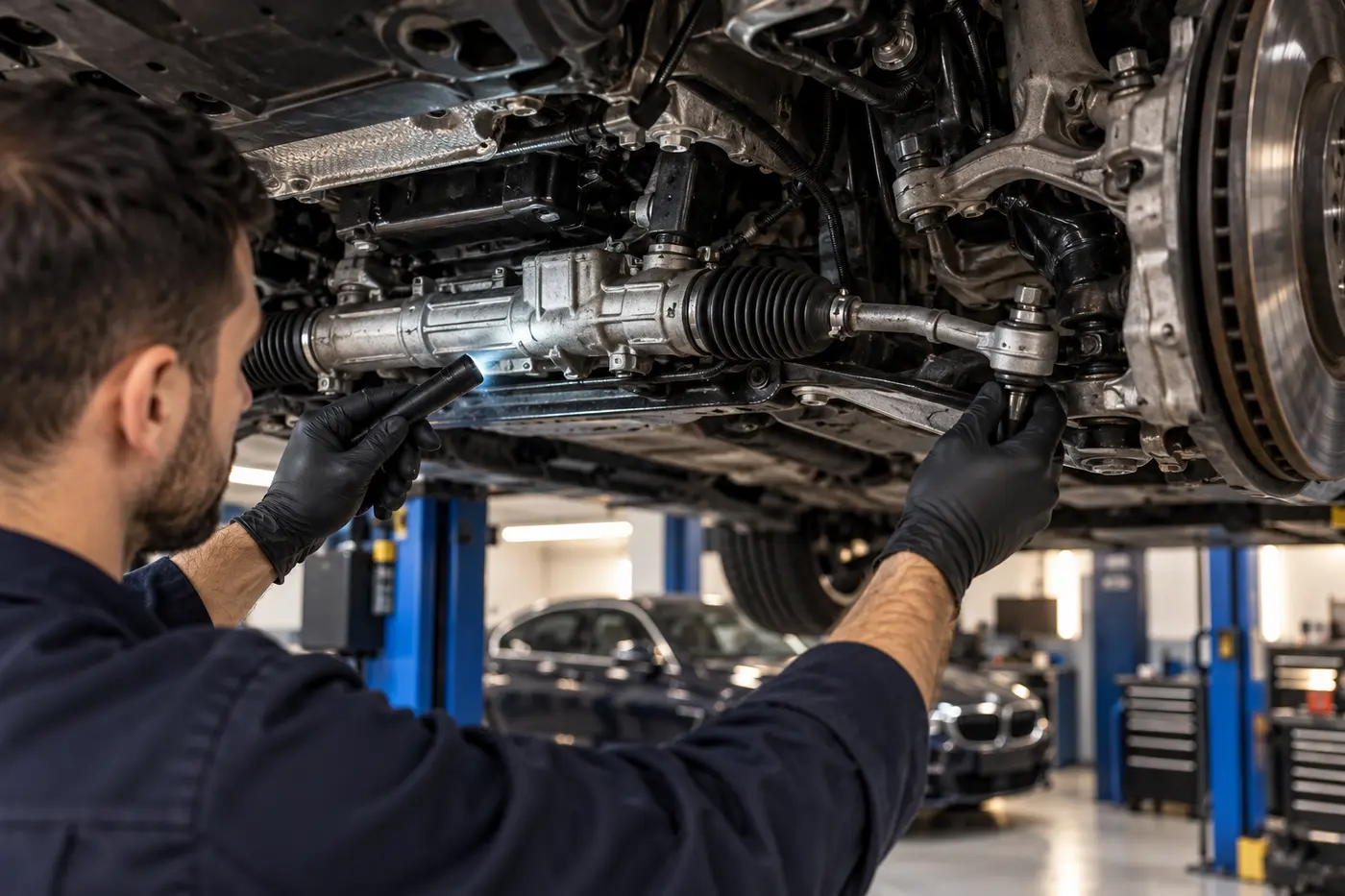
Physical play, boot condition, mounting, leaks and joint movement are checked together.
We begin with the customer’s description because timing matters. A noise only at parking speed suggests a different path from vibration at highway speed or a steering warning after battery replacement.
The vehicle is checked for tire pressure, tire damage, wheel condition and obvious suspension movement. We inspect the rack, tie rods, boots, column joints, relevant hoses and mountings. If the vehicle uses electric assistance, we check system voltage, fault memory, communication and available live data. Hydraulic systems may need leak tracing and pressure-related checks.
A controlled road test is used only when safe. It helps compare left and right turns, assistance effort, return-to-center behavior, noise, wheel position and response over road changes. Alignment measurements follow mechanical checks because alignment cannot correct worn or loose parts.
| Choice | Suitable when | What to consider |
|---|---|---|
| Targeted component repair | A joint, boot, hose, bush, sensor or mounting is the confirmed cause | Keeps serviceable assemblies in place and usually controls cost |
| Rack overhaul or remanufactured rack | The rack is repairable and a suitable supported unit is available | Core condition, internal damage, supplier quality and calibration affect suitability |
| New steering assembly | Damage is severe, electronics are integrated, or repair is not dependable | Highest parts cost, but may be the correct path for safety or compatibility |
| Alignment and calibration | Mechanical repairs are complete and geometry or steering-angle values require correction | This is a finishing step, not a substitute for repairing play or damage |
We inspect steering concerns across BMW 1 Series, 2 Series, 3 Series, 4 Series, 5 Series, 6 Series, 7 Series, 8 Series, X1, X2, X3, X4, X5, X6, X7, Z4 and selected M models. The exact rack, assistance type, rear-steering equipment and calibration needs vary by chassis and production specification.
Urban impacts, tire wear, front-arm condition and electric assistance faults can all change steering feel. The model and symptom are enough to start the booking.
Higher vehicle weight and larger wheels make tire, arm, joint and alignment condition especially important. We separate suspension movement from rack or assistance faults.
Performance settings, variable steering and active rear steering require model-aware testing. Programming or calibration is included only when the repair requires it.
Do not continue driving when the wheel suddenly becomes very heavy, steering assistance cuts in and out, the car wanders sharply, a wheel changes position, a joint clunks with visible movement, fluid is pouring out or the steering does not respond normally. Park safely and call the workshop. Free pickup and delivery can remove the risk of driving the vehicle to Al Quoz 4.
A mild off-center wheel or stable low-speed noise may allow a short workshop trip, but only when steering response, braking, tire clearance and fluid levels remain normal. If you cannot judge the condition, describe the symptom by phone first. A dedicated on-site inspection can also be arranged when appropriate; availability and any applicable visit fee are confirmed before dispatch.
These are realistic cost scenarios, not records of completed customer vehicles. Final pricing depends on inspection, exact parts, vehicle condition and the written quote.
AED 1,250
Replacement of one worn outer tie-rod end, fitting labor, steering play check and wheel alignment. No rack damage assumed.
AED 3,600
Repair path for a leaking steering hose and related fluid service, cleaning, installation labor and post-repair leak check. Rack replacement is not included.
AED 7,900
Suitable replacement steering-rack assembly, installation, required setup and wheel alignment. Price changes with part source and programming needs.
The model and symptom are enough to begin. If available, add the year, dashboard message and when the problem occurs. A short video can help with a noise, but it does not replace inspection.
VIN, mileage, previous invoices and wheel-alignment reports are optional follow-up details when needed for parts matching or diagnosis.
View BMW repair servicesSteering components work with the tires, wheels and suspension. Keeping those areas in good condition reduces unnecessary load and helps a repair last. Maintain the correct tire pressure, replace damaged tires, and investigate uneven wear instead of relying on repeated alignment adjustments. A wheel that has taken a severe pothole impact should be checked for distortion along with the nearby arm, joint and bearing.
Do not hold the steering hard against full lock for long periods on hydraulic systems. If a leak appears, avoid repeatedly adding unknown fluid because the wrong specification or a low level can damage the pump and contaminate the system. On electric systems, a weak battery or charging fault can create inconsistent assistance and misleading warning messages. Battery and charging condition should be stable before expensive electronic steering parts are condemned.
An alignment printout may show incorrect geometry, but it does not prove the cause. Loose tie rods, damaged arms, collapsed bushes and wheel problems must be corrected first. Otherwise the setting can move again and tire wear will return.
A stored code must be supported by voltage checks, wiring condition, live behavior and the relevant test procedure. Replacing a controlled steering assembly without confirming power supply or communication can leave the original fault unchanged.
Wheel imbalance, tire separation, brake variation, worn bearings and suspension play can all be felt through the steering wheel. The road speed, braking condition and surface where vibration occurs help separate these causes.
After repair, pay attention to wheel position, return-to-center behavior and any new warning. Report a change promptly rather than waiting for tire wear or looseness to develop. When the work involves a rack, tie rod, control arm or significant geometry change, alignment is normally assessed as part of the finishing checks. When the fitted system requires steering-angle initialization or another setup, that procedure is included in the approved scope.
No. Alignment changes wheel geometry but does not repair failed assistance, a binding joint, low hydraulic pressure or internal rack damage. We identify the cause first.
Not always. Low voltage, sensor, wiring, communication and calibration faults can also trigger warnings. Fault codes are a starting point and must be tested in context.
Some hydraulic racks can be repaired or overhauled when the housing and internal condition allow it. Other racks require replacement. Inspection determines the dependable choice.
Possible causes include tie rods, rack mounting, column joints, control arms, top mounts or another suspension joint. The location and movement must be confirmed physically.
Yes. The initial workshop inspection is free. If deeper electrical testing, pressure work or dismantling is needed, that charge is explained before it begins.
Yes. Free pickup and delivery are available. Tell us if steering control is reduced so the vehicle can be moved appropriately.
A joint or alignment-related job may be completed sooner than a rack overhaul or electronically controlled assembly replacement. Timing depends on diagnosis, parts and required setup.
Yes. Send the BMW model and describe what the steering does. You do not need to diagnose the vehicle before requesting an inspection.
Request a free workshop inspection, free pickup and delivery, or discuss a dedicated on-site assessment. We will confirm the suitable next step before repair begins.