Repair method selected from panel evidence

Mercedes dent repair in Dubai

Panel, paint, access and dent-shape assessment for Mercedes-Benz vehicles, used to choose paintless dent removal, a painted body repair or a mixed repair plan without promising the method from a distant photograph.

Paintless dent removal assessment on a Mercedes body panel
Paint condition, metal movement, panel edge and tool access determine whether PDR is appropriate.
Protect the paint Do not polish or press the dent
Show the shape Wide, angled and reflected views
Name the panel Edge, brace, sensor and access
Choose the method PDR or painted body repair

The goal is the right repair, not one method everywhere

Decide whether the Mercedes dent is a PDR candidate

Mercedes-Benz describes paintless dent repair as an option for certain minor dents and dings that can be corrected without affecting the original factory finish. That definition contains two important limits: the damage must suit the method, and the paint must remain suitable. A visual and access assessment decides whether those conditions exist on the specific panel.

Paintless dent removal may suit

  • The coating appears intact and flexible around the full damaged area
  • The dent geometry can be moved gradually without unacceptable paint stress
  • The panel has safe rear access or a controlled external repair route
  • The damage is not locked into an unsuitable edge, seam or structural reinforcement
  • Previous filler or repair does not make the area unsafe to manipulate

PDR aims to preserve the existing finish. It does not mean every minor-looking mark will return perfectly, and the result depends on depth, diameter, crown, crease, metal stretch, location and previous work.

Painted body repair may be required

  • Paint is split, chipped, deeply scratched or detached
  • Metal is sharply stretched, torn or distorted at an edge
  • A panel has previous filler, cracking or incompatible repair
  • Access would damage a brace, adhesive, trim or safety component
  • The final surface needs filling, corrosion treatment or refinishing

A mixed plan is also possible. One dent can be reduced with controlled metal work before finishing, while another on the same vehicle remains suitable for PDR.

Panel context changes the answer

Assess the surface, structure and hidden access together

A dent photograph can show location and scale, but it rarely proves the metal condition behind trim. The workshop inspection looks for the relationships that make a repair safe and repeatable.

Paint surface
Inspect in controlled light for cracks, chips, scratches, lifting, abrasion, colour disturbance and previous refinishing. Polishing can temporarily disguise marks, while water and reflections can hide shallow distortion. Keep the area clean but do not aggressively correct it before assessment.
Dent geometry
Record width, depth, crowns, crease direction and metal tension rather than labelling everything small or large. A broad shallow dent can behave differently from a narrow sharp impact even when both occupy a similar visible area.
Panel location
Identify body line, swage, edge, hem, seam, brace, bonded area and proximity to lamps, glass or trim. Metal near an edge may have less freedom to move and can require another repair route.
Material and construction
Confirm the panel and available repair information instead of guessing aluminium or steel from the model class. Material, thickness, reinforcement and joining method influence tool choice, heat limits and refinishing decisions.
Rear access
Determine whether trim, liner, lamp, handle, wiring or another component must be removed. Access work should be priced and authorized separately when hidden clips, adhesives or previous damage can change the scope.
Nearby technology
Note cameras, radar areas, parking sensors, antennae, wiring, sound insulation and driver-assistance hardware. A cosmetic repair must not disturb a bracket, connector or calibrated component without including the required verification.
Common damage still needs an individual method decision

Match the repair route to the way the dent was formed

The cause provides useful context because it suggests likely force direction and hidden contact. It does not override the physical inspection.

Parking-door dings

These are often localized, but a sharp door edge can create a narrow crease or paint chip. Inspect the crowns and the full reflection, especially when the impact sits on a Mercedes character line.

A clean, accessible ding with intact paint may be a strong PDR candidate. A chipped edge or previous filler changes the plan.

Low-speed bumper contact

A visible metal dent may be accompanied by bumper, lamp, bracket or sensor damage. Check panel gaps and impact transfer before treating the mark as isolated cosmetics.

Shopping trolley or object impact

Round impacts can still stretch metal when the force is concentrated. Record paint abrasion, centre depth and surrounding crown instead of estimating from diameter alone.

Hail-like roof and bonnet marks

Multiple dents require panel mapping, paint review and access planning. Roof lining, reinforcement, glass and panoramic-roof construction can influence time and method.

Body-line and edge dents

Strong styling lines and folded edges contain tension by design. Repair may be possible, but access, paint stress and the acceptable finish need a closer in-person decision.

Creases and stretched metal

A crease can have a sharp bottom, locked crowns and stretched material that a distant photograph does not reveal. The recommendation may include controlled reduction, conventional metal work and refinishing rather than PDR alone.

Photographs support triage, not a false guarantee

Capture the dent so shape and paint remain visible

Good photographs help estimate likely access and decide whether an in-person inspection is needed before a price range is discussed. They cannot confirm hidden braces, previous filler, material behavior or the final repair method.

Wide context

Photograph the whole side or corner of the vehicle so the correct panel, body line and proximity to lamps, glass, handles and trim are clear.

Angled reflection

Use daylight or a long reflected line from more than one angle. A straight-on flash can flatten the distortion and make depth impossible to judge.

Surface detail

Include a close view of scratches, chips and paint cracking without filters or water. Place a ruler near the damage without touching the panel.

Vehicle identity

Send the model, year, VIN when requested, paint finish, affected side, cause, date and whether the panel was repaired previously.

A photo estimate should state its assumptions. The final scope follows physical paint, access and panel evidence after cleaning and controlled lighting.

Finish type changes the risk

Treat matte, special and previously repaired paint carefully

Paint correction options that may be acceptable on a conventional gloss clear coat can alter sheen or texture on a matte finish. Previous refinishing may also have different flexibility, thickness or adhesion from the factory coating.

Matte or satin finish

Do not polish, compound or spot-blend as though the finish were conventional gloss. Record the paint type and protect the surrounding area. If refinishing is required, discuss the panel and blend strategy before repair.

Previous body repair

Look for texture changes, sanding marks, filler response, masking lines and thickness variation. Manipulating a repaired area can crack filler or coating even when the visible dent appears shallow.

Scratched but not exposed

A transfer mark may sit on top of intact coating, or a scratch may pass through it. Clean and inspect before promising that polishing will remove it. Dent correction and paint correction are separate decisions.

Controlled metal movement

A PDR repair is planned around access and reflection

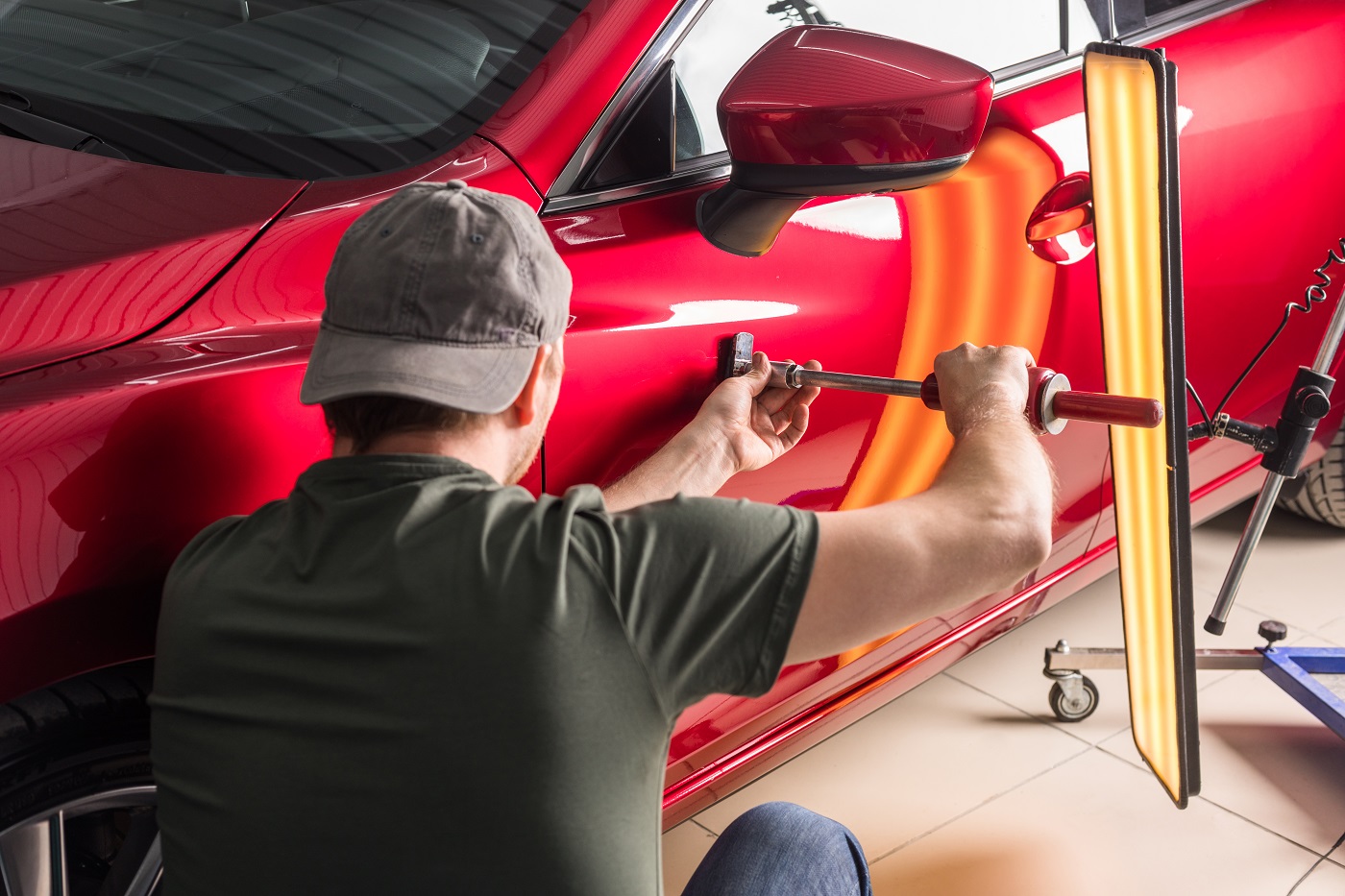
Paintless dent removal uses controlled pressure or pulling techniques to move the panel gradually while reading the surface under structured light. The technician manages the low area and surrounding crowns rather than simply pushing the centre outward.

Map the damage

Mark the full low area, high crowns, crease direction, paint defect and panel boundary. Confirm the finish and previous repair risk.

Plan access

Choose safe rear access or an appropriate external route. Protect trim, glass, wiring, insulation and the vehicle interior during removal.

Move gradually

Use controlled steps while reading reflection. Excess force or heat can create high spots, texture changes or paint stress that are harder to correct.

Inspect the result

Review from multiple angles, recheck paint and reassemble removed items. Verify nearby sensors, lamps or functions affected by access.

The general paintless dent removal process applies only after the Mercedes panel has passed the finish, geometry and access checks described here.

When paint repair is the better method

Define conventional body work without hiding the steps

If paint is broken, metal is sharply stretched or PDR access and finish risk are unsuitable, the recommendation may include metal correction, filling, primer, colour and clear or finish-specific refinishing. The estimate should identify the affected panel and any blend or disassembly assumptions.

Damage preparation

Remove or protect necessary trim, inspect hidden impact, correct metal to the planned shape and address exposed substrate or corrosion. Do not bury unresolved edge or mounting damage under filler.

Colour and finish decision

Record paint code and actual vehicle colour condition. Adjacent-panel blending, texture and special-finish requirements depend on the repair area and achievable match, not a universal promise.

Reassembly and checks

Restore clips, seals, lamps, wiring and trim, then review panel gaps, surface, contamination and functions. Any removed camera or sensor hardware needs the relevant verification or calibration decision.

Protect the evidence before the appointment

Avoid home methods that make the repair harder

Hot water, suction cups, glue kits, dry ice and pressure from behind can overstretch metal, create high spots, damage paint or disturb trim. A temporary visual improvement may reduce the remaining controlled movement available to a professional repair.

What to do

Keep the panel clean and dry, photograph the original condition, note how the damage happened and protect exposed metal from contamination without applying an unapproved coating. If a lamp, mirror, door, bonnet or boot operation is affected, stop using it until inspected.

When the dent is more than cosmetic

Arrange an earlier safety inspection if a door will not latch, glass is stressed, a tyre rubs, a sharp edge is exposed, a sensor warning appears, a lamp is loose, fluid is leaking or the impact changed steering or braking. Cosmetic booking language must not hide collision-related safety concerns.

For mechanical, electrical or warning issues linked to the same impact, the main Mercedes repair assessment keeps those concerns connected to the body record.

Completion is evidence, not a slogan

Review the repair under controlled light and normal use

A responsible handover identifies the method used, any remaining limitation and the checks performed. Results should be judged under reasonable viewing conditions from several directions rather than one flattering photograph.

Surface review

Check the repaired area and surrounding crowns with a structured reflection, then view panel shape, paint condition and texture from multiple angles.

Reassembly review

Confirm trim, liners, clips, seals, handles, lamps and wiring removed for access are secure and function normally without new noise or marks.

Technology review

Check parking sensors, cameras, warning displays, locks and any driver-assistance functions affected by the impact or dismantling. Record when separate calibration is required.

The estimate should reveal its method assumptions

Compare dent repair quotations on the same scope

Two prices may describe different work. One may assume paintless access without trim removal, while another includes conventional repair, refinishing, blend panels, clips and sensor checks. Ask each estimate to name the repair route and provisional items.

Damage included

List every dent, scratch, chip and affected panel. Mark pre-existing marks separately so the collection review does not confuse them with the approved repair. A multi-dent price should say whether all visible marks are included.

Access and refinishing included

State trim, liner, lamp or handle removal, protection materials, PDR access, metal work, filler, primer, colour, clear coat and blend assumptions. Special or matte finishes need their own process boundary.

Verification included

Name panel-gap, paint, reassembly and function checks. If impact or access affects a camera, radar, parking sensor, antenna or lamp, state whether inspection, scan, aiming or calibration belongs to this estimate or another job.

Insurance approval does not change the physical repair method. Preserve claim references, photographs and agreed parts, but ask who authorizes concealed damage and how a method change will be documented.

Time also depends on access, paint curing, part supply, previous repair and calibration. A useful schedule gives a current range and explains what finding would change it instead of promising every dent will be completed in the same number of hours.

Direct owner answers

Mercedes dent repair questions in Dubai

Can every Mercedes dent be repaired without paint

No. Paint condition, metal stretch, crease, edge location, access, panel construction and previous repair determine whether PDR is appropriate.

Can you give a final dent price from one photograph

A photograph can support triage, but it cannot prove depth, paint adhesion, previous filler, rear access or hidden impact. Final scope follows an in-person inspection.

Will PDR preserve the original paint

PDR is intended to retain existing paint on suitable damage. The coating must first be assessed as intact and able to tolerate the planned metal movement.

Can a scratch be removed with the dent

The scratch is a separate finish decision. Surface transfer may clean or polish, while a scratch through the coating may require touch-up or refinishing.

Are dents on body lines repairable

Some are, but body lines, edges and braces carry more tension and can restrict access. Geometry and paint risk must be assessed before promising the method or result.

What photos should I send

Send a wide panel view, angled reflections from both sides, a clear close view of paint damage, a size reference, model and year, and whether the area was repaired before.

Prepare the dent assessment

Send the panel, paint condition and damage views

Include the Mercedes model and year, cause, wide and angled photographs, close paint detail and previous repair history.