Petrol engine diagnostics
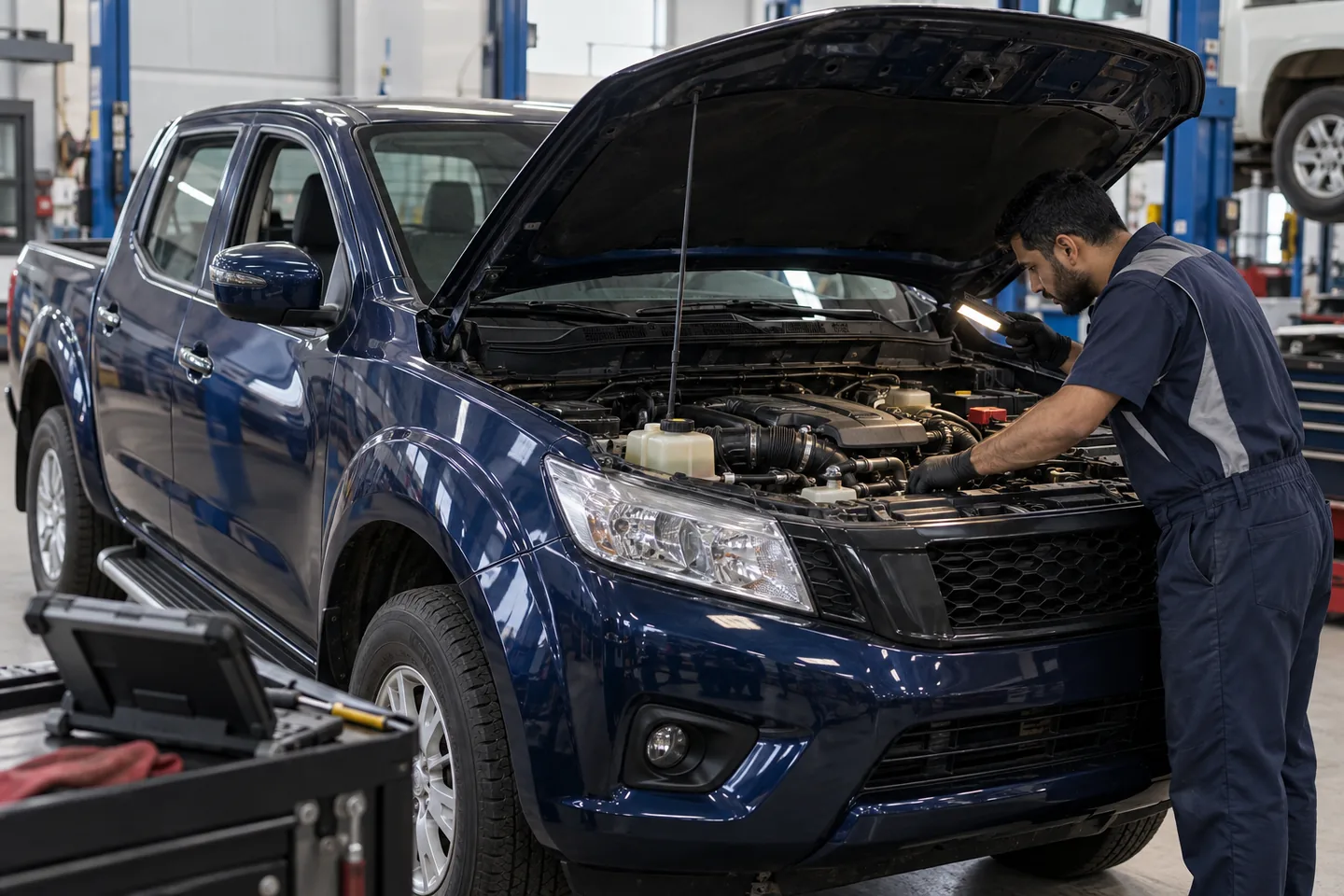
Hard starting, rough running, loss of power, overheating, smoke and warning lights are diagnosed from the installed engine rather than the ZNA badge alone. Air, fuel, ignition, compression, cooling and sensor faults are separated before parts are recommended. Imported models can use different engine families, so VIN and engine identification come first.
Diesel engine and fuel-system faults
Diesel pickups can develop hard starting, low power, smoke, fuel-pressure, injector, turbo or emissions-related complaints. We record whether the fault appears cold, hot, under load or after refuelling and test the relevant system instead of replacing injectors or turbo components because of one code.
Turbo and intake diagnosis
Whistling, underboost, black smoke and reduced power can involve boost leaks, hoses, actuator control, sensors, exhaust restriction or the turbocharger itself. The intake and boost system is inspected before an expensive turbo replacement is proposed.
Cooling-system repair
Pickups used under load can expose marginal cooling systems quickly in Dubai. We inspect coolant condition, leaks, radiator and condenser airflow, fan operation, hoses, thermostat behaviour and available temperature data. Overheating needs both the cause and any resulting engine damage assessed.
Transmission, clutch and driveline
Shift problems, clutch slip, vibration and leaks need the exact manual or automatic gearbox identified. On 4WD vehicles, prop shafts, universal joints, transfer-case behaviour and differential concerns can create symptoms that feel like transmission faults. We separate those systems before approving a major repair.
4WD and transfer-case faults
If 4WD will not engage, a warning appears or the vehicle binds or vibrates, the first check includes tyres, wheel-speed information, switches, actuators, transfer-case operation and driveline condition where applicable. Using mismatched tyre sizes or driving on unsuitable surfaces can also create misleading symptoms.
Suspension and load-related wear
Work vehicles can wear bushes, ball joints, dampers, mounts and rear suspension components faster when repeatedly loaded. We record payload use, inspect ride height and wear, and check leaf-spring hardware where fitted. Replacing one noisy part without checking the load path can leave the original cause in place.
Steering and wheel alignment
Steering pull, uneven tyre wear, wandering and vibration are assessed across tyre pressure, wheel damage, steering joints, suspension wear and alignment. A loaded pickup can behave differently from an empty vehicle, so the customer’s description of when the problem appears is useful evidence.
Brakes for commercial use
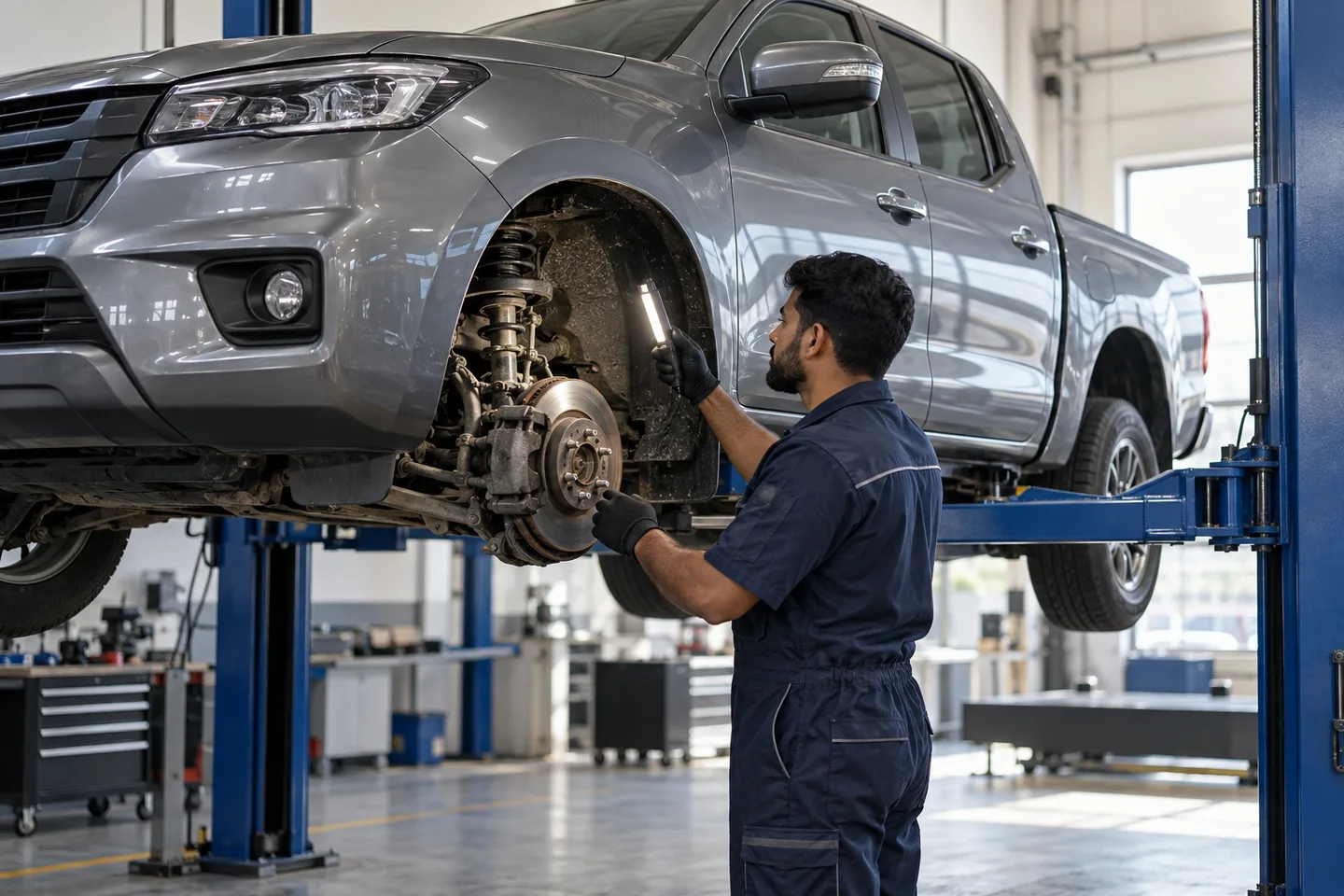
Repeated city stops, payload and towing can increase brake load. We inspect pads, discs or drums where fitted, calipers or wheel cylinders, fluid condition and parking-brake operation. Brake vibration or pull is not automatically a pad problem; wheel, tyre and suspension causes are also considered.
Electrical and starting faults
Battery, alternator, starter, grounds, fuses, relays and wiring are tested from the actual complaint. Added work lights, trackers, refrigeration equipment or aftermarket accessories can change current draw and fault patterns, so modifications should be disclosed before parasitic-drain or charging diagnosis.
Air-conditioning
Weak AC in a work vehicle can involve airflow, refrigerant loss, compressor control, condenser restriction, fan operation or electrical faults. Refrigerant is not added without checking why cooling performance changed. Long idling and dusty use can also make airflow and condenser condition worth inspecting.
Tyres, wheels and commercial wear
Tyre choice, pressure and load rating matter on pickups. We inspect tread, sidewalls, pressure, wheel damage and wear pattern, then separate balancing, alignment and suspension causes. A commercial vehicle should not be aligned around worn joints or incorrectly loaded tyres.