Slow or failed starting
The starter turns slowly, clicks, or does not operate after the vehicle has been parked.
Restore reliable starting and stable electrical operation with the correct battery specification, safe installation, system testing, and battery registration where required. Our Al Quoz 4 workshop supports Rolls-Royce main and auxiliary batteries, charging faults, repeated discharge, and no-start diagnosis.
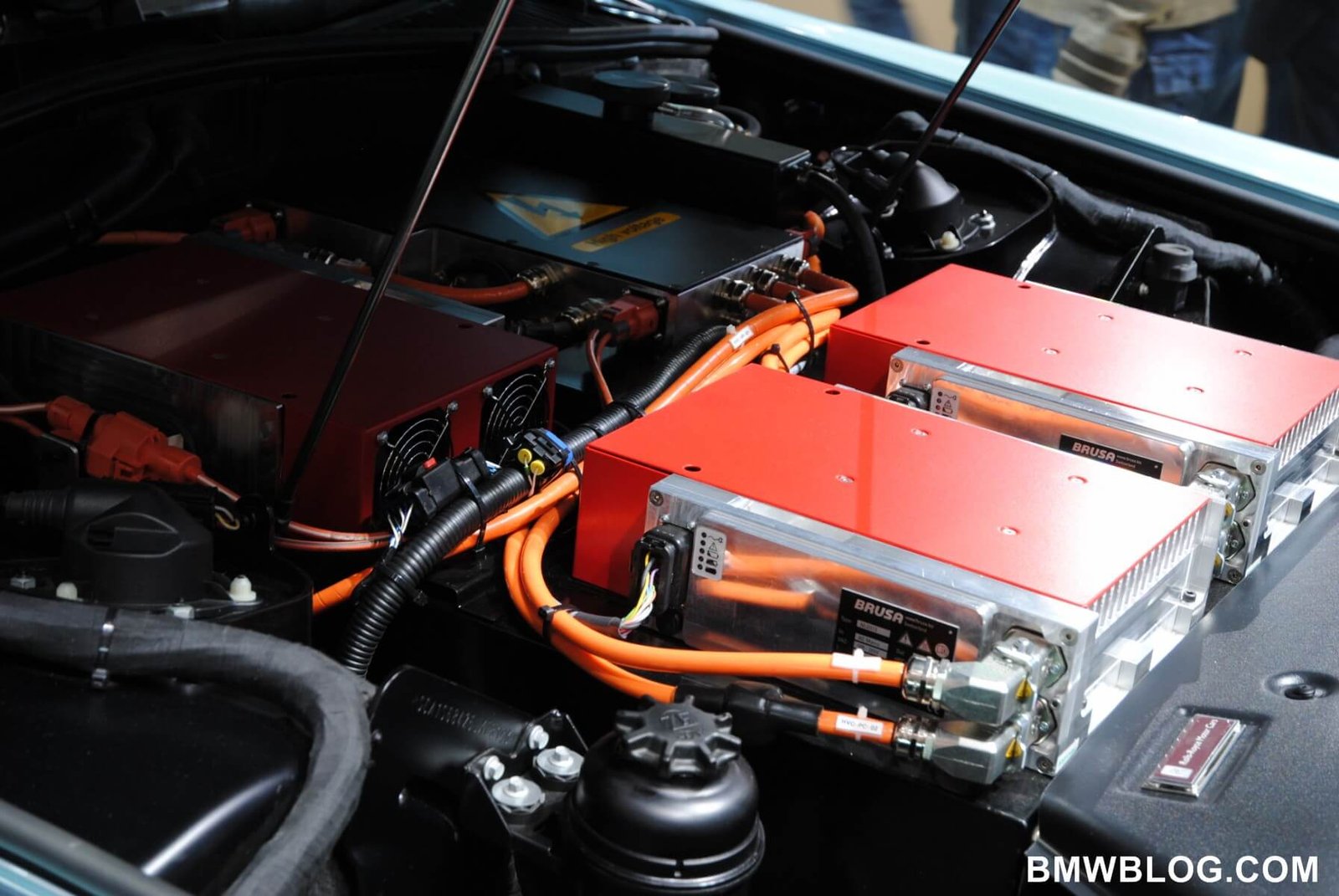
Slow cranking is only one sign of a weak battery. Modern Rolls-Royce vehicles manage many comfort, security, suspension, and control systems even when parked. Low voltage can create several warnings at once, disturb stored settings, or make the vehicle appear to have unrelated faults.
The starter turns slowly, clicks, or does not operate after the vehicle has been parked.
Battery discharge, increased discharge, charging, or electrical-system messages return after driving.
Seat, climate, lighting, soft-close, infotainment, or convenience features are limited to protect starting power.
A new or recently charged battery loses power because of a charging fault, parasitic drain, coding issue, or unsuitable specification.
A jump start proves that available voltage was too low to start the car. It does not prove the battery is the only failed component. Replacing it without checking the system can leave the same problem unresolved.
Stop and arrange assistance if there is smoke, a strong chemical smell, a hot or swollen battery, damaged cables, repeated complete electrical shutdown, or a charging warning with unstable vehicle operation. Do not continue jump-start attempts around a visibly damaged battery.
Battery technology, physical size, terminal position, cold-cranking capacity, reserve capacity, ventilation, and power-management compatibility all matter. The cheapest battery with similar dimensions may not support the vehicle correctly.
These market-based ranges include the typical work stated in each row. They are estimates, not fixed quotations. Model, battery location, capacity, battery brand, auxiliary systems, access, coding requirements, and related electrical faults can change the total.
Send the model, approximate year, location, and whether the vehicle starts. We will check the practical next step and current availability.

Battery registration tells the vehicle that a new battery has been installed. It may record the replacement, reset battery-age calculations, and help the charging strategy respond to the new unit. Where supported, the correct battery type and capacity must also match the vehicle configuration.
Skipping required registration can make energy management continue treating the battery like the old, aged unit. An incorrect battery type can also be charged in a way that reduces service life. Registration does not repair an alternator fault, parasitic drain, weak ground, or damaged intelligent battery sensor, so those faults still need separate diagnosis.
Tell us the model, whether it starts, and which warning or behavior you noticed.
We inspect battery condition, connections, starting demand, and charging performance.
You receive a model-matched battery choice and a written installed estimate.
The battery is fitted safely and registered or initialized where required.
We recheck voltage, starting, faults, and affected electrical functions before handover.
These scenarios are clearly labeled estimates, not claims about completed customer repairs. The correct price requires a battery test, exact specification, and confirmation of any related charging or drain fault.
High-capacity AGM main battery, installation, battery registration, charging-system check, and relevant fault clearing. No alternator or drain repair included.
Estimated total AED 3,200 to 5,800
Main AGM battery replacement after slow-crank testing, terminal inspection, installation, registration, and starting verification.
Estimated total AED 2,400 to 4,600
Battery and charging diagnosis followed by replacement of a suitable auxiliary battery, fault clearing, and comfort-system function checks.
Estimated total AED 1,400 to 3,200
A replacement battery may fail again if the alternator does not recharge it, a control unit remains awake, a light stays on, a module has water damage, an accessory is wired incorrectly, or the vehicle is used only for short trips. Extended parking can also reduce charge, especially when security, comfort, and communication systems remain active.
Parasitic drain testing often requires the vehicle to enter its normal sleep state before current can be measured accurately. Opening a door, unlocking the car, or waking a network can change the reading. We use a staged approach and isolate circuits only after confirming that the current remains above a suitable level.
For vehicles stored for long periods, an appropriate battery maintainer and a safe connection point can help. The correct device and procedure matter. Do not attach an unsuitable charger directly without checking the vehicle instructions and battery type.
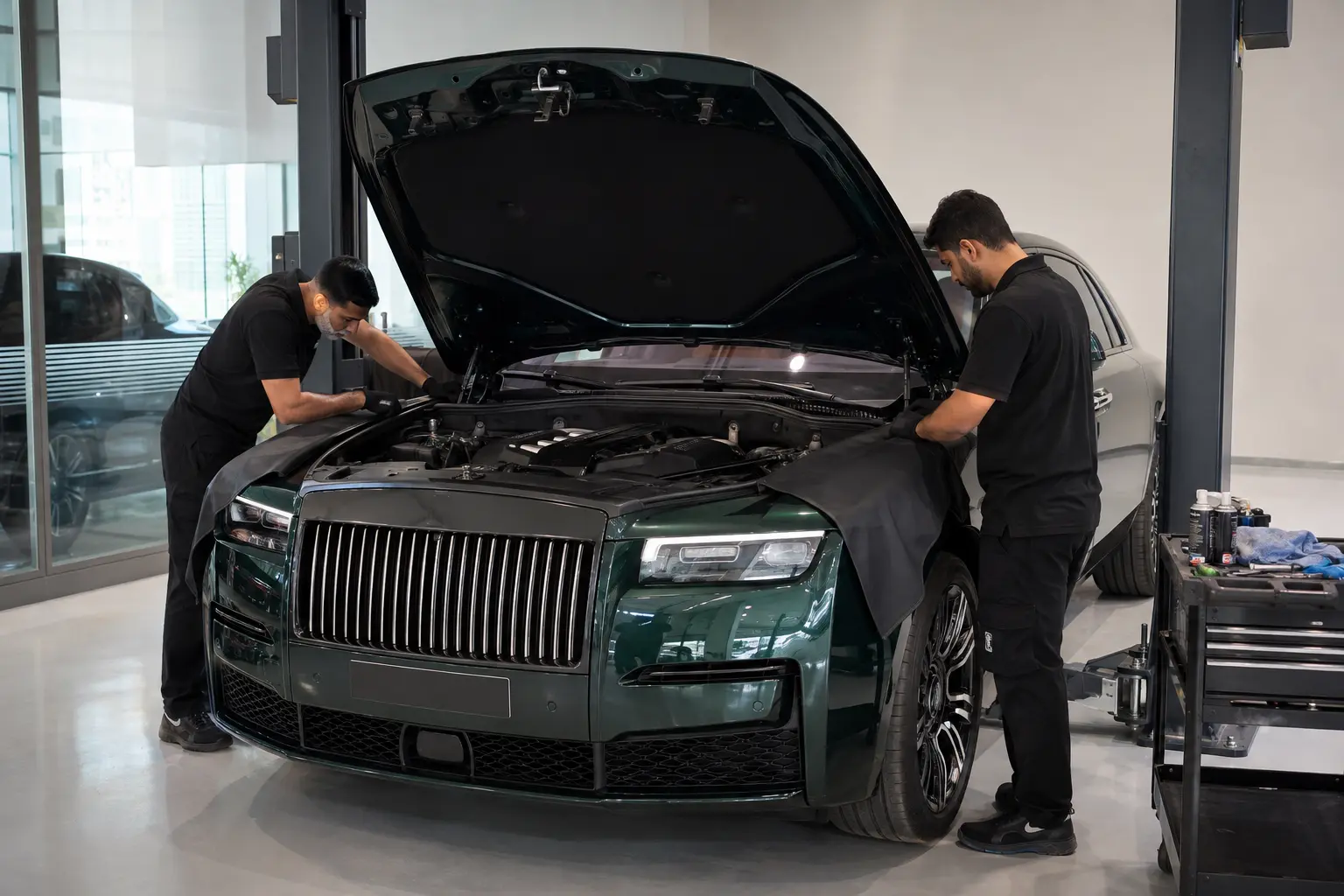
The main starter battery and an auxiliary battery do not always fail at the same time or produce the same symptoms. The main battery normally carries the largest starting and electrical load. An auxiliary unit may support selected control systems, voltage stabilization, comfort equipment, or backup functions. Replacing the wrong unit can leave the original warning active.
The dashboard message and scan data help identify which supply is affected, but the final decision also uses physical testing. If both batteries are old, we report each result separately instead of automatically replacing them together. This keeps the estimate focused on the failed component and makes any preventive replacement a clear customer choice.
High under-hood and cabin temperatures accelerate chemical aging inside a battery. Dubai heat can shorten service life even when the vehicle appears to start normally. Long periods of parking add another challenge because security, keyless entry, communication, suspension, and comfort systems continue using small amounts of power.
A test can show that the battery starts the car today but has limited reserve capacity. That matters on a Rolls-Royce because electrical demand remains high and voltage stability affects many control systems. The result should be considered with battery age, recent discharge, charging behavior, and the way the vehicle is used.
After a deep discharge, recharging and retesting may be more informative than immediately condemning the battery. A battery that cannot recover useful capacity or repeatedly falls below a reliable level should be replaced with the correct specification.
Battery location, access, capacity, energy-management setup, and auxiliary systems differ by model and production period. We match the installed specification rather than treating every Rolls-Royce battery as interchangeable.
Battery support is also available as part of wider Rolls-Royce repair in Dubai. For non-brand-specific battery guidance, see our car battery replacement Dubai service.
Our workshop is in Al Quoz 4, Dubai. Bring the vehicle for a free inspection or arrange free pickup and delivery. A dedicated on-site inspection can also be arranged when an initial mobile assessment is useful. On-site availability and any applicable inspection fee are confirmed before dispatch.
If the car is parked in a basement or cannot select neutral, mention this when contacting us. That information helps us arrange suitable access and transport without risking the vehicle.
Start with the model, approximate year, location, and whether the vehicle starts. A photo of the dashboard warning or existing battery label can help, but it is not required before you contact us.
A written estimate identifies the proposed battery, fitting, registration or programming, testing, and any separate electrical repair. We confirm availability and expected timing for the specific vehicle.
For battery testing, registration, charging diagnosis, and wider workshop support, see our Rolls-Royce garage in Dubai.
Slow starting, repeated low-voltage warnings, and reduced comfort functions are common signs. A proper test checks charge and remaining capacity before replacement is recommended.
No. A jump start only confirms that available voltage was too low. The battery, alternator, connections, or an electrical drain may be responsible.
Many modern models require battery registration or initialization. The requirement depends on the vehicle and battery-management system.
A dedicated on-site inspection can be arranged, and mobile replacement may be possible when the battery, access, safety, and registration requirements are suitable. Availability is confirmed first.
A straightforward replacement and registration commonly takes about one to two hours. Diagnosis, difficult access, auxiliary batteries, or related electrical faults can extend the time.
Possible causes include an alternator fault, parasitic drain, incorrect battery specification, weak connections, a faulty sensor, or extended parking without maintenance charging.
Yes. Free pickup and delivery can be arranged. Tell us whether the car is accessible, in a basement, or unable to select neutral so the correct transport plan can be discussed.
Yes. Charging performance and relevant faults are checked so an unresolved alternator problem is not mistaken for a battery issue.
Send your model and the starting or battery problem. We will check availability and arrange a workshop visit, inspection, or pickup.