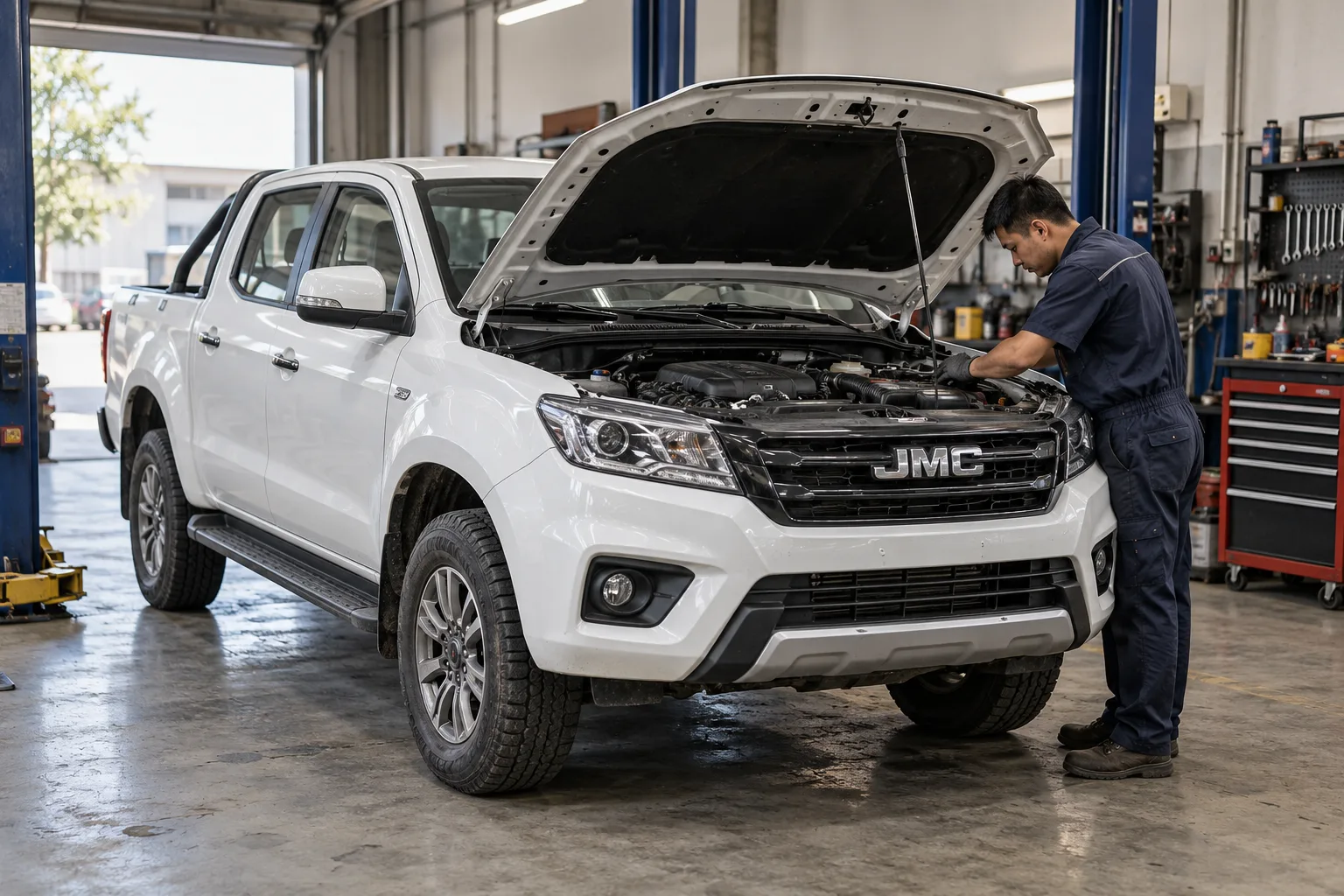
Pickup and light commercial diagnosis

JMC repair in Dubai

Repair planning for JMC pickups and eligible light commercial vehicles, built around the exact model, engine, gearbox, drive configuration, load history and symptom that brought the vehicle in.

JMC pickup vehicles prepared for a diagnostic assessment in Dubai
The same pickup warning can follow a cold start, heavy load, towing, heat, sand or recent work. Record the event first.
Name the exact JMCModel, year, VIN and source market
Record the configurationEngine, gearbox and two or four-wheel drive
Explain its working usePayload, towing, route and idle time
Keep warning evidencePhotographs before resets or battery disconnection

Identity before assumptions

A JMC badge does not establish the installed system

JMC uses model families such as Vigus, Grand Avenue and Carrying in different markets. Engines, transmissions, four-wheel-drive equipment, emissions hardware and trim can differ by year and source market. The vehicle itself must settle the application.

Vigus familyConfirm the complete model wording, engine, gearbox and drive system. A general Vigus label is not enough for parts or fluids.
Grand Avenue familyState whether the vehicle is petrol, diesel or another market configuration, then record fitted driver-assistance and four-wheel-drive equipment.
Carrying and light trucksDimensions, body, weight and workshop access must be accepted before arrival. Light-truck capability cannot be inferred from pickup acceptance.
Private importsRegional software, security, telematics and parts references may require support outside a general mechanical repair scope.

Photograph the VIN plate, engine bay and dashboard with the ignition on. If a part has already been removed, include its complete label and connector face. This information is more useful than sending an online photograph of a visually similar component.

A working-day record

Track when the JMC changes during its normal route

A pickup may behave normally when empty and develop the complaint after loading, warming or entering four-wheel drive. A short sequence helps the workshop reproduce the right condition.

First start

Note crank speed, smoke, idle quality, warning duration and outside temperature.

After loading

Record payload, rear ride height, tyre pressure and whether steering or braking changes.

At road speed

Capture engine speed, selected gear, vibration, boost response and temperature.

During slow work

State idle time, AC use, fan behaviour, repeated starts and low-speed manoeuvring.

At the end

Report hot restart, fluid smell, new leakage and whether the warning clears after parking.

Do not create the record while driving. A passenger can photograph the display, or the driver can stop safely and write the details. Preserve the order of warnings because the first event may explain several later messages.

Complaint-led diagnosis

Separate common JMC symptoms by the condition that creates them

Cold and hot

Hard starting or uneven idle

Record crank duration, battery history, smoke, fuel level and whether the engine improves when warm. Supply voltage, air, fuel, glow or ignition control, sensors and compression need different evidence.

Load and speed

Reduced power or hesitation

State payload, gradient, engine speed, selected gear and warning message. Intake leakage, fuel delivery, turbo control, exhaust restriction, temperature and mechanical condition may overlap.

Selection and slope

Delayed engagement or harsh shifts

Describe cold and warm behaviour separately, selected position, delay and any previous fluid work. Electrical supply, controls, mounts, driveline and internal transmission operation are assessed in sequence.

Mode and surface

Four-wheel-drive warning or binding

Record selected mode, road surface, steering angle, tyre sizes and whether the warning followed battery, tyre or driveline work. Do not force a mode change when abnormal noise or resistance is present.

Traffic and AC

Cooling temperature rises

Preserve fluid residue and note fan activity, AC setting, load and whether the temperature falls at road speed. Leakage, airflow, circulation, control and internal engine causes follow different test paths.

Braking and turning

Pull, vibration or uneven tyre wear

Check pressures and record impact history, load, braking input and whether the pull changes under acceleration. Tyres, wheels, alignment, bushes, joints, steering and brakes must be separated.

When stored data identifies an affected circuit, the next task is to prove the electrical or mechanical condition behind it. The computer diagnostic process uses codes and live values as evidence, while physical measurements decide whether the named component, its wiring or another system owns the repair.

Payload changes the case

Inspect load-related complaints with the pickup in mind

Payload and towing affect tyres, rear suspension, brakes, cooling, transmission temperature and driveline angles. The load record belongs beside the symptom, even when the dashboard message names another system.

Record the normal payload

State what is carried, approximate weight, where it sits and whether the complaint appears empty. Permanent toolboxes, tanks, canopies and tow equipment also count.

Check tyre application

Photograph size, load index, pressure label and tread. Mismatched circumference can affect four-wheel drive, stability control and steering observations.

Preserve brake evidence

Note pedal feel, stopping distance, vibration, smell and whether the symptom changes with load. Do not continue if braking control or wheel security is uncertain.

Describe rear ride height

Photograph both sides on level ground, loaded and unloaded where safe. Springs, dampers, bushes, chassis, tyres and installed accessories may influence the stance.

Report towing conditions

Include trailer type, approximate mass, electrical connection and road gradient. A temperature or shift complaint under towing cannot be judged from an unloaded idle check.

Declare off-road use

Sand, water, impact and underbody contact change inspection priorities. Show guards, connectors, hubs and any area that was recently recovered or repaired.

Safe arrival decision

Stop driving when control or fluid retention is uncertain

A pickup that still moves is not automatically safe to drive to the workshop. Load, tyre condition and the failure type affect the transport decision.

Recover the vehicle

Arrange recovery for persistent oil-pressure or temperature warnings, significant leaks, brake or steering loss, wheel damage, heavy smoke, burning smell, locked driveline or a vehicle that will not retain drive.

Ask before moving

Send the warning photo, leak location, starting status and whether steering and braking feel normal. Include the vehicle dimensions and any locked wheel for recovery planning.

Preserve the evidence

Do not clear codes, wash away fluid residue, keep topping up or disconnect accessories before the workshop advises. Those actions can remove the pattern needed to find the source.

Maintenance by installed application

Use the VIN and history to plan JMC maintenance

A service reminder does not identify the correct oil, filters, fluid procedures or inspection scope. The vehicle’s model year, engine, transmission, drive system and duty cycle should be recorded first.

Engine

Oil and filters

Confirm specification, capacity and references. Record consumption, contamination or pressure concerns as separate diagnostic items rather than hiding them inside routine service.

Temperature

Cooling and AC

Inspect levels, leakage evidence, hoses, airflow and fan behaviour. Weak cabin cooling and engine-temperature change may share airflow but still require distinct tests.

Driveline

Gearbox and four-wheel drive

Identify each installed unit before discussing fluid or intervals. Selection trouble, noise, binding or shift quality is a complaint that needs diagnosis.

Chassis

Brakes, tyres and suspension

Record axle-specific wear, pressures, tyre ratings, joint play, leakage and load-related stance. Alignment follows a mechanical and tyre inspection.

Supply

Battery and charging

Measure battery condition, charging performance and voltage drop. List trackers, cameras, lights and other additions before investigating repeat discharge.

Record

Handover information

Keep part numbers, fluid specifications, mileage and measured results on the invoice so the next decision starts from evidence rather than memory.

Parts without guesswork

Verify the JMC part against the vehicle and the removed component

New, used or remanufactured conditionThe estimate should state which is proposed and what inspection, testing or supplier terms apply.
Related materialsSeals, fluids, fasteners, filters and setup work should be visible instead of appearing after disassembly.
Programming and adaptationAvailability must be confirmed before a module or electronic assembly is ordered. A fitted component may still need configuration.
Conditional damageHeat, leakage, impact or earlier work can affect connectors, mounts and adjacent parts. New findings should pause for approval.

From complaint to handover

Build a repair decision the driver can verify

Identify

Confirm exact model, powertrain, drive configuration, load and recent work.

Reproduce

Use cold, hot, speed, load and selected-mode details to define the event.

Measure

Compare electronic evidence with supply, pressure, temperature and physical checks.

Approve

Name confirmed work, conditional items, parts basis and verification method.

Handover

Record the result, remaining observation and service information for the next visit.

The owner should be able to compare the final result with the original complaint. If a vibration only occurred at a particular speed and payload, a brief unloaded test cannot close the case by itself. The handover should state what was reproduced, what was corrected and what could not be tested safely.

Estimate clarity

Know what changes JMC repair cost and downtime

Diagnostic depth, access, load, parts source, previous modifications and required setup can change the work after the first inspection. The estimate should show where approval is required.

A visible worn brake pad is different from an intermittent power-loss complaint that only appears on a loaded incline. Ask how much initial test time is included and what evidence will trigger further work. If parts must be ordered, confirm whether they are returnable and whether the vehicle can remain in use while waiting.

Accessories can also alter the job. Canopies, extra lights, suspension changes, tow wiring and trackers may obstruct access or affect the same circuits under investigation. Declare them at booking so the scope and responsibility are clear.

The final quotation should separate labour, confirmed parts, related materials, outside services and the verification task. This makes two estimates comparable without relying on a single headline figure.

Accessories can become part of the fault

Map every JMC modification before electrical or chassis diagnosis

Pickups often gain equipment after delivery. Some changes are harmless to the complaint, while others alter current draw, load distribution, tyre behaviour, cooling airflow or the wiring used by control systems.

Electrical additions

List driving lights, cameras, trackers, alarms, audio, chargers, inverters, tow modules and auxiliary batteries. Photograph fuse holders, ground points and cable routing. State whether the problem began before or after installation.

Do not disconnect the equipment before the first record unless it presents an immediate hazard. A moved wire can temporarily hide an intermittent connection.

Suspension and wheel changes

Record springs, dampers, spacers, lift components, wheel offset and tyre size. These changes can influence steering angles, driveshaft geometry, stability information, braking feel and wear patterns.

Alignment values cannot correct loose joints, damaged bushes, mismatched tyres or an unsuitable modification.

Body and load changes

Include canopy, drawer, tank, refrigeration, crane, tow bar and permanent cargo. Photograph mountings and state approximate mass. The installed body may obstruct service access or add wiring outside the original diagram.

Responsibility for the base vehicle and the conversion should be agreed before either system is opened.

A clean modification record protects useful accessories from being blamed without evidence. It also prevents the original vehicle from being diagnosed as though it remained in factory configuration. The repair proposal should identify whether the modification is tested, temporarily isolated, repaired by its installer or left outside the current scope.

Keep accessory evidence with the vehicle

Retain installer information after modification work

Keep the installer invoice and wiring diagram where available. If an accessory has its own fuse, controller or warranty, record those details before another workshop alters it. This lets the owner decide whether diagnosis remains with the vehicle workshop or returns to the equipment provider.

Photograph any temporary isolation and restore it only under an agreed test plan. The final record should state whether the accessory contributed to the complaint, remained untested or was left disconnected for a defined reason.

Direct owner answers

JMC repair questions in Dubai

Which JMC models can be assessed

Pickup and eligible light commercial bookings can be considered after the exact model, dimensions, configuration, movement condition and requested work are reviewed.

What should I send before a JMC appointment

Send the VIN, model, year, engine and gearbox details, drive configuration, mileage, warning photographs, load history and recent repair records.

Does a JMC code identify the failed part

No. A code records an observed condition. Supply, wiring, control data, physical checks and mechanical measurements are used to confirm the cause.

Can a loaded JMC be road-tested

The load, legal condition and risk must be agreed first. The workshop may use another safe verification method or request that the vehicle arrive unloaded.

Can you check a four-wheel-drive warning

An assessment can be planned after the exact system, tyre sizes, selected mode, warning and recent work are provided. Avoid forcing the system when binding or abnormal noise is present.

Can JMC parts be ordered from a photograph

A photograph helps identify the area, but final selection should use the VIN, installed reference and application details.

Prepare the JMC case

Send the model, load history and exact driving event

Include the VIN, powertrain, drive mode, warning photograph and whether the pickup is safe to move.