Measurements before replacement
What the Ford brake inspection checks
We begin with the exact complaint and driving condition. Noise during the first stop, vibration only at speed, a soft pedal after heat, or pulling under light pressure can point toward different tests.
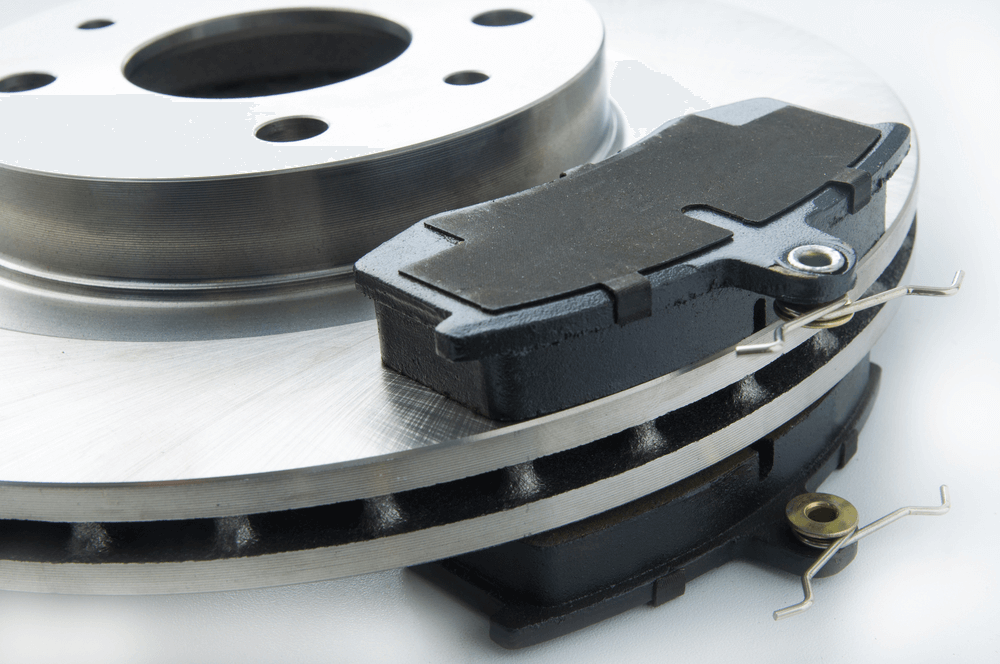
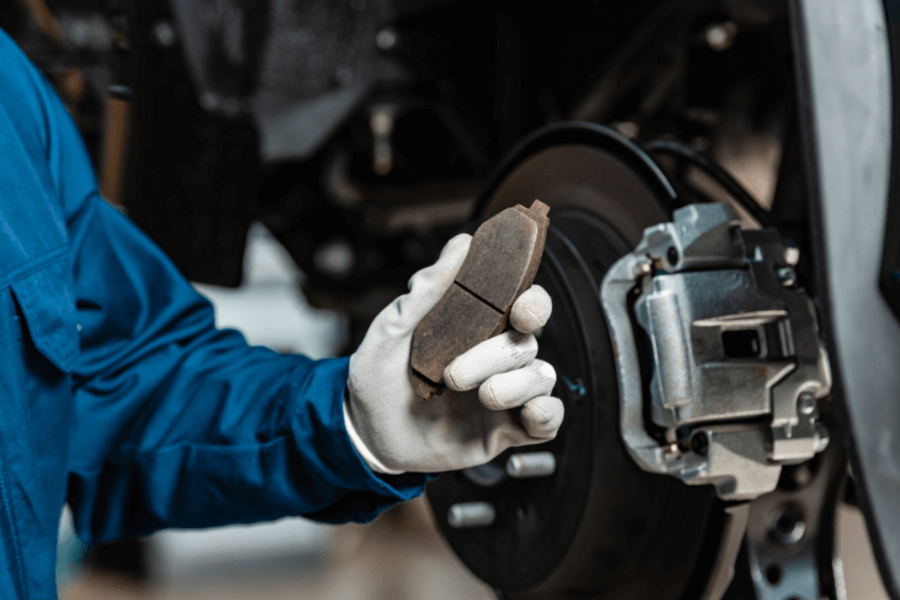
Pad wear is compared across the axle and between inner and outer surfaces. Uneven wear can expose restricted slides, piston trouble, damaged hardware, hose restriction, or mounting problems. Disc thickness and condition are checked against the relevant limits.
Pedal response is assessed with assistance on and off. Visible hoses, lines, calipers, fluid level, and leakage are reviewed. Where a warning is present, scan data is compared with wheel-speed and circuit behavior instead of treating the code as proof of one failed sensor.
Heat is compared across the axle after a suitable controlled drive. A hotter wheel can support a drag complaint, but the reading is followed by checks of caliper release, hose behavior, parking-brake movement, bearing condition, and pad contact. Temperature by itself cannot identify which part has failed.
When vibration is reported, we note where it is felt. Steering-wheel movement often points the first checks toward the front axle, while seat or body vibration can lead toward rear brakes, wheels, tires, or the driveline. A pedal pulse, road-speed shake, and vibration that appears only with brake pressure are treated as different clues.
Previous repairs also matter. New pads can wear unevenly if old hardware, restricted slides, a damaged hose, contaminated hub face, or incorrect wheel tightening remains. We inspect the supporting condition so the estimate addresses the reason the earlier result did not last.
- Pad depth and wear pattern
- Disc thickness, surface, heat, and runout
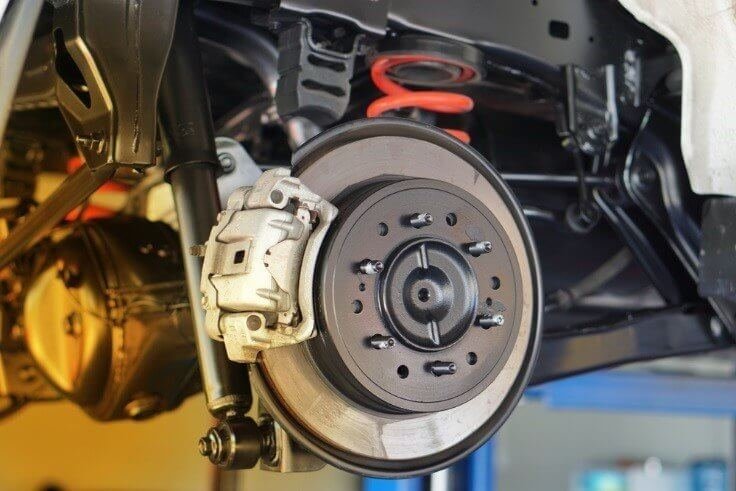
- Caliper movement, seals, boots, and hoses
- Fluid, lines, pedal, booster, and master-cylinder clues
- ABS signals, wiring, and warning status
- Hub, tire, bearing, and suspension influence