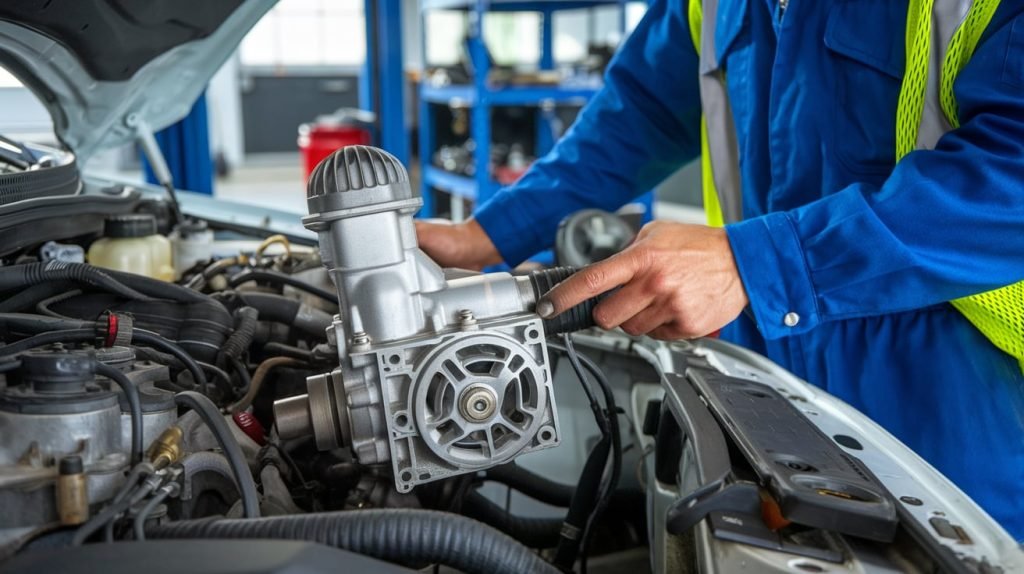
Your engine does not crank, and replacing the starter feels like the obvious answer. That guess can become an expensive mistake. A weak battery, loose ground, damaged cable, immobilizer fault, park/neutral switch, relay, or seized engine can produce the same complaint. The starter should be condemned only after the complete starting circuit has been measured.
Car starter replacement is justified when the battery and cables pass testing, the control signal reaches the starter, the engine turns mechanically, and starter current draw, voltage drop, sound, or bench testing confirms an internal fault. One click, slow cranking, intermittent no-crank, grinding, or a starter that keeps running all need diagnosis. Smoke, hot cables, repeated grinding, or a starter that will not disengage means stop trying to start the car.
What the Starter Motor Actually Does
Turn battery power into engine rotation
The starter converts battery power into the torque needed to turn the engine. When you turn the key or press Start, a relay and solenoid complete the high-current circuit. The pinion engages the flywheel or flexplate ring gear, and the motor cranks the engine.
Respond to the vehicle’s start command
Modern vehicles may involve an immobilizer, body control module, engine control module, brake switch, clutch switch, transmission range sensor, smart key, battery-management system, and network communication before the starter receives permission to operate.
Release after the engine starts
The pinion must disengage once the engine runs. A scan can reveal why a start command was blocked, but electrical measurements are still needed. The starter is one part of a battery, cable, control, motor, and ring-gear system.
Starter Symptoms and the Correct Next Check
| What happens | Possible causes | Urgency | Next check |
|---|---|---|---|
| No sound and no crank | Battery, terminal, start authorization, relay, switch, wiring, or starter | Vehicle may remain stranded | Scan authorization status and measure the command circuit |
| One solid click | Weak supply, high cable resistance, solenoid, starter motor, or locked engine | Do not keep repeating attempts | Battery load test, voltage-drop test, and manual engine check |
| Rapid clicking | Low battery voltage or poor terminal connection | Usually stop and test | Battery state, terminal condition, and charging history |
| Slow cranking | Weak battery, cable resistance, starter wear, oil viscosity, or mechanical load | Failure may be close | Cranking voltage, current draw, voltage drop, and engine condition |
| Grinding | Pinion, mounting, ring gear, engagement, or incorrect starter | Stop repeated cranking | Inspect teeth, fitment, mounting, and engagement |
| Starter runs after engine starts | Sticking solenoid, relay, ignition command, or mechanical engagement | Stop the engine when safe | Prevent overheating and inspect the control circuit |
Do Not Blame the Starter Before These Checks
Battery condition
Open-circuit voltage alone is not enough. The battery needs a conductance or load assessment and a cranking-voltage check. A recently charged weak battery can still show an acceptable resting voltage.
Cable voltage drop
Corrosion inside a cable, loose terminals, engine-ground resistance, or a damaged connection can starve a good starter. Measure both positive and ground sides while the circuit is loaded.
Start authorization
A key, immobilizer, brake switch, clutch switch, range sensor, relay, fuse, or control-module fault may prevent the starter command. Check live data and fault codes before removing parts.
Engine rotation
A seized accessory or internal engine problem can stop cranking and create high current. Confirm mechanical rotation using the correct procedure before calling the starter defective.
Ring-gear condition
Damaged flywheel or flexplate teeth can cause grinding or intermittent engagement. Replacing only the starter will not repair the mating gear.
Correct part and fit
Power rating, pinion teeth, rotation, mounting, connector, stop-start specification, and software procedures must match the vehicle. Similar-looking starters are not always interchangeable.
Useful clue: headlights dimming during a start attempt proves that current is being drawn, not that the starter is automatically bad. The amount of voltage drop and current, plus engine speed, provides the useful evidence.
How a Workshop Diagnoses a No-Crank Problem
- Record when it fails. Hot-only, cold-only, after parking, or random faults narrow the search.
- Inspect before testing. Terminals, grounds, wiring damage, oil contamination, mounting, and heat shields matter.
- Support system voltage. Low voltage can create misleading module faults and prevent a fair starter test.
- Measure under load. Cranking voltage, current and voltage drop expose resistance that a visual check misses.
- Confirm the start request. Scan data and a circuit test show whether the starter was actually commanded.
- Inspect mechanical engagement. Abnormal teeth, mounting, or engine resistance changes the repair plan.
Repair, Rebuild, or Replace the Starter
| Choice | When it can make sense | Limitations | Ask before approval |
|---|---|---|---|
| Repair a connection or control fault | The starter tests correctly but supply or command is faulty | The real cause may be elsewhere in the vehicle | Which measurement proved the fault? |
| Rebuild the original starter | The housing and major parts are reusable and a capable electrical specialist can test the unit | Quality depends on parts, machining, insulation, assembly, and final load testing | Which internal parts will be renewed? |
| Install a remanufactured unit | A traceable unit meets the correct specification and test standard | Core and remanufacturing quality vary | Who remanufactured it and what is covered? |
| Install a new starter | Access labor is high, the unit is badly damaged, stop-start duty is demanding, or reliability is the priority | Higher part cost and several quality levels may exist | Is it genuine, OEM-equivalent, or aftermarket? |
Car Starter Replacement Cost in Dubai
Use these as planning ranges. The final amount depends on the vehicle, starter type, access time, part source, programming requirements, damaged cables or ring gear, and whether another fault caused the failure.
Diagnosis
AED 150 to 350
Battery, circuit, scan, and starting-system checks. Complex intermittent faults can require more time.
Starter repair or rebuild
AED 450 to 1,200
Possible when the unit and internal parts are suitable. Removal and installation may be separate.
Starter replacement
AED 800 to 3,500+
Common passenger-car planning range including varied access and part choices. Performance and luxury models can exceed it.
Do not approve a starter from a click alone. Ask for the battery result, loaded voltage, voltage-drop readings, start-command confirmation, and the evidence that the engine is free to turn.
Can You Drive With a Failing Starter?
A starter normally does not affect an engine that is already running. The risk is that the vehicle will not restart after you switch it off. Intermittent operation can disappear without warning. Park somewhere accessible and arrange a check before the next essential trip.
| Condition | Drive or stop? | Reason |
|---|---|---|
| Intermittent no-crank but normal once running | Go directly for diagnosis if safe | The next restart is uncertain |
| Grinding during cranking | Stop repeated attempts | Pinion or ring-gear damage may increase |
| Smoke, burning smell, or hot cable | Stop and arrange recovery | An electrical short or stuck starter can overheat wiring |
| Starter stays engaged after the engine starts | Stop the engine when safe | Overspeed can destroy the starter and damage the ring gear |
| No crank in an unsafe location | Use recovery support | Avoid roadside electrical work near traffic |
Starter Differences by Vehicle Type
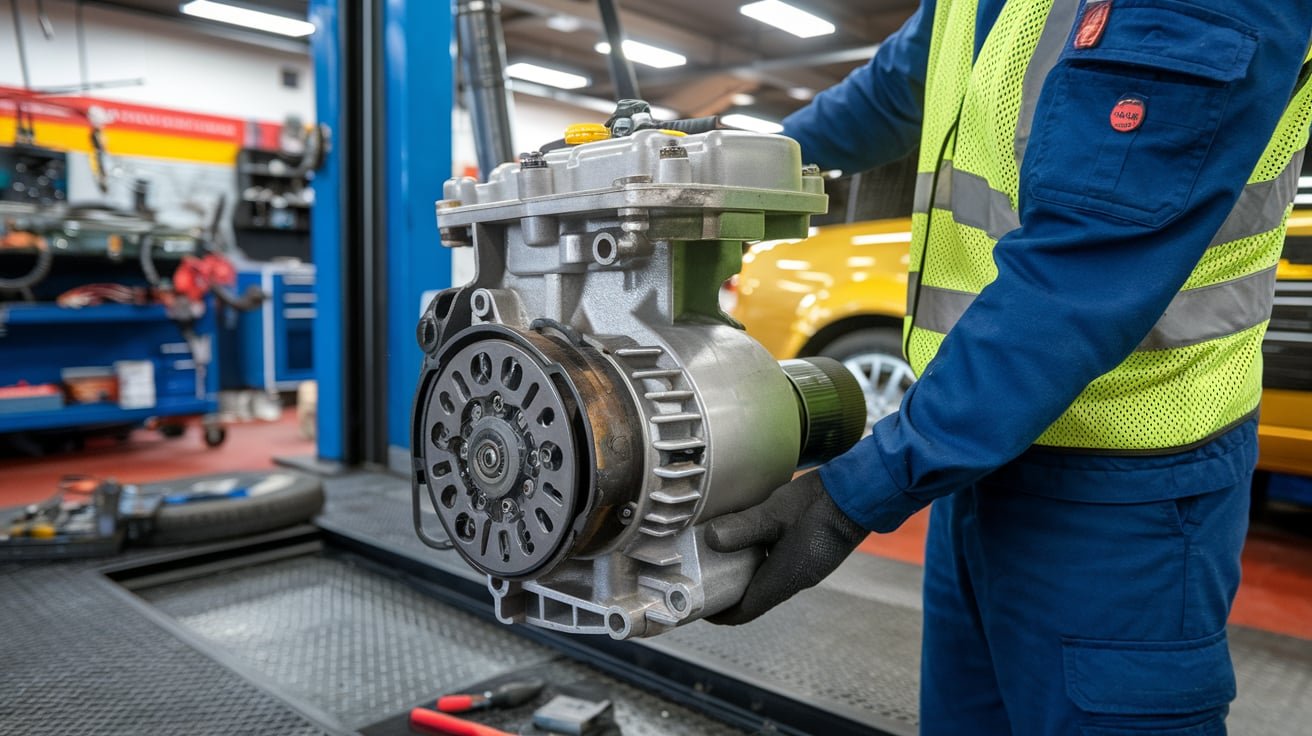
Stop-start and mild-hybrid vehicles
These systems may use a reinforced starter, belt starter-generator, integrated starter-generator, or another architecture. Battery type, state-of-charge logic, coding, isolation, and restart counts change the diagnosis.
Luxury and performance models
Starter access can sit beneath an intake manifold, near hot exhaust parts, or inside a tight drivetrain layout. Labor can outweigh the apparent size of the component.
Diesel engines
Higher compression changes cranking load. Glow-system, battery-capacity, cable, engine, and starter checks need to be interpreted together.
DIY Checks and When to Use a Workshop
You can note whether the dash powers up, try the approved spare key, confirm the selector is firmly in Park or Neutral, inspect accessible battery terminals, and record the sound. Do not bridge starter terminals, crawl beneath an unsupported vehicle, strike the starter, or repeatedly crank a grinding system. High current, moving parts, hot exhaust components, and vehicle security systems make shortcuts risky.
A workshop is the right choice when the fault is intermittent, the battery repeatedly goes flat, the vehicle has stop-start or hybrid systems, access requires component removal, a start authorization is missing, cables heat up, or the starter does not disengage. For measured electrical testing, see our car electrical and computer diagnostic service in Dubai. If battery condition is uncertain, use our car battery tester guide to understand conductance, load, and charging-system results.
How to Reduce Repeat Starter Failure
- Correct weak batteries and charging faults before they overload the replacement.
- Clean and secure positive terminals, grounds, and engine straps.
- Repair oil or coolant leaks that contaminate the motor or solenoid.
- Fix hard-start engine problems that extend cranking time.
- Use the exact starter specification and mounting hardware.
- Inspect ring-gear damage when the old unit shows abnormal pinion wear.
- Complete required battery registration, coding, or relearn procedures.
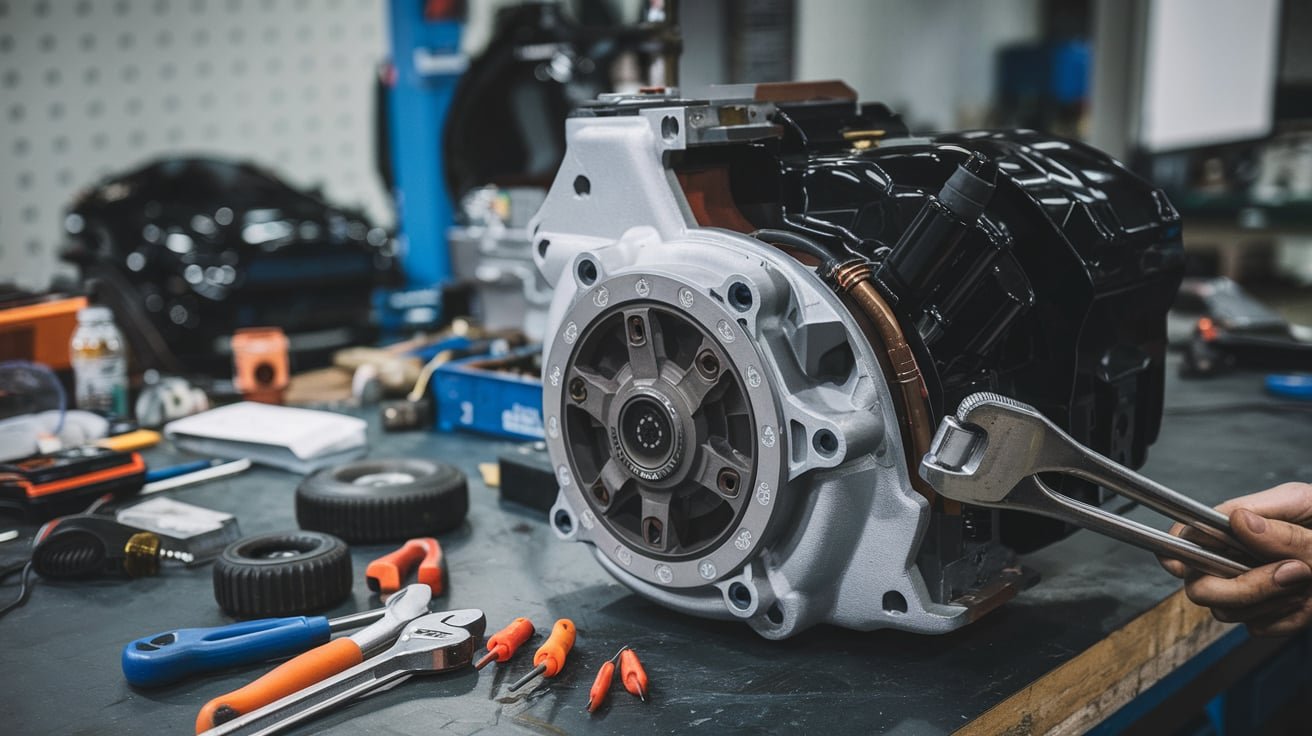
Why Starter Motors Fail
Starter motors work for seconds at a time, but the electrical and mechanical load is high. Most failures develop from wear, heat, contamination, poor supply, long cranking periods, or an incorrect operating condition. Finding that condition protects the next unit.
Brush and commutator wear
Carbon brushes carry current into the rotating armature. They shorten with use, and the commutator surface can burn or wear. The result may be intermittent operation, a dead spot, slow speed, or a unit that responds differently when hot. A rebuild is reasonable only when the remaining motor and housing pass inspection.
Solenoid contact damage
The solenoid moves the pinion and closes the high-current contacts. Burned contacts can produce a click without motor rotation. A sticking plunger can delay engagement or keep the starter connected after the engine fires. The control circuit must still be checked because low voltage can prevent normal solenoid movement.
Bearing or bushing wear
Bushings and bearings support the armature. Wear can let rotating parts drag, raise current demand, reduce speed, and create noise. A starter may pass a brief unloaded spin yet struggle under engine load, which is why the vehicle measurements and a proper bench load test matter.
Heat exposure
Starters mounted near exhaust components experience repeated heat cycles. Heat increases electrical resistance and can expose weak windings, connections, or solenoid parts. A heat shield that was removed during previous work should not be dismissed as decoration.
Fluid contamination
Oil, coolant, road debris, and cleaning chemicals can enter connectors or the starter body. Contamination affects insulation, contacts, and movement. Installing another motor without repairing the leak can create the same failure again.
Extended cranking
A fuel, ignition, compression, sensor, or security problem can make the engine crank for too long. The starter then stays energized beyond its intended short duty. Diagnose the reason for the hard start instead of treating each failed motor as an isolated event.
Common Starter Misdiagnoses
A starting complaint attracts shortcuts because the car is already inconvenient to move. That is precisely when evidence matters. These mistakes cause repeat visits and unnecessary parts.
- Calling every no-crank a starter failure. No-crank describes the result. It does not identify whether voltage, authorization, wiring, the motor, or the engine stopped the sequence.
- Using a battery voltage reading without load. A battery can show reasonable voltage and collapse during cranking. The starting event must be observed.
- Replacing the relay because it clicks. A click confirms movement inside the relay, not that the contacts carry the required current or that the downstream circuit is healthy.
- Ignoring the ground side. Technicians often focus on the positive cable. A poor battery-to-body or engine ground can create the same slow or failed crank.
- Assuming a fault code names the failed part. Codes indicate a monitored condition. Low system voltage can produce communication and authorization faults that disappear after the supply is corrected.
- Bench-testing alone. A starter spinning without engine load may still fail in the vehicle. Bench results need to be compared with current draw, voltage drop, mounting, heat, and mechanical load.
- Replacing the starter when the engine will not turn. A seized accessory, liquid in a cylinder, internal engine damage, or another mechanical restriction can overload a working unit.
A useful diagnosis explains the complete event: what command was sent, how much voltage reached the starter, how much current flowed, whether the engine rotated, and why the measured result points to one repair.
What a Complete Starter Quote Should Include
| Quote item | Why it matters | Question to ask |
|---|---|---|
| Diagnostic result | Separates the starter from battery, wiring, control, and engine faults | Which readings failed? |
| Exact part description | Clarifies new, remanufactured, rebuilt, genuine, OEM-equivalent, or aftermarket supply | Who made the unit and what specification was matched? |
| Removal and installation labor | Access differs widely by engine and drivetrain layout | Which components must be removed? |
| Related parts | Terminals, cables, grounds, bolts, shields, seals, or intake gaskets may be needed | Are these required now or optional? |
| Programming or relearn | Some vehicles require battery-management, start-stop, security, or module procedures | Which procedure applies to this model? |
| Cause correction | A leak, charging fault, hard start, or ring-gear problem can damage the replacement | What caused the original failure? |
| Post-repair verification | Confirms cranking speed, voltage, current, noise, charging, and hot restart | Will final results be recorded? |
A low part price can become a poor value if the specification is wrong or access labor must be paid twice. Compare the complete installed repair, not just the motor on the counter. Keep the old diagnostic results and part details with the vehicle record. They are useful if an intermittent problem returns.
When Not to Buy a Starter Motor
Do not buy a starter because an online symptom list sounds familiar. Wait when the battery has not been tested, the terminals are visibly loose, the security light behaves abnormally, the gear indicator is wrong, the car starts only in Neutral, the engine stopped suddenly before the no-crank, or smoke appeared near the battery cable. Each clue can move the repair away from the starter.
Also pause when a seller cannot confirm the part by VIN, engine, transmission, start-stop system, electrical rating, tooth count, connector, and mounting arrangement. Returning a mismatched electrical part is inconvenient. Installing it can be worse. Incorrect engagement depth or pinion geometry can damage the ring gear, while the wrong electrical design may create slow cranking or control faults.
A used starter can be tempting for an older car. Its remaining life is unknown, and removal labor may be substantial. It makes more sense when the vehicle is low value, access is simple, the donor specification is verified, and the buyer accepts the risk. When access is difficult, a traceable new or properly remanufactured unit often reduces the chance of paying the labor again.
Real Starting Situations and What They Suggest
Starts cold but not after a drive
Heat can expose solenoid, winding, cable, or connection resistance. Record the hot cranking voltage, command, voltage drop, and current while the fault is present. Testing only the next morning may miss it.
Starts in Neutral but not Park
The transmission range input or shifter adjustment deserves attention. Confirm live data and the approved adjustment procedure. Replacing the starter will not restore a missing Park authorization.
Cranks normally but will not run
The starter is already doing its job. Fuel delivery, ignition, engine timing, compression, security authorization, and control signals become the relevant direction. Do not confuse no-start with no-crank.
Click after battery replacement
Check state of charge, terminal seating, cable condition, battery specification, grounds, and any required registration. A new battery can arrive undercharged or be connected to a high-resistance circuit.
Grinding at one engine position
Intermittent tooth damage on the flywheel or flexplate can appear only when the engine stops in that position. Inspect the full ring gear rather than replacing multiple starters.
No crank after accident repair
Battery safety terminals, grounds, harnesses, fuses, immobilizer status, range data, and crash-related start inhibition may be involved. Follow the model procedure before bypassing any circuit.
How Dubai Conditions Affect Starting Problems
Heat does not automatically destroy a starter, but it changes the environment around the starting system. High underhood temperature can increase resistance, expose weak solenoid windings, harden cable insulation, and speed battery aging. A vehicle that starts each morning but clicks after a long drive needs testing while hot. Letting it cool before every inspection can hide the fault.
Dust and previous cleaning also matter. Fine contamination can collect around terminals, grounds, connectors, and underbody components. Water or aggressive engine-cleaning chemicals may enter a connector that was not designed for direct spray. Inspect connector seals, terminal tension, corrosion, and harness routing before replacing an expensive motor.
Long periods of parking are another common pattern. The battery may discharge from normal vehicle sleep loads, an electrical drain, heat-related aging, or an accessory that prevents the car from sleeping. The starter then receives low voltage and clicks or cranks slowly. Repeated jump-starting treats the immediate symptom but does not show whether the battery, charging system, parasitic draw, or starter is responsible.
Stop-and-go use creates many start cycles on vehicles with automatic stop-start. If the system is operating correctly, the starter or starter-generator and battery are specified for that duty. Installing a conventional unit, using the wrong battery technology, or skipping registration can affect operation. Diagnose the installed system by VIN and equipment, not by assuming that every push-button car uses the same hardware.
Key Takeaway
A click is a symptom, not a starter verdict. Test the battery, terminals, cables, grounds, control signal, start authorization, mechanical engine rotation, current draw, and voltage drop before choosing a repair. Replace or rebuild the starter only when evidence isolates it. Stop repeated start attempts if there is grinding, smoke, heat, a burning smell, or failure to disengage.
Book a Starter System Check in Al Quoz 4
Send the make, model, year, engine, dashboard message, sound, and whether the fault is hot, cold, or intermittent. We can test the battery, circuit, authorization, current draw, starter, and mechanical load before quoting the repair.
Car Starter Replacement FAQs
How do I know if the battery or starter is bad?
Test battery condition and loaded cranking voltage, then measure voltage drop and starter current. Rapid clicking often points to low voltage, while a good supply and command with abnormal starter current can isolate the motor.
Can jump-starting prove the starter is good?
No. A successful jump suggests a supply problem but does not fully test the starter. An unsuccessful jump can still result from poor connections, control faults, a defective starter, or a mechanical problem.
Can tapping the starter make it work?
It can occasionally change contact inside a worn unit, but it is not a repair and can damage parts. It also places the person near wiring, hot components, and moving machinery.
How long does starter replacement take?
Accessible units may be completed within a few hours. Starters beneath intake parts, near exhaust systems, or inside tight drivetrain layouts can require much longer. Diagnosis should happen before removal.
Should I replace the battery with the starter?
Only when battery testing shows it is weak, damaged, incorrectly specified, or near failure. Replacing a healthy battery adds cost without correcting another cause.
Can a bad alternator damage the starter?
A charging fault can leave the battery undercharged, causing slow cranking and repeated attempts. Overvoltage can also harm electrical parts. Test the charging system when the history supports it.
Does a clicking starter always need replacement?
No. Clicking can come from low battery voltage, cable resistance, poor grounds, relay operation, a locked engine, or the starter solenoid. Measurements separate them.
Do you provide recovery if the car will not start?
Contact the workshop with your location and vehicle details. Recovery or pickup can be arranged when roadside starting is unsafe or the vehicle cannot be restarted.