Car Electrical Repair in Dubai
Book car electrical repair in Dubai for starting faults, battery drain, charging problems, wiring damage, warning lights and failed accessories. The free Al Quoz 4 visit covers a symptom discussion and visible condition check. Targeted circuit testing, battery-drain observation and repairs are quoted separately before they begin. Ask us to confirm pickup availability for your Dubai address.
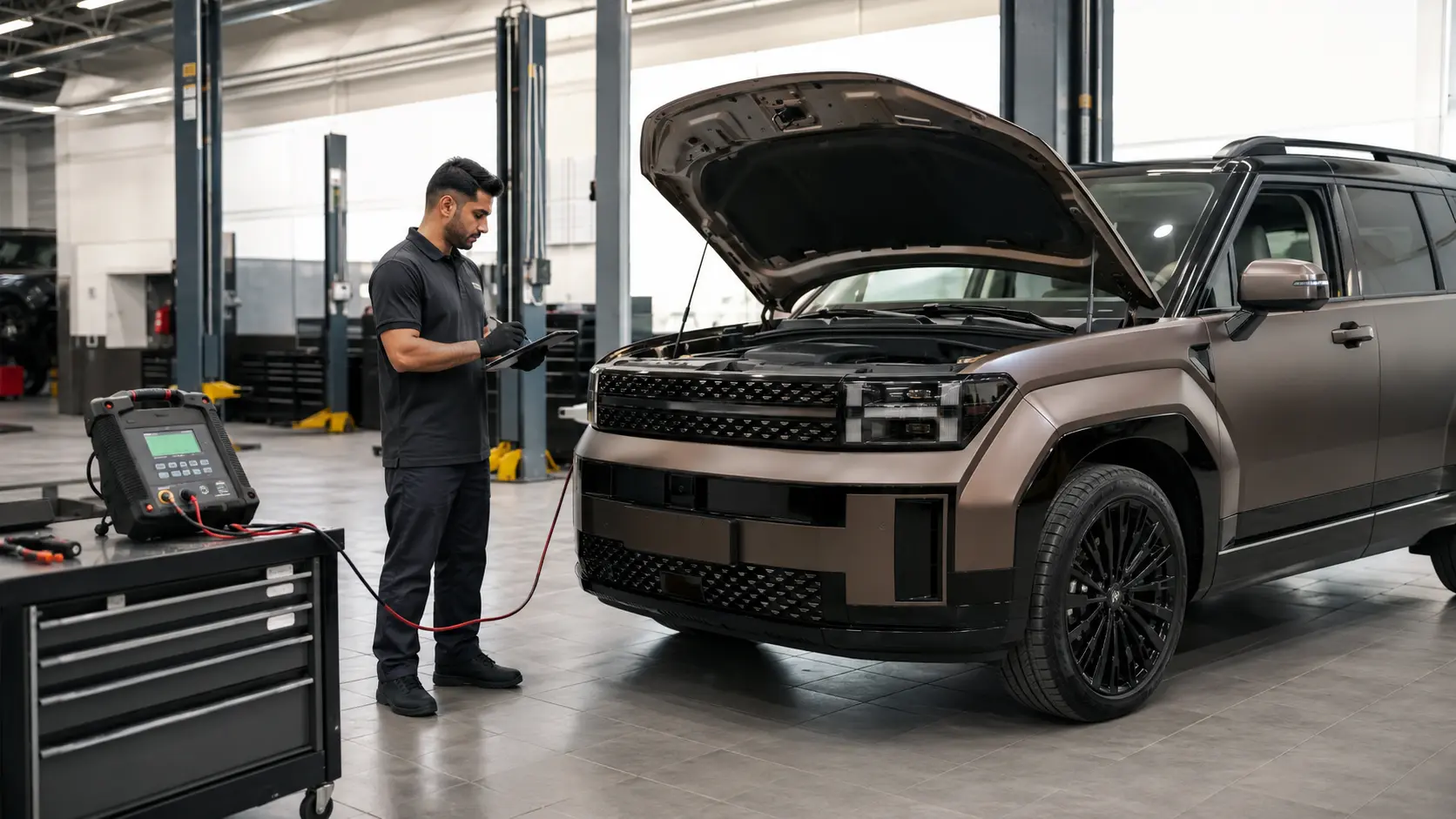
Electrical repair and diagnosis costs
These estimated Dubai ranges provide a practical starting budget. The final total depends on access, testing time, vehicle architecture, wiring condition and the required part. These published estimates have not been confirmed against a current workshop tariff. The displayed figures are before VAT; 5% VAT is not included in the displayed prices. Request a written payable total before approving paid work.
| Electrical service | Estimated price | Typical inclusion |
|---|---|---|
| Workshop inspection | Free | Initial symptom discussion and visible electrical-condition check in Al Quoz 4. |
| Electrical fault diagnosis | AED 240–620 | Relevant scan, voltage checks and targeted circuit testing for the reported fault. |
| Battery-drain investigation | AED 335–855 | Battery and charging checks plus an initial parked-current assessment. Extended observation is quoted separately. |
| Battery replacement | AED 430–1,335 | Correct battery specification, installation and charging verification. |
| Alternator replacement | AED 810–2,285 | Suitable alternator, installation and output testing. Access and model specification affect the range. |
| Starter-motor replacement | AED 715–2,095 | Suitable starter, installation and starting-circuit checks. |
| Wiring or connector repair | AED 285–1,430+ | Access, damaged-section repair, protection and functional testing. Harness replacement is separate. |
Ask for a written estimate
Send the vehicle model and the main symptom. We will give the closest useful range and arrange a free workshop inspection, free pickup and delivery, or a dedicated on-site assessment where suitable.
Common electrical repairs
The first visit identifies the likely system. We test before recommending a part, then explain whether the repair is a battery, charging component, starter, damaged connection or wiring.
Battery and supply
A weak battery, wrong specification, loose terminal or ground can cause slow cranking and several warnings. We check battery condition and supply before replacement.
Charging and starting
Alternator output, belt drive, cables, controls and the starter are checked against the reported failure. The quote names the component and any related work.
Wiring and connectors
Moisture, heat, abrasion or earlier accessory fitting can damage a circuit. A local repair may be possible; a wider harness or control fault needs a separate estimate.
Battery drain
Parked-current testing can distinguish battery capacity from a load that stays awake. Extended observation is quoted before the car is held for further testing.
What to tell us: The model, main symptom and when it happens are enough to start. A warning photo or recent battery or accessory work helps when available.
What the symptoms may mean
Vehicle electronics depend on stable supply, sound connections, protected wiring, communicating modules and functioning loads. One weak point can create several symptoms, while several unrelated faults can appear at the same time. A useful diagnosis identifies which behavior can be repeated and which circuit should be measured first.
A stored code names an observed condition or affected circuit; it does not automatically prove that the named component has failed. Voltage, current, resistance, signal integrity and physical condition must be interpreted together.
- Engine does not crank
- Report the sound from the starter area, lamp brightness, gear position, key behavior and whether a jump source changes the result. Battery state, terminals, grounds, control authorization, relays, wiring and the starter may require different checks.
- Battery goes flat while parked
- State how long the vehicle sits, how often it is driven and what devices remain connected. Capacity, charging history, sleep behavior and parasitic current are different questions; replacing a battery alone may not remove an abnormal draw.
- Charging warning appears on the road
- Note engine speed, temperature, steering weight, lamp changes and any belt noise. Alternator output, belt drive, wiring, ground paths, battery condition and control strategy should be considered before further driving.
- Lights flicker or fail selectively
- Identify the exact lamp, side, switch position and whether moisture or recent body work is involved. Bulbs, LED assemblies, connectors, grounds, fuses, wiring and control outputs need a circuit-specific check.
- Accessories behave unpredictably
- Record which radio, camera, lock, window, seat, sensor or added device fails and what restores it. Shared power, data networks, water entry, software state and installation quality can overlap.
- Fuses keep opening
- Do not replace a fuse with a higher rating. Note which function was active when it failed. A short, overloaded motor, chafed harness, contaminated connector or incorrect accessory feed must be located safely.
Electrical checks in context
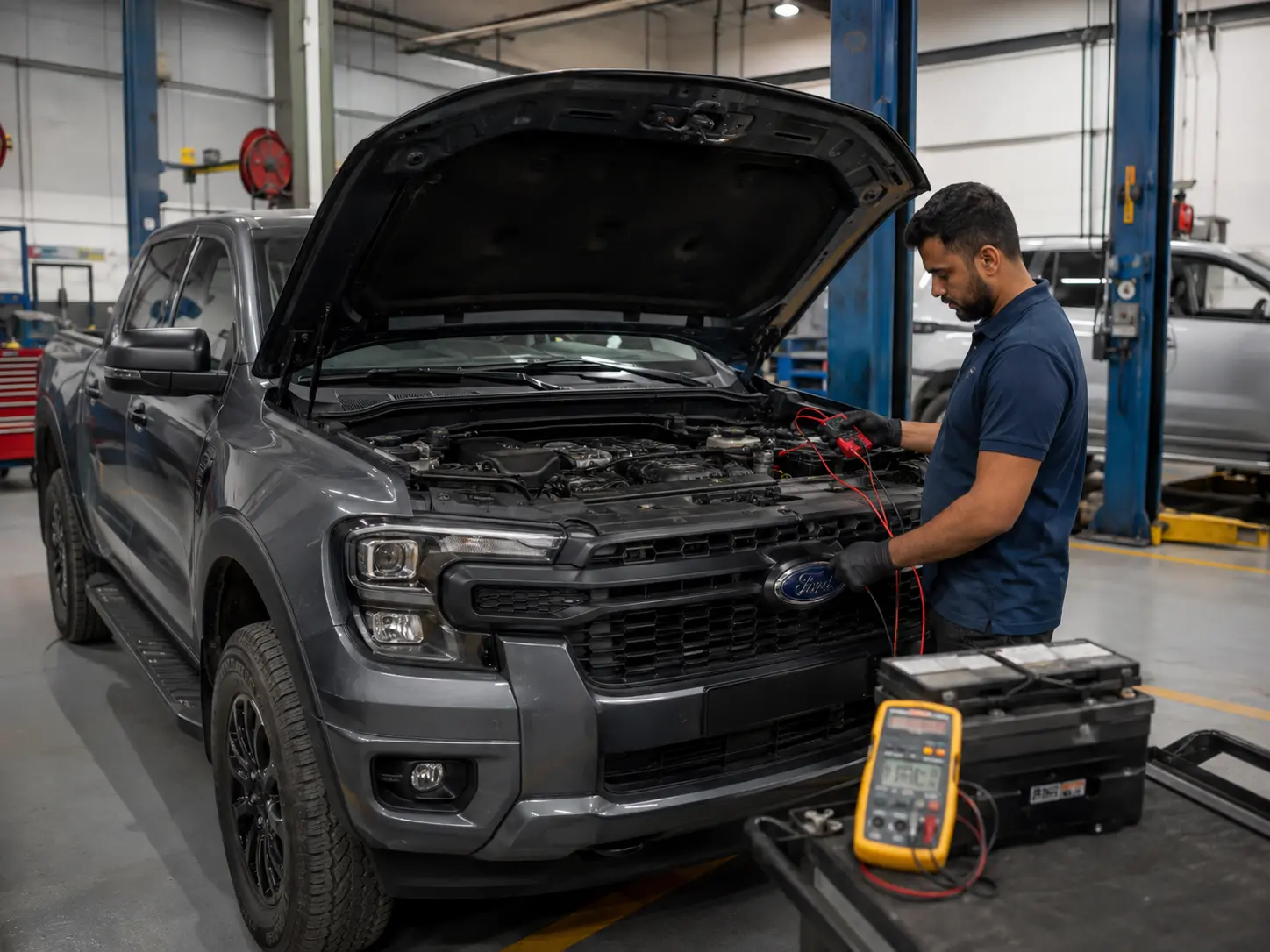
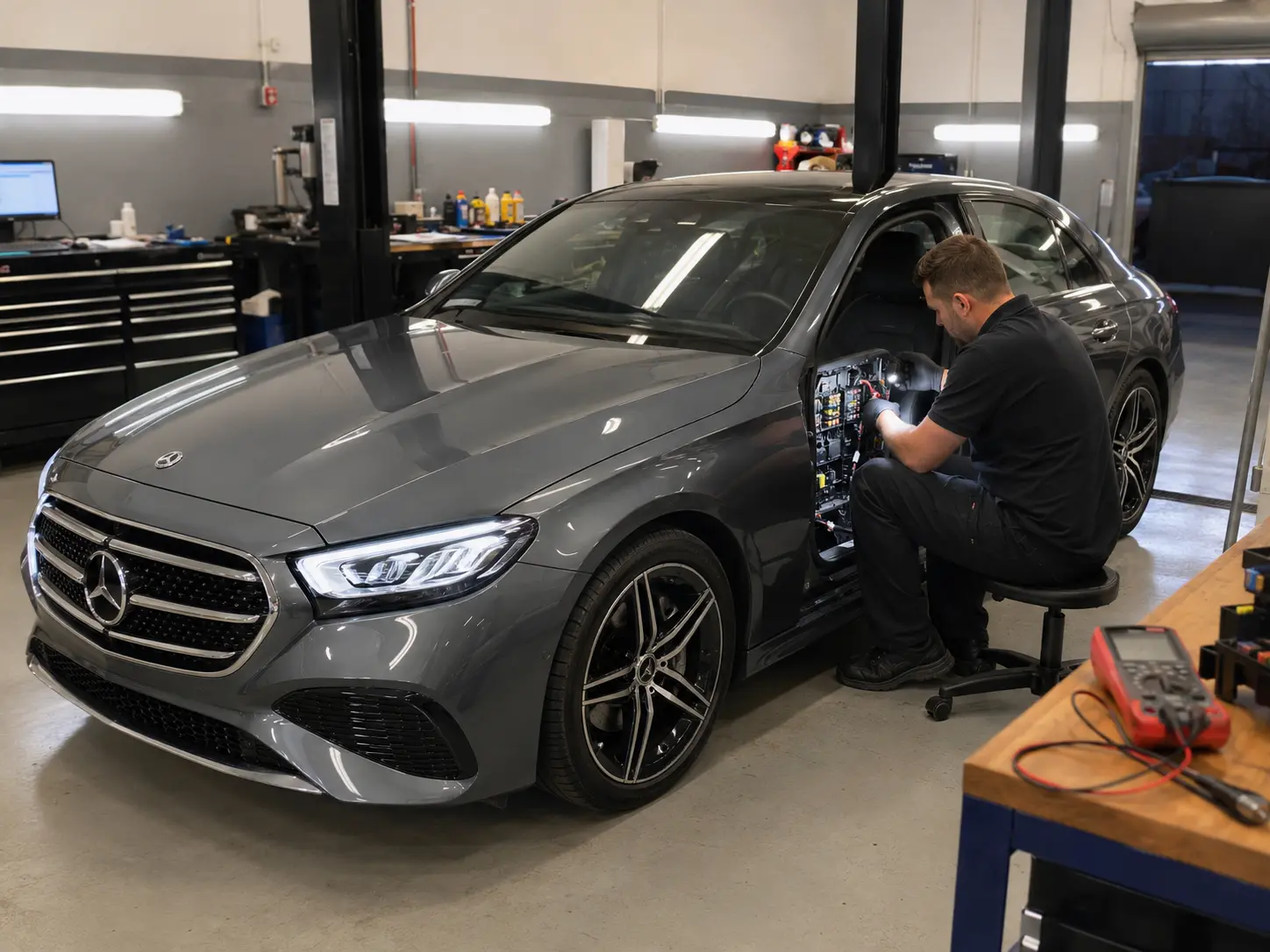
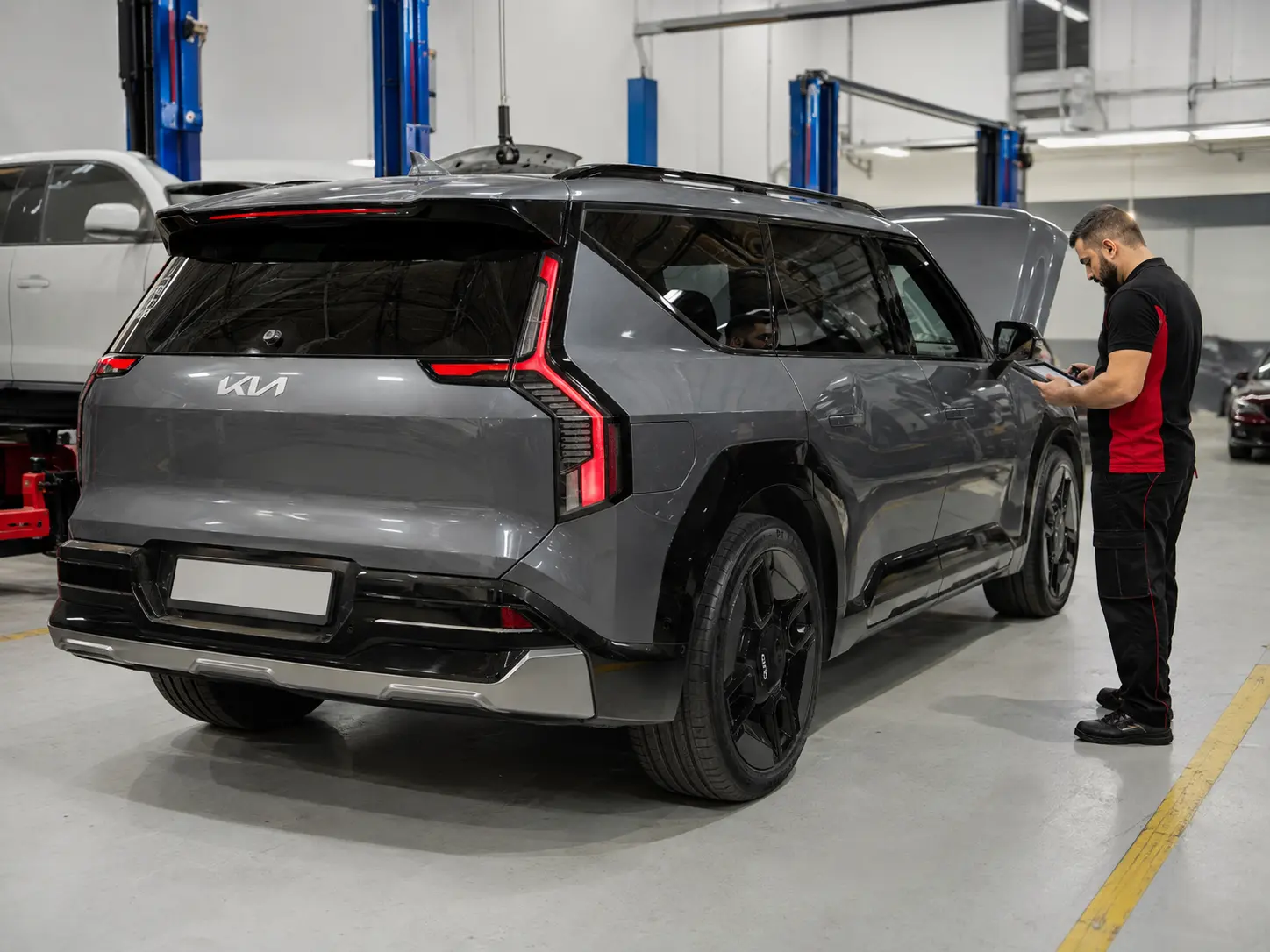
The images show charging checks, wiring inspection and a low-voltage check. They show the type of work discussed here; they do not establish a completed repair on a customer car.
When another service helps
A scan can guide circuit testing, but does not alone prove a part has failed. See our computer diagnostics service for scan and inspection choices. If testing points to the battery itself, review battery replacement options.
Electrical repair costs in context
These hypothetical budget examples are not completed customer jobs. Testing may change the recommendation when the fault is intermittent, access is difficult or earlier wiring work is found.
Battery-drain repair
Battery and charging checks, parked-current testing, isolation of an accessory circuit and protected wiring correction.
Hypothetical estimate: AED 810Replacement modules and extended overnight observation are excluded.
Alternator replacement
OEM-equivalent alternator, installation, belt inspection and charging-output verification.
Illustrative total: AED 2,095Battery replacement and unrelated oil leaks are quoted separately when required.
Starting-circuit repair
Starting-system diagnosis, suitable starter replacement, ground checks and repeated start verification.
Illustrative total: AED 1,380Battery, immobilizer or key work is separate if testing identifies another fault.
Which vehicles can be assessed?
Conventional petrol and diesel vehicles, mild hybrids, full hybrids and battery-electric vehicles all contain low-voltage systems, but their isolation procedures and propulsion components differ. The VIN, year, powertrain and market specification are essential.
Aftermarket conversions, imported vehicles and repaired accident cars may not match standard wiring information. Share that history early so safe access and data availability can be confirmed.
High-voltage work is a separate decision
Orange cables, traction batteries, inverters, onboard chargers and electrically driven compressors require appropriate training, tooling and isolation controls. Do not infer that a 12-volt diagnosis includes these operations.
Driver-assistance calibration, immobilizer programming and protected manufacturer functions may also require specialist equipment or authorization. The advisor should confirm scope before promising completion.
- Petrol and diesel vehiclesSend engine, transmission, battery and starting details with every warning.
- Mild and full hybridsIdentify the exact hybrid system and ask which voltage domain the requested test involves.
- Battery-electric carsSeparate low-voltage symptoms from charging, thermal and traction-system concerns.
- Modified electrical systemsList all added devices, control modules, coding and non-original harness changes.
- Imported specificationsProvide VIN, market, earlier repair history and any unavailable key or security information.
From testing to repaired function
This sequence keeps authorization clear when an intermittent problem needs more than one visit or observation period.
- 01
Record the event
Provide the exact failure order, environmental conditions, warning photographs and recent electrical changes.
- 02
Stabilize and reproduce
Confirm battery support, connections and safe access before trying to repeat the symptom or wake the affected system.
- 03
Measure the relevant path
Test supply, ground, protection, signal and load behavior according to the circuit implicated by evidence.
- 04
Repair and challenge again
Restore wiring or components, then repeat the original conditions and document remaining stored or active faults.
Approve testing before repair
Confirm the initial diagnostic allocation, the symptom being investigated and how further time will be authorized. If access requires trim removal, harness opening or module isolation, ask what can change once concealed areas are visible.
A written repair should identify parts, wiring materials, protection, coding or setup, labour, tax and the planned functional check. Warranty, timing and availability belong to this specific job; they should not be assumed from general website language.
Car electrical repair questions
The answers below describe common diagnostic boundaries. The actual route depends on the vehicle architecture and a reproducible condition.
Why does my car battery keep dying?
Possible reasons include reduced capacity, inadequate charging, poor connections, long parking or abnormal current draw. Measurements are needed before another battery is recommended.
Does a fault code identify this failed part?
Not by itself. A code records a state seen by a control system; circuit, signal, supply and physical checks determine the cause.
Can you diagnose intermittent electrical faults?
Intermittent cases can be investigated when the event history and conditions are clear. Some require observation, data logging or staged isolation.
Should I fit a larger fuse?
No. Use the specified rating and diagnose repeated failure. A larger fuse can remove protection from the wiring.
Can an accessory drain the battery?
Yes. Cameras, trackers, alarms, chargers and incorrect installations may affect sleep current. The device should be measured or isolated rather than blamed without proof.
Do you repair hybrid or EV high-voltage systems?
High-voltage propulsion work is separate from ordinary low-voltage electrical diagnosis and must be confirmed for the exact operation.
Which booking information is useful?
Start with the make, model and main symptom. Photos, recent work or parking patterns help if the fault is intermittent; we can request further details when needed.
Can I drive with a charging warning?
Continuing may result in loss of electrical supply and other functions. Stop safely, follow the vehicle guidance and ask whether recovery is appropriate.
Book car electrical repair
Send the vehicle model and the main electrical symptom, then choose a workshop visit or pickup. We can request warning photos, battery history or other technical details later when they help the diagnosis.